Our verdict
"Capital of the Mexican state of Baja California Sur, La Paz is an eco-tourist magnet, surrounded by protected islands in the Sea of Cortes, white sand beaches with rich birdlife, and seas teeming with fish and mammals. The area used to be a pearl diving center till the 1930s and compared with Cabo and other nearby areas, it still feels a bit sleepy, but in a good way. Stroll along the palm-fringed three-and-a-half mile Malecon that runs from the Marina de la Paz in the south to Playa Coromuel in the north. Local artists sell their wares along this boardwalk and you can meet whale-watching operators and surf instructors as well as fellow kayakers, hikers, bikers, and divers too. La Paz also has a beautiful colonial cathedral and a fascinating little reptile museum and conservation center (El Serpentario de la Paz) that is staffed completely by volunteers who are striving to protect local reptiles and other species. See your lizards and snakes up close here rather than in the wild. Safer for you and them! In partnership with Adventure Travel Trade Association"

Pearl is the En Primeur Club membership app, where members save venues, book tables and use the concierge.
The menu
What to order
- Chicken mole
- Tortilla soup
- Pork in salsa verde
Where the Peninsula Sets the Terms
Loreto sits roughly midway down the Baja California Sur coastline, flanked by the Sierra de la Giganta to the west and the Sea of Cortez to the east. That geography is not incidental to what ends up on a plate in this town. The sea here is cold-current fed, exceptionally productive, and carries a different character from the tropical Pacific waters further south. Fishing has defined Loreto's economy and its diet for centuries, and that relationship between source and table is more direct, more visible, and more consequential here than in most Mexican coastal cities. Restaurants that understand the place work with that fact rather than around it.
Across Baja California Sur, the broader sourcing conversation has shifted significantly over the past decade. What was once a region associated primarily with resort buffets and tourist-facing seafood platters now runs parallel to a more serious ingredient-led movement. That shift is most visible in Valle de Guadalupe further north, where places like Animalón in Valle de Guadalupe have built reputations on hyper-local sourcing from the peninsula's farms and waters. Loreto represents a different expression of the same underlying logic: a working fishing town where provenance is practical reality rather than menu language.
The Ingredient Map of Baja California Sur
Understanding what Loreto restaurants work with requires understanding the peninsula's larder. The Sea of Cortez, which Jacques Cousteau famously called the aquarium of the world, supports one of the most biodiverse marine environments in the Pacific. Yellowtail, tuna, grouper, sea bass, and various shellfish move through these waters seasonally, and the catch cycles are real rather than decorative. A kitchen that sources honestly will serve different fish in February than in August, a distinction that matters enormously to the coherence of what arrives at the table.
On the agricultural side, the Sierra's microclimate supports olives, dates, citrus, and various alliums that have been grown in the region since the Jesuit mission era of the 17th and 18th centuries. Loreto is one of Mexico's oldest permanently settled communities, founded as a mission outpost in 1697, and that long history of cultivation has left a distinct local pantry. The Baja Med culinary movement, which fused Mediterranean technique with Baja-sourced ingredients, drew on exactly this combination of mission-era agriculture and Sea of Cortez seafood. That culinary tradition now informs serious kitchens across the peninsula, from Olivea Farm to Table in Ensenada to smaller operations in towns like Loreto itself.
Comparing this model to what happens in Mexico's other serious dining cities is instructive. In Oaxaca, the sourcing conversation is dominated by indigenous grain varieties, cultivated chiles, and mezcal production. At Levadura de Olla Restaurante in Oaxaca, for example, the kitchen's identity is inseparable from that regional pantry. Loreto's equivalent is the Sea of Cortez catch combined with the mission-era agricultural base. Different raw materials, same underlying principle: the sourcing is the story.
Loreto in Mexico's Broader Fine Dining Picture
Beyond the capital, serious cooking has emerged in clusters: Monterrey has produced places like Pangea in San Pedro Garza Garcia and KOLI Cocina de Origen in Monterrey; Guadalajara has Alcalde in Guadalajara; the Yucatan Peninsula has developed its own node with places like Huniik in Merida and HA' in Playa del Carmen. The Riviera Maya adds Gaia at Maykana in Riviera Maya and Arca in Tulum to that coastal cluster.
Loreto sits outside all of these established clusters. It is a small town by Mexican standards, with a population under 20,000, and its dining scene reflects that scale. What it offers is not density of options but specificity of context. The seafood arriving in local kitchens does not travel far, and the town's relative remove from major tourist infrastructure means that the sourcing pressures that can distort menus in places like Los Cabos or Puerto Vallarta are less acute here. For comparison, Tuna Blanca in Punta de Mita operates in a more resort-adjacent context, which shapes its offer differently. For those who have visited Le Chique in Puerto Morelos, the contrast between that high-technique contemporary format and Loreto's more grounded character is instructive.
Loreto's closest dining peer in terms of editorial coverage is Andreina, which brings a Progressive Italian and Modern Cuisine approach to the town and represents the more technique-forward end of the local scene. Loreto as a dining destination is not built around a single flagship; it is built around access to an exceptional raw material base.
Seasonal Rhythms and When to Go
The Sea of Cortez fishing calendar directly affects what is available in Loreto kitchens. Dorado (mahi-mahi) runs heavily from spring through early autumn. Yellowfin tuna peaks in summer. Winter months bring different species into range, and the cooler water temperatures concentrate certain shellfish. A visit timed to these cycles will produce a different table than one planned around hotel rates alone. The dry season, broadly October through May, is also when the town is most accessible and the desert interior most walkable. Summer heat and humidity push some visitors away, though the offshore fishing at that time of year is among the most productive.
International access has improved with expanded service into Loreto International Airport, which receives direct flights from several US West Coast cities. Once there, the town itself is compact enough that distances between accommodation and restaurants are navigable on foot or by short taxi. For those building a wider Baja itinerary, our full Loreto restaurants guide maps the town's dining options in more detail.
The Reference Points That Matter
For a reader who has eaten at technically sophisticated operations like Lazy Bear in San Francisco or Le Bernardin in New York City, Loreto will register as a deliberate step away from high-production fine dining and toward something more place-specific. The comparison that matters here is not with Mexico City's top-tier tasting menus but with other small coastal towns where the sourcing chain is short and the daily catch is the menu's primary constraint. That is a different kind of precision, and for certain readers it is a more compelling one.
The peninsula's ingredient story, from Sea of Cortez seafood to mission-era agricultural products, is the most honest entry point into understanding what Loreto has to offer. The town does not compete on the same terms as Lunario in El Porvenir or the Valle de Guadalupe scene, nor does it try to. It operates on the terms set by its own coastline, and that specificity is what gives it a coherent identity.
Frequently asked questions
Is Baja California child-friendly?
Loreto's dining culture is generally relaxed and accommodating to families, shaped by its position as a small coastal city in Baja California Sur rather than a high-density urban restaurant scene. The Sea of Cortez setting means menus lean heavily on grilled and simply prepared fish, which tends to work across age groups. Specific family policies vary by venue, so confirming directly before visiting is advisable.
How would you describe the vibe at Baja California?
Loreto operates at a pace set by the fishing calendar and the desert climate rather than by urban trend cycles. The Sea of Cortez to the east and the Sierra de la Giganta to the west frame a town where the dining atmosphere is anchored in place and season rather than performance. Expect settings that reflect the peninsula's geography more than any metropolitan dining aesthetic.
What types of seafood are most commonly available in Loreto restaurants given the Sea of Cortez fishing calendar?
The Sea of Cortez fishing calendar drives Loreto's kitchen supply more directly than any import or distribution network. Dorado (mahi-mahi) runs from spring through early autumn, while the gulf also yields yellowtail, sea bass, and various shellfish across different months. Loreto, situated in Baja California Sur at 23880 BCS, sits within direct access of these fisheries, meaning menus in the city shift with the season rather than holding a fixed seafood offering year-round.
What's the signature dish at Baja California?
Dorado, which runs heavily from spring through early autumn, is among the most prevalent fish in local kitchens. The peninsula's Pacific-facing producers and gulf fisheries together define what appears on plates more than any fixed house specialty.
How do I find Baja California?
Baja California is located at 23880 Loreto, BCS, Mexico, Loreto.
Do I need a reservation for Baja California?
Reservation requirements in Loreto vary by establishment and season. Peak visitor periods, particularly when the Sea of Cortez fishing and whale-watching seasons align with winter and spring travel, can tighten availability at smaller operations.
What's the standout thing about Baja California?
The geography is the defining factor: Loreto sits between the Sierra de la Giganta mountain range and the Sea of Cortez, which Jacques Cousteau documented as among the most biodiverse marine environments on earth. That access to wild-caught gulf seafood, combined with the peninsula's isolation from major supply chains, produces a table shaped almost entirely by what the surrounding terrain and water yield. Few coastal dining destinations in Mexico operate under such direct ingredient constraints.
Comparison Snapshot
| Venue | Cuisine | Price | Awards | Notes |
|---|---|---|---|---|
| Baja CaliforniaThis venue (the venue you are viewing) | Authentic Mexican | $20–30 | Not listed | Not listed |
| Pujol | Modern Mexican Fine Dining | $200–300 | 2 Michelin Stars · World's 50 Best #60 | Mexican |
| Quintonil | Modern Mexican Fine Dining | $300–500 | 2 Michelin Stars · World's 50 Best #7 | Modern Mexican, Contemporary |
| Rosetta | Mexican-Italian Fusion Fine Dining | $30–50 | 1 Michelin Star · World's 50 Best #39 | Italian, Creative |
| Andreina | Modern Italian with Meats and Grills | Not listed | 1 Michelin Star · La Liste Top Restaurants | Progressive Italian, Modern Cuisine |
| Le Chique | Avant-Garde Mexican Tasting Menu | $200–300 | 1 Michelin Star · World's 50 Best #58 | Mexican, Contemporary |
Baja California
Featured Guides

Details
- Rustic
- Family
- Casual Hangout
- Standalone
- Local Sourcing
- A La Carte
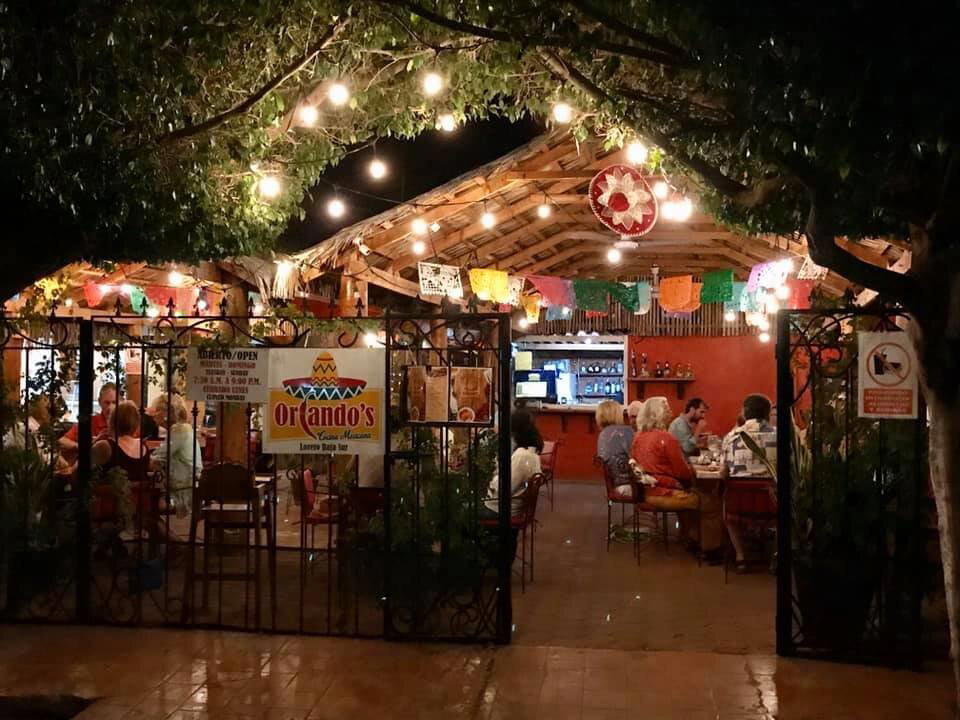
Cozy and welcoming atmosphere in the center of town across from the mission.