← Guides
How collectors can approach Jean-Louis Chave and Château Rayas, from importer allocations and auction routes to cellar-visit realities.
How collectors can approach Jean-Louis Chave and Château Rayas, from importer allocations and auction routes to cellar-visit realities.
Two doors, both effectively closed. Domaine Jean-Louis Chave's cellar in Mauves and Château Rayas in Châteauneuf-du-Pape do not operate public tasting rooms, do not list on Resy or any booking platform. For most collectors chasing Rhône Valley allocation wines, the door is not ajar, it is shut.
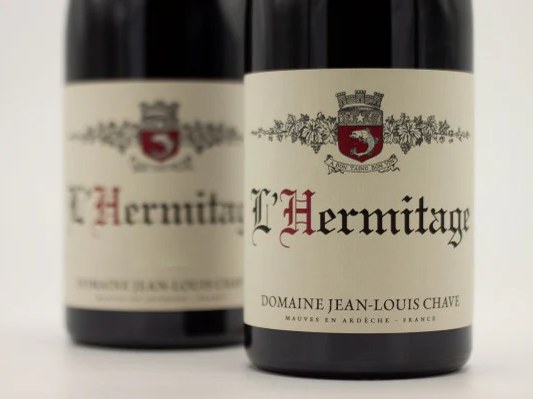
What little is documented about a visit to Domaine Jean-Louis Chave in Mauves describes a working cellar in the northern Rhône, granite-walled, cool, smelling of reduction and old wood, where the Chave family has vinified Hermitage across many generations. The family works across a patchwork of Hermitage lieux-dits: Les Bessards, Le Méal, Les Greffieux, L'Hermite, Peleat, and Beaumes, each fermented separately before the final assemblage that defines the grand vin. The cellar visit, when it happens at all, is a working conversation rather than a choreographed tour: you taste from barrel, discuss the vintage, and leave with a sense of how the blend is taking shape. There is no tasting room in the hospitality-industry sense. No gift shop. No appointment calendar on the website, the domaine has no website at all.1
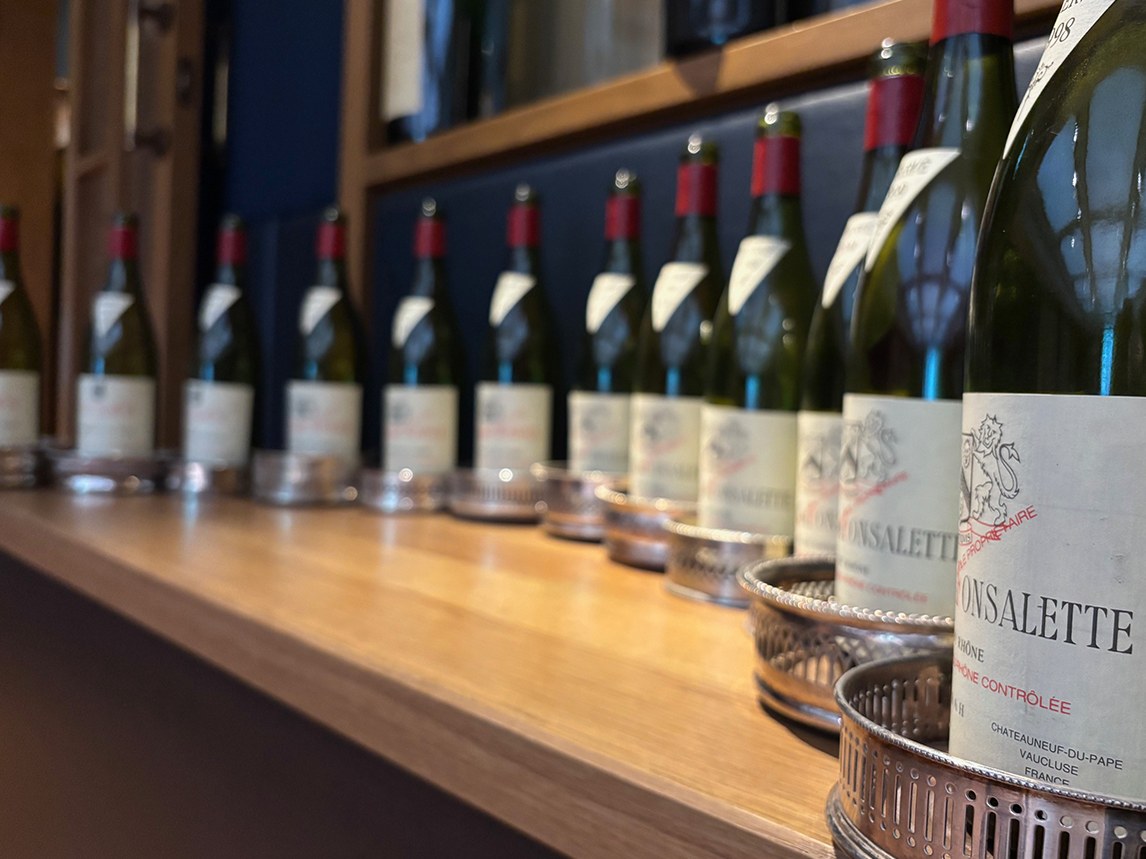
Château Rayas in Châteauneuf-du-Pape is, if anything, more austere. The estate sits on sandy, wind-sheltered soils north of the appellation, an anomaly in a region where galets roulés dominate, and the estate's current director is famously private. Cellar visits are by appointment only,2 and even then, visitors are grouped together and the estate is notoriously difficult to access.3 The cellar is functional and unadorned. Rayas produces Grenache from old vines on these unusual soils, and the resulting wine, low-yielding, pale in color, deceptively structured, has attracted a cult following that bears no relationship to the estate's minimal hospitality infrastructure.
If you do gain access to either estate, through a long-standing négociant relationship, a trusted importer introduction, or years of patient correspondence, expect a private, unscripted encounter. Neither estate performs for visitors. That is, in part, why the wines taste the way they do.
Demand is one factor. Chave Hermitage blanc and rouge rank among the northern Rhône's most sought-after wines, and production is tightly constrained: Hermitage Rouge runs to only 2,000 to 2,500 cases per vintage,4 Hermitage Blanc to just 1,000 cases annually,4 and the Cuvée Cathelin, released only in notable vintages, tops out at approximately 200 cases (roughly 2,000 to 2,500 bottles), with only nine total vintages ever produced.4 Rayas produces even less: the flagship Châteauneuf-du-Pape rouge reaches only 1,200 to 1,500 cases annually,5 while Rayas Blanc is released in as few as 42 cases.5 When production is this constrained, the winemaker's time is the scarcest resource of all.
Philosophy is the other factor. Both estates have, across generations, chosen to let the wine carry the argument rather than the brand. The Chave family communicates through their négociant arm and through a small circle of importers. At Rayas, allocated clients remain the same year after year, and long-term relationships are prioritized over new customers.2 Neither estate has a social media presence designed to cultivate visitor traffic. Treat access as you would a private introduction: it depends on trust, history, and the person making the call.
Neither Domaine Jean-Louis Chave nor Château Rayas publishes an allocation calendar, a mailing-list signup page, or a documented release window. The estates do not sell direct to the public in any conventional sense. Chave releases wines through its négociant arm and through a network of importers; Rayas releases through a similarly tight circle of négociants and selected merchants. Neither estate publishes a release schedule, so confirm directly with your merchant.
What is consistent: both estates release wines after extended élevage. Chave Hermitage typically spends time in a combination of demi-muids and older barrels before release; Rayas, vinified in old foudres, follows a similarly unhurried timeline. Releases tend to arrive in the market well after harvest, so confirm current timing with your merchant rather than treating any estimate as a fixed rule.
The Chave family recommends patience in the cellar as well as in the chase: Jean-Louis Chave recommends a minimum of 15 years of bottle aging before opening his wines,4 a timeline that reframes the allocation wait as merely the first act.
For Chave, one reliable route in the United States runs through Kermit Lynch Wine Merchant, which has represented the domaine for decades and holds a documented allocation. In the UK and Europe, specialist Rhône merchants including Yapp Brothers and Les Caves de Pyrène have historically carried Chave; availability varies by vintage and should be confirmed directly. Current retail pricing gives a sense of the market: Chave Hermitage Rouge 2022 lists at $355 per 750ml at Sotheby's Wine,6 with Hermitage Blanc 2022 at $389.95 (sale) / $425 (regular) at Merchant of Wine.7
For Rayas, the allocation picture is even tighter. Martine's Wines is the exclusive U.S. importer for Château Rayas,8 your first call in North America. The wine also appears regularly at auction: Christie's, Sotheby's, Hart Davis Hart, and Idealwine all carry Rayas, and the secondary market is often one realistic route for collectors not already embedded in a merchant's allocation list. Verify specific current prices with the auction house at the time of purchase.
En primeur is not a standard offering for either estate. Neither participates in a Bordeaux-style futures system, and no documented en primeur campaign exists for Chave or Rayas through any verified merchant source. The wines are bought on release, not before.
For cellar visits specifically, the only documented route is a personal introduction through an importer or négociant with an existing relationship. Cold outreach to either estate is unlikely to succeed. If you work with a specialist Rhône importer, ask directly whether they can facilitate an introduction, and be prepared for the answer to be no. Château Rayas can be reached by phone at +33 (0)4 90 83 73 09.9
The collector's playbook for both estates follows the same logic: establish yourself as a serious buyer through the channels that do have allocations, then wait.
For Chave, the second wine is a legitimate entry point. Chave's Mon Coeur, a Rhône-wide blend, is widely available and gives merchants a reason to note your interest in the domaine. More directly, Chave Saint-Joseph 2021 lists at $109.95 per 750ml at Sotheby's Wine,6 sourced from the granite slopes south of Hermitage. It appears more regularly in merchant allocations than the Hermitage grand vin and shares the same winemaking philosophy. Buying it consistently signals commitment without requiring you to compete for particularly constrained bottles.
For Rayas, the sister estates are the practical route. The estate's director also makes wine at Château des Tours9 in the Vacqueyras and Côtes du Rhône appellations, and at Château Fonsalette, a Côtes du Rhône that many collectors treat as a proxy for Rayas's style at a fraction of the price and with meaningfully better availability. Merchants who carry Fonsalette often have a relationship with the Reynaud family's allocation network; buying Fonsalette consistently is the closest thing to a documented entry point. Note that even Rayas Pignan, the estate's second wine, sees only 650 cases released to the public,5 so the scarcity runs through the entire range.
Money vs. time: The immediate route for both wines is the secondary market. Auction houses and platforms like Idealwine list Chave Hermitage and Rayas regularly; you pay a premium over release price, but you get the wine now, in a specific vintage. Building merchant history over several years costs less per bottle but requires sustained engagement and offers no guarantee of allocation. For collectors who want a specific mature vintage, a 2010 Chave Hermitage rouge, a 2007 Rayas, the secondary market is the only realistic option regardless of budget, since neither estate publishes a direct-sale route for back vintages.
The effort required to access either estate, in person or by allocation, suits collectors already deeply engaged with the northern and southern Rhône. If Hermitage and Châteauneuf-du-Pape are peripheral to your cellar, the return on the time investment is low. If they are central, then building a position in Chave and Rayas is a multi-year project worth starting now, because the allocation lists at the merchants who hold them do not shorten.
A cellar visit to either estate is appropriate only as a professional or semi-professional engagement: a wine writer, a buyer for a restaurant group, or a collector with an existing importer relationship. Planning a trip to the Rhône Valley around the hope of walking into either cellar is not a strategy. Planning a trip around the region's more accessible estates, with a long-shot introduction request sent well in advance, is a reasonable approach, provided the expectation is managed.
| Estate / Producer | Access Difficulty | Allocation Route | Cellar Visit | Entry-Point Wine |
|---|---|---|---|---|
| Domaine Jean-Louis Chave | high, no public visits | Importer mailing list (e.g. Kermit Lynch) | Introduction only; not publicly offered | Chave Saint-Joseph |
| Château Rayas | high, appointment only; notoriously difficult | Martine's Wines (U.S.); specialist merchant; secondary market | By appointment only; not publicly offered | Château Fonsalette |
| Domaine du Vieux Télégraphe | Moderate, visits by appointment | Direct and merchant | Appointment-based; contact domaine | La Crau Châteauneuf-du-Pape |
| M. Chapoutier (Hermitage) | Low, tasting room open | Direct, merchant, and online | Tasting room in Tain-l'Hermitage | Crozes-Hermitage Les Meysonniers |
| Domaine Jamet (Côte-Rôtie) | High, small production, limited visits | Specialist importer | Occasional; contact domaine directly | Côte-Rôtie rouge |
Domaine du Vieux Télégraphe in Châteauneuf-du-Pape, run by the Brunier family, offers appointment-based visits and produces a Grenache-dominant wine from the La Crau plateau that shares Rayas's appellation without Rayas's inaccessibility. The Bruniers are engaged with visitors in a way the Reynauds are not, and the wines, structured, age-worthy, terroir-specific, reward the same kind of collector attention.
In Hermitage, M. Chapoutier maintains a tasting room in Tain-l'Hermitage and produces single-parcel Hermitage wines, Le Pavillon, L'Ermite, Le Méal, that cover much of the same granite terrain as Chave, with the added context of a biodynamic farming philosophy applied since the early 1990s. The access is direct; the wines are serious.
For Côte-Rôtie, Domaine Jamet produces some of the appellation's most precise Syrah from the Côte Brune and Côte Blonde. Production is small and visits are not routine, but the domaine is more reachable than Chave and the wines, aged in a mix of demi-muids and older barrels, offer a northern Rhône experience that stands on its own terms.
For bottles: yes, but through the right channels. Build a relationship with a specialist Rhône importer, Kermit Lynch or Martine's Wines for the U.S. market, buy consistently across their range, and treat the allocation as a long-term outcome rather than an immediate one. The secondary market is the faster route and the only realistic option for specific mature vintages; factor the premium into your planning rather than resisting it.
For a cellar visit: most collectors will never stand in either cellar, and the wines do not require it. The Chave Saint-Joseph and Château Fonsalette are not consolation prizes, they are serious wines made on the same philosophy, and they are actually available. The Rhône Valley offers enough appointment-accessible estates, Vieux Télégraphe, Chapoutier, Jamet, to build a meaningful trip without depending on an introduction that may never come.
Both Chave and Rayas reward patience in the cellar and patience in the chase. The collectors who drink them well are, almost without exception, the ones who started building their merchant relationships years before they needed the allocation, and who understood that the scarcity is not a marketing posture but a simple arithmetic of old vines and unhurried winemaking.
Not through any publicly documented route. The domaine does not operate a tasting room or publish a visit-booking process, and it has no website through which to make contact. Access is through personal introduction via an importer or négociant with an existing relationship. Cold outreach is unlikely to succeed; confirm any approach through your specialist Rhône merchant.
The wine is distributed through a small network of négociants and specialist merchants, with Martine's Wines holding the exclusive U.S. import rights. The practical route is to identify a merchant who holds a Rayas allocation, ask your Rhône specialist directly, and build a purchase history with them. The secondary market (Christie's, Sotheby's, Idealwine) is particularly immediate alternative when merchant allocations are unavailable.
Fonsalette is made by the same director from Côtes du Rhône fruit and shares the same winemaking approach as Rayas: old foudres, minimal intervention, Grenache-led. It is not the same wine, but it is the closest documented proxy available at meaningful scale. Merchants who carry Fonsalette often have a relationship with the Reynaud family's allocation network, making it a practical entry point for new buyers.
No documented en primeur campaign exists for Domaine Jean-Louis Chave. The wines are released after élevage through importers and merchants, not through a futures system. Confirm current timing with your merchant, as it varies by vintage.
Domaine du Vieux Télégraphe offers appointment-based visits; contact the domaine directly to arrange. M. Chapoutier maintains a tasting room in Tain-l'Hermitage that is open without a prior introduction. Both are documented as visitor-accessible and offer a serious alternative to the closed doors at Rayas and Chave. Confirm current visit policies directly with each estate before traveling.
Get the App
Take the shortlist into the En Primeur Club app for concierge access, saved places, and the next step after discovery.
Get Exclusive AccessMore from the editors