← Guides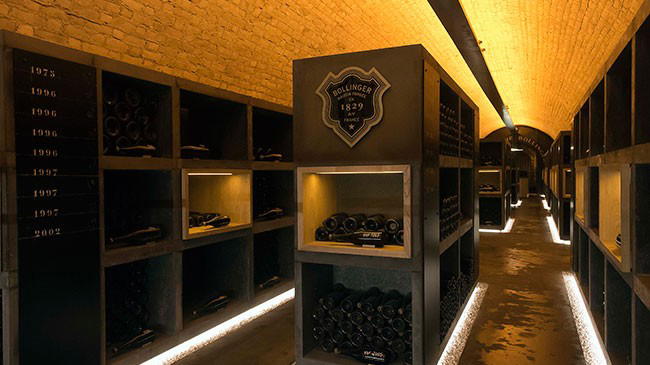
How to Visit Bollinger in Aÿ in 2026: Appointments, Tours, and What to Expect Yes, you can visit Bollinger, but not by walking up to the gate in Aÿ and knocking.
How to Visit Bollinger in Aÿ in 2026: Appointments, Tours, and What to Expect Yes, you can visit Bollinger, but not by walking up to the gate in Aÿ and knocking.
Yes, you can visit Bollinger, but not by walking up to the gate in Aÿ and knocking. The house does not operate a public tasting room or open cellar door. Every visit is by appointment, arranged in advance, and the experience you get depends almost entirely on how you ask and who you ask through. One direct route in 2026 runs through Bollinger's own 1829 membership program, tours and events at Bollinger require becoming a member of the 1829 program,1 and joining is free.1 From there, tours are booked via the 1829 application,2 which you can access by scanning a QR code from the Bollinger website.
The chalk cellars beneath the estate are the operational heart of the RD program, Bollinger's Récemment Dégorgé releases, which spend an extended period on lees before disgorgement, are aged here for years beyond the legal minimum. Walking the cellar corridors, you are passing bottles that will not be disgorged for another decade.
The house offers several distinct tour formats, each with a different depth of access. The Discovery tour, booked via the 1829 app, costs €100 per person and lasts 2 hours, including a tasting of 3 champagnes.3 Step up and the Experience tour costs €150 per person and lasts 2 hours, including a tasting of 5 wines.3 For those who want one structured format available through a third-party booking agent, the Taste of Time guided tour costs €170 per adult4 and lasts 120 minutes, including a tasting of 5 champagnes, for groups of 1 to 12 persons.4 Appropriate attire is required for the Taste of Time tour.4
Tours are offered in both French and English.3 Each tour has a limited number of visitors,3 a maximum of 12 persons for tours booked via champagne-booking.com,5 which keeps the pace unhurried. You are not being processed; you are being hosted.
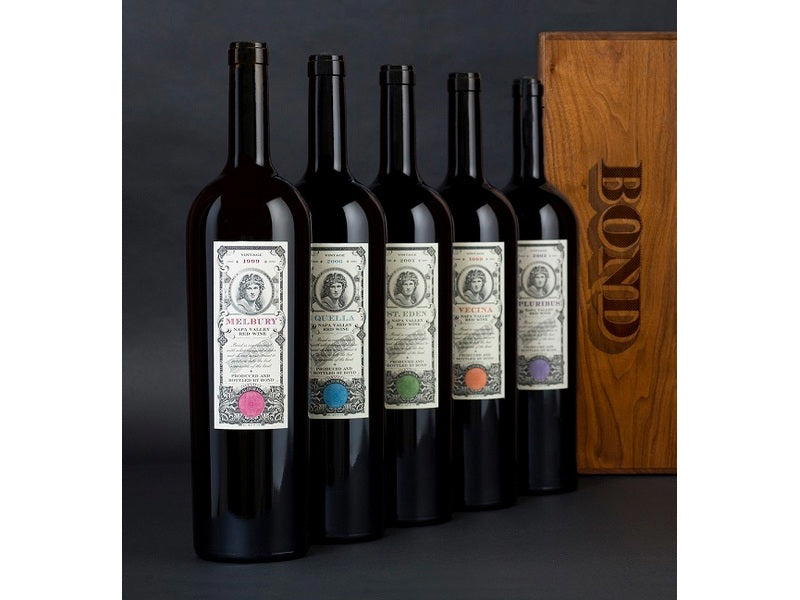
The house also maintains a display covering the Bond connection, original props, film stills, and bottles used on set from the 007 partnership. The display is incorporated into most visit formats rather than operating as a separately ticketed attraction.
Access to the RD program or the Vieilles Vignes Françaises, produced in small quantities from ungrafted Pinot Noir in Aÿ, is generally reserved for trade and serious collector visits rather than standard tour formats. When making your inquiry, name the cuvées you are interested in specifically.
Tours run on weekdays and Saturdays up to September, but do not run on weekends during the autumn and winter season.3 Timeslots run in the morning (typically around 10:00) or afternoon (typically around 14:00), with no more than 2 timeslots per day.3 That is a narrow window, plan accordingly.
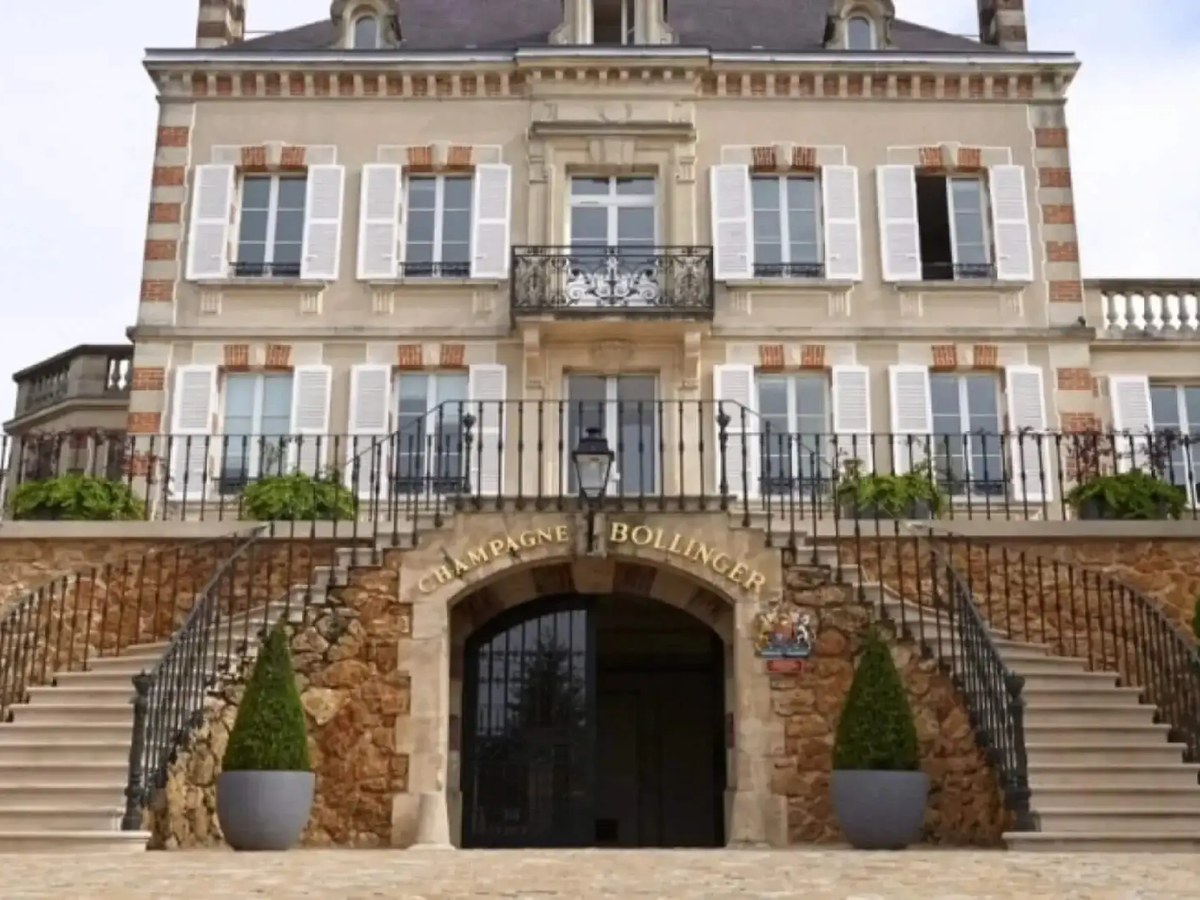
During high season (May to October), it is recommended to book several weeks in advance as availability is limited.5 Bollinger does not release visit slots on a fixed public schedule, so confirm availability directly with its hospitality team before planning travel around a specific date.
Practical notes: visitors who arrive more than 15 minutes after the start time may be refused entry.4 No alcohol is served to those under 18.4 The Taste of Time tour can be cancelled free of charge up to 24 hours before the visit.4 Payment for tours booked via champagne-booking.com is made on-site upon arrival, by cash, debit card, or credit card.5
The 1829 program, the direct route. Tours and events at Bollinger require becoming a member of the 1829 program.1 Membership is free.1 Once enrolled, you book through the 1829 application,2 the Discovery (€100, 3 champagnes) and Experience (€150, 5 wines) formats are both available this way. This is the cleanest path for individual collectors who do not have a trade relationship.
Via a specialist merchant. Collectors who buy Bollinger regularly through a UK or European fine wine merchant, Berry Bros. & Rudd, Justerini & Brooks, Corney & Barrow, or a French négociant with a Champagne focus, can draw on that relationship to arrange a facilitated visit. Merchants with active allocations of the Vieilles Vignes Françaises or the RD releases maintain trade contacts at the house. This channel most reliably yields access to the deeper cellar experience rather than the standard tour format.
Specialist wine travel operators. A small number of Champagne-focused travel companies, Arblaster & Clarke in the UK being the established, include Bollinger in curated itineraries. These visits are typically group-format and may not offer the same depth as a trade or direct visit, but they are a consistent route for collectors who do not have an existing merchant relationship. The Winedering private trip from Paris, for example, can be cancelled free of charge up to 2 days prior to the experience,6 useful if travel plans shift.
Build a purchase history before you ask. Bollinger's hospitality team is more responsive to collectors who have a documented relationship with the house, either direct or through a merchant. If you are buying the RD or the Grande Année through a merchant, make sure that merchant knows you want a visit. That purchase history is the currency.
Ask for the right format. The standard tour and the trade tasting are different experiences. When you make your inquiry, be specific: name the cuvées you are interested in, mention any vintages you collect, and ask whether a tasting of the RD program is possible. A vague request gets a standard response; a specific one opens a conversation.
Time your visit outside harvest and trade weeks. The quieter months, January through March, and late spring before the summer trade season, are when the hospitality team has more flexibility. High season runs May to October, when availability is limited and advance booking of several weeks is recommended.5
Mistakes that cost people access:
What insiders do differently: Collectors who visit Bollinger regularly treat the relationship as ongoing rather than transactional. They send a note after the visit. They buy the new RD release when it lands. When they return to Champagne the following year, they are not starting from zero, they are continuing a conversation. The depth of the next visit reflects it.
| House | Access Difficulty | Public Booking? | Tour Cost (Adult) | Best Route In |
|---|---|---|---|---|
| Bollinger (Aÿ) | Moderate, 1829 membership required; free to join | Via 1829 app | €100 to €150 (1829 app);3 €115 to €170 (booking agent)4 | 1829 app or merchant facilitation |
| Krug (Reims) | high, trade and allocation-holder priority | No | N/A | Allocation history via merchant |
| Pol Roger (Épernay) | Moderate, appointment required, more accessible than Krug | No, direct contact | N/A | Direct inquiry; UK merchant relationship |
| Taittinger (Reims) | Low, public tours available | Yes, bookable online | N/A | Book directly via Taittinger's website |
| Moët & Chandon (Épernay) | Low, high-volume public tours | Yes, multiple platforms | N/A | Book directly; advance booking advised in peak season |
Pol Roger is the closest alternative for collectors drawn to Bollinger's house style, Pinot-dominant, structured, built for the cellar. The Churchill connection gives it a comparable cultural narrative, and the house is somewhat more accessible to direct inquiries.
Krug is the right alternative if the RD program is what draws you, the idea of extended aging and disgorgement-on-demand. Access is harder, not easier, but the Krug ID program (each bottle carries a distinctive ID linking to its production history) gives collectors a digital relationship with the house that can precede a physical visit.
Taittinger offers one accessible cellar experience in Reims, public tours, online booking, and the Comtes de Champagne as a serious prestige pour. It is not the same experience as Bollinger, but it is a genuine Champagne house visit without the access friction.
Bollinger is one of the few Grande Marques where the visit genuinely reflects the wines: unhurried, specific, and built around production rather than tourism. The access route is clearer than many collectors realize, the 1829 membership is free,1 and tours book through the 1829 application2 once you are enrolled. The constraint is not the membership; it is the limited number of visitors per tour3 and the narrow daily window of no more than two timeslots per day.3
The cellar walk beneath Aÿ, past bottles of RD that will not see daylight for another decade, is the kind of access that justifies the planning. For collectors who already drink the Grande Année or track the RD releases, this visit deepens the relationship with wines already in the cellar. For everyone else, Pol Roger or Taittinger will give you a serious Champagne house experience with considerably less friction. The RD program is the reason Bollinger's cellars are worth seeing; those who arrive already knowing that tend to leave with the.
Yes. Tours and events at Bollinger require becoming a member of the 1829 program.1 Joining is free.1 Once enrolled, you book through the 1829 application,2 which can be downloaded by scanning a QR code from the Bollinger website.2
The Discovery tour costs €100 per person and lasts 2 hours, including a tasting of 3 champagnes.3 The Experience tour steps up to €150 per person for a 2-hour visit with a tasting of 5 wines.3 Both are booked via the 1829 app. Tours are offered in both French and English.3
The Taste of Time tour, available through champagne-booking.com, lasts 120 minutes and includes a tasting of 5 champagnes for groups of 1 to 12 persons4 at €170 per adult.4 Whether the RD or Vieilles Vignes Françaises feature depends on what the house is currently presenting; access to those cuvées is generally reserved for trade and serious collector visits. Name the cuvées you want when making your inquiry.
The Bond memorabilia, props, film stills, and bottles used on set from the 007 partnership, is incorporated into most visit formats at the estate rather than operating as a separately ticketed attraction or public museum. You need a confirmed visit appointment to see the display.
During high season (May to October), it is recommended to book several weeks in advance as availability is limited.5 Tours do not run on weekends during the autumn and winter season.3 The quieter months, January through March and late spring, are when the hospitality team typically has more flexibility.
Get the App
Take the shortlist into the En Primeur Club app for concierge access, saved places, and the next step after discovery.
Get Exclusive AccessMore from the editors