← Guides
Liv-ex data points to a fine wine floor: Mouton Rothschild 2015, Lafite 2015 and non-vintage Champagne now lead the recovery.
Liv-ex data points to a fine wine floor: Mouton Rothschild 2015, Lafite 2015 and non-vintage Champagne now lead the recovery.
Mouton Rothschild 2015 is trading at its 2020 lows again, but this time, according to Liv-ex analysis, it has already posted the strongest performance across the entire period studied.
That is the first clean signal collectors have had in some time. Not a universal rally. Not a return to easy gains across every blue-chip label. Liv-ex’s key indices are stabilising, but the individual wines beneath those indices are moving at different speeds, and some are still looking for their floor. The more useful detail sits wine by wine, vintage by vintage.
The Liv-ex screen used in the analysis was strict enough to matter. It considered only wines that traded at least twice quarterly, with traded value totalling at least £5,000. Then it looked at volume-weighted quarterly average trade prices from Q2 2025 onward. An upward trend meant three or four consecutive quarter-on-quarter increases over the past year. For a collector, that methodology matters because it leans on transactions rather than wishful merchant offers (Thedrinksbusiness1).
The broader market stabilised in Q3 2025, according to the same analysis, so price floors were likely being established around that point. By August 2026, the names emerging from those floors are telling: Bordeaux first growths, Champagne with enough liquidity to show a pattern, and one Napa Valley outlier, Opus One 2013, now trading above its Market Price at levels similar to its 2022 peak (Thedrinksbusiness1).
Bordeaux supplied more of the top-performing wines than any other region in the Liv-ex analysis. It is also a reminder that in a cautious market, collectors tend to return first to labels they can price, trade and benchmark with some confidence.
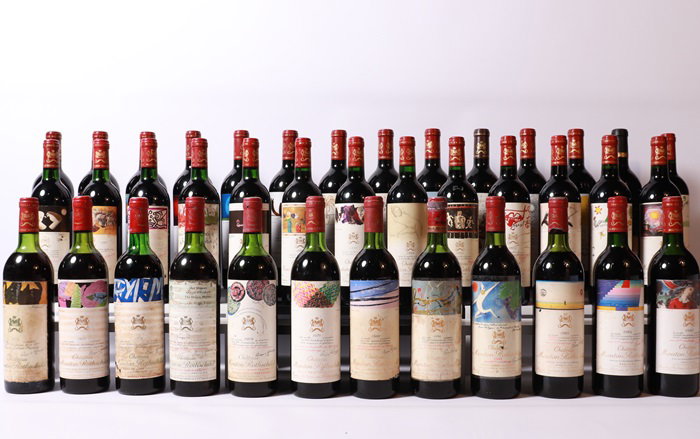
Mouton Rothschild is the name to put at the summit of the page. The château had five vintages on the upward trend list: 2015, 2005, 2010, 2018 and 2008. In a market still separating price floors from false starts, that breadth matters. A single vintage can move on a thin run of trades; five vintages from one producer suggest that buyers are circling the name itself, not just a lone bottle with a temporarily attractive bid (Thedrinksbusiness1).
Mouton 2015 did the work. According to the analysis, it had the strongest performance over the entire period, with most of its upward movement taking place in late 2025. The nuance is important: the wine now appears to have come to rest at its 2020 lows. For collectors, that makes it a reference point rather than a simple momentum story. It has recovered from its 2025 lows, but the current level places it back at an earlier pricing band rather than a new high.
Lafite 2015 tells a sharper story. Like Mouton 2015, it is trading at its 2020 lows, but Liv-ex’s analysis points to consistent upward momentum and a tight spread. In plain cellar language: the bid-ask picture looks cleaner, and the price movement has not yet shown the same evidence of settling. That does not make Lafite 2015 a guaranteed next leg higher. It does make it one of the cleaner Bordeaux signals in the current fine wine market recovery.
If you collect Bordeaux through a merchant account, this is where the conversation should become precise. Ask for recent trade evidence, not only current Market Price. A price floor only helps you if the stock is comparable.
One useful part of the latest Liv-ex analysis may be its refusal to treat every rising price as a trend. Fine wine data can flatter a bottle when only a small parcel changes hands, especially in quieter corners of the market. Liv-ex set a minimum of two quarterly trades and at least £5,000 in traded value before including a wine in the assessment. That strips out some of the noise.
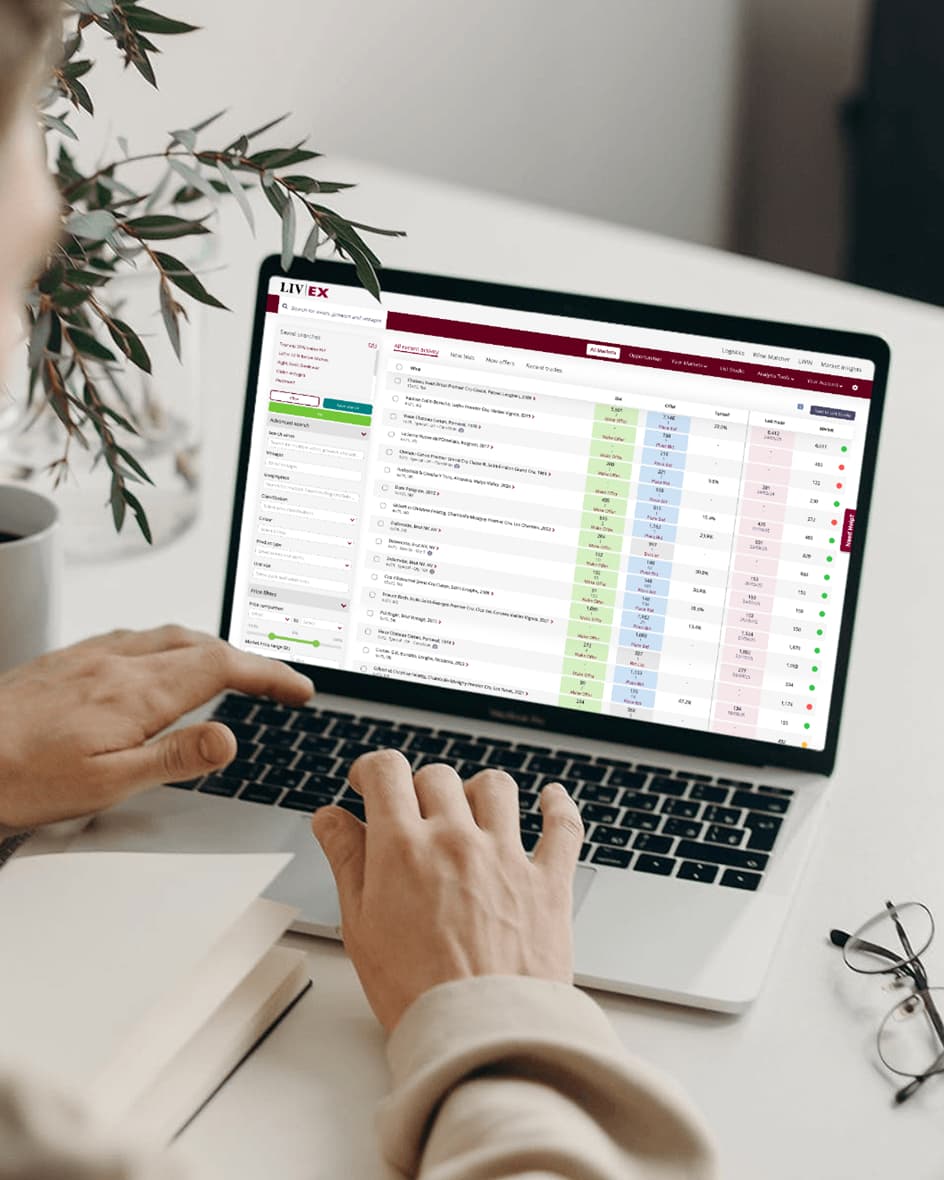
The analysis then used volume-weighted quarterly average trade prices. That phrase will not make anyone thirsty, but it helps prevent a single anomalous bottle from carrying too much influence.
The timing also gives the fine wine market recovery its shape. Liv-ex looked from Q2 2025 onward, with the broader market stabilising in Q3 2025. That means the wines on the upward trend list are not simply above their lows; they have posted three or four consecutive quarter-on-quarter increases in volume-weighted average trade price over the past year. In a market still carrying the memory of recent weakness, consecutive quarters are more persuasive than a single bounce.
There is restraint in the story, too. Liv-ex’s key indices are stabilising, but individual wines still vary widely. Some component wines probably have further to fall. That is exactly why the Mouton and Lafite data matter: they are not standing in for the whole market. They are showing where buyers have already returned in a measurable way.
For anyone who buys en primeur, back-vintage Bordeaux or Champagne through a private client desk, this is the distinction to carry into the next allocation call. Index direction gives the weather. Trade frequency, spread and vintage-specific movement tell you whether to pack a coat.
Champagne’s recovery signal is more about structure than spectacle. The Liv-ex Champagne 50 has found support on its long-term upward trend line, according to the analysis. That does not mean every Champagne label is rising in lockstep. It means the index has stopped behaving like a falling knife and started behaving like a market with a visible floor.
Liquidity again matters. As with Bordeaux, Champagne trades often enough for more wines from the region to appear in the analysis. That is useful for collectors because Champagne’s investment story can split quickly between large houses, non-vintage cuvées, grower names and rare releases.
Both showed defined upward trends over the past year in the Liv-ex screen. They were among the strongest performances for non-vintage Champagne. That is a useful detail because non-vintage Champagne often sits in a different part of the collector psyche than vintage prestige cuvées. It is bought, opened, replaced and traded with a rhythm that can expose real demand more quickly than bottles that disappear into long storage.
Pol Roger Brut Réserve gives the signal a house-led counterpoint. Jacques Selosse Initial gives it a grower-inflected edge. The point is simpler: two named non-vintage Champagnes have shown measurable upward price patterns at a moment when the broader Champagne index has found support.
For travellers, Champagne remains one of the easiest regions in which to connect bottle and market. A day split between Reims and Épernay can remind you why non-vintage cuvées matter: they are not footnotes to prestige bottlings, but signatures of house style and cellar judgment. If you are tasting before buying, keep the market data in one pocket and your own palate in the other.
Beyond Bordeaux and Champagne, the list thins quickly. Liv-ex noted that few other wines fulfilled the criteria, though others may be forming newer or less consistently defined upward trends. That scarcity of qualifying names is part of the message. The fine wine market recovery, at least in this analysis, is selective.
Opus One 2013 is the named Napa Valley wine that breaks through. Its trade frequency is increasing as prices rise, according to the Liv-ex analysis, and it is now trading above its Market Price at levels similar to its 2022 peak. Recent trades also align broadly with a sustained upward trend when viewed over a longer period.
That combination, rising trade frequency, rising prices and a level near the 2022 peak, makes Opus One 2013 different from a bottle that merely prints one high trade. Liquidity is doing some of the talking. Buyers are not just admiring the label from a distance; they are transacting often enough for the trend to register.
Collectors who keep Napa in the same portfolio as Bordeaux and Champagne will read this carefully. It names Opus One 2013. That is enough. In a market with wide variation between individual wines, the discipline is to follow the named bottle, not to inflate it into a regional verdict.
For Napa travellers, the practical takeaway is equally measured. A visit to Napa Valley can sharpen your sense of why certain wines keep international pricing visibility while others trade more quietly. But if the question is portfolio allocation, the cited evidence belongs to Opus One 2013 specifically. Other producers and vintages need their own trade record.
The temptation now is to turn a few upward lines into a sweeping call. Resist it. The Liv-ex analysis gives a cleaner instruction: separate wines that have found their floors from those still searching. That means prioritising actual traded value, repeat trade frequency and consecutive quarter-on-quarter movement over broad optimism.
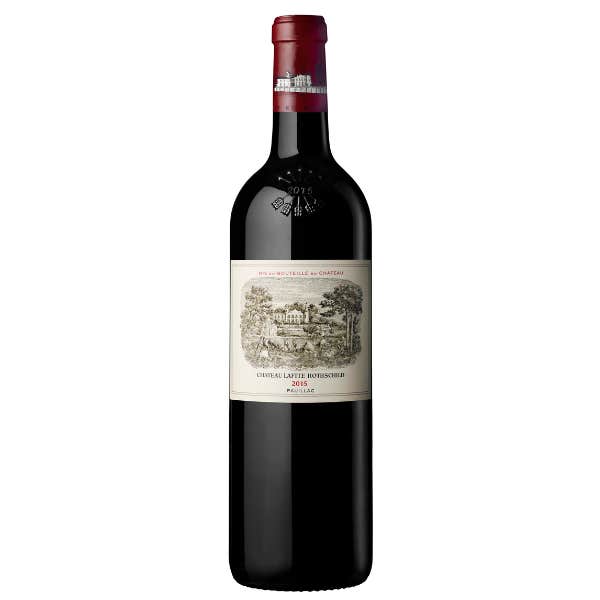
For Bordeaux, the immediate watchlist is specific. Mouton Rothschild 2015, 2005, 2010, 2018 and 2008 all appeared on the upward trend list, with Mouton 2015 showing the strongest performance over the period and now trading at 2020 lows. Lafite 2015 also trades at 2020 lows, but its consistent upward momentum and tight spread make it the more active price story.
For Champagne, the Liv-ex Champagne 50’s support on its long-term upward trend line gives the region a firmer base than it had during the decline. Pol Roger Brut Réserve and Jacques Selosse Initial add two named non-vintage signals. If your cellar already holds Champagne for drinking rather than trading, this is the moment to check whether replacement costs are beginning to move before you open the last bottle of a favourite cuvée.
For Napa, Opus One 2013 is the one to isolate. It is trading above Market Price at levels similar to its 2022 peak, with trade frequency increasing as prices rise. That is a sharper fact than any general statement about California demand. Treat it accordingly.
The collector’s work now is checking spreads, provenance, case condition, trade recency and whether a quoted price reflects bottles that actually changed hands. In the rising part of a cycle, sellers often move faster than buyers. In the first stage of a recovery, strong defence is not cynicism; it is documentation.
Before acting on the fine wine market recovery, ask your merchant or exchange contact which trade data sits behind the offer. Was the quoted level based on recent transactions or current listings? Did the wine trade more than once in the quarter?
Those questions are not meant to drain pleasure from the cellar. They protect it. A bottle of Mouton Rothschild 2015 bought because it appears to have reached its 2020 lows is a different decision from a bottle bought simply because Mouton has a famous label. Lafite 2015 with a tight spread deserves a different conversation from a wine whose market price has moved on thin activity. Pol Roger Brut Réserve and Jacques Selosse Initial, both named in the Champagne analysis, should be assessed with the same discipline.
There is also a travel dimension here, and it is not decorative. If you are planning Bordeaux or Champagne in the coming months, use the trip to calibrate the market against the glass. Taste current releases, ask merchants how back-vintage supply is moving, and listen for where replacement demand is most acute. Strong cellar decisions often come after a morning of tasting and an afternoon of invoice scrutiny. Pleasure and arithmetic can share a table.
As of August 2026, the fine wine market is no longer offering only falling charts. Bordeaux has supplied the densest cluster of upward-trending wines in this Liv-ex screen; Champagne has found support on a long-term line; Opus One 2013 has returned to levels similar to its 2022 peak. The next phase will belong to collectors who can tell the difference between a broad recovery headline and the specific bottle in front of them.
Get the App
Take the shortlist into the En Primeur Club app for concierge access, saved places, and the next step after discovery.
Get Exclusive AccessMore from the editors