← Guides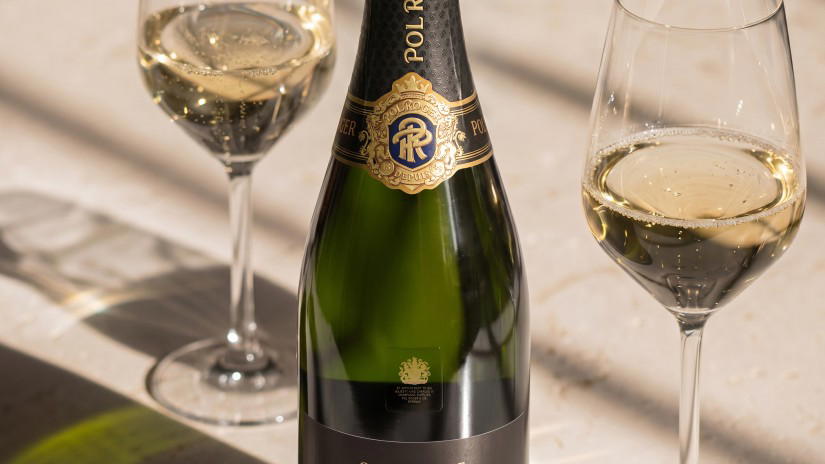
Pol Roger's 2019 vintage Champagne is the first made solely by cellar master Damien Cambres, from a harvest Hubert de Billy calls 'notable.'
Pol Roger's 2019 vintage Champagne is the first made solely by cellar master Damien Cambres, from a harvest Hubert de Billy calls 'notable.'
Frost in April. Mildew through the spring. Hailstorms in August, layered with summer heatwaves. By the time growers in the Marne reached harvest in 2019, yields across the region were down almost 20% on average, a season that, on paper, reads like a write-off.
Instead, Pol Roger has just released its 2019 vintage Champagne, and fifth-generation family member Hubert de Billy calls it "a notable vintage year." It's also the first vintage Champagne made entirely by new cellar master Damien Cambres, who took over from longstanding chef de caves Dominique Petit after Petit's retirement in April 2018.
A brutal growing season, a widely praised result, and a new hand on the blend for the first time, that combination is why this release, out of Pol Roger 's cellars in Épernay, is worth pouring slowly and paying attention to.
Vintage Champagne only happens when a house declares it, skipping the practice in lesser years and reserving it for harvests that earn the distinction. Pol Roger has built an identity around doing this more often than most. According to the house, 15-20% of its annual production comes from a single harvest, compared to around 5% for the Champagne appellation as a whole. That ratio alone tells you how the house thinks about vintage declarations: not as a marketing flourish, but as a core part of what Pol Roger makes. When a year like 2019 comes along, it's not a departure from house style, it's the occasion the whole operation is built for.
Ask any grower in the Marne about 2019 and you'll get a wince before you get a smile. The growing season delivered frost in April, then mildew pressure, then hailstorms in August, layered with summer heatwaves. By the time harvest arrived, yields across the region were down almost 20% on average, a season that punished vineyard managers who weren't paying close attention, row by row.
What saved the vintage was the final stretch. Warm days and cool nights during harvest allowed growers to bring in grapes at optimum ripeness, and Pol Roger has described the resulting wines as showing "rare harmony," citing their "freshness, aromatic richness and notable fruit health." It's a pattern familiar to anyone who follows Champagne closely: a difficult, low-yielding year that concentrates quality in what does make it to the press, provided the harvest window closes cleanly. In 2019, it did.
That's the context Hubert de Billy was responding to when he called it "a notable vintage year", not a wine that overcame adversity despite the growing season, but one shaped by it. Lower yields, when the fruit that survives is this healthy, tend to concentrate flavor rather than dilute it. The house has also flagged the vintage's ageing potential as a strength, which matters directly to anyone deciding whether to drink this now or lay it down.
Dominique Petit retired from Pol Roger in April 2018 after a long tenure as chef de caves, handing the cellar to Damien Cambres. The 2019 vintage is significant for reasons beyond the weather: it's the first vintage Champagne made solely by Cambres, without Petit's hand on the blend. For a house where continuity of style across decades is part of the appeal, where collectors buy Pol Roger precisely because it doesn't reinvent itself vintage to vintage, a cellar master's first unaccompanied release is a genuine inflection point, even if the house's public framing is one of continuity rather than change.

Cambres' own account of the wine leans into specificity rather than abstraction. He described the 2019 Champagne as "dominated by yellow fruits," from pineapple to lemon and peach, "complemented by hazelnut," while also noting red plum. That's a tasting note with real texture to it, the yellow-fruit register (pineapple, peach) suggesting ripeness from the warm harvest days, the hazelnut note hinting at the developing complexity that six years on lees can bring, and the red plum adding a savory counterpoint likely coming through the Pinot Noir.
For collectors, a cellar master's debut vintage is worth tracking for a simple reason: it's the first data point in a new era. Petit's decades of vintages gave Pol Roger drinkers a long baseline to calibrate against. Cambres' 2019 is the first entry in what will eventually be its own arc, and the house's decision to keep the blend architecture, the ageing regime, and the hand-riddling process consistent suggests continuity is the stated intention, even as a new palate now signs off on the final blend.
Pol Roger's 2019 vintage is produced entirely from premier and grand cru vineyards, drawing fruit from three of Champagne's defining sub-regions: the Montagne de Reims, the Grande Vallée de la Marne and the Côte des Blancs. That geographic spread is the backbone of Pol Roger's house style, Pinot Noir-driven backbone from the Montagne and the Marne valley, aromatic lift and chalk-driven precision from the Côte des Blancs' Chardonnay.
The blend itself is 63.5% Pinot Noir and 36.5% Chardonnay, a little more Pinot Noir than the house's usual 60% split. That shift toward Pinot Noir tracks with a vintage where the black grapes evidently performed well enough to earn a larger share of the final assemblage. More Pinot Noir typically means more structure and weight in the mid-palate, which pairs with the vintage's reported "power", a word Pol Roger itself used when discussing the wine's alcohol level.
That figure is worth sitting with: the 2019 vintage carries an average potential alcohol level of 10.7%, ahead of the 10.2% recorded in the 2018 vintage, itself a widely praised year. Pol Roger attributed the higher number directly to "the power of this strong vintage." For readers used to reading Champagne through dosage and acidity alone, potential alcohol is a quieter but telling metric, it reflects just how ripe the fruit was at picking, a direct consequence of those warm harvest days following a stressed growing season.
None of this happens without the underlying geology. The Côte des Blancs sits on the belemnite chalk that gives Chardonnay from the region its laser focus and mineral drive, a character K&L Wines' tasting notes on other Pol Roger vintages have pointed to directly, describing "the pure, aromatic white fruit of the Chardonnay in Champagne and the killer focus, belemnite chalk and laser-like" precision that defines the house's whites. In the 2019 blend, that Chardonnay component, just over a third of the assemblage, provides the counterweight to the Pinot Noir's added share, keeping the wine from tipping into pure weight without lift.
The 2019 vintage has been aged for six years in Pol Roger's cellars, which sit 33 metres below ground in Épernay, and has been riddled entirely by hand, the traditional process of gradually rotating and tilting each bottle to move sediment toward the neck ahead of disgorgement. Pol Roger applies hand-riddling across its entire range, not as a boutique flourish reserved for prestige cuvées, but as a stated house-wide practice.
Six years is a serious commitment of cellar time for a vintage Champagne, well beyond the three-year minimum the appellation requires for vintage-dated wines. That extended lees contact is almost certainly where some of Cambres' reported hazelnut and developing complexity comes from, autolytic character builds slowly, and six years below ground at a constant 33 metres gives the wine time to develop it without losing the fruit definition that made 2019 stand out at harvest.
Depth and consistency of cellar conditions matter here in ways that are easy to underrate. At 33 metres, Pol Roger's cellars maintain the kind of stable temperature and humidity that allows a wine to age slowly and predictably, which is precisely why a house built around vintage declarations invests in that kind of infrastructure. It's not incidental to the story; it's the reason a 15-20% vintage-production ratio is even viable.
Cambres' own description, yellow fruits ranging from pineapple to lemon and peach, hazelnut, and a note of red plum, gives a clear read on where this wine sits stylistically. The fruit register skews toward the riper, more textured end of Champagne's spectrum rather than the green-apple austerity you'd associate with a cooler year. That tracks with everything else about the 2019 growing season: heat stress during summer, warm harvest days, and a potential alcohol level the house itself flagged as unusually high.
At the same time, the six years of lees ageing and the hand-riddling process are pulling in the other direction, adding the hazelnut complexity and presumably fine, persistent mousse that vintage Champagne collectors expect from Pol Roger specifically. The tension between ripe, generous fruit and long, patient ageing is often what separates a good vintage Champagne from a genuinely layered one, and it's the balance Cambres appears to have been aiming for in his first solo blend.
What this debut signals for Pol Roger's future is less about stylistic departure and more about confirmation. The house kept its vineyard sourcing across the Montagne de Reims, Grande Vallée de la Marne and Côte des Blancs unchanged. It kept the six-year ageing regime and hand-riddling intact. The one variable that shifted, the Pinot Noir/Chardonnay ratio, nudged to 63.5/36.5, reads as a response to what the vintage gave Cambres to work with, not a stylistic signature imposed on the wine. That's the reassuring thing a new cellar master can demonstrate on a first solo release: the judgment to let the vintage lead.
For anyone building out a Champagne cellar with vintage-dated bottles, two things about this release matter beyond the tasting note.
First, 2019 is a vintage the house itself is framing in strong terms, "a notable vintage year" isn't language Pol Roger's own family members use loosely, given how selectively the house declares vintages in the first place. Second, this is the first full expression of Damien Cambres' judgment as chef de caves, unaccompanied by Dominique Petit.
Cellar master transitions at historic houses don't happen often, and the debut vintage is always the one collectors and critics return to years later as the baseline for everything that follows.
Champagne's vintage designation system exists precisely to flag years like this, houses aren't obligated to declare a vintage, and most don't in weaker years. Pol Roger's decision to lean into 2019 so heavily, given that vintage releases already represent a larger share of its production than the appellation average, reflects the house's confidence in the harvest.
The 2019 vintage from Pol Roger won't be the last word on Damien Cambres' tenure at the house, it's the first. But first vintages carry a particular weight in Champagne, where reputations are built slowly and continuity is prized above reinvention. Watch how this bottle drinks over the next several years, and watch, too, what Cambres declares next, the true measure of a cellar master's hand is rarely the debut, but what comes after it. If this is the kind of insider detail you look for in a glass, join the club, we'll keep pouring.
It's the first vintage Champagne made entirely by new cellar master Damien Cambres, following Dominique Petit's retirement in April 2018. It also comes from a growing season marked by frost, mildew, hailstorms and heatwaves, yet produced what Hubert de Billy called "a notable vintage year."
Although yields across the Marne fell almost 20% due to frost, mildew and hail, warm days and cool nights during harvest allowed grapes to reach optimum ripeness. Pol Roger felt the resulting wines showed enough "rare harmony," freshness and fruit health to merit a vintage declaration.
Pol Roger declares a vintage far more frequently than most, with 15-20% of its annual production coming from a single harvest versus roughly 5% for the Champagne appellation overall. This makes vintage releases a core part of the house's identity rather than an occasional exception.
Chef de caves Damien Cambres describes it as dominated by yellow fruits, pineapple, lemon and peach, complemented by hazelnut, with a note of red plum. The profile reflects the ripeness gained during the warm final stretch of the 2019 harvest.
Pol Roger has specifically flagged the vintage's ageing potential as a strength, suggesting it rewards patience as well as early drinking. Its concentration, a result of low yields and healthy fruit, supports laying bottles down for further development.
Get the App
Take the shortlist into the En Primeur Club app for concierge access, saved places, and the next step after discovery.
Get Exclusive AccessMore from the editors