← Guides
Liv-ex data shows fine white wine trading has surged 650% since 2010. Here's what's driving it, and where the next opportunities lie.
Liv-ex data shows fine white wine trading has surged 650% since 2010. Here's what's driving it, and where the next opportunities lie.
Red wine's grip on the fine wine secondary market has been loosening for fifteen years. The numbers from Liv-ex make it plain: since 2010, fine white wine trading on the exchange has soared by 650% in value, while red wine trading has dropped by 15% over the same period. That is not a trend. It is a structural realignment, one that is repricing appellations from Pessac-Léognan to the Swartland and forcing collectors to rethink portfolios built almost entirely around Pauillac and Gevrey.
The Liv-ex data deserves a careful read before you draw conclusions. Champagne and sparkling wines have risen by 1,100% over the same period, a more dramatic headline, but that figure masks a pronounced boom-bust cycle since 2020. Fine white wine trading, by contrast, has been steadier: demand held up during the broader market downturn that followed the post-pandemic correction. The trajectory is less volatile, which is precisely what makes it more interesting to collectors building for the long term.
At Bordeaux Index, white Burgundy's share of the company's trade by value has grown from around 2% to around 5% over the past decade, according to investment specialist Geraint Carter, a doubling of its footprint within a business whose clients are, by definition, serious buyers. Carter frames this within the broader fragmentation of the fine wine market, particularly the decline of Bordeaux's historic dominance. But he is measured about what the numbers mean in practice: "This represents meaningful growth, although it shouldn't be overstated. Limited volumes, a highly fragmented product/producer base and agency-led distribution naturally cap the extent to which it can feature in the secondary market," said Geraint Carter.1
The auction data from iDealwine adds texture. The French auction house sold just over 30,000 bottles (scaled to 75cl equivalent) of white Burgundy last year, up 13% on 2024. But average hammer prices fell from €213 to €193 over the same period. Volume is rising; unit prices are softening.
That combination suggests buyers are broadening into the category rather than concentrating spend on trophy bottles, which is a different kind of growth, and a more durable one.
Still, Órlaith Moore Smith, international marketing manager at iDealwine, notes that white wine's volume share at auction dipped slightly, to 20.1% in 2025 from 20.8% in 2024, having risen steadily from 17.7% in 2022. The long-run direction remains upward; the short-run picture is one of consolidation.
Burgundy accounts for 69.3% of white wine trading by value on Liv-ex in 2026. That concentration is both the story's engine and its constraint. The appellations driving secondary market activity, Puligny-Montrachet, Le Montrachet, Corton-Charlemagne, Meursault, produce volumes that were already small before successive vintages of frost, hail, and vine disease pressure reduced allocations further. The practical consequence is that release lists for domaines like Coche-Dury have contracted to quantities that make meaningful portfolio building almost impossible through conventional channels.
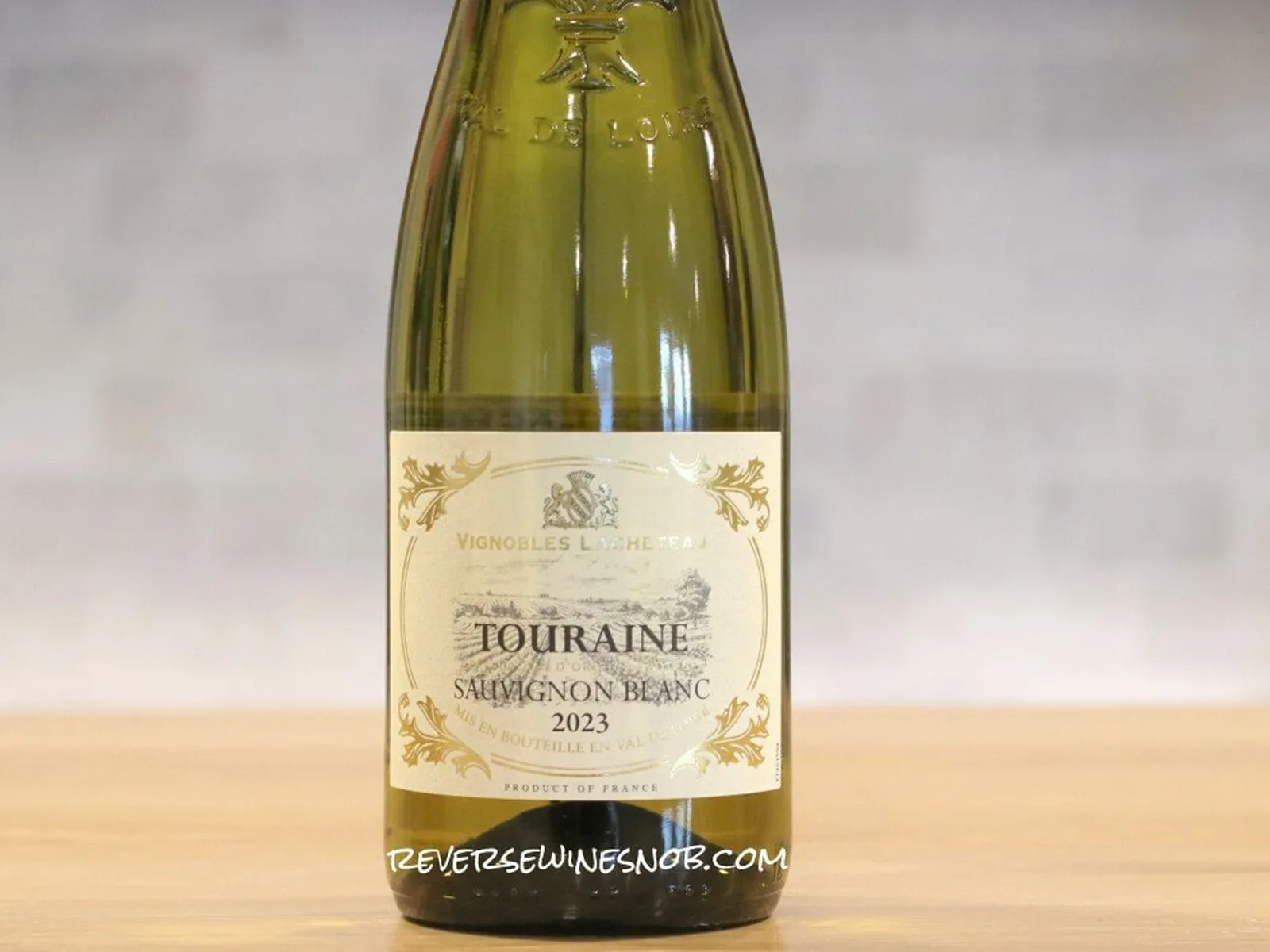
Brett Fleming, MD at Armit Wines, reports persistent collector interest in Puligny, Le Montrachet, high-end Chablis, and Corton-Charlemagne, but also notes that St-Aubin has undergone a quality and demand shift that has moved it firmly into the conversation.
Benjamin Stanley, from Armit's broking department, is more specific about where the pressure is most acute: "Meursault is the one to watch beyond the obvious Montrachet cluster, Coche-Dury in particular commands extraordinary premiums, and the gap between demand and available supply shows no sign of narrowing.
Village-level wines from reliable producers such as PYCM [Pierre-Yves Colin-Morey] and Ramonet are also being absorbed faster than before as buyers seek entry points into the category."
Fleming's broader observation is worth sitting with: the same bottles are being traded with increasing frequency as scarcity intensifies. This is not simply new buyers entering the category, it is existing stock cycling through the secondary market at higher velocity, which is a different kind of demand signal and one that tends to be self-reinforcing as allocations tighten further.
When Burgundy becomes inaccessible, either by price or by allocation, capital moves. The question is where it goes, and the answer in 2025 and 2026 is: almost everywhere. Alex Turnbull, head of fine wine at The Wine Society, has watched this play out in his own sales data. Fine white wine sales at The Wine Society have doubled in four years. "The halo effect of white Burgundy being difficult to secure has been monumental, with regions such as South Africa, Austria, Jura, New Zealand and the Loire benefitting," said Alex Turnbull.2
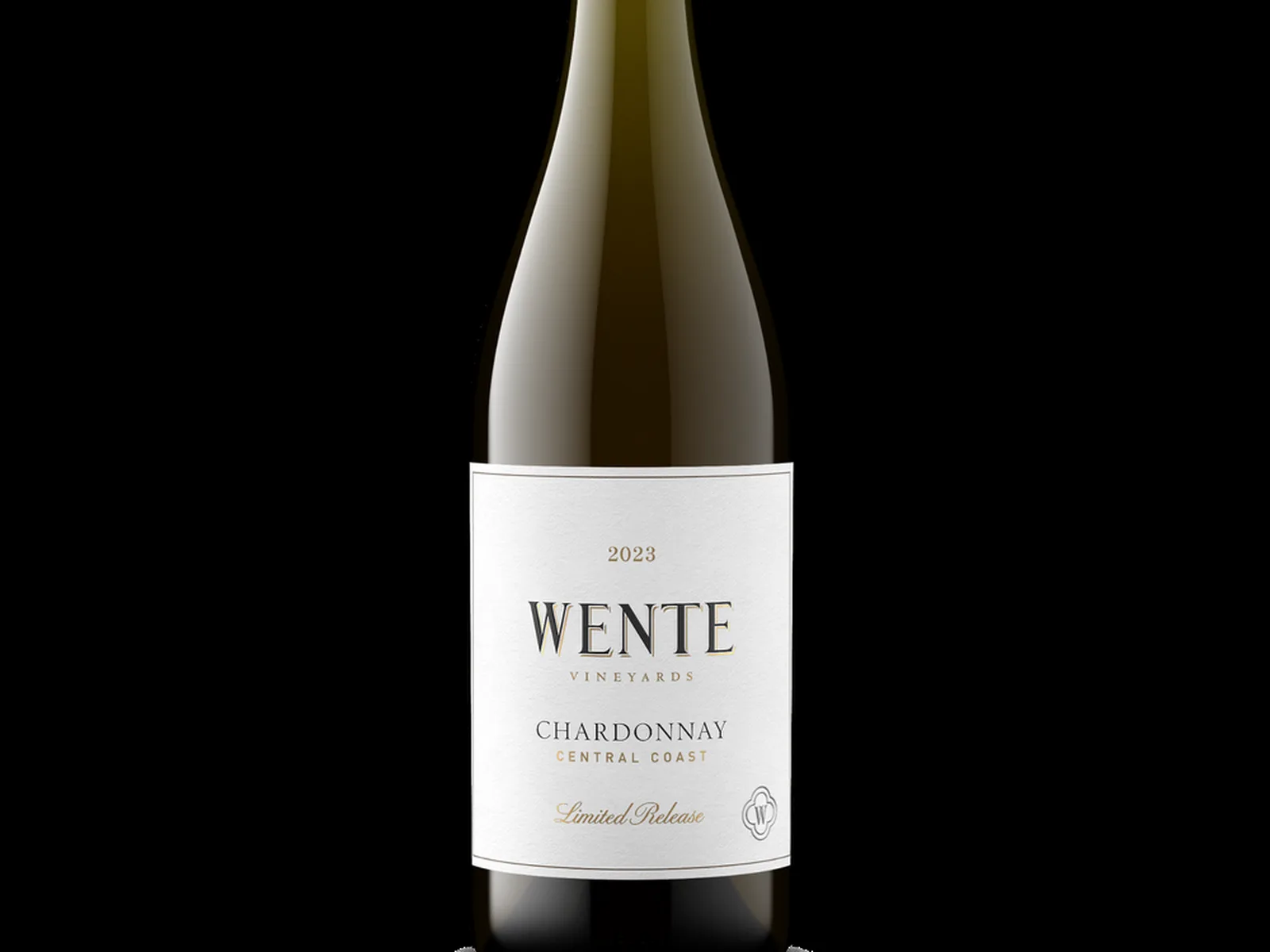
The Wine Society's regional French fine white wine sales have tripled over three years. Fine white Portuguese wines have surged 370% in four years.
White Bordeaux, long dismissed as a category in structural decline, has seen demand at The Wine Society rise by 55% in four years, with Turnbull noting that members are recognising the value proposition in Pessac-Léognan relative to comparable Burgundy.
On Liv-ex, white Bordeaux still holds a 10.5% share of white wine trading by value, though it has suffered a 17.6% decline since 2011.
The auction data and the merchant data are telling slightly different stories: the secondary market has not yet caught up with the primary market recovery, which is precisely the kind of lag that attentive collectors have historically exploited.
Beyond France, the Liv-ex data shows Italy at 4.5% of white wine trading by value, the US at 3.6%, Germany at 3.3%, and the Rhône at 3.2%. These are small shares, but the directional signals are notable. Sophia Gilmour, market analyst at Liv-ex, highlights Antinori's Cervaro della Sala, an Umbrian blend of Chardonnay and Grechetto, as a specific case study in how the halo effect is reaching beyond Burgundy's immediate neighbours. So far in 2026, Liv-ex has seen eight times the volume of Cervaro della Sala traded compared to the whole of 2019. That is not a rounding error.
The iDealwine auction results tell the same story from a different angle. A bottle of Didier Dagueneau's Astéroïde Pouilly-Fumé 2000 sold for €2,066. Klaus Peter Keller's G-Max Riesling Trocken 2021 reached €1,440. A half-bottle of Jean-Louis Chave's Hermitage Vin de Paille 1989 sold for €576. These are not wines that would have cleared those prices a decade ago. The collector appetite for terroir-driven whites with genuine cellaring credentials, outside Burgundy, is now a documented market reality, not a hypothesis.
The supply squeeze in Burgundy explains the urgency. It does not fully explain the breadth. For that, you need to look at who is entering the fine wine market and what they are bringing with them, their taste, their reference points, and their indifference to the red-wine orthodoxy that shaped collecting for most of the twentieth century.
Stanley at Armit identifies a generational dimension that is reshaping the demand side of fine white wine trading in ways that go beyond simple Burgundy substitution.
Younger buyers entering the market are, in his assessment, less anchored to the orthodoxy of red wine as the primary vehicle for fine wine collecting, an orthodoxy that shaped the market for most of the twentieth century.
The on-trade has accelerated this: sommeliers championing Chenin Blanc from the Swartland, Grüner Veltliner from Kamptal, or Fiano from Campania have created a generation of drinkers whose reference points for quality and complexity are not exclusively red and not exclusively French.
Turnbull at The Wine Society frames this more directly: the adage that the leading white wines in the world come from Burgundy, he argues, simply is not true any more. The Dagueneau Astéroïde, the Keller G-Max, the Chave Vin de Paille: these are wines that command prices on the basis of their own quality and scarcity, not as Burgundy proxies.
Fleming at Armit connects the generational shift to the trading data directly: premium whites are now being traded with the same frequency and seriousness as upper-end reds. That normalisation, white wine as a legitimate fine wine asset class rather than a curiosity, is what makes the current moment structurally different from earlier periods of white wine enthusiasm that faded when Bordeaux recovered.
The regions that have already repriced, premier and grand cru white Burgundy, the upper tier of Coche-Dury's Meursault, Domaine Leflaive's Puligny-Montrachet, are largely beyond the reach of collectors who were not already on allocation lists. The more actionable question is where the halo effect has arrived but not yet fully repriced.
Carter at Bordeaux Index identifies the Loire Valley, South Africa, and Germany as categories showing encouraging signs of growing interest, while acknowledging they remain small in secondary market terms. That gap between primary market momentum and secondary market recognition is the window. The Wine Society's 370% surge in fine white Portuguese wine sales over four years, and the tripling of regional French fine white wine sales over three years, suggest that capital is already moving, the secondary market data simply has not caught up yet.
In Pessac-Léognan, the white Bordeaux revival is anchored in estates with long track records for age-worthy Sauvignon Blanc and Sémillon blends. The 55% rise in demand at The Wine Society over four years, combined with the relative underperformance of white Bordeaux on Liv-ex since 2011, creates an unusual situation: primary market demand is recovering faster than secondary market pricing, which historically precedes a correction upward in the latter.
Stanley's assessment of the structural case is precise: the supply dynamics in white Burgundy alone, chronic, worsening, with no obvious resolution, provide a floor under prices across the entire category of terroir-driven fine whites.
Whether the current moment represents a permanent rebalancing or a cyclical correction is, as he puts it, the more interesting question. The Liv-ex data since 2010 points toward the former. The softening of average hammer prices at iDealwine in 2025 suggests the market is pausing to absorb the gains of the previous three years.
For collectors with a five-to-ten-year horizon, that pause is the entry point, not the warning sign.
Get the App
Take the shortlist into the En Primeur Club app for concierge access, saved places, and the next step after discovery.
Get Exclusive AccessMore from the editors