← Guides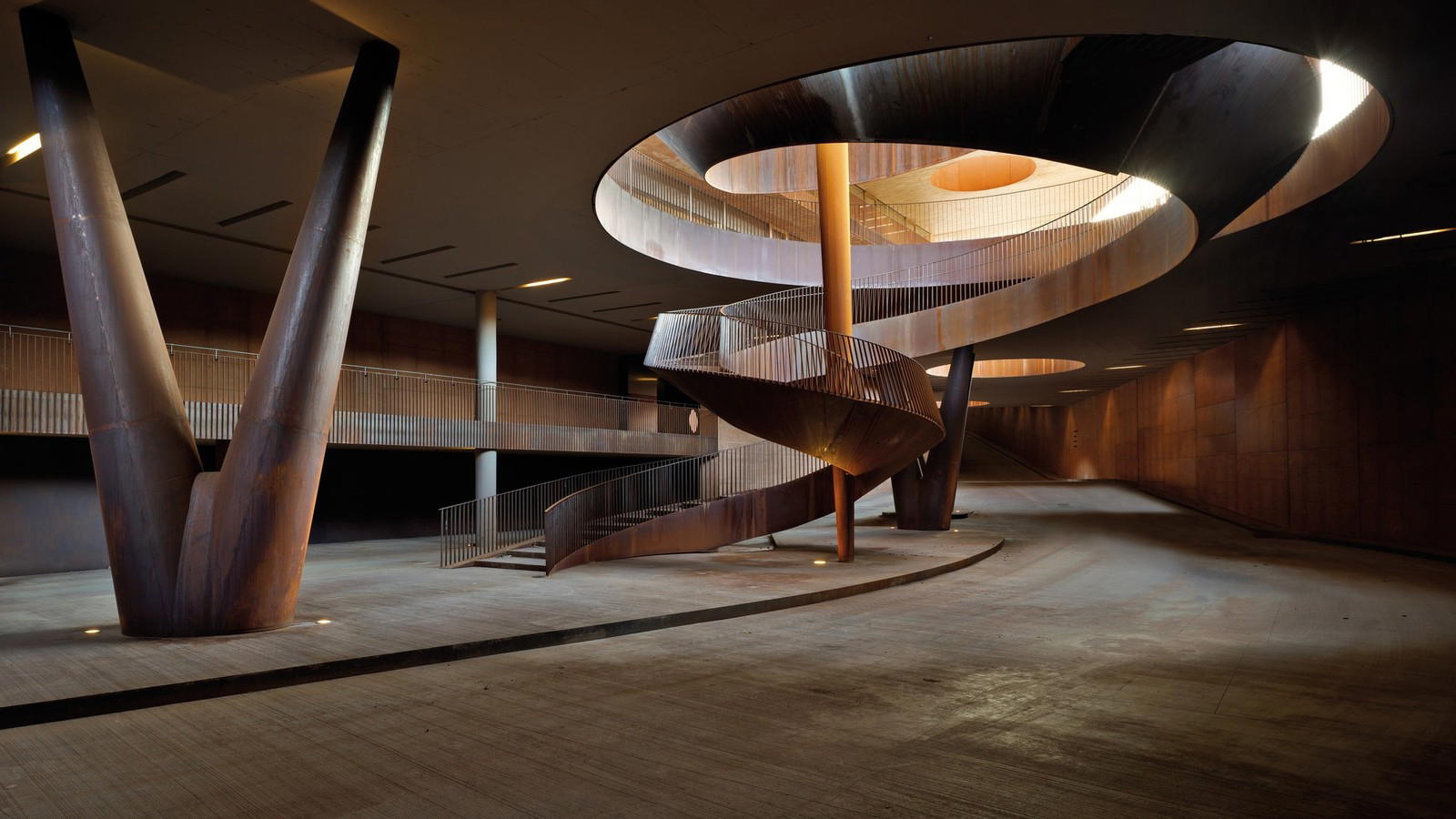
Plan your visit to Antinori nel Chianti Classico in 2026 with this realistic guide, featuring essential tips on tours, tastings, and the winery's dramatic architecture. Experience the heart of Tuscany's wine culture.
Plan your visit to Antinori nel Chianti Classico in 2026 with this realistic guide, featuring essential tips on tours, tastings, and the winery's dramatic architecture. Experience the heart of Tuscany's wine culture.
The Tinaia Tour, the estate's standard guided experience, is priced at €45 per adult, €10 for juniors 17 and under, and free for children 6 and under,1 and the price is the least of your planning concerns. Antinori nel Chianti Classico, the gravity-fed cellar carved into the hillside at Bargino in the San Casciano Val di Pesa commune, is among the more frequently visited wine estates in Tuscany. Walk-in access is limited; particularly sought-after formats book out days to weeks in advance, particularly between April and October. The single best route for most visitors is booking directly through the estate's official reservations page before arriving in the region, not on arrival day.
The estate at Bargino is a gravity-fed cellar built almost entirely underground, with only the rooftop olive grove and a sliver of terracotta visible from the Via Cassia per Siena. The architecture alone draws visitors who have never opened a bottle of Tignanello. Add the Antinori family name, twenty-six generations of winemaking, a portfolio that anchors the Chianti Classico DOCG and extends to Bolgheri, Umbria, and Napa, and you have a destination that competes with Florence's museums for the attention of wine-curious travelers.
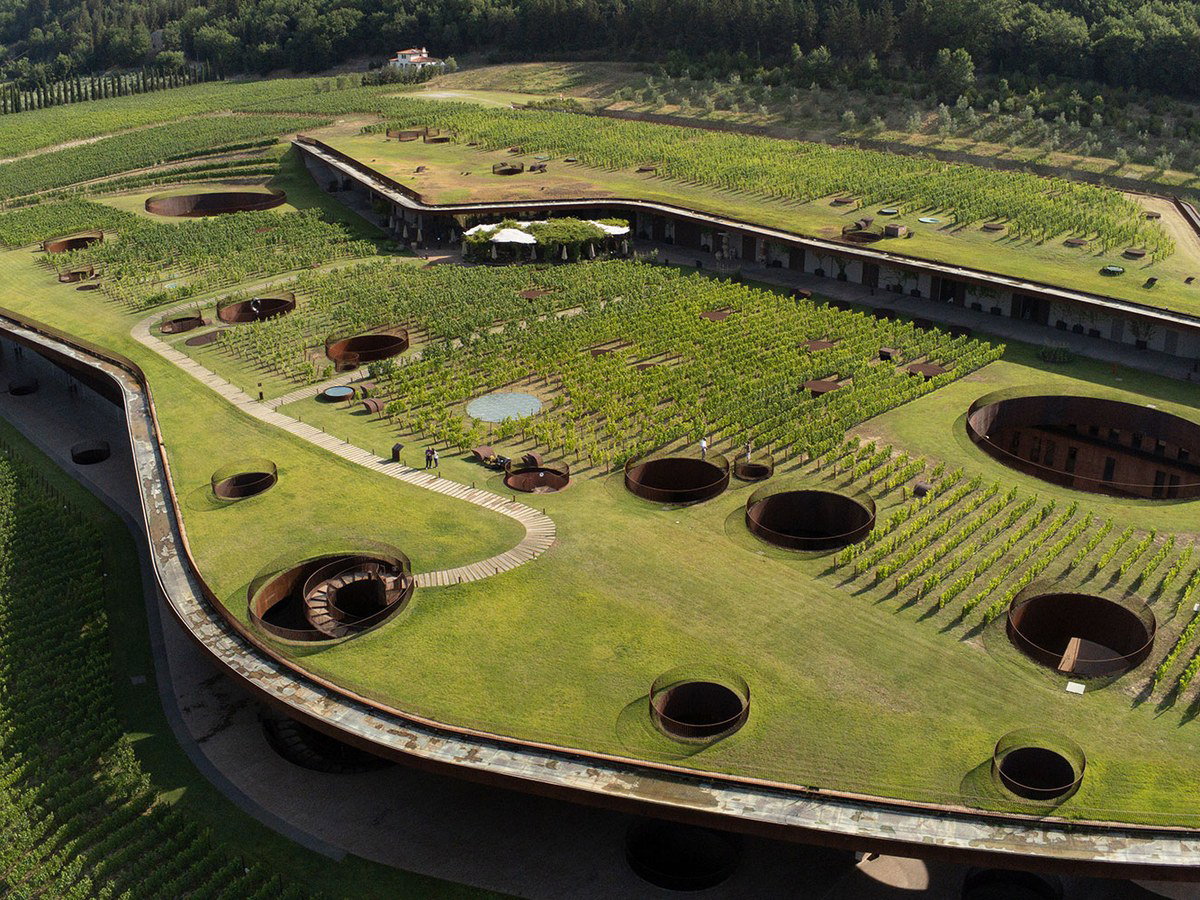
Capacity inside the cellar is finite by design. The tasting rooms, the barrel hall, and the museum spaces were built for immersion, not throughput. Groups are kept small to preserve the atmosphere of the barrel corridors and the underground library. During harvest, typically September into October, the working winery takes priority, and public access narrows further. Confirm current capacity directly with the estate.
The booking calendar on the estate's website appears to update on a rolling basis. The practical implication: check the calendar early and often, especially if your travel dates are fixed. Waiting until you land in Florence to book is a gamble that regularly loses between May and September.
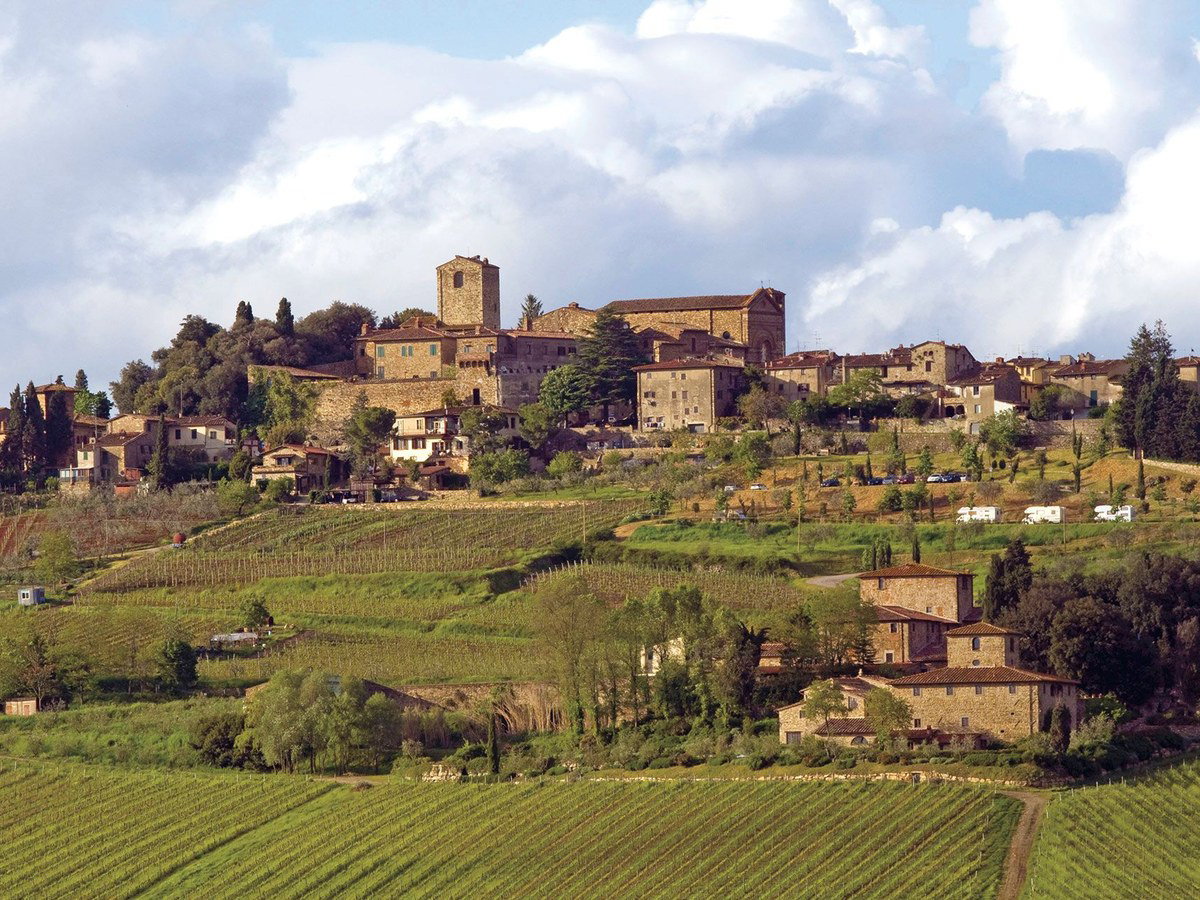
Seasonally, the shoulder months, March, April, and November, offer one breathing room. August sees heavy Italian domestic tourism alongside international visitors; October draws harvest enthusiasts and the Chianti Classico Collection crowd. January and February are quieter, though some tour formats may run on reduced schedules. Confirming which experiences run year-round versus seasonally is worth a direct inquiry before booking flights around a specific tasting. Hours vary by season: April through October, daily 10am-6:30pm; November through March, Monday-Friday 10am-5:30pm and Saturday-Sunday 10am-6pm.2
The estate handles reservations through its own online booking system. The Tinaia Tour can be booked on antinori.it, and booking at least one week ahead is recommended.2 This is a reliable channel, third-party tour aggregators sometimes list the estate but cannot guarantee slot availability or the same format options. Visitors can also reach the hospitality team by phone at +39 055 2359700.3
Visitors can choose between three different types of tours or request a tailor-made experience.4 The Tinaia Tour is the standard entry point; the Bottaia Tour includes a tasting of four wines held in the suspended tasting room or in the exclusive bottaia room.4 Premium formats carry higher fees, confirm current rates on the booking page before planning a budget, as the estate updates its pricing periodically. Payment is by credit card at the end of the reservation process and is not refundable,5 so confirm your dates carefully before completing the booking.
Group bookings, typically defined as eight or more guests, require direct contact with the estate's hospitality team rather than the online calendar. Lead times for groups are longer; reaching out six to eight weeks ahead is prudent for travel between April and October.
What insiders do differently: Regulars who visit the Chianti Classico zone annually tend to book Antinori as the first reservation they make after fixing travel dates, not the last. They also pay attention to the estate's newsletter and social channels, where new format launches or seasonal openings occasionally appear before the booking calendar updates. A second tactic: mid-week slots (Tuesday through Thursday) consistently show more availability than Friday and Saturday, which attract weekend visitors from Florence, roughly 25 kilometres north.
The visitor mix at Antinori nel Chianti Classico skews international and wine-literate.
On any given tour you're likely to share the barrel hall with American and Northern European collectors who have Tignanello in their cellars at home, Italian wine professionals on a busman's holiday, and architecture enthusiasts drawn by the Marco Casamonti-designed building.
The estate's profile means it also attracts a contingent of visitors for whom this is their first serious winery visit, drawn by the Antinori name rather than a deep familiarity with Sangiovese. The guided format handles that range well; the cellar itself does the heavy lifting of setting expectations.
The approach sets the tone before you reach the door. The building emerges from the hillside as a series of horizontal cuts in the earth, terracotta-tiled rooftop planted with olive trees, the facade almost flush with the slope. Inside, the architecture is the first thing you process: a spiral ramp descends through the production levels, barrel halls arranged in curved corridors that follow the contour of the hill.
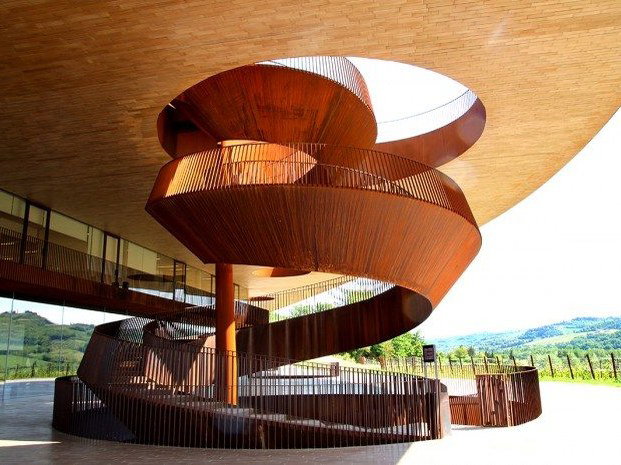
Guided tours move through the working cellar, fermentation tanks, the barrel aging rooms where Tignanello and Solaia spend time in French oak, and the bottle library, which holds back vintages of the estate's flagship wines. The museum section documents the Antinori family's history across six centuries of Florentine and Tuscan wine, with original documents and objects that give the twenty-six-generation claim a physical weight it wouldn't otherwise carry.
The tasting component takes place in dedicated rooms designed for the purpose, not a converted barn or a makeshift table in the cellar, but spaces built to show the wines properly. The Bottaia Tour, for instance, pours four wines in the suspended tasting room or the exclusive bottaia room.4 Depending on the format booked, the flight is anchored by the estate's Chianti Classico DOCG bottlings, potentially including the Badia a Passignano Chianti Classico Gran Selezione, with premium formats offering the Tignanello IGT, the Sangiovese, Cabernet Sauvignon, and Cabernet Franc blend that helped define the Super Tuscan category, first produced in 1971, released 1974. Food pairings, where included, draw on local Tuscan products: cured meats, cheeses, and olive oil from the estate's own groves.
The pacing is unhurried by design. The Tinaia Tour lasts about one and a half hours and includes other guests;5 extended formats with food pairings run longer. Tours are conducted in Italian and English; tours with interpreters can be arranged by prior agreement.5 The cellar temperature stays cool year-round, bring a layer regardless of the season outside. Note also that pets are not allowed anywhere on the premises.5
One practical note on timing within the day: morning slots, where available, tend to offer better light in the above-ground spaces and a quieter cellar before afternoon tour groups arrive. The pattern holds at most high-traffic Tuscan estates. The rooftop vineyard is free to access with no booking needed,2 making it a worthwhile stop even if you arrive early before your tour begins.
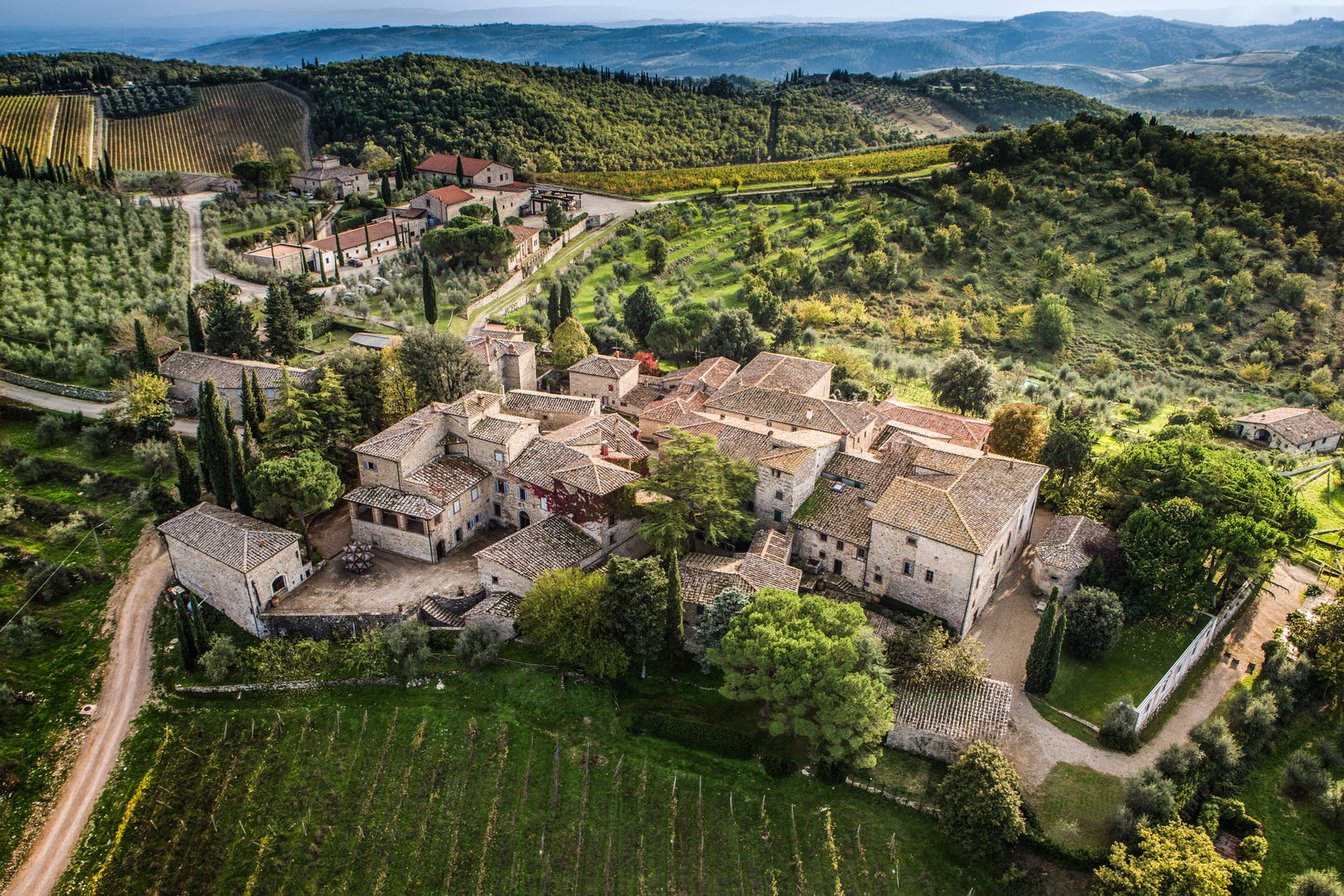
The estate sits just off the Via Cassia per Siena (SR2), along the Firenze-Siena superstrada at the Bargino exit. If you're building a Chianti Classico itinerary, Antinori pairs logically with Castello di Verrazzano to the north or Isole e Olena toward Barberino Tavarnelle to the south. Driving is the practical choice; public transport connections to Bargino are limited.
For collectors specifically interested in Tignanello or Solaia allocations, the cellar visit is not the primary access route to bottles, the estate's allocation and merchant network handles that separately. The visit is an experience in its own right, not a back-channel to the allocation list. If securing a Tignanello allocation is the goal, the route runs through established Antinori importers and fine wine merchants in your home market, not through the tasting room.
The Rinuccio 1180 restaurant must be booked separately from the tour and can be booked on antinori.it; booking at least one week ahead is recommended2 here too, particularly during peak season when lunch reservations fill as quickly as tour slots.
If Antinori's calendar is full for your dates, or if you want to build a multi-estate day, these alternatives cover similar ground with different emphases:
| Estate | Booking Difficulty | Format | How to Book | Key Wine |
|---|---|---|---|---|
| Antinori nel Chianti Classico | Moderate-High (Apr-Oct) | Guided cellar tour + tasting; food pairing formats available; tailor-made on request | antinori.it direct; phone +39 055 2359700 | Tignanello IGT, Badia a Passignano Gran Selezione |
| Castello di Ama | Moderate | Tasting + contemporary art installation tour | Estate direct; advance booking advised | L'Apparita Merlot, Chianti Classico Gran Selezione |
| Fontodi | Moderate | Cellar visit + tasting; Panzano in Chianti location | Estate direct | Flaccianello della Pieve IGT |
| Isole e Olena | Lower | Appointment-based tasting; smaller-scale, producer-led | Direct contact with estate | Cepparello IGT, Chianti Classico |
Castello di Ama, in Gaiole in Chianti, layers a serious contemporary art collection, site-specific commissions by Louise Bourgeois and Anish Kapoor among others, onto a rigorous Gran Selezione program; it's the natural choice if architecture and art are as important as the wine. Fontodi in Panzano anchors the Conca d'Oro, the natural amphitheatre that produces some of the zone's most structured Sangiovese; the Flaccianello della Pieve is the benchmark for what the variety does at altitude. Isole e Olena offers a more intimate appointment-based visit, fewer visitors, more direct conversation about the farming.
The Antinori visit rewards visitors who want to understand the scale and ambition of a major Tuscan wine family, the architecture, the history, the full range from entry-level Chianti Classico through to the Super Tuscans, in a single, well-organized experience. It's the right choice for a first serious Chianti Classico visit, for guests who want a polished, professionally guided format, and for anyone with a specific interest in the Tignanello story told in the place where it's made.
It's less suited to visitors seeking an intimate, producer-led conversation or a spontaneous drop-in. The scale of the operation means the experience is curated rather than improvised. If you want to sit with a winemaker over an unlabeled barrel sample and talk about the 2023 harvest, a smaller estate in Radda or Gaiole will serve you better.
Yes, with the caveat that the effort is front-loaded into the planning stage, not the visit itself. Antinori nel Chianti Classico is one of the few wine estates in Italy where the building alone justifies the trip; the wines and the family history add layers that most cellar visits can't match. The booking process is not complicated, but it requires acting early: the estate's direct reservations page on antinori.it is the only channel that reliably delivers confirmed slots, and mid-week dates in the shoulder months are where availability concentrates.
For collectors, the visit won't unlock a Tignanello allocation, that runs through the merchant network, but it will give the wines a context that changes how you open them at home.
For travelers building a Chianti Classico itinerary, Antinori is a logical anchor around which to arrange smaller, appointment-based visits to estates like Isole e Olena or Fontodi. The combination of architectural spectacle, historical depth, and serious winemaking is not easily replicated elsewhere in the zone.
Those who plan ahead, book the morning slot, and leave the afternoon open for the Chiantigiana tend to leave with the clearest sense of why this corner of Tuscany still commands so much attention.
Walk-in access is limited and unreliable, particularly between April and October when the estate is at its busiest. The estate's tasting formats are structured and guided, which means they run on a schedule rather than on demand. Booking in advance through the estate's official website is strongly advised; arriving without a reservation risks being turned away entirely. Note that the rooftop vineyard is free to access with no booking needed, so there is at least one element of the estate you can experience without a prior reservation.
The Tinaia Tour is priced at €45 per adult and €10 for juniors 17 and under; children 6 and under enter free. Payment is by credit card at the end of the reservation process and is not refundable, so confirm your travel dates carefully before completing the booking. A separate pricing page on antinori.it lists €50 per adult, confirm the current rate directly on the booking page before reserving, as the estate updates its pricing periodically.
Tignanello IGT appears in some of the estate's premium tasting formats, but not necessarily in the standard Tinaia Tour. The format you book determines which wines are poured. Check the current format descriptions on the estate's booking page, or contact the hospitality team directly to confirm which bottlings are included before reserving.
The estate is located at Bargino in the San Casciano Val di Pesa commune, about 25 kilometres south of Florence via the Firenze-Siena superstrada. Driving is the practical option; the journey takes roughly 30 minutes by car. Public transport connections to Bargino are limited, so visitors without a car typically arrange a private transfer or join an organized tour from Florence.
Yes. The guided format is designed to work across a range of wine knowledge, and the cellar architecture and family history provide context that makes the visit accessible regardless of prior familiarity with the appellation. That said, visitors with existing knowledge of Sangiovese, the Chianti Classico DOCG, and the Super Tuscan category will find additional layers to engage with, particularly in the museum section and in conversation with the guides. Tours run in Italian and English, with interpreter arrangements available by prior agreement.
Get the App
Take the shortlist into the En Primeur Club app for concierge access, saved places, and the next step after discovery.
Get Exclusive AccessMore from the editors