← Guides
From Mount Edelstone’s 1952 label decision to Tolpuddle’s 1988 plantings, 13 Australian single-vineyard sites reward close reading.
From Mount Edelstone’s 1952 label decision to Tolpuddle’s 1988 plantings, 13 Australian single-vineyard sites reward close reading.
Mount Edelstone is the Australian single-vineyard reference point that still sets the pace. In 1952, Cyril Henschke put a 16ha Eden Valley vineyard on a Shiraz label and changed the grammar of Australian fine wine. Mount Edelstone made site, rather than blend or reserve tier, the headline, and the 70th vintage is the 2022 release, 70 years after the 1952 debut, already released. For collectors, the attraction remains concrete: a defined parcel, a recognisable vineyard character and the discipline to let one place speak.
Start here if you want the short list: these are the Australian single-vineyard names, regions and site markers to keep beside your next allocation offer or restaurant list.
| Vineyard / wine | Region | State | Variety or style | Site marker |
|---|---|---|---|---|
| Mount Edelstone Vineyard (Eden Valley) | Eden Valley | South Australia | Shiraz | Australia’s pioneering named-source Shiraz benchmark |
| Hill of Grace Vineyard (Eden Valley) | Eden Valley | South Australia | Shiraz | Ancient-vine Shiraz source of extremely limited production |
| Tolpuddle Vineyard (Coal River Valley) | Coal River Valley | Tasmania | Chardonnay and Pinot Noir | Cool-climate site for structured, ageworthy wines |
| Centenary Hill (Barossa) | Barossa | South Australia | , | Barossa vineyard name visible in the early-1980s single-site wave |
| Steingarten (Barossa) | Barossa | South Australia | , | Barossa site associated with the rise of named-vineyard labelling |
| St Hallett Old Block Shiraz (Barossa) | Barossa | South Australia | Shiraz | Barossa Shiraz tied to the focus on key vineyard sources |
| Yangarra High Sands (McLaren Vale) | McLaren Vale | South Australia | Grenache | Elite single-location Grenache from Blewett Springs |
| Cullen Vineyard (Margaret River) | Margaret River | Western Australia | Biodynamic viticulture | Margaret River vineyard planted in 1971 |
| Graveyard Vineyard (Hunter Valley) | Hunter Valley | New South Wales | Shiraz | Hunter Valley Shiraz source associated with Brokenwood Graveyard Vineyard Shiraz |
| Vasse Felix Home Vineyard (Margaret River) | Margaret River | Western Australia | Cabernet Sauvignon and Malbec | Home vineyard fruit produces Tom Cullity |
| Clarendon Vineyard (Clarendon) | Clarendon | South Australia | Shiraz, Cabernet Sauvignon and Grenache | Historic Clarendon vineyard revived by Toby Bekkers over five years |
| Lenswood Vineyard (Lenswood) | Lenswood | South Australia | Chardonnay | About 4,800 vines per hectare used to reduce crop load |
| Powderbark Vineyard (Frankland River) | Franklin River | Western Australia | Mourvedre, Grenache and Shiraz | Ironstone gravel hilltop planted to bush-vine Mourvedre alongside Grenache and Shiraz |
Mount Edelstone is the place to begin, historically and in the glass. Rocky red loam, an east-facing slope at 400m and a decision made in the 1950s still give the vineyard its authority. Ronald Angas planted only Shiraz here in 1912, resisting the Barossa habit of mixing several varieties, before Cyril Henschke recognised that the site carried a character worthy of its own label.
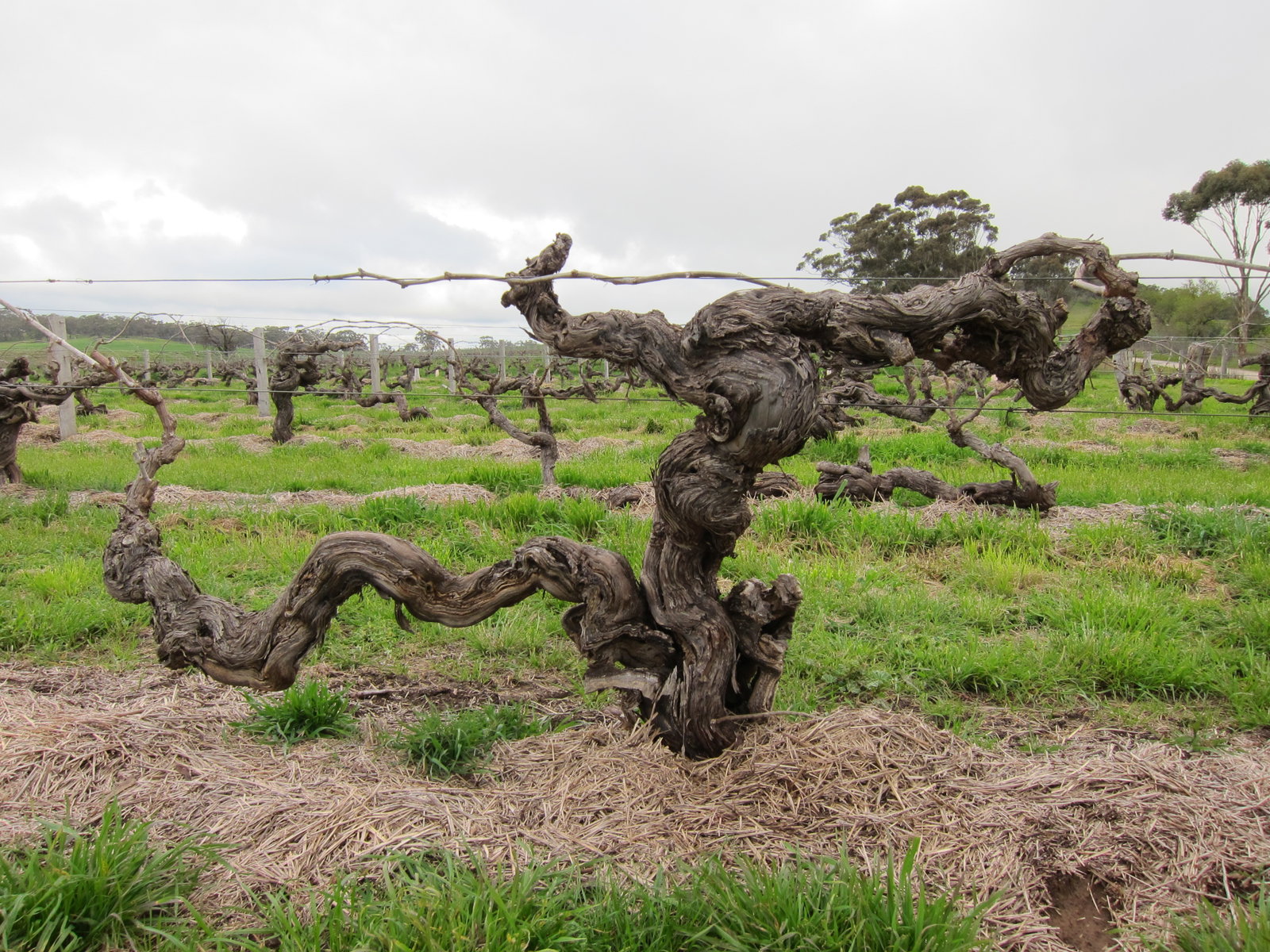
Henschke purchased the vineyard in 1974. Today, Prue Henschke tends 1,300 old vines across 11 blocks using biodynamic practices, with Blocks G and H in the lower southeast portion especially prized by the winemaking team. Her 1989 introduction of an upright trellis system brought more even light to the fruit and sharpened the wine’s definition.
“This had an immediate effect on the wines,” she says. “It amplified colour and brought great clarity and purity to the fruit flavours and subtle aromas. Vineyard attention led to sharper wine definition.” At a February 2026 tasting in the historic cellars at Keyneton, key vintages from 1952 to 2022 showed the sprightly, lean 1958; gentle tannins; red earth and red spice in warmer years; and sage and bay leaf over blackberry and black pepper in cooler seasons. If you are choosing by season, look to warmer years for red earth and red spice, and cooler years for that herbal line over dark fruit.
Hill of Grace is the Eden Valley counterpoint for collectors who value rarity as much as contour. Scarcity gives Hill of Grace its first pull; ancient vine material gives it the deeper one. Cyril Henschke followed Mount Edelstone with a second single-vineyard Shiraz within six years, drawn from a small Eden Valley source and commanding a higher price because production was so limited.
The vines stand on original rootstock, among the rare survivors untouched by phylloxera. Clay-rich alluvial soils lie under fine, sandy-silty loam, while organic composting and mulching support microbial life and vine health. Each portion is handpicked at different times around the full moon at Easter, markedly later than neighbouring Eden Valley and Barossa vineyards.
Yields sit at about 2.5 tonnes of tiny berries per hectare, compared with roughly 4 tonnes at Jim Barry’s Armagh vineyard, another highly regarded South Australian Shiraz site. In bottle, Hill of Grace builds slowly: dark, inky and coiled, with 2010 and 2015 capturing dried sage, Chinese five spice and black pepper over blackberry, dark plum and juicy cranberry. Put this in the cellar when you want a Shiraz that reveals itself by degrees rather than volume.
Tolpuddle is the Tasmanian name to watch if your palate leans toward acidity, tension and cool ripening rather than Barossa depth. The vineyard was planted to Chardonnay and Pinot Noir in 1988, and Michael Hill Smith MW and Martin Shaw acquired it in 2011 with the sense that a respected site still had another level to reach.
“It has that special something,” says Hill Smith, one of the five Co-Chairs at the Decanter World Wine Awards. “Tolpuddle has deliberate focus, but we felt it could be significantly better.” The revitalisation was practical and precise: a dam to manage frost, soil ripping between rows to ease compaction in silica-rich, stony ground, and new clones introduced through more intensive plantings to build flavour and texture.
Chardonnay won early acclaim, while Pinot Noir needed patience as clonal diversity from newer vines reached maturity. “Pinot Noir is capricious,” says Shaw. “It reacts so sensitively to vintage and yield differences that it took time for Tolpuddle Pinot Noir to show site familiarity, but we have now arrived at a strong place.” The wines’ prominent acidity comes from a ripening season that is typically cold and dry. Choose the Chardonnay for one immediate read on the site; follow the Pinot Noir as the newer clonal material continues to settle into maturity.
Centenary Hill debuted in 1998. For Barossa drinkers, the useful cue is simple: the wine narrows the lens from regional reputation to specific ground, so track it alongside other named Barossa sites rather than treating it as generic regional Shiraz.
Steingarten belongs to the same movement toward naming the vineyards behind serious Australian wines. Once a site earns space on the label, you can ask the better question: who made the wine, where was the fruit grown, and why did that place merit separation?
Old Block Shiraz gives the Barossa side of this story a direct, evocative name. By the early 1980s, St Hallett’s wine was among the Australian examples drawing attention to key vineyard sources, making it a useful reference point when you are tracing how Barossa producers began foregrounding vineyard origin.
Yangarra High Sands is the Grenache to track from Blewett Springs. The wine comes from a 1.7ha block of deep, ancient sand, where the late Peter Fraser recognised after the 2010 vintage that bush vines planted in 1946 were delivering fruit with unusual delicacy and intensity. He argued for a separate, single-location bottling.
At that moment, no one else in Australia had placed Grenache quite so high. High Sands helped open international attention to a broader league of McLaren Vale Grenache, while a 15-vintage retrospective proved how subtly the parcel reflects seasonal variation. “I always knew this block was special. I had something that everyone else wanted, so I gave it my best attention,” Fraser said at the tasting.
Minimal-intervention winemaking is central to the wine’s poise. The 2024 High Sands Grenache shows wild herbs, fresh plum and wild raspberry, then gathers itself around a lean, complex mid-palate with a fine-boned frame and long persistence. If you usually file Australian Grenache under warmth and generosity, this is the bottle to taste for sand, restraint and line.
Cullen’s Margaret River vineyard, planted in 1971, brings biodynamic viticulture into the heart of Australia’s site conversation. For the drinker, the point is how the estate ties site identity to long-term stewardship through the vineyard itself.
Biodynamics here is part of the site’s fine-wine identity, placing Cullen among the Australian vineyards whose value is bound to continuity in the vineyard. Track it when you want Margaret River seen through farming practice as much as through Cabernet structure.
Cabernet Sauvignon and Malbec from the Vasse Felix home vineyard produce Tom Cullity, one of Margaret River’s key statements of place. The wine places site specificity inside a Bordeaux-variety frame while remaining unmistakably Western Australian in its logic: a home vineyard, a defined source and a name that keeps estate history close to the bottle. Reach for it when you want the single-vineyard idea expressed through Cabernet Sauvignon and Malbec rather than Shiraz or Grenache.
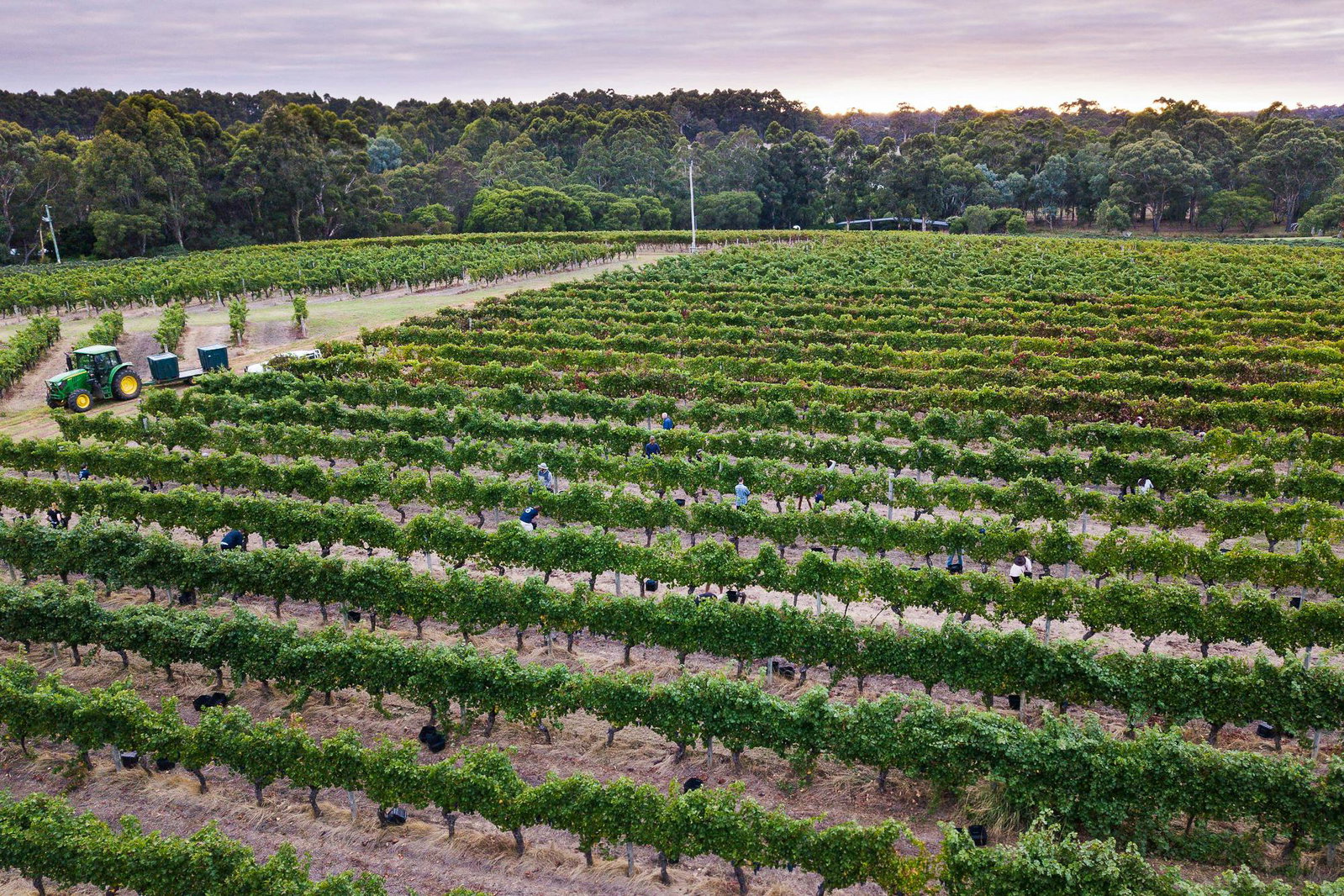
Brokenwood’s Graveyard Vineyard Shiraz anchors the Hunter Valley in Australia’s single-site canon. It gives the country’s Shiraz story a different cadence from Barossa muscle or Eden Valley lift, so use it as the Hunter Valley reference when comparing how one grape changes across named Australian vineyards.
Clarendon Vineyard brings resurrection into the story. Toby Bekkers spent five years reviving a site planted between 1842 and 1848, once the poster-site of South Australian wine and later derelict through neglect from the 1970s onward.
Bekkers Wines now produces single-site Clarendon Vineyard Shiraz, Cabernet Sauvignon and Grenache. This is a living source for several red varieties at a high level, with 19th-century planting history and contemporary revival work in the same glass. If provenance matters to you, this is the site to follow.
Shaw & Smith’s Lenswood Vineyard shows how modern viticultural design can stand alongside ancient-vine romance. Intensive planting at about 4,800 vines per hectare naturally reduces crop load, and the resulting Chardonnay has become a clear example of research-led site work. Watch this wine when you want Chardonnay shaped by planting density and crop control rather than old-vine narrative.
At Swinney’s Powderbark vineyard, an ironstone gravel hilltop carries bush-vine Mourvedre beside Grenache and Shiraz. Winemaker Rob Mann produces three single-variety wines from the family site, allowing the same ground to be read through different red grapes.
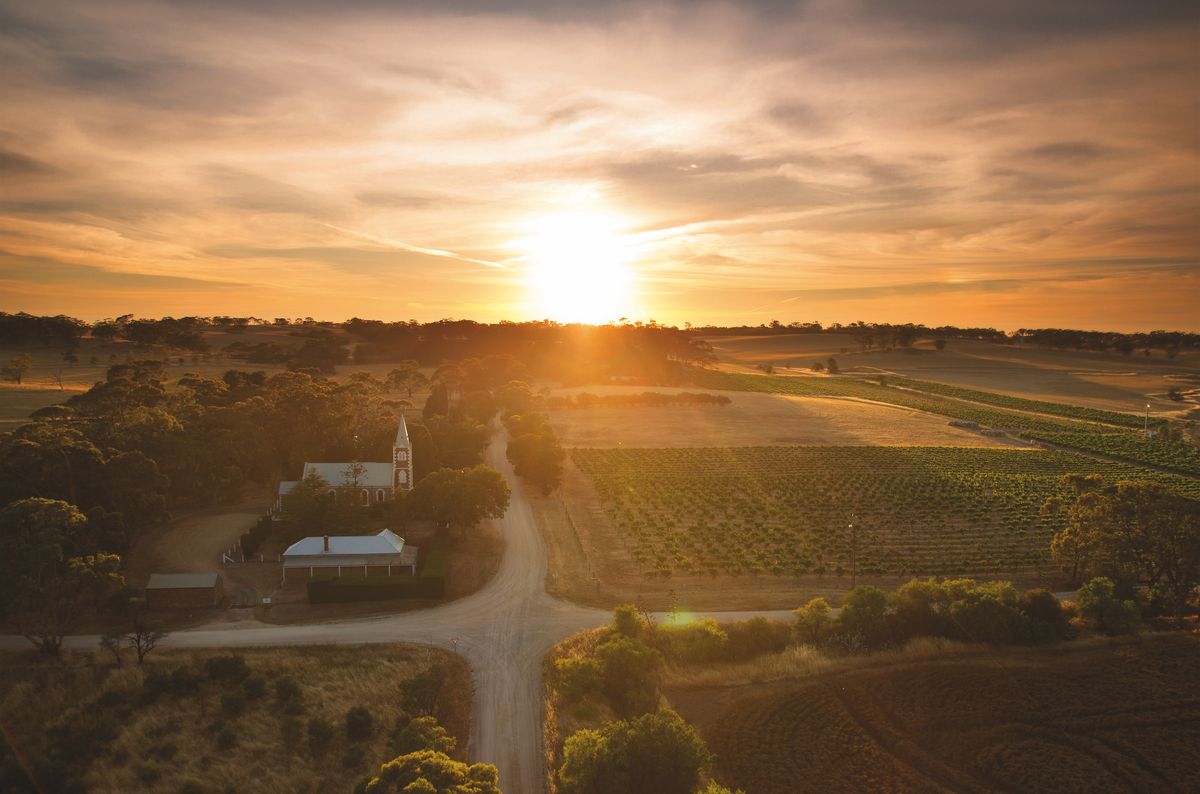
Powderbark lets each variety articulate the hilltop’s structure and finesse. It also pushes Western Australia’s fine-wine map beyond Margaret River, giving Franklin River a tangible, site-specific claim. Taste the three single-variety wines side by side if you want the clearest read on how Mourvedre, Grenache and Shiraz each handle the same ironstone gravel hilltop.
Australia’s great blends still matter: Penfolds’ Grange, Yalumba’s The Signature, Hardy’s Eileen Hardy and Wendouree’s wines remain part of the country’s fine-wine vocabulary. The practical shift for collectors is that named vineyards now stand beside them, from Henschke’s pioneering labels to a new generation of micro-site work.
Alkina captures the contemporary end of that evolution. After Alejandro Bulgheroni bought the Barossa’s Greenock site in 2015, Chilean soil expert Dr Pedro Parra identified different soil outcrops across the 43ha vineyard.
Those “polygons” now supply tiny parcels vinified separately in concrete vessels, without oak influence; Polygon 1 Shiraz comes from six rows of 70-year-old vines in granite-flecked schist and iron-rich clay over limestone. If you want one granular expression of this movement, follow the polygon bottlings for soil, row and vessel detail.
Parra’s view is unequivocal: “These are all significant micro-sites, all with significantly different geologies that introduce vastly different characteristics in the wine, and it would be a crime if they were not identified individually and celebrated.”
Bastard Hill adds another lesson in site rescue. The 13ha Yarra Valley vineyard, planted in the 1980s by Ray Guerin, rises from 300m to 400m above sea level on gradients of up to 32%, with red basalt tracing volcanic activity from 500 million years ago. Giant Steps Wine, owned by Jackson Family Wines, purchased it in August 2022 and began extensive restoration; the 2023 Bastard Hill Chardonnay quickly proved that serious vineyard work can return a neglected site to the highest conversation. For a current release cue, track Bastard Hill Chardonnay as evidence of how fast restoration can show in the glass.
The next phase belongs to producers who can make place repeat itself across vintages: labels that keep naming the ground, vertical tastings that test those claims, and viticulturists whose decisions make a vineyard easier to read each time the cork comes out.
They focus on one named site rather than a broader regional, multi-vineyard or multi-variety blend. Soil, vine age, exposure, farming and continuity of fruit source become central to the wine’s identity.
The clearest early marker came when a specific vineyard source was placed on a Shiraz label, with wider visibility among elite producers following in later decades.
Chardonnay, Pinot Noir, Grenache, Riesling, Semillon, Cabernet Sauvignon, Malbec and Mourvedre all show how broad the category has become. Lenswood adds a Chardonnay-focused example within that wider movement.
A 4ha portion of the vineyard supplies Hill of Grace Shiraz.
Particularly compelling regions combine distinctive soils, serious viticulture and producers willing to bottle place with precision rather than relying on broad appellation character.
Get the App
Take the shortlist into the En Primeur Club app for concierge access, saved places, and the next step after discovery.
Get Exclusive AccessMore from the editors