← Guides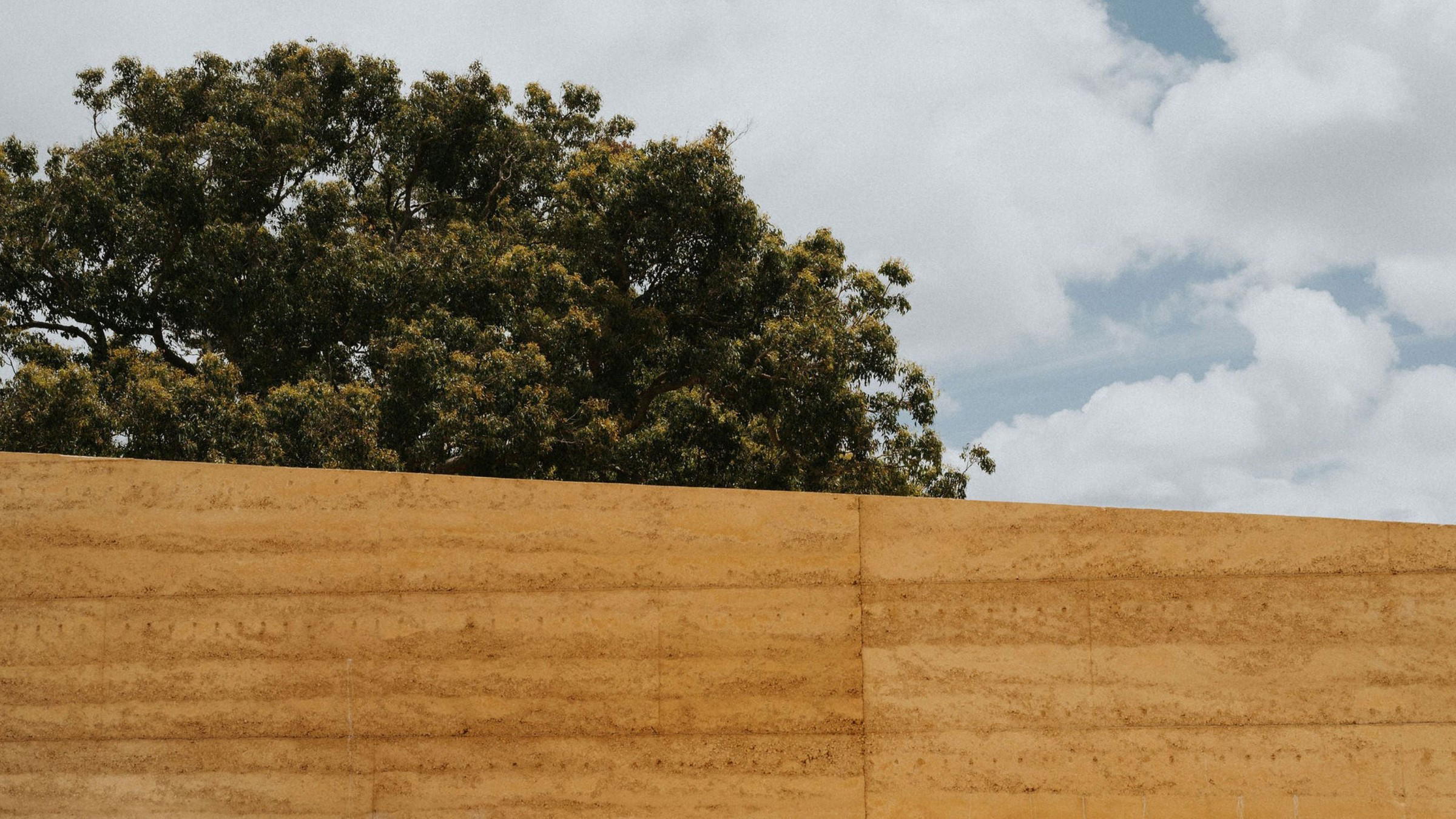
Wayfinder Wines opens in Cowaramup this August, an off-grid winery and 60-seat farm restaurant with chef Brendan Pratt (Fat Duck, The Ledbury) at the stove.
Wayfinder Wines opens in Cowaramup this August, an off-grid winery and 60-seat farm restaurant with chef Brendan Pratt (Fat Duck, The Ledbury) at the stove.
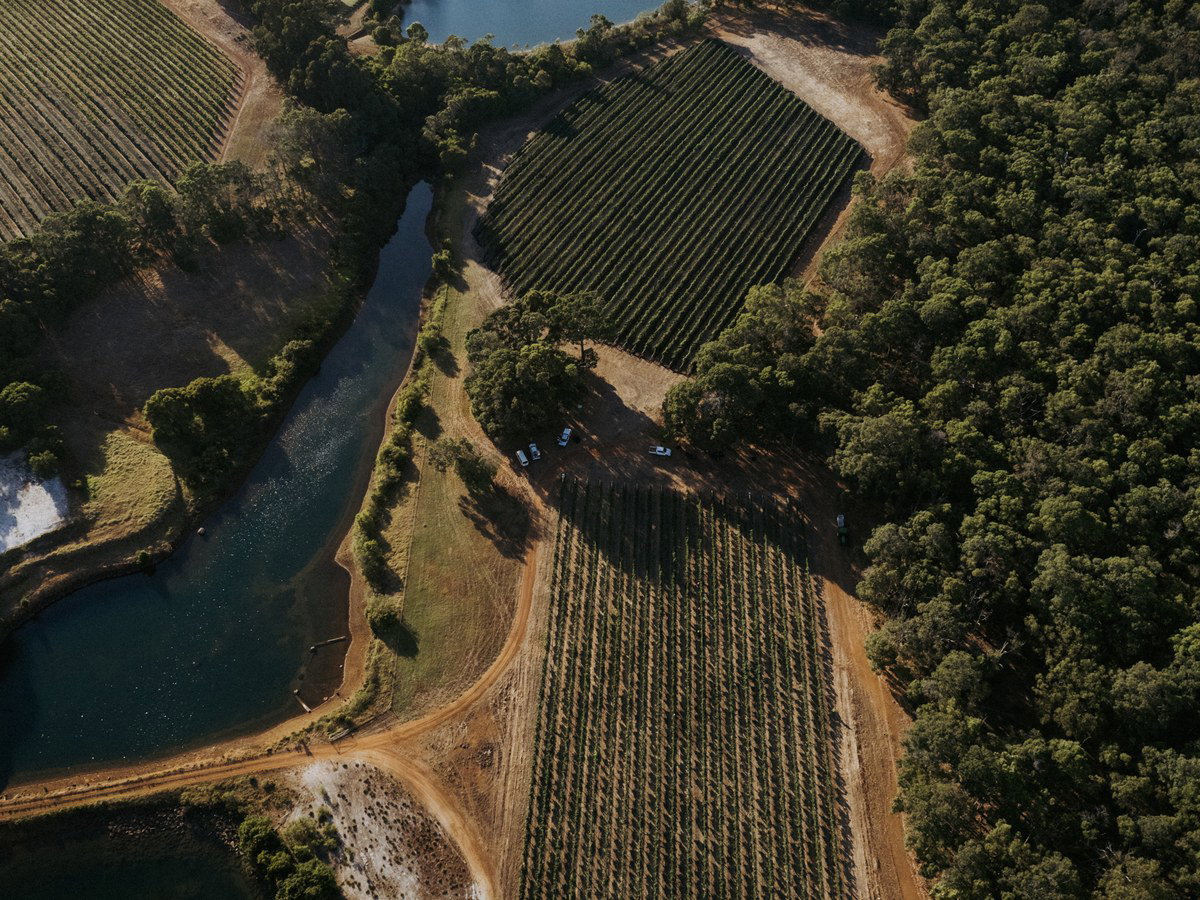
When Brendan Pratt walked the Cowaramup estate in March, he found a dam that had been converted into a gravity-fed winery, 0.4 hectares of market garden already in production, and a solar-powered property running entirely off-grid. He took the job.
This August, Wayfinder Wines opens its 60-seat farm restaurant in Margaret River, with Pratt, whose two-decade career spans Heston Blumenthal's The Fat Duck, The Ledbury in London, and Vasse Felix, leading the kitchen.
A chef with that formation arriving at a new estate with its own regenerative produce supply and a winemaker returning from a decade abroad is not a combination Margaret River sees often. The booking window opens before the first vintage is even in bottle.
The Cowaramup estate that houses Wayfinder Wines is not a greenfield hospitality project dressed up in sustainability language. By the time Pratt visited in March, the infrastructure was already in place: a 0.4 hectare market garden planted and producing, established vineyards under organic and regenerative management, and a former dam converted into a gravity-fed winery, using natural elevation rather than pumps to move juice through the cellar, which is gentler on the grapes and draws less energy. The entire property runs on solar power and operates off-grid.
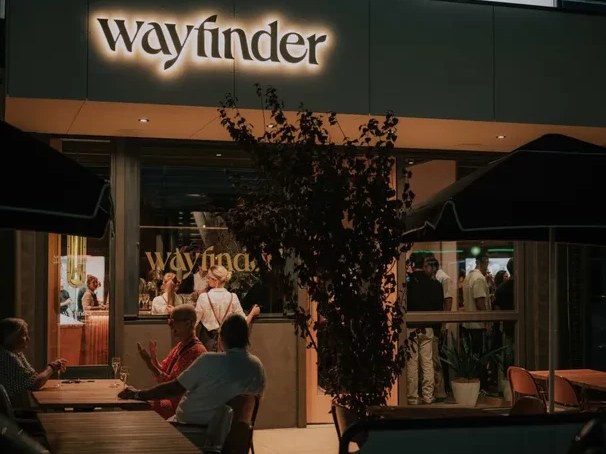
The dining room was designed by Kerry Hill Architects, the Perth practice behind the State Buildings, Walyalup Koort, and the State Theatre Centre, using rammed earth walls and timber salvaged directly from the property. The result is a 60-seat space that reads as an extension of the land rather than a structure imposed on it. Wayfinder Winery & Farm Restaurant is due to open in August, and the team assembled to run it suggests the ambitions extend well beyond a standard cellar-door lunch.
Overseeing the project is CEO Paul McArdle, whose background includes consulting to Perth's Must Winebar, one of the city's most enduring wine institutions. Winemaker Andrew Trio is locally raised and returns to the southwest after a decade making wine in America. Restaurant manager Cat Houlberg comes from Old Young's Kitchen in the Swan Valley.
Gardeners Amy Dyson and Bec Davie both worked at Glenarty Road in Karridale, the farm-to-table operation that has set the benchmark for produce-driven dining in the Margaret River region.
Each appointment signals the same thing: Wayfinder has recruited people who understand the specific demands of place-based hospitality in southwest WA, not generalists parachuted in from elsewhere.
Brendan Pratt's trajectory is the kind that makes a regional appointment genuinely notable. His two-decade career includes time at The Fat Duck under Heston Blumenthal and The Ledbury in London, kitchens where technique is non-negotiable and the margin for imprecision is essentially zero.
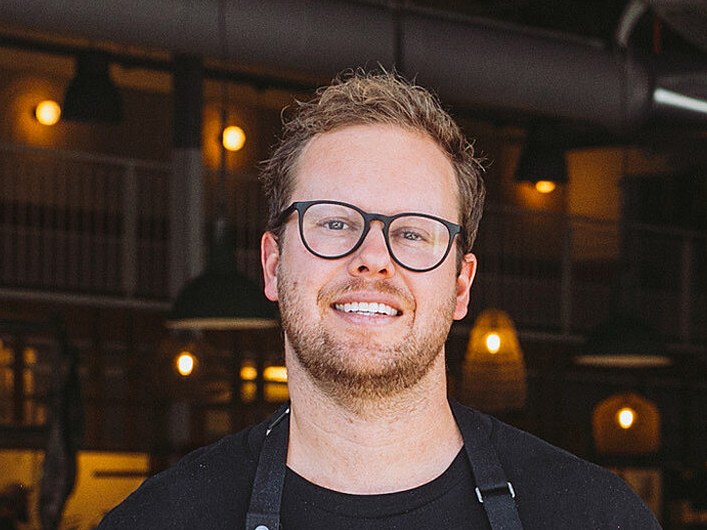
He then brought that discipline back to Western Australia, working at Vasse Felix before taking on the role of culinary director for the Parker Group, where his brief ranged from pub menus to fine dining across multiple venues.
That breadth matters at Wayfinder, where the offering deliberately spans a formal tasting menu, à la carte dining, and a casual lawn menu for families arriving from the beach.
What drew Pratt to the project was not just the infrastructure. When the Wayfinder team showed him around the estate, he noted that their commitment to regenerative and low-impact practices came without the ideological rigidity that can make sustainability-focused hospitality feel prescriptive.
As Pratt described it, the approach was more "this is how we think we'll get there" than "this is how it's going to be done", a flexibility that, in his view, is rarer in hospitality than it should be.
That openness, combined with the estate's existing investment in soil health and off-grid infrastructure, gave him the platform to build a kitchen program that is genuinely connected to the land rather than merely adjacent to it.
For collectors and wine-focused travelers, Pratt's presence at Wayfinder raises the stakes in a specific way. Margaret River already has serious dining, Vasse Felix's restaurant, Leeuwin Estate's long-running lunch program, and a handful of producers with strong cellar-door food offerings.
But a chef with Pratt's European fine-dining formation arriving at a new estate with its own regenerative produce supply and a winemaker returning from a decade abroad is a different proposition.
The kitchen and the winery are being built simultaneously, which means the food and wine programs can be calibrated to each other from the ground up rather than retrofitted.
The gravity-fed winery at Wayfinder is worth dwelling on, because it shapes the wine style as much as any varietal decision. Converting a dam into a functional winery using natural elevation to move juice, rather than pumps, reduces mechanical intervention at particularly critical moments in fermentation.
For collectors who follow minimal-intervention producers, this is the kind of infrastructure choice that tends to show up in the glass: wines with more textural integrity, less oxidative stress on the fruit, and a cleaner expression of the site's character.
Andrew Trio spent a decade making wine in America before returning to the southwest, that international formation, now applied to Cowaramup fruit under regenerative viticulture, is a combination that will take a vintage or two to fully read. The structural conditions for wines worth adding to your watchlist are already in place.
The 0.4 hectare market garden feeds directly into the kitchen, and the vineyards are managed under organic and regenerative practices, no synthetic inputs, with soil biology treated as a long-term asset rather than a production variable.
Gardeners Amy Dyson and Bec Davie bring specific expertise from Glenarty Road in Karridale, which has spent years refining the relationship between garden production and restaurant menu in a similar southwest WA context.
That institutional knowledge is not easily replicated, and its presence at Wayfinder from day one suggests the kitchen garden will be a genuine production asset rather than a decorative gesture.
Margaret River's climate, long, dry summers moderated by the Indian Ocean, with reliable winter rainfall, is well suited to both organic viticulture and year-round kitchen gardening.
The region's Cabernet Sauvignon and Chardonnay have long attracted international attention, and the shift toward regenerative practices among its producers reflects a broader recognition that the region's soils are a competitive advantage worth protecting.
Wayfinder's off-grid solar infrastructure and gravity-fed cellar position it at the more committed end of that spectrum, not as a marketing posture, but as an operational framework that constrains and shapes every decision made on the property.
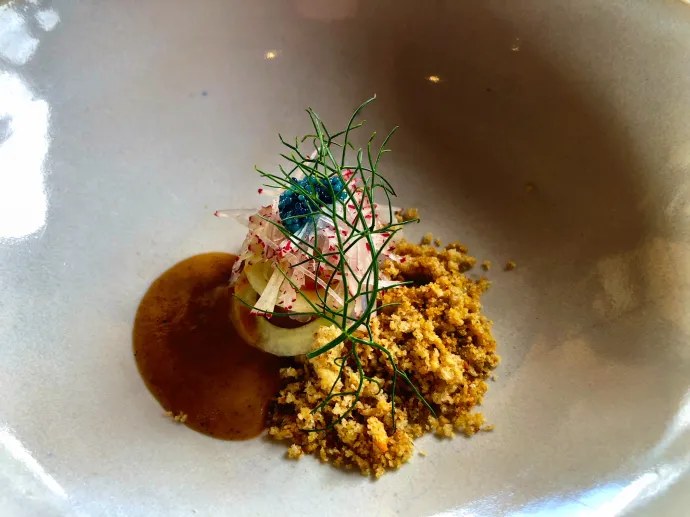
The menu at Wayfinder's farm restaurant will run across two formats: a tasting menu and à la carte, with estate-grown vegetables, fruits, eggs, and honey forming the backbone, supplemented by meat, seafood, and other ingredients sourced from West Australian producers. Pratt has also flagged fermentation and pickling as recurring techniques, alongside house-made pastas and bread, a kitchen program that draws on classical European training while anchoring itself firmly in the produce available from the Cowaramup estate and the broader WA food system.
The equipment choices are telling. Pratt has invested in a Zesti Icarus grill, a locally made electric grill that replicates the intense char of a traditional charcoal grill without the combustion emissions. The plan is for the only red meat on the menu to be regeneratively farmed lamb from the property itself. These are not incidental details; they reflect a kitchen philosophy in which the environmental commitments of the winery and farm extend directly into the cooking, without sacrificing the quality of the result.
On the philosophy behind the menu, Pratt is direct: "The food needs to be able to be enjoyed without thinking about it too much. But if you do want to dive in and think about it too much, then you'll find a lot to talk about," said Brendan Pratt.1 That balance, between accessibility and depth, is exactly what a farm restaurant anchored in a wine region needs to get right. A table that works for a first-time visitor and a serious collector simultaneously is harder to pull off than it sounds.
Beyond the formal dining room, Wayfinder is building a casual lawn menu for guests who want something lighter, families, surfers coming in from the coast, locals who want to sit outside with a glass rather than commit to a full sitting. There are also plans for community market days, garden workshops, and events on a purpose-built pavilion on the property. Pratt has been explicit that the project is not designed exclusively for tourists: the intention is to be a genuine part of the Cowaramup community, not a destination that happens to occupy local land.
Margaret River has spent fifty years building a reputation on Cabernet Sauvignon and Chardonnay, and its top producers, Cullen, Moss Wood, Cape Mentelle, Leeuwin Estate, are benchmarks not just within Australia but internationally. The region's challenge now is less about proving the quality of its wines and more about defining what the full experience of visiting a Margaret River winery can be. That question is where Wayfinder Wines enters the conversation with something specific to say.
The integrated model, regenerative viticulture, off-grid production, a kitchen garden managed by specialists, and a chef with genuine European fine-dining formation, is not common in the region. Most cellar-door restaurants in Margaret River operate as adjuncts to the winery, with the food program secondary to the tasting experience.
Wayfinder is structured differently: the kitchen and the winery are co-equal parts of the same project, designed together from the ground up by a team that includes people with serious credentials in both disciplines.
Andrew Trio's winemaking and Brendan Pratt's cooking are being built to speak to each other, which is the condition under which wine and food pairings move from competent to genuinely illuminating.
For collectors, the winery's first releases will be worth tracking, not because the scores are in, but because the structural conditions for site-expressive, minimal-intervention wines are already in place.
Gravity-fed cellaring, organic and regenerative viticulture, a locally raised winemaker with a decade of international experience: these are the inputs that tend to produce wines with a specific sense of place.
Whether Wayfinder's Cowaramup fruit delivers on that potential will become clear over the first few vintages, and the August opening gives enthusiasts the opportunity to taste the early releases in the context of the estate that produced them, which is, ultimately, a practical way to assess a new producer's direction.
Get the App
Take the shortlist into the En Primeur Club app for concierge access, saved places, and the next step after discovery.
Get Exclusive AccessMore from the editors