Plough at Bolnhurst

A Tudor-era whitewashed pub in rural Bedfordshire that operates well above its postcode's expectations. The Plough at Bolnhurst holds a Michelin Plate for 2024 and 2025, running two distinct menus, 'The Furrow' and the offcut-led 'The Seam', across a rustic bar, a modern dining room, and a garden. British and Mediterranean influences share the plate alongside a serious cheese selection.
Pearl is the En Primeur Club membership app — saves, bookings, and concierge access live there. Same editors, same standards.
- Address
- Kimbolton Rd, Bolnhurst, Bedford MK44 2EX, United Kingdom
- Phone
- +44 1234 376274
- Website
- bolnhurst.com
 Saves & bookings on Pearl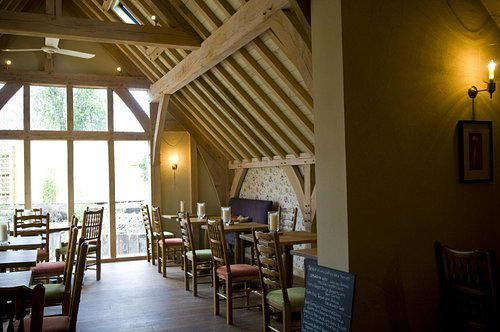
A Pub That Takes the Kitchen Seriously
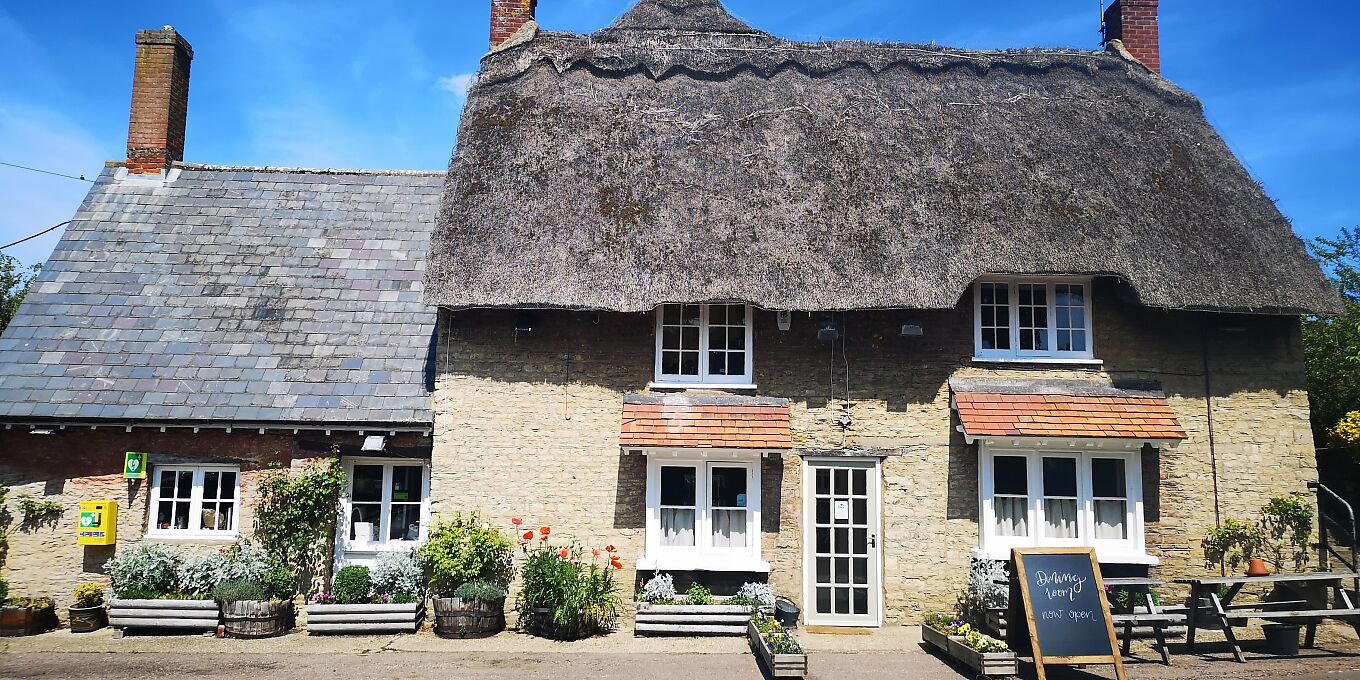
The approach to Plough at Bolnhurst sets the tone before you reach the door. A low, whitewashed building with Tudor origins sits along the Kimbolton Road in a stretch of Bedfordshire where the horizon is mostly fields. There is no urban restaurant row here, no cluster of competing tables to position against. What you find instead is a village pub that has, over time, quietly recalibrated what a pub kitchen is expected to produce.
That recalibration is the broader story of British gastropub dining over the past three decades. The category was invented, in a sense, by the collision of a serious chef with a pub lease, the recognition that a flagstone floor and a hand-pulled ale do not preclude a kitchen running with discipline and sourcing ambition. The results have ranged from modest to genuinely compelling. The Hand and Flowers in Marlow sits at one end of that spectrum, holding two Michelin stars while keeping its boots on a pub floor. The Plough at Bolnhurst operates at a different scale and in a different county, but the underlying premise is the same: the building is a pub, the cooking is not casual.
The Menu Architecture
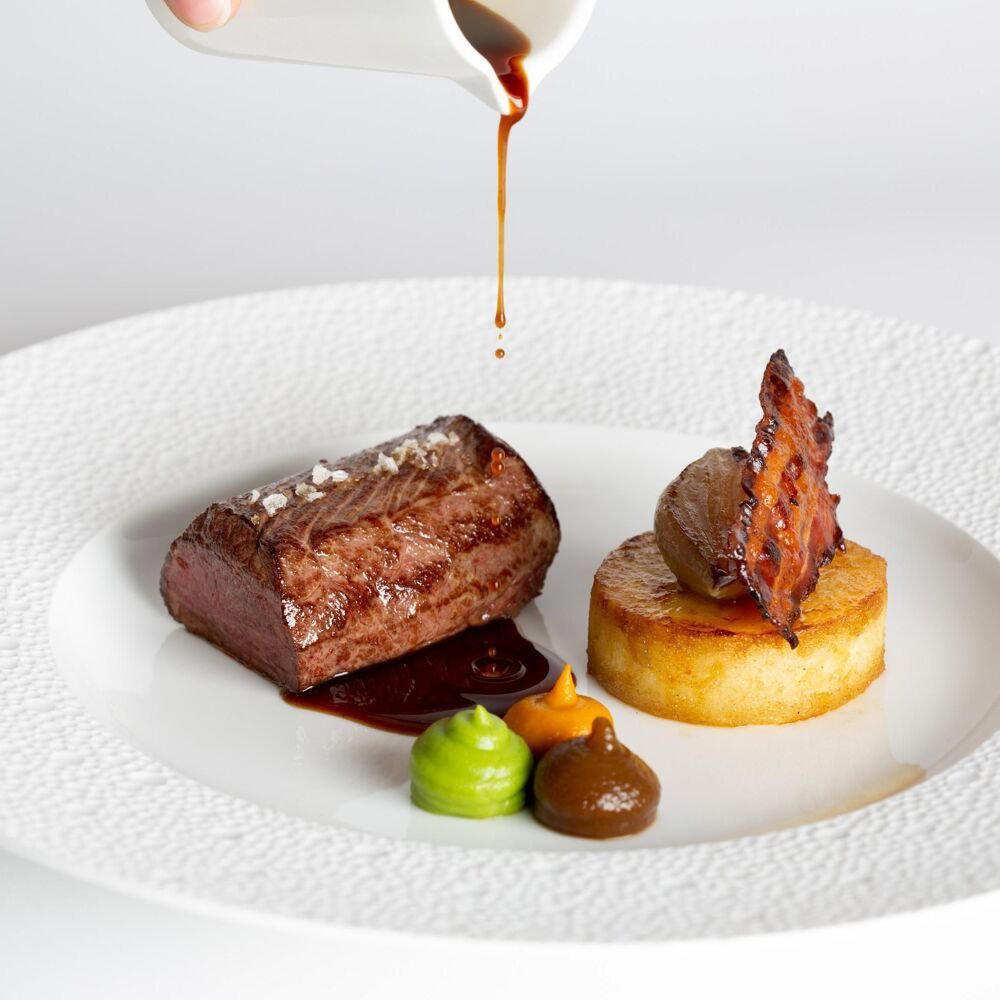
The kitchen here structures its offer around two distinct menus, and the naming is worth paying attention to. 'The Furrow' is the main menu; 'The Seam' is built from offcuts and secondary cuts generated by The Furrow's prep. This is not a gimmick. The decision to name menus after ploughing terms, seam, furrow, signals an intentional relationship between the countryside the pub sits in and what appears on the plate. It also signals a kitchen that thinks about yield and waste in practical terms rather than as branding language.
The cuisine sits across two gravitational pulls: British and Mediterranean. That combination is less of a contradiction than it might sound. Much of the modern British restaurant canon, including venues like CORE by Clare Smyth in London, draws on classical European technique applied to British produce. In a pub context, the British-Mediterranean register tends to mean roast-forward cooking, olive oil alongside butter, and a willingness to let produce from both traditions share a course. The cheese selection, described as great in the Michelin recognition notes, reinforces a kitchen that takes the board seriously as a course, not an afterthought.
For context on the broader East of England fine-dining scene, Midsummer House in Cambridge represents the formal, destination-restaurant end of the regional spectrum. The Plough operates on a different register: more accessible in format, grounded in pub architecture, but arriving at a comparable level of kitchen seriousness through different means.
The Space
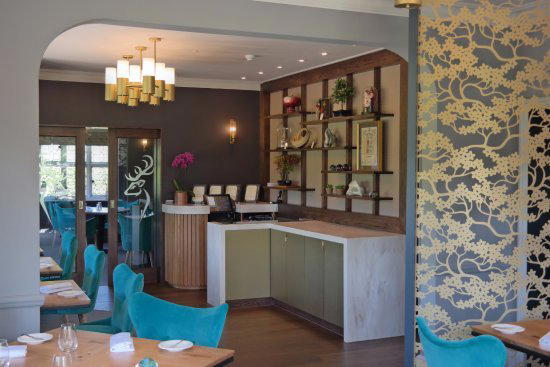
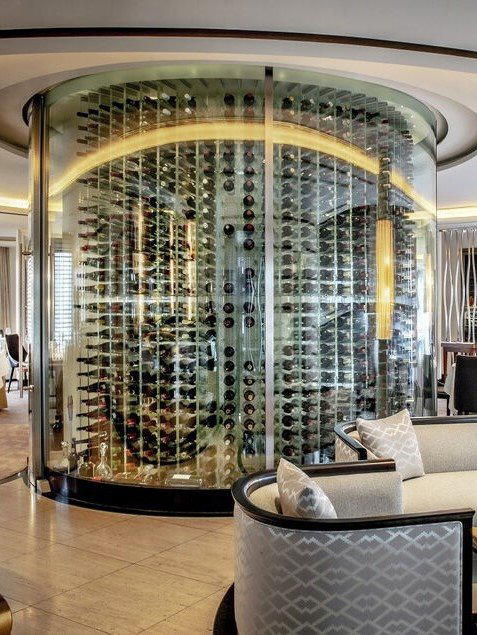
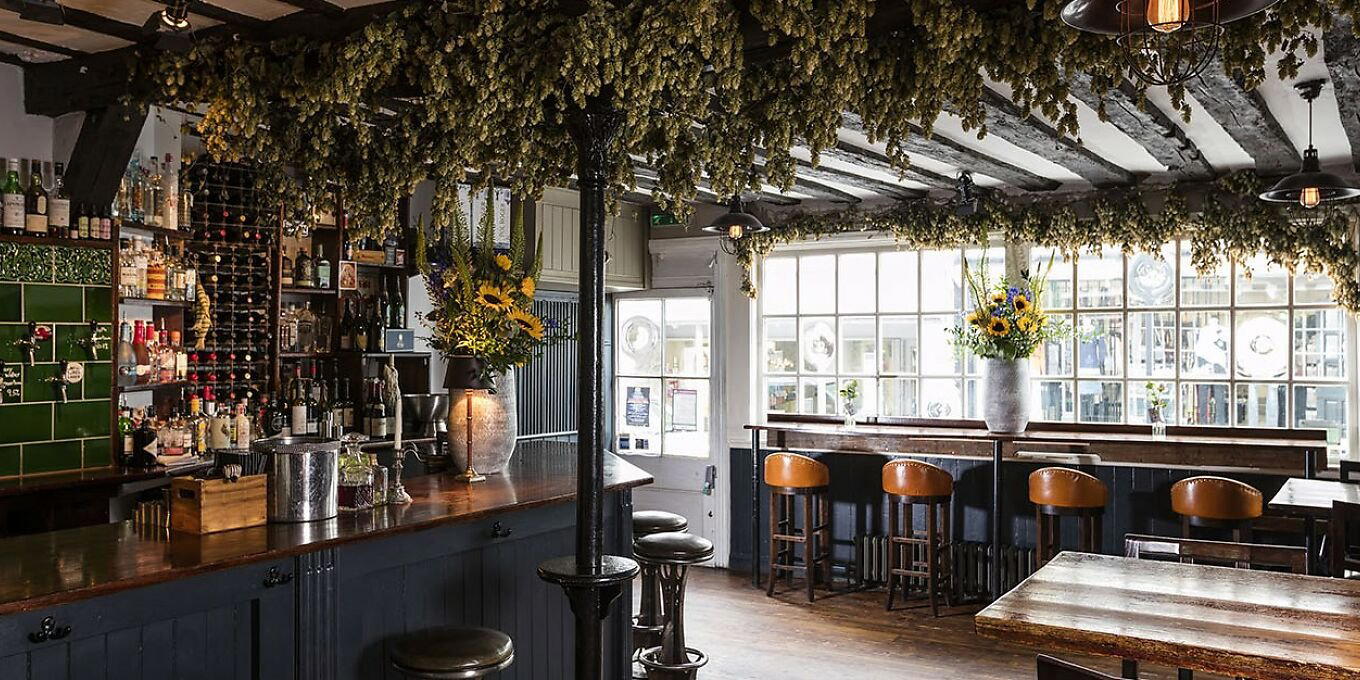
The pub divides into three distinct areas: a rustic bar, a modern restaurant room, and a garden. That range matters because it means the venue functions across different occasions and different levels of formality. A party arriving for Sunday lunch in the bar is doing something categorically different from a table seated in the restaurant room for a full Furrow menu, even if the kitchen is the same. This flexibility is a structural feature of the gastropub format that separates it from the destination-restaurant model, where the room and the menu are a single, non-negotiable experience.
The whitewashed exterior and Tudor-origin bones place the building in a tradition of English country pubs that predates the gastropub category by several centuries. That architectural weight is part of the appeal. Walking into a room with that kind of age behind it changes the way serious food lands. The same dish served in a designed restaurant space in a city reads differently when it arrives in a room where the walls have been standing since the sixteenth century. Country pub dining at its most coherent uses that contrast deliberately.
Recognition and Peer Context
Michelin Plate recognitions for 2024 and 2025 place the Plough in the category Michelin uses to signal good cooking that does not yet meet the criteria for a star. A Plate is not a consolation award, it is a specific classification, and in rural England, where starred restaurants are sparse and the competition for kitchen talent runs against geography, holding a Plate across consecutive years at a village pub is a meaningful signal about kitchen consistency.
Among the wider category of serious British gastropubs, the Hand and Flowers remains the reference point at the top of the tier. Below that, a tier of Michelin-recognised country pubs operates across the UK, from the south-west to the north. The Plough sits in that cohort, geographically isolated from the most concentrated dining markets but producing food that Michelin's inspectors have found worth returning to.
For those building a broader itinerary around serious British cooking, the national picture includes L'Enclume in Cartmel, Moor Hall in Aughton, and Gidleigh Park in Chagford at the formal end. The Plough represents a different entry point: closer to the original gastropub premise of serious cooking in an unselfconscious setting, at a price point, £££, that reflects ambition without tipping into destination-restaurant territory.
Planning Your Visit
The Plough at Bolnhurst sits at Kimbolton Road, Bolnhurst, Bedford MK44 2EX. The price range of £££ positions it at about $85 per person. Given the rural location, driving is the practical approach for most visitors; the pub is accessible from Bedford and from the A1 corridor. Reservations are essential, particularly at weekends. The garden operates as a third option in warmer months, though seating there is better suited to drinks and lighter eating than a full menu.
For regional fine dining reference points beyond Bedfordshire, hide and fox in Saltwood, Opheem in Birmingham, and Restaurant Andrew Fairlie in Auchterarder cover different regional points on the broader British fine-dining map. At the London end of the Modern British spectrum, The Ritz Restaurant and The Ledbury represent the formal, metropolitan version of what serious British cooking can look like at full scale.
Fast Comparison
Comparable venues nearby, for context on price, style, and recognition.
| Venue | Cuisine | Price | Awards | Notes |
|---|---|---|---|---|
| Plough at BolnhurstThis venue — the venue you are viewing | Modern British Seasonal Gastropub | $$$ | Michelin Plate | |
| The Plough | pub | $$$ | Bolnhurst | |
| The Chandlers Arms | Modern British Gastropub | $$$ | Michelin Plate | Epwell |
| The Crown at Burchetts Green | Modern British Gastropub | $$$ | Michelin Plate | Burchetts Green |
| Chalk | Modern British Estate Dining | $$$ | Michelin Plate | Wiston Estate |
| Lasdun | Modern British Brasserie | $$$ | Michelin Plate | South Bank |
Continue exploring
More in Bolnhurst
Restaurants in Bolnhurst
Browse all →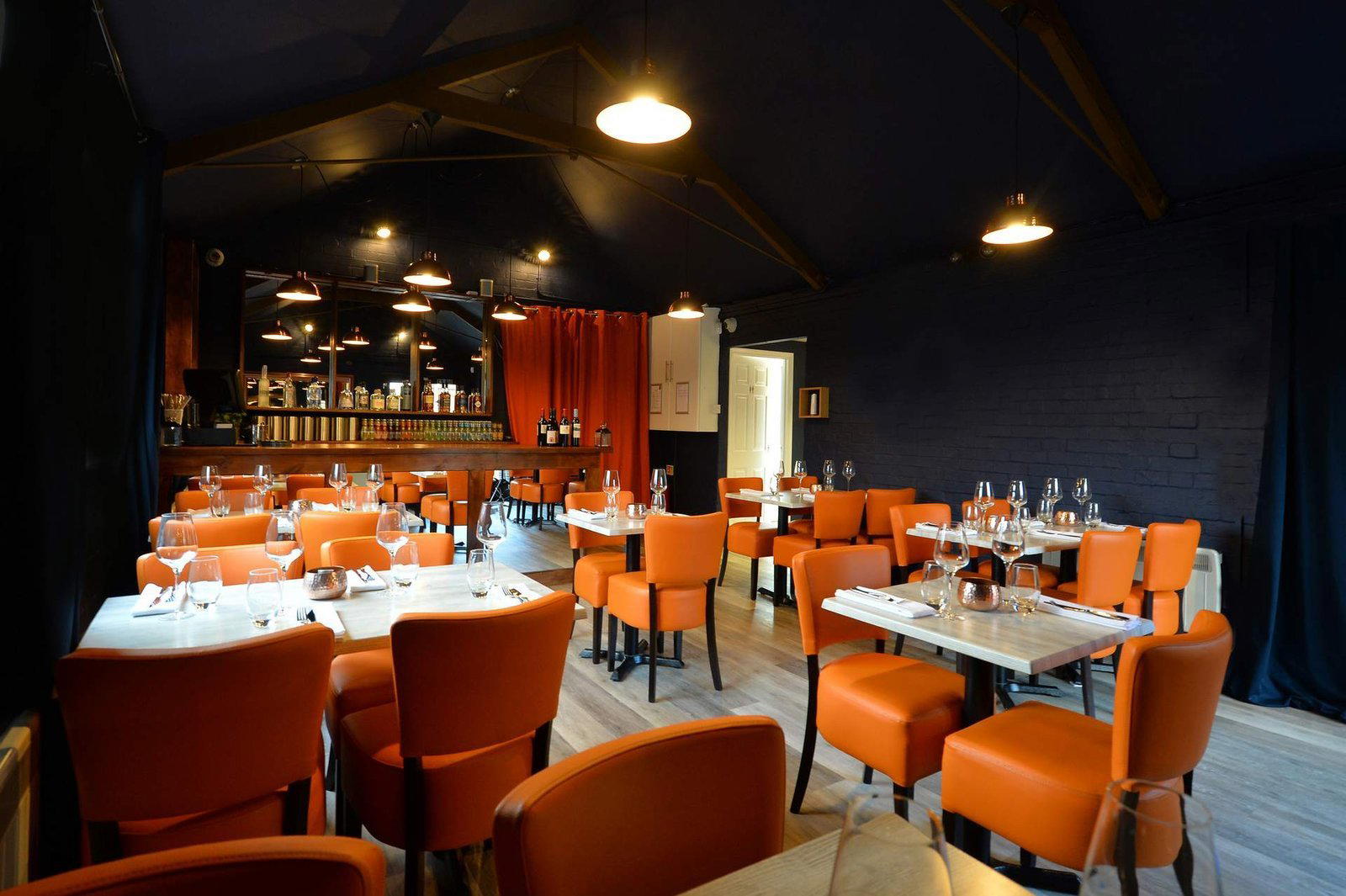
At a Glance
- Cozy
- Rustic
- Romantic
- Elegant
- Classic
- Hidden Gem
- Special Occasion
- Date Night
- Celebration
- Group Dining
- Family
- Garden
- Terrace
- Historic Building
- Standalone
- Extensive Wine List
- Beer Program
- Farm To Table
- Local Sourcing
- Sustainable Seafood
- Garden
Warm and welcoming with open fireplaces, wooden tables, and a blend of rustic bar seating and modern restaurant spaces; intimate yet unpretentious with traditional country pub charm enhanced by thoughtful details like reading glasses and throws for riverside patio guests.