The Green Door Tavern
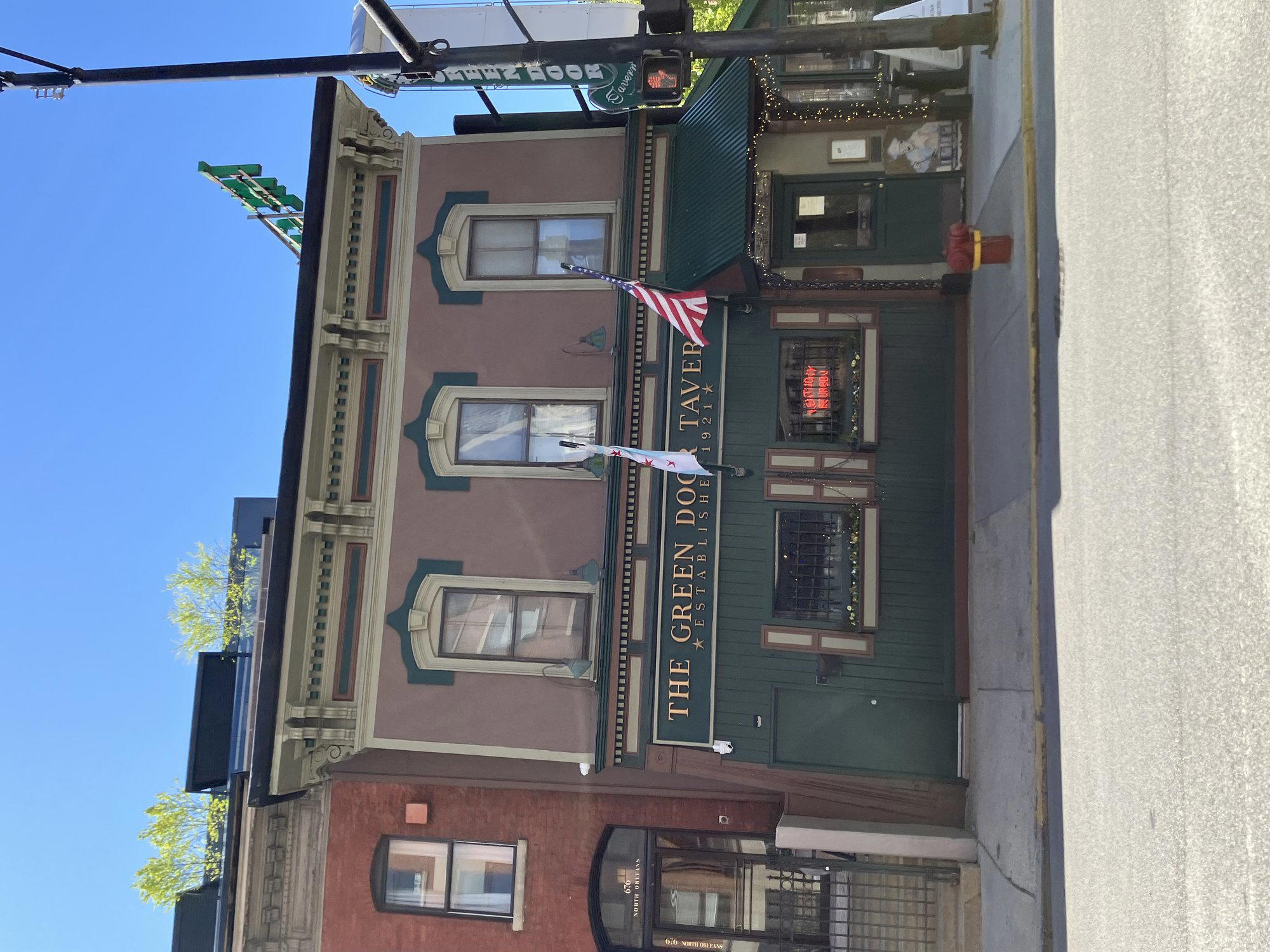
One of Chicago's oldest surviving tavern structures, The Green Door Tavern at 678 N Orleans St in River North carries more than a century of the city's drinking history within its visibly tilted walls. The building itself, a wood-frame holdover from the post-Fire era, is as much the draw as whatever is poured inside. A reference point for Chicago bar heritage, it sits apart from the cocktail-program bars that now define the neighbourhood's premium tier.
 Discover on Pearl
Pearl is the En Primeur Club membership app — saves, bookings, and concierge access live there. Same editors, same standards.
- Address
- 678 N Orleans St, Chicago, IL 60654
- Phone
- +1 312 664 5496
- Website
- greendoorchicago.com
A Building That Precedes the Cocktail Era
River North's bar scene has fractured in two directions over the past decade: polished cocktail programs drawing national recognition, and heritage venues whose primary credential is the structure they occupy. The Green Door Tavern at 678 N Orleans St belongs firmly to the second category. The wood-frame building, one of the few remaining in Chicago, survived because it was constructed just before the city's post-1871 fire ordinance banned timber construction in this zone. That near-miss with demolition-by-regulation gives the place a physical character that no interior design budget can manufacture.
Walking toward it from Orleans Street, the lean is visible before you reach the door. The building has settled unevenly over the decades, and the tilt is not a styling choice. Inside, the floors follow suit. For visitors accustomed to the precisely calibrated environments of nearby programs like Kumiko or Leading Intentions, the contrast is deliberate and useful: this is what a Chicago drinking establishment looked like before the city developed a hospitality industry around its bars.
Heritage Architecture as Sustainability Argument
The conversation around sustainable hospitality has expanded well beyond sourcing and waste management. In bar and restaurant development, adaptive reuse of existing structures represents one of the most resource-intensive sustainability choices a venue can make, or, more accurately, one of the most resource-intensive choices a venue can avoid by not demolishing and rebuilding. River North has lost numerous pre-Prohibition structures to redevelopment in the past two decades. The Green Door's continued operation inside its original footprint is, by extension, an argument for retention over replacement.
This framing sits alongside the more conventional sustainability markers now expected of Chicago's premium bar tier. The city's serious cocktail programs, from Bisous to Lemon, have increasingly built sourcing and waste-reduction practices into their public identity. Heritage venues occupy a different position in that framework: their environmental argument is architectural rather than operational, rooted in what was preserved rather than what is composted or batch-distilled. Both matter, and the most complete picture of sustainable bar culture in a city includes both types.
Nationally, this tension plays out in markets from Honolulu, where Bar Leather Apron operates with careful program discipline, to New Orleans, where Jewel of the South works within a historic-district context not unlike Chicago's River North. The common thread is that meaningful bar culture requires both innovation and preservation, and markets that lose their oldest structures lose a layer of context that cannot be reconstructed.
Where It Sits in Chicago's Bar Hierarchy
Chicago's premium cocktail tier is well-documented. The Aviary set a format benchmark that influenced how the city's serious programs were discussed internationally, and venues like Kumiko have carried that recognition forward with a more restrained, Japanese-influenced approach. Three Dots & a Dash built its reputation on a specific tiki tradition that rewards genre fluency. Leading Intentions operates with a lower-proof focus that positions it as a category-specific program rather than a general cocktail bar.
The Green Door occupies none of these categories. It does not compete on cocktail technique, menu depth, or critical recognition in the way those programs do. Its comparable set, if mapped honestly, is the city's long-running neighborhood taverns rather than its award-circuit cocktail destinations. That is not a demotion. The tavern format has its own integrity, and Chicago, a city that has historically organized its social life around the corner bar, has a stronger claim to that tradition than most American cities.
For travelers building a multi-stop Chicago bar itinerary, the practical question is sequencing. The Green Door reads better early in an evening, when its historical register lands before palate fatigue or competitive-cocktail fatigue sets in. Later stops at programs with stronger technical output, whether in Chicago or on trips to cities like Houston, where Julep runs a focused American whiskey program, or New York, where Superbueno works a distinct Latin-inflected format, benefit from the context a heritage stop provides.
The Basement and What It Signals
The Green Door has a basement bar, which operates with a different atmosphere than the street-level tavern. Chicago's bar culture has a long history of below-grade drinking spaces, partly practical (the city's climate) and partly cultural. The basement format now reads differently depending on the venue: at technically-driven programs like ABV in San Francisco or Allegory in Washington, D.C., the subterranean setting is a deliberate atmospheric choice. At the Green Door, the basement predates that framing by decades. It is less designed environment and more architectural given.
The distinction matters for setting expectations. Visitors arriving with the mindset they bring to a curated lower-level cocktail room will find something rawer and less considered. Visitors arriving with the mindset they bring to a historic Chicago tavern will find exactly that. The Parlour in Frankfurt operates with a somewhat analogous positioning in a European context: a bar whose identity is inseparable from its physical envelope, and whose value depends on the visitor understanding that the building is the program.
Planning a Visit
Green Door Tavern is located at 678 N Orleans St in River North. River North is walkable from the Chicago Brown and Red Line stops at Chicago Avenue, and the address sits within a dense corridor of bars and restaurants, making it direct to combine with other stops on the same evening.
| Venue | Format | Primary Draw | Booking Required |
|---|---|---|---|
| The Green Door Tavern | Heritage tavern | Pre-Prohibition building, neighborhood history | Verify directly |
| Kumiko | Cocktail bar / omakase | Japanese-influenced program, national recognition | Yes, advance booking advised |
| Leading Intentions | Low-ABV cocktail program | Category-specific focus, thoughtful sourcing | Verify directly |
| Three Dots & a Dash | Tiki bar | Genre-deep tiki tradition, basement format | Walk-in and reservations |
| The Aviary | Modernist cocktail | Technique-forward, internationally benchmarked | Yes, reservations required |
Price and Recognition
Comparable venues nearby, for context on price, style, and recognition.
| Venue | Cuisine | Price | Awards | Notes |
|---|---|---|---|---|
| The Green Door TavernThis venue — the venue you are viewing | River North, speakeasy | $$ | , | |
| Maria's Packaged Goods and Community Bar | $$ | , | Bridgeport, beer_bar | |
| Estereo | $$ | , | Logan Square, cocktail_bar | |
| Scofflaw | $$ | , | Logan Square, cocktail_bar | |
| Volare Ristorante Italiano | Streeterville, lounge | $$ | , | |
| Mild 2 Spicy – Modern Indian Restaurant | $$ | , | Lakeview, cocktail_bar |
At a Glance
- Classic
- Cozy
- Historic
- Hidden Gem
- Casual Hangout
- After Work
- Late Night
- Speakeasy
- Historic Building
- Seated Bar
- Booth Seating
- Lounge Seating
- Classic Cocktails
Historic tavern with old-school Chicago charm, cozy wood-frame building, Prohibition memorabilia, and speakeasy ambiance downstairs.