Perched at Brooke Street Pier on Hobart's Franklin Wharf, The Glass House occupies one of the waterfront's more considered drinking positions, where the view across Sullivan's Cove does a fair amount of the work. The bar draws from Tasmania's deep larder of cool-climate produce, with a drinks programme that pairs closely with a food offering built around the same regional logic.
 Discover on Pearl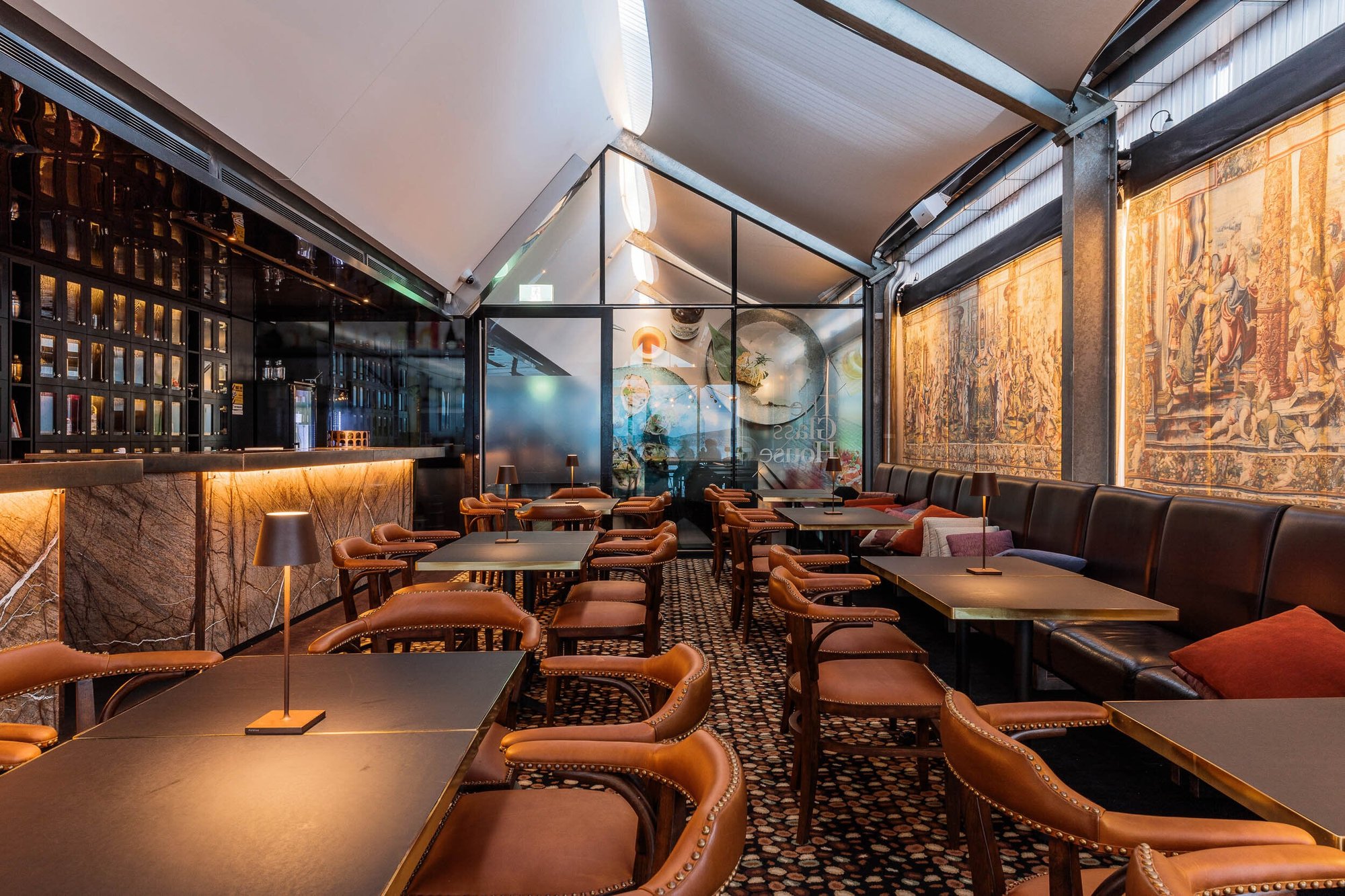
The Waterfront Context That Shapes What You Drink
Hobart's bar scene has developed along two distinct lines in recent years. One runs through the laneways and converted warehouses of the CBD, where venues like Dier Makr and Institut Polaire have built technically disciplined programmes inside spaces that reward the kind of focused attention you give a serious wine list. The other line runs along the waterfront, where the physical setting does its own kind of editorial work, and where food-and-drink pairing tends to operate from a different set of priorities: accessibility, seasonality, and the logic of a room that looks out over Sullivan's Cove toward kunanyi.
The Glass House at Brooke Street Pier sits firmly in that second current. The pier location places it at the edge of the working harbour, a short walk from Salamanca Place and the Saturday market that remains the leading single guide to what Tasmania's growers and producers are doing in any given season. That proximity matters because it shapes what a drinks-led venue on this stretch of wharf can credibly offer. Hobart's waterfront bars are not judged by the same metrics as inner-city cocktail rooms; the standard here involves how well the room reads the harbour, how coherently the food programme connects to the broader Tasmanian larder, and whether the drinks list earns its keep beyond the postcard view.
The Pairing Logic at the Core of the Programme
Across Australian bar culture, the relationship between the drinks list and the food offering has become a more deliberate editorial statement. Bars like Cantina OK! in Sydney and Above Board in Melbourne have each made tight format discipline a defining feature, where the food programme exists not as a concession to licensing requirements but as a genuine complement to what is in the glass. The Glass House operates within a similar logic, though on a larger, more open scale that the pier setting demands.
Tasmania's cool-climate position gives any venue drawing from local producers a structural advantage in building coherent food-and-drink pairings. The island's oysters, abalone, and seafood supply chains run short; the whisky and gin distilleries are now numerous enough that a considered spirits list does not require imports to feel complete. A bar at Brooke Street Pier that takes its location seriously should be engaging with that supply network, using the harbour adjacency as an argument for a food programme that reflects what arrives fresh from Tasmanian waters and farms. The seasonality of that offer shifts meaningfully across the year: late autumn and winter bring the cold-water shellfish into their strongest condition, while summer stretches the outdoor terrace season and draws a heavier flow of visitors who have arrived via the MONA ferry docking nearby.
Where The Glass House Sits in the Hobart Bar Peer Set
Hobart's bar options now cover enough ground that choosing between them involves a genuine editorial decision. Franklin Bar and Restaurant operates with a produce-led kitchen programme that gives the bar its anchoring identity. Mary Mary has positioned itself toward the natural wine end of the drinks conversation. The Glass House holds a different brief: it is a room designed to be comfortable for both the dedicated drinker working through a considered cocktail list and the visitor who has come primarily for the view and wants a food offering that does not make the decision harder than it needs to be.
That positioning is neither a weakness nor a compromise. In a city that now competes seriously for the kind of traveller who treats Hobart as a food-and-drink destination rather than a gateway to the national parks, there is a clear need for venues that translate the quality of the Tasmanian larder into a format accessible to someone arriving without a deep knowledge of the local scene. The Glass House, in occupying Brooke Street Pier, holds one of the more geographically and commercially logical positions for that task.
For comparison across Australian bar programmes that have built their identity around pairing discipline and regional specificity, Bar Lune in Adelaide, Timber Door Cellars in Geelong, and The Crafers Hotel in Adelaide Hills each offer useful reference points for how regional bars can make geography an argument for quality rather than just a backdrop. Further afield, Bowery Bar in Brisbane and Bar Leather Apron in Honolulu demonstrate how waterfront or destination-adjacent bar settings can carry serious drinks programmes without sacrificing accessibility.
Planning Your Visit
Brooke Street Pier is walkable from central Hobart, roughly five minutes from the lower end of Salamanca Place, and sits directly on the waterfront path that connects the Saturday market precinct to the MONA ferry terminal. Summer weekends draw the heaviest foot traffic, and the outdoor terrace positions are subject to the particular wind behaviour that the open harbour generates in the afternoon; arriving earlier in the evening or opting for an indoor position manages that variable. Winter is the quieter season and the one in which Tasmanian shellfish is at its peak condition, making it the more considered time of year for a food-and-drink pairing visit if your itinerary allows the choice.
Frequently Asked Questions
Peers in This Market
A compact peer snapshot based on similar venues we track.
| Venue | Cuisine | Price | Notes |
|---|---|---|---|
| The Glass House Hobart | This venue | ||
| Sonny | |||
| Dier Makr | |||
| Franklin Bar & Restaurant | |||
| Institut Polaire | |||
| Mary Mary |
Need a Table?
Our members enjoy priority alerts and concierge-led booking support for the world's most difficult bars and lounges.
Get Exclusive Access