The Banks Seafood and Steak
The Banks Seafood and Steak occupies a considered position in Boston's Back Bay dining corridor, where the city's theatre district and financial edges converge. The restaurant pairs classic surf-and-turf programming with a setting that draws an after-show and business crowd from the surrounding blocks. Located at 406 Stuart St, it sits within walking distance of Copley Square and the major downtown hotel cluster.
 Discover on Pearl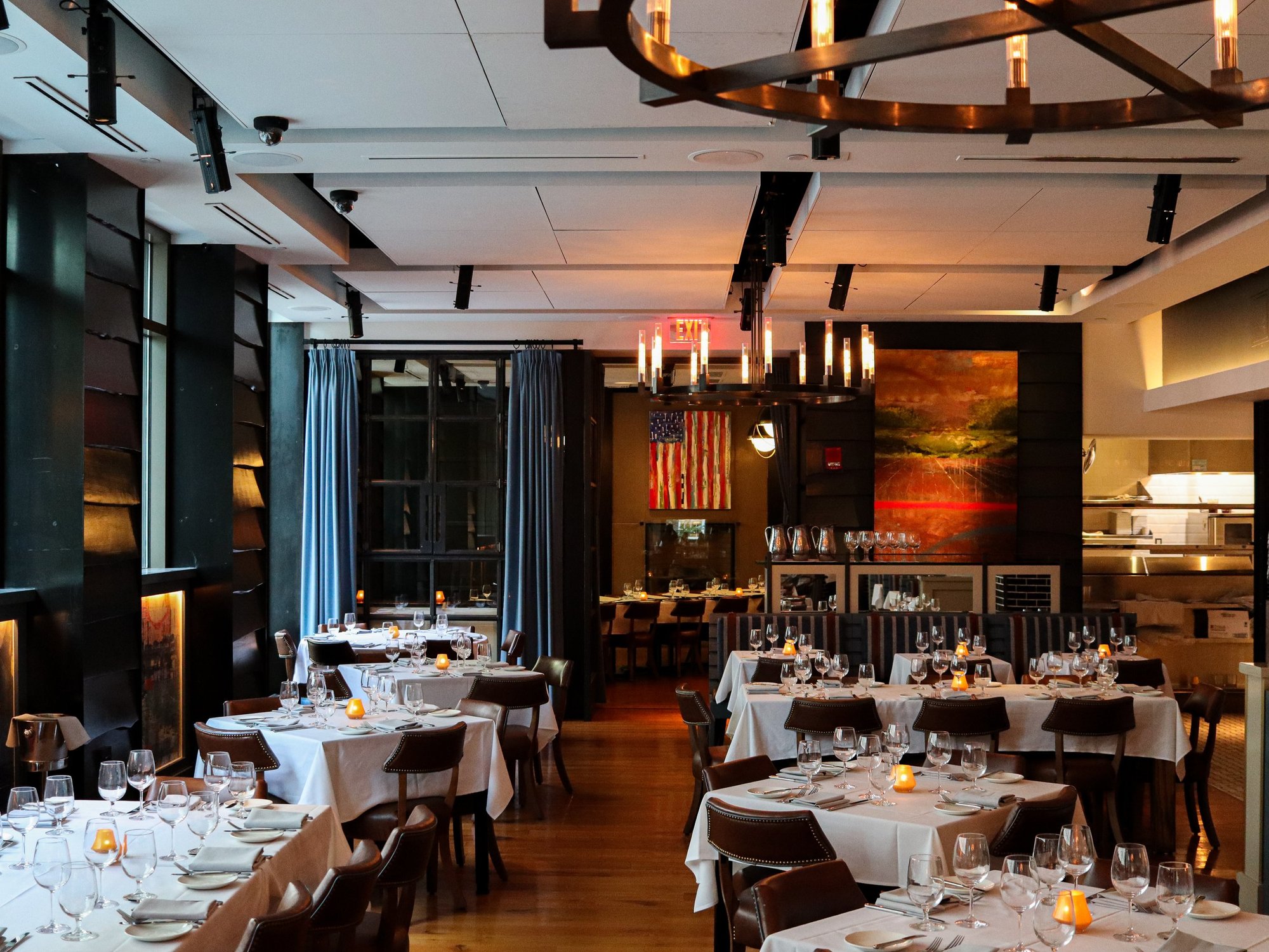
Where Stuart Street Meets the Water's Edge
Boston's Back Bay and Theatre District boundary along Stuart Street has developed into one of the city's more reliably busy dining corridors. The stretch runs between the financial core and the residential weight of the South End, drawing a crowd that skews toward pre-theatre diners, hotel guests from the nearby Westin and Marriott properties, and the after-work business contingent that treats this pocket of the city as its default hospitality strip. The Banks Seafood and Steak at 406 Stuart St sits squarely inside that geography, and the address tells you something about the register it operates at before you've opened the door.
Surf-and-turf programming of this kind, where a kitchen divides its identity between premium seafood and USDA beef, is a format with deep roots in American urban dining. Boston in particular has a long relationship with this model: the city's position as a historic Atlantic fishing port made seafood a natural anchor for formal restaurant menus, and the addition of steakhouse cuts gave those menus the broader commercial appeal needed to sustain a full-evening operation. The Banks fits within that tradition rather than departing from it, which is not a criticism so much as an observation about where it pitches its tent.
The Back Bay Dining Corridor in Context
Understanding what The Banks is requires some understanding of what surrounds it. The Theatre District and lower Back Bay support a concentration of restaurants that function at a mid-to-upper price register, serving an audience that prioritises reliability and setting over culinary experiment. This is not the neighbourhood where Boston's more technically ambitious kitchens tend to operate. Those tend to cluster further toward the South End or Cambridge. What Stuart Street and its immediate surrounds offer instead is a consistently occupied dining room, strong bar revenue, and a clientele that wants a good piece of fish or a properly handled steak without having to navigate a ten-page tasting menu.
That dynamic shapes the competitive set. The Banks sits alongside other full-service American restaurants in the area that trade on similar formats, and it competes less against the city's more conceptually driven tables than against other operations capable of handling volume without sacrificing quality on the plate. For visitors staying in the downtown hotel cluster, it is the kind of restaurant that resolves the question of where to eat on a Tuesday night without requiring advance planning weeks out.
For a broader read on how Boston's dining scene is structured across neighbourhoods, our full Boston restaurants guide maps the key clusters and what each area does well.
Seafood and Steak as a Format
The surf-and-turf format succeeds when a kitchen commits to sourcing at both ends of the equation. In New England, that means access to genuinely good shellfish and fin fish from the North Atlantic, where quality benchmarks are high enough that a restaurant trading on seafood identity cannot afford to treat it as the secondary billing. Lobster, clams, oysters from the colder Massachusetts waters, and line-caught species from local fisheries represent the standard vocabulary, and the better restaurants in this format use those ingredients as a baseline rather than an occasion.
On the beef side, the steakhouse segment of American dining has consolidated significantly around a recognisable quality tier, where dry-aged prime cuts and a short but precise selection of preparations define the offer. A restaurant functioning in this space is measured against that tier rather than against the broader casual dining market.
The Bar Programme and Pre-Theatre Logic
Restaurants in Theatre District-adjacent locations in any major American city develop their bar and early-evening programming around a specific rhythm: a wave of pre-show diners between 5:30 and 7:00pm, a quieter mid-evening, and then a post-show return after 10:00pm. The leading operations in that position use the bar as an anchor for both ends of that cycle, giving it enough depth to hold someone through a drink and an appetiser before curtain and enough interest to pull them back in for a nightcap afterward.
Boston's cocktail programme has matured considerably across the city's better venues. Operations like Equal Measure and Asta have demonstrated that the city's drinking culture can sustain genuine technical ambition, while venues like Baleia show how a bar identity can anchor a broader hospitality offer. At a restaurant like The Banks, the expectation is a competent classic cocktail list built around familiar American categories: whiskey-forward serves, clean martini variations, and seafood-friendly aperitif-style pours.
For comparison across other American markets, the programmes at Kumiko in Chicago, Julep in Houston, and Superbueno in New York City each illustrate how a bar identity can carry distinct regional and conceptual weight. ABV in San Francisco, Bar Leather Apron in Honolulu, and Jewel of the South in New Orleans extend that picture across different coastlines and hospitality cultures. Internationally, The Parlour in Frankfurt offers a European counterpoint to how cocktail programming positions itself within a full-service dining context.
Planning Your Visit
The Banks sits at 406 Stuart St in Boston's Theatre District, accessible on foot from the Back Bay and Copley stations, and a short walk from the major hotel properties along Stuart and Columbus. Given the pre-theatre crowd that the location naturally attracts, arriving before 6:00pm or after 8:30pm tends to allow for a less compressed experience. The restaurant's position in a high-footfall corridor means walk-in availability is more realistic than at destination-driven tables in less central parts of the city, though this can shift on weekend evenings and during peak performance seasons at the Wang Theatre and Boch Center nearby. Abe and Louie's, a few blocks along the same corridor, provides a useful reference point for the steakhouse register that this stretch of Boston supports.
Frequently Asked Questions
- What drink is The Banks Seafood and Steak famous for?
- The Banks operates within a surf-and-turf dining format where the bar is built to serve a pre-theatre and business crowd. That context points toward a classic American cocktail list anchored by whiskey and spirit-forward serves alongside seafood-complementary lighter pours. No single signature drink has been documented in the public record, so specific cocktail recommendations are leading sourced directly with the venue.
- What's the standout thing about The Banks Seafood and Steak?
- Its position at the intersection of Boston's Theatre District and the Back Bay hotel corridor gives The Banks a practical utility that few comparably priced restaurants in the city can match. For visitors staying nearby, it resolves the dinner question without requiring the kind of advance booking that the city's more awarded tables demand, while operating in a format, American seafood and steak, that Boston's dining tradition supports well.
- Can I walk in to The Banks Seafood and Steak?
- Walk-in availability is generally more accessible at Theatre District-adjacent restaurants like The Banks than at destination tables elsewhere in the city, though the pre-theatre window between 5:30 and 7:30pm on weekdays, and most of Friday and Saturday evenings, will be the most competitive periods. Arriving outside those windows or contacting the venue in advance is the more reliable approach when a specific time matters.
- Who is The Banks Seafood and Steak leading for?
- The Banks is well-suited to visitors staying in Boston's downtown hotel cluster who want a full-service dinner without navigating a longer journey into the South End or Cambridge. It also serves the pre-theatre contingent heading to the Wang Theatre or Boch Center on Stuart Street. Business diners and groups looking for a format that handles both seafood and steak preferences at the table will find it covers that ground comfortably.
- How does The Banks Seafood and Steak fit into Boston's broader seafood dining tradition?
- Boston's identity as a historic Atlantic fishing port means the city holds seafood-focused restaurants to a relatively high baseline, particularly for shellfish and North Atlantic species like lobster and clams. A restaurant operating in the surf-and-turf format in this city is measured against that context. The Banks on Stuart St sits within the Theatre District tier of that tradition, prioritising a consistent, full-service experience over the kind of specialist sourcing focus that defines the city's more destination-driven seafood tables.
Pricing, Compared
A quick snapshot of similar venues for side-by-side context.
| Venue | Price | Awards | Notes |
|---|---|---|---|
| The Banks Seafood and Steak | This venue | ||
| Equal Measure | World's 50 Best | ||
| Blossom Bar | Cocktail bar (referenced as alum) | ||
| NAMU Distilling Company | Korean-American distillery and snacks (soju, gin, makgeolli-based spirits, anju) | ||
| Swingers | Activity-bar with Detroit-style pizza | ||
| Hecate |
Need a Table?
Our members enjoy priority alerts and concierge-led booking support for the world's most difficult bars and lounges.
Get Exclusive Access