Public Records
Public Records at 233 Butler Street in Brooklyn occupies an unusual position in New York's drinking scene: a bar, venue, and record shop that has evolved alongside the borough's shift toward format-conscious nightlife. Gowanus regulars treat it as a reference point for low-intervention natural wine and considered cocktails in a space where the sound system is taken as seriously as what's in the glass.
Pearl is the En Primeur Club membership app — saves, bookings, and concierge access live there. Same editors, same standards.
- Address
- 233 Butler St, Brooklyn, NY 11217
- Phone
- +1 347 529 4869
- Website
- publicrecords.nyc
- Directions
- Get directions
 Saves & bookings on Pearl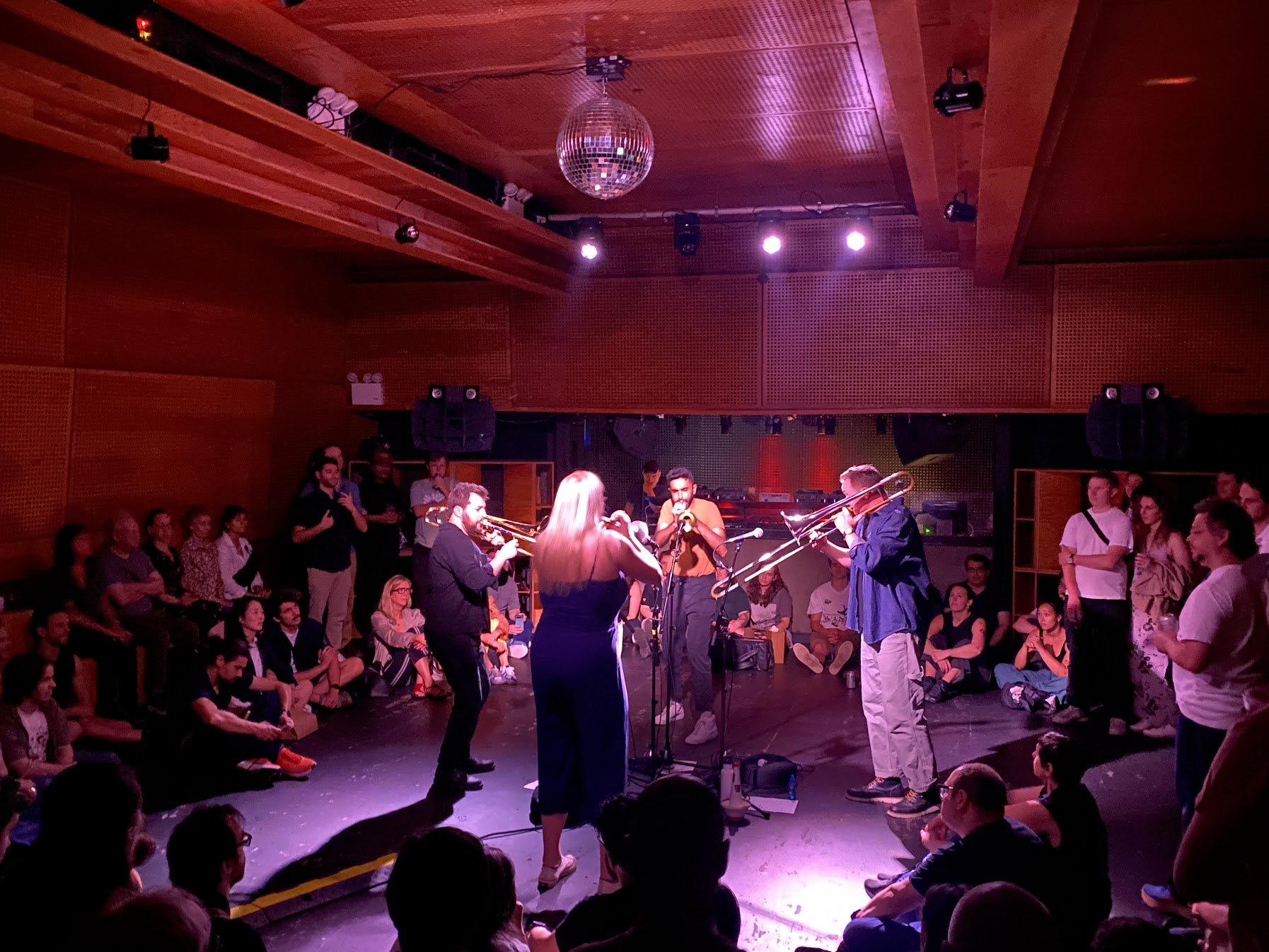
Where Gowanus Turned a Record Shop Into a Ritual Space
Brooklyn's Gowanus neighborhood spent much of the 2010s in a slow negotiation between industrial legacy and creative reuse. Public Records at 233 Butler Street is a Brooklyn bar, record shop, and listening room known for its high-fidelity sound system. Part bar, part restaurant, part vinyl record shop, part listening room with a high-fidelity sound system, Public Records belongs to a cohort of venues that treat the evening as a designed sequence rather than a transaction. The drink arrives. The record plays. The food follows. The pacing is deliberate and the environment engineered around it.
The Ritual of the Evening at Public Records
What distinguishes the format at the bar from a bar with a turntable is the degree to which the experience is structured around attentiveness. High-fidelity audio listening rooms have a specific etiquette imported from Japanese jazz kissa culture: you arrive, you settle, you listen. Conversation happens at the margins. The music is not background furniture. That discipline, applied to a Brooklyn bar context, creates something less common than it sounds in a city where ambient noise levels are treated as proof of vitality.
The ritual here involves moving between registers. The record shop component is browsable before or after eating and drinking, which means the evening has a built-in rhythm: browse, sit, order, listen, linger. Venues that achieve this kind of pacing tend to attract a crowd that stays longer and arrives with more deliberate intent than the walk-in bar trade. That self-selection shapes the atmosphere as much as the sound system does.
Across the broader New York bar scene, the structural shift away from single-purpose venues has accelerated. Spots like Superbueno layer Latin-inflected cocktails over a specific spatial identity, while Amor y Amargo has built its entire format around bitter spirits education as an ongoing ritual rather than a menu. The bar sits in a different lane, one where sound and hospitality are co-equal, but the impulse toward format discipline connects it to the same broader movement.
The Drink Program in Context
The bar has developed a reputation for its natural wine list and its commitment to low-intervention producers at a time when that category has moved from fringe interest to mainstream fixture in Brooklyn's bar culture. The venue also runs a thoughtful beer program alongside cocktails, which is consistent with its multi-format identity: no single drink category dominates, and the list reflects the same curatorial sensibility applied to the record collection.
In New York's competitive cocktail and drinks scene, that curation matters. Angel's Share has held its position in the East Village for decades through format discipline and quiet authority. Attaboy NYC operates on a no-menu, guest-responsive model that demands a different kind of trust from the drinker. The bar asks for a different kind of commitment still: the willingness to surrender to an environment shaped by sound as much as by what's in the glass.
Beyond New York, the model of the thoughtfully programmed drinks venue has proven durable. Kumiko in Chicago applies Japanese precision to the cocktail format. Jewel of the South in New Orleans anchors its program in historical cocktail tradition. ABV in San Francisco, Allegory in Washington D.C., Julep in Houston, and Bar Leather Apron in Honolulu each occupy specialist positions in their respective markets. Even internationally, venues like The Parlour in Frankfurt on the Main have demonstrated that format-led hospitality travels. What the bar contributes to that conversation is the integration of recorded music as a genuine program element, not décor.
Food as Part of the Sequence
The food offering at the bar operates as a supporting element to the overall ritual rather than as a destination in its own right. The kitchen has historically run a plant-forward menu with dishes suited to grazing across a longer evening, which aligns with the pacing logic of the space. You are not expected to eat and leave. The meal is one act in a multi-act format, and the dishes are sized and spaced accordingly.
That approach places the bar in a specific tier of Brooklyn dining: venues where the food is taken seriously but the identity is not food-first. Gowanus and its surrounding neighborhoods have produced a number of spaces in this mold, where the full proposition matters more than any single component. The evening at the bar is evaluated in aggregate, not dish by dish.
Sound as the Organizing Principle
The high-fidelity sound system at the bar is the element that sets the venue apart from any other multi-hyphenate bar in Brooklyn. The system is not a background feature. The listening room operates with a level of acoustic intentionality that most music venues, let alone bars, do not attempt. Events including DJ sets, live performances, and listening sessions are programmed regularly, and the calendar functions as a second editorial layer alongside the food and drink menus.
The kissa tradition that influenced this format originated in postwar Japan, where record-shop owners curated listening environments for jazz enthusiasts who could not afford home hi-fi equipment. That tradition has migrated into Western hospitality contexts with varying degrees of fidelity. The bar is among the more serious applications of the format outside Japan, and that seriousness is felt in the room: the volume is calibrated, the programming is intentional, and the expectation is that guests engage rather than talk over it.
Planning Your Visit
| Venue | Format | Booking | Price Tier |
|---|---|---|---|
| The bar | Bar, restaurant, record shop, listening room | Walk-in and events ticketed separately | Mid-range |
| Amor y Amargo | Bitters-focused cocktail bar | Walk-in | Mid-range |
| Attaboy NYC | No-menu cocktail bar | Walk-in, no reservations | Mid-to-upper range |
| Angel's Share | Classic Japanese-style cocktail bar | Walk-in, limited seats | Mid-to-upper range |
The bar is located at 233 Butler Street in Gowanus, Brooklyn, accessible from the Smith and 9th Streets F and G train stop. Check the venue's event calendar before visiting: certain evenings are ticketed and the listening room format changes character significantly on event nights versus quieter weekday sessions.
Similar Picks
Comparable venues nearby, for context on price, style, and recognition.
| Venue | Cuisine | Price | Notes |
|---|---|---|---|
| Public RecordsThis venue — the venue you are viewing | lounge | $$ | Not listed |
| Juliette Restaurant | cocktail_bar | $$ | Williamsburg |
| TALEA Beer Co - Williamsburg | beer_bar | $$ | Greenpoint |
| Bar Bonobo | cocktail_bar | $$ | Chelsea-Hudson Yards |
| For All Things Good Bed-Stuy | wine_bar | $$ | Bedford-Stuyvesant (West) |
Continue exploring
More in New York City
Bars in New York City
Browse all →
Restaurants in New York City
Browse all →
Hotels in New York City
Browse all →






At a Glance
- Modern
- Trendy
- Industrial
- Intimate
- Energetic
- Late Night
- Group Outing
- Casual Hangout
- Live Music
- Design Destination
- Standalone
- Lounge Seating
- Seated Bar
- Communal Tables
- Craft Cocktails
- Zero Proof
Current opening hours
- Monday
- Closed
- Tuesday
- Closed
- Wednesday
- 6–10 PM
- Thursday
- Closed
- Friday
- 6 PM–4 AM
- Saturday
- 10 AM–4 AM
- Sunday
- 10 AM–9 PM
Hours can change for holidays and private events. Last verified .
Communal space with high ceilings, skylight, minimalist industrial design, and excellent acoustics for music appreciation.