Socarrat Paella Bar - Midtown East
Socarrat Paella Bar on Midtown East's 2nd Avenue has built a following around a menu structure that treats paella not as a novelty export but as a format with genuine regional range. The kitchen works through Valencia's foundational rice disciplines, from socarrat-crusted bomba rice to ink-blackened arroz negro, in a setting that reads more neighborhood canteen than Spanish theme restaurant.
Pearl is the En Primeur Club membership app — saves, bookings, and concierge access live there. Same editors, same standards.
- Address
- 953 2nd Ave, New York, NY 10022
- Phone
- +1 212 759 0101
- Website
- socarratnyc.com
- Directions
- Get directions
 Saves & bookings on Pearl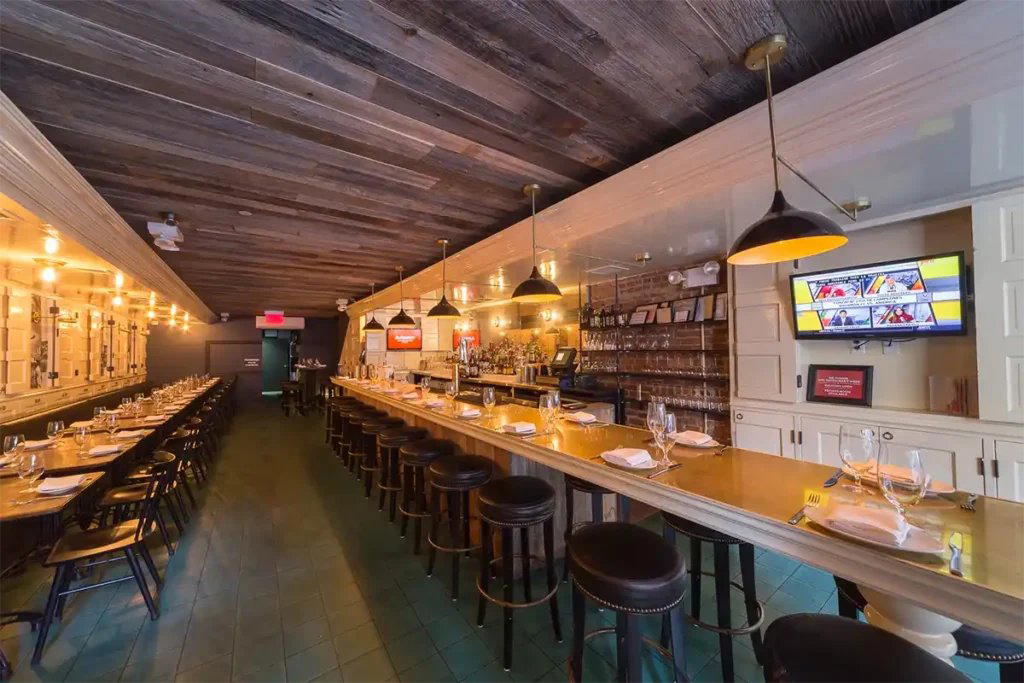
How New York Learned to Take Paella Seriously
For most of its early presence in New York, paella occupied an awkward position in the city's Spanish dining scene: too familiar to feel special, too easily botched to command serious attention. The category attracted broad-audience Iberian restaurants that treated it as a crowd-pleaser rather than a technical exercise, and the result was decades of yellow rice with scattered seafood that had little connection to the Valencia tradition it nominally descended from. Socarrat Paella Bar arrived on the New York scene with a different premise, one built around paella as the organizing principle of an entire menu rather than a single marquee item surrounded by tapas.
The Midtown East location on 2nd Avenue sits within a corridor that has historically served a professional lunch crowd and neighborhood regulars more than destination diners. That context is part of what makes the menu architecture here worth reading carefully. The restaurant is not positioning itself as a celebratory Spanish set piece. It is doing something quieter and more disciplined: building a focused program around rice cookery and asking the room to engage with it on those terms.
The Menu as a Taxonomy of Rice
The defining quality of Socarrat's menu structure is that paella is treated as a category with internal distinctions, not a single dish. Valencia's rice tradition encompasses several distinct formats, and the menu maps those differences rather than collapsing them into a single house version. Valenciana-style preparations, fideuà (the Catalonian pasta variant that follows the same cooking logic as rice paella), and arroz negro each follow separate technical paths, and the kitchen's commitment to that taxonomy is what separates this from broader Spanish menus where paella appears as a footnote.
Name itself is instructive. Socarrat refers specifically to the caramelized, slightly crisp crust that forms at the base of a properly made paella when the rice is allowed to catch against the pan without burning. It is the marker of correct heat management and timing, and it is routinely absent from restaurant versions because it requires attention and cannot be rushed. Making that detail the restaurant's identity is a statement about where the kitchen's priorities sit.
Spanish rice cookery demands a particular ratio of stock to grain, control over reduction speed, and restraint with stirring, all of which conflict with the economics of high-volume service. Its ability to work in a Manhattan setting, serving a mixed crowd across lunch and dinner, reflects operational discipline. For context, the New York Spanish dining tier has shifted considerably since the mid-2000s, when José Andrés and a small cohort of Spanish-trained chefs began reframing what the cuisine could look like in an American market. Socarrat operates at a different price point and register than the tasting-menu end of that shift, but it draws from the same period of renewed seriousness around Iberian technique.
Drinks and the Logic of the Spanish Table
A paella-centered menu creates natural pressure on the drinks list to follow Spanish logic. The canonical pairing for Valencian rice dishes runs through the wines of the eastern Spanish coast: the DO Valencia and Utiel-Requena appellations, lighter Garnacha-based reds, and dry rosados that can handle the saffron, pimentón, and seafood registers without overwhelming them. Vermouth service, long a fixture of the pre-lunch ritual in Barcelona and Valencia, is the kind of detail that signals whether a Spanish restaurant is thinking about the full table experience or just the food component.
The Midtown East Setting
2nd Avenue in the upper 50s operates differently from the destination restaurant corridors of the West Village or lower Manhattan. The neighborhood draws office workers, residents of the Sutton Place and Beekman area, and visitors to the Midtown corridor who want reliable, specific food rather than a production. That demographic profile shapes how the restaurant functions: the room leans practical rather than theatrical, the format rewards diners who want to understand what they are eating rather than those looking for spectacle, and the price register remains accessible by Manhattan standards for the quality of cooking involved.
This is not the part of the city where restaurants open to generate press. Venues that survive here tend to do so because of consistent execution and a loyal base that returns regularly. Socarrat's continued presence on the 2nd Avenue stretch reflects that pattern.
Planning Your Visit
Paella is a shared-format dish by design, and the menu structure rewards tables of two or more who can order across multiple rice styles. Solo diners can eat well here, but the menu's logic becomes more apparent when the table has room to compare preparations side by side. Midtown East is accessible from several subway lines along Lexington Avenue, and the 2nd Avenue location is direct to reach from both the Upper East Side and Midtown proper. Reservations are advisable for dinner, particularly later in the week when the neighborhood's restaurant demand concentrates.
953 2nd Ave, New York, NY 10022. Reservations are recommended.
Comparison Snapshot
Comparable venues nearby, for context on price, style, and recognition.
| Venue | Cuisine | Price | Notes |
|---|---|---|---|
| Socarrat Paella Bar - Midtown EastThis venue — the venue you are viewing | wine_bar | $$$ | Not listed |
| Bar Blondeau | rooftop_bar | $$$ | Williamsburg |
| Saint Julivert | wine_bar | $$$ | Carroll Gardens-Cobble Hill-Gowanus-Red Hook |
| Wingbar | sports_bar | $$$ | Carroll Gardens-Cobble Hill-Gowanus-Red Hook |
| New Mulan | Bar | $$$ | Flushing-Willets Point |
| Bar Chimera | cocktail_bar | $$$ | Midtown East |
Continue exploring
More in New York City
Bars in New York City
Browse all →
Restaurants in New York City
Browse all →
Hotels in New York City
Browse all →





At a Glance
- Cozy
- Romantic
- Lively
- Date Night
- After Work
- Group Outing
- Standalone
- Seated Bar
- Lounge Seating
- Conventional Wine
- Craft Cocktails
Current opening hours
- Monday
- 12–10 PM
- Tuesday
- 12–10 PM
- Wednesday
- 12–10 PM
- Thursday
- 12–10 PM
- Friday
- 12–10:30 PM
- Saturday
- 11:30 AM–10:30 PM
- Sunday
- 11:30 AM–10 PM
Hours can change for holidays and private events. Last verified .
Cozy and romantic atmosphere with warm lighting and authentic Spanish hospitality in a lively modern setting.