Oslo's Vulkan district has built its food identity around Mathallen, the city's principal covered food hall. Under one industrial-chic roof, the market brings together specialist producers, wine merchants, and prepared-food counters that reflect Norway's shift toward provenance-led eating. It operates as a reference point for understanding what the Oslo food scene has become over the past decade.

Pearl is the En Primeur Club membership app — saves, bookings, and concierge access live there. Same editors, same standards.
- Address
- Vulkan 5, 0178 Oslo, Norway
- Phone
- +47 40 00 12 09
- Hours
- Mon ClosedTue–Sat 10 AM–8 PMSun 11 AM–6 PM
- Website
- mathallenoslo.no
- Directions
- Get directions
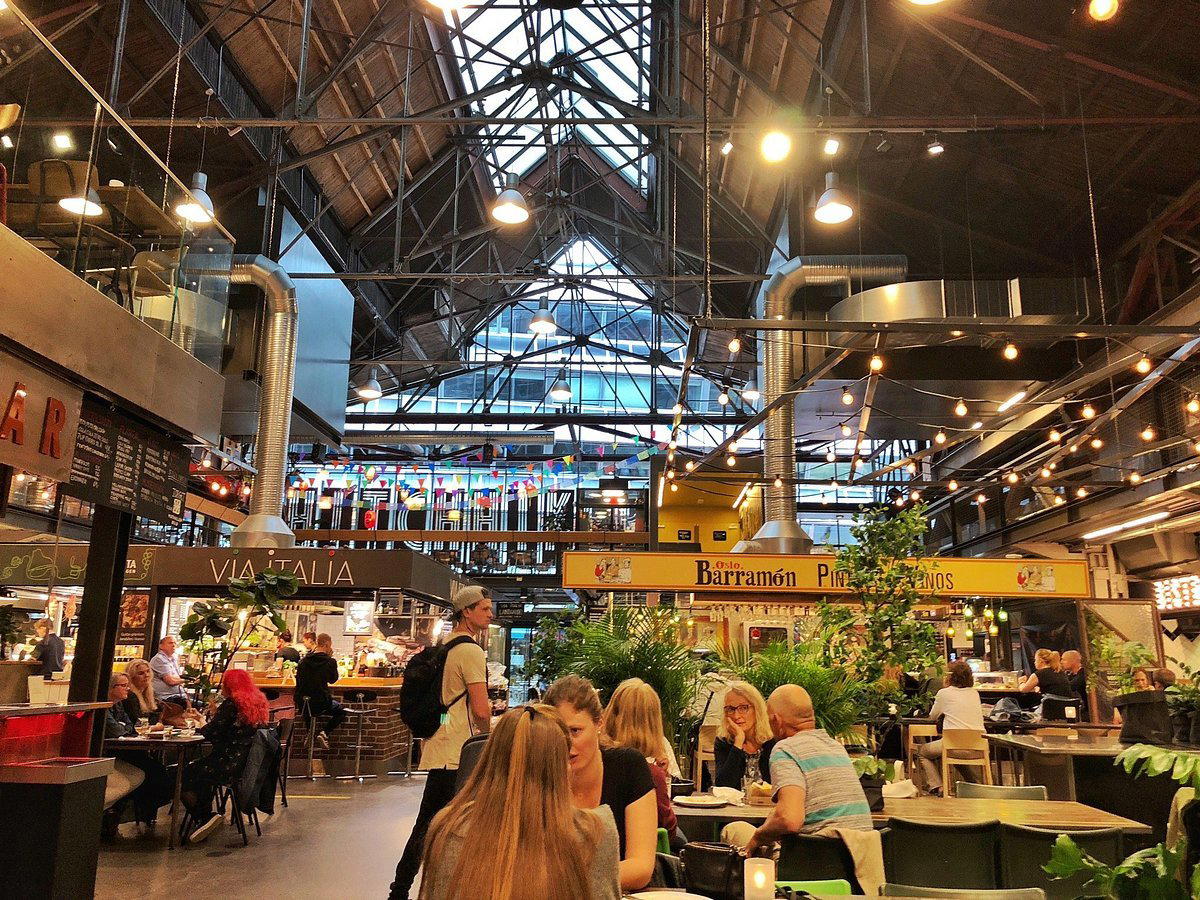
A Market Hall That Reads as a City Statement
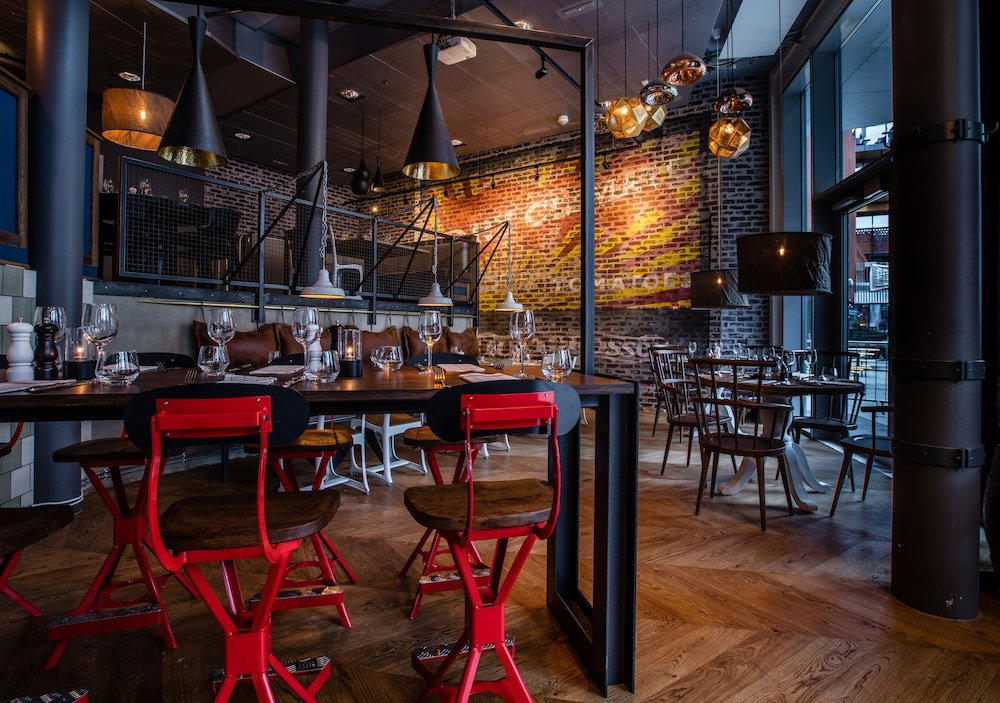
Approach Vulkan 5 from the river side and the building announces itself plainly: a converted industrial structure in a district that was, fifteen years ago, still being excavated from decades of post-industrial disuse. Mathallen Oslo sits inside what was originally a heating plant, and the original bones are part of the architecture's argument. Exposed steel and raw concrete frame a market floor where Norwegian producers, wine importers, and specialty food stalls operate side by side. It is loud, well-lit, and crowded on weekends — the kind of market hall that functions less as a quiet retail exercise and more as a public forum on how Norwegians want to eat.
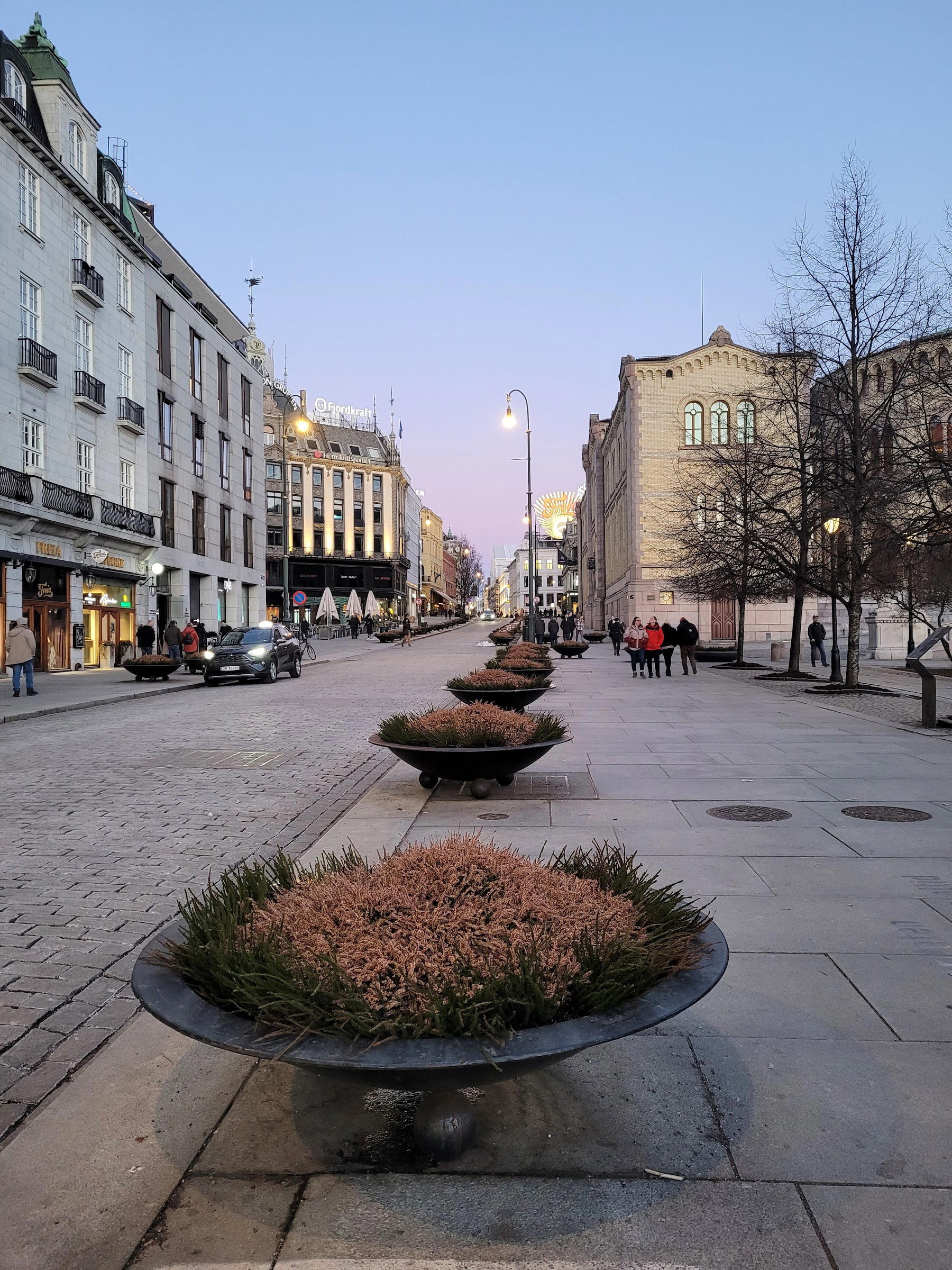
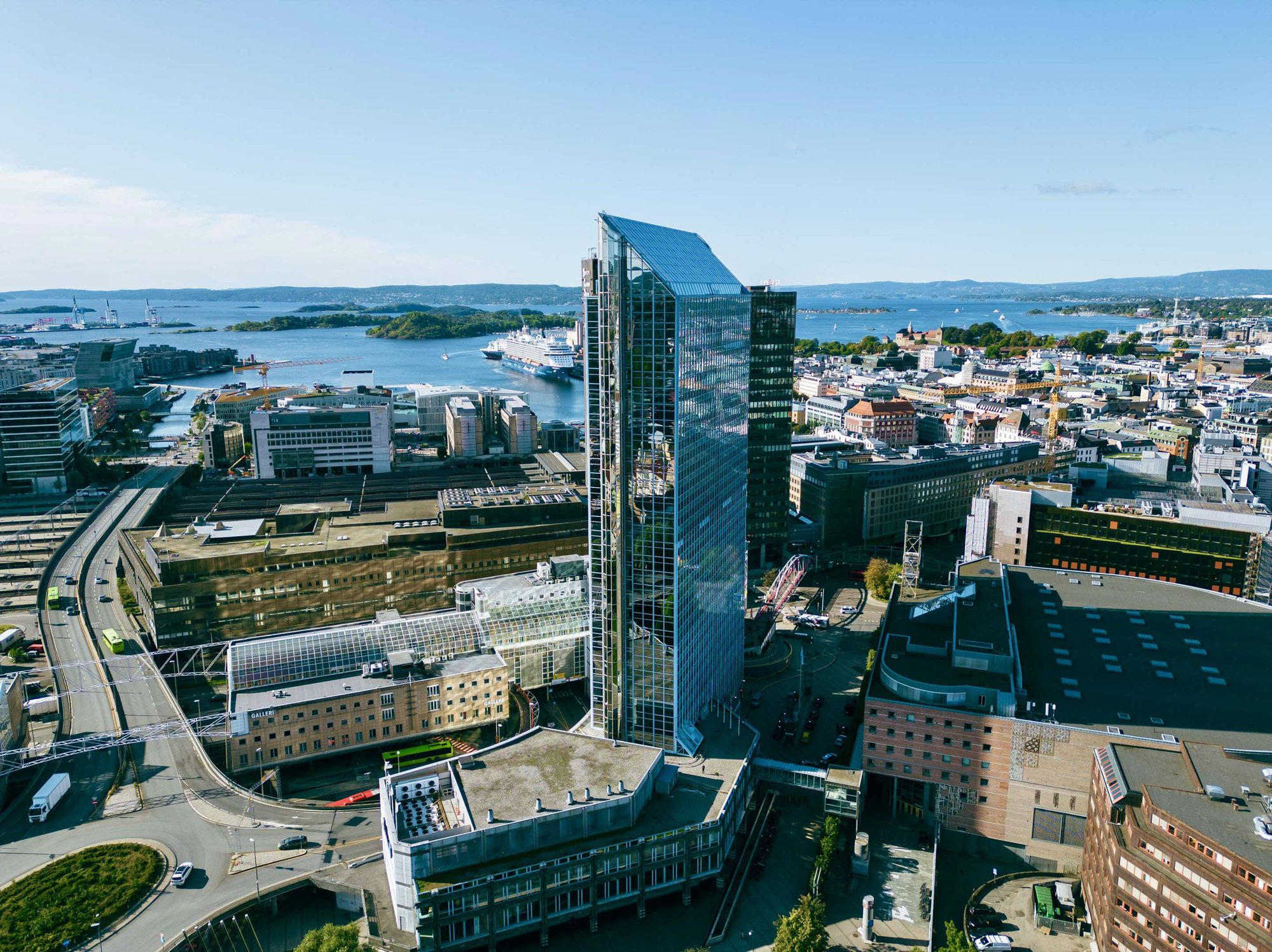
The Vulkan area itself is worth locating in context. It runs along the Akerselva river between Grünerløkka and Bjølsen, a stretch that has absorbed Oslo's appetite for urban regeneration without quite becoming the theme-park version of it. The food hall's positioning in this particular neighbourhood was deliberate: Vulkan attracted food-forward tenants early, and Mathallen became the anchor that gave the district its commercial character. To understand Mathallen is to understand something about how Oslo has repositioned itself gastronomically over the past decade.
The Back Bar Logic: Spirits, Wine, and the Case for Curation
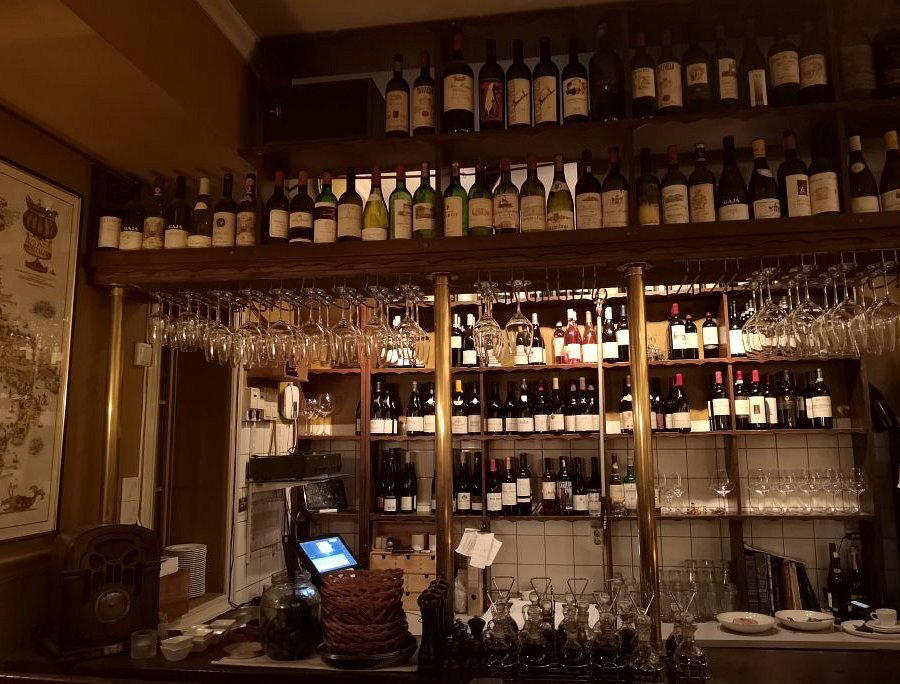
Norway's relationship with alcohol retail is governed by the Vinmonopolet system, which gives the state monopoly over the sale of wine and spirits above a certain ABV threshold. This creates an unusual market condition: venues that want to present interesting bottles have to work harder than their counterparts in open-market cities. The result, across Oslo's more serious drinking venues, is that curation becomes both a necessity and a point of pride. What you see behind a bar in Oslo is a deliberate editorial act in a way that it simply isn't in cities where supply is frictionless.
Mathallen's tenants operate inside this logic. The market hall format differs from those dedicated bar environments, but the underlying editorial stance is similar: provenance is stated, producers are named, and the assumption is that the customer wants to know where things come from.
Across Norway, this philosophy is visible in very different settings. Amtmandens in Tromsø applies it in the far north; Blomster og Vin in Trondheim and Dråpen Vinbar in Bergen anchor their respective cities' wine-bar cultures around the same commitment. Smaller operations like Huset i Gato in Mosjøen, Køl Bar and Bistro in Molde, and Kork Vinbar and Scene in Rørvik demonstrate that the curation-first approach to drinks has spread well beyond the capital. Norway has, in effect, developed a national grammar for specialist drinks retail, and Mathallen's vendors write in that same language.
What the Producer Stalls Tell You About Norwegian Food Culture
The market floor at Mathallen is divided between prepared-food counters and specialty retail, with cheesemongers, fishmongers, charcuterie specialists, and bakeries occupying fixed stalls. Norwegian food culture has historically been shaped by preservation techniques — salting, fermenting, smoking, drying, that were practical responses to climate and geography. These methods have been recontextualized in recent years as markers of quality rather than necessity, and Mathallen's stall composition reflects that shift. Producers who might have supplied supermarkets quietly a generation ago now present their work as a named product with a story attached.
This mirrors what has happened in Oslo's restaurant scene more broadly. The new-Nordic momentum that made Oslo internationally legible as a food city in the 2010s has filtered down from tasting-menu restaurants into everyday retail and market culture. Visitors who want to understand the full arc of Norwegian food's current moment, from the formal end of that spectrum to the casual and accessible, will find Mathallen a useful horizontal cut through it.
Oslo Drinking Culture and Where Mathallen Sits
Oslo's cocktail and spirits scene has developed along a different axis from the food scene, with venues like Himkok establishing an internationally recognized position through aquavit-forward programs and technical rigor. Svanen occupies a different register, quieter and more wine-focused. Mathallen sits outside the dedicated bar category but contributes to the same ecosystem: it is where producers and importers make their case directly to consumers, without the intermediary layer of a drinks menu curated by a bar team. The market hall format is, in that sense, the most transparent version of the curation argument, the bottle is in your hand before you decide whether to buy.
For a broader view of how Oslo's drinking and eating culture maps across neighbourhoods and formats, the EP Club Oslo guide covers the full range from Grünerløkka to Aker Brygge. And for those who want to compare the market-hall experience against a very different drinking-culture reference point at international scale, Bar Leather Apron in Honolulu offers a useful contrast in how curation operates outside the European state-monopoly context.
Planning a Visit
Mathallen Oslo is located at Vulkan 5, 0178 Oslo, in the Vulkan district along the Akerselva. The area is walkable from central Oslo and well-served by tram. Weekend mornings draw the heaviest traffic, particularly among local shoppers stocking up at the specialist food stalls. Visitors with specific producer or stall interests are better served by arriving mid-week or early on weekend mornings. Individual stalls within the hall maintain their own hours and some operate on reduced schedules outside peak periods, so confirming with specific vendors before a targeted visit is advisable. The hall itself functions as a walk-in retail environment rather than a reservation-based dining destination, which means access is unconditional but the experience varies considerably depending on when you arrive.
Cost and Credentials
Comparable venues nearby, for context on price, style, and recognition.
| Venue | Cuisine | Price | Awards | Notes |
|---|---|---|---|---|
| Mathallen OsloThis venue — the venue you are viewing | Not listed | Not listed | Not listed | Not listed |
| Pillefyken | Not listed | $20–30 | Star Wine List | Enerhaugen, wine_bar |
| Sparta | Not listed | Not listed | Star Wine List | center, wine_bar |
| Liminal | Torshov, Bar | $50–100 | Star Wine List | Not listed |
| Klink. | Fredensborg, pub | $20–30 | Star Wine List | Not listed |
| Radegast | Not listed | Not listed | Star Wine List · Falstaff Wine Bar - 90 Falstaff Points | Fredensborg, wine_bar |
Continue exploring
More in Oslo
Details
- Lively
- Trendy
- Modern
- Casual Hangout
- Group Outing
- Design Destination
- Communal Tables
- Lounge Seating
- Craft Beer
- Street Scene
Current opening hours
- Monday
- Closed
- Tuesday
- 10 AM–8 PM
- Wednesday
- 10 AM–8 PM
- Thursday
- 10 AM–8 PM
- Friday
- 10 AM–8 PM
- Saturday
- 10 AM–8 PM
- Sunday
- 11 AM–6 PM
Hours can change for holidays and private events. Last verified .
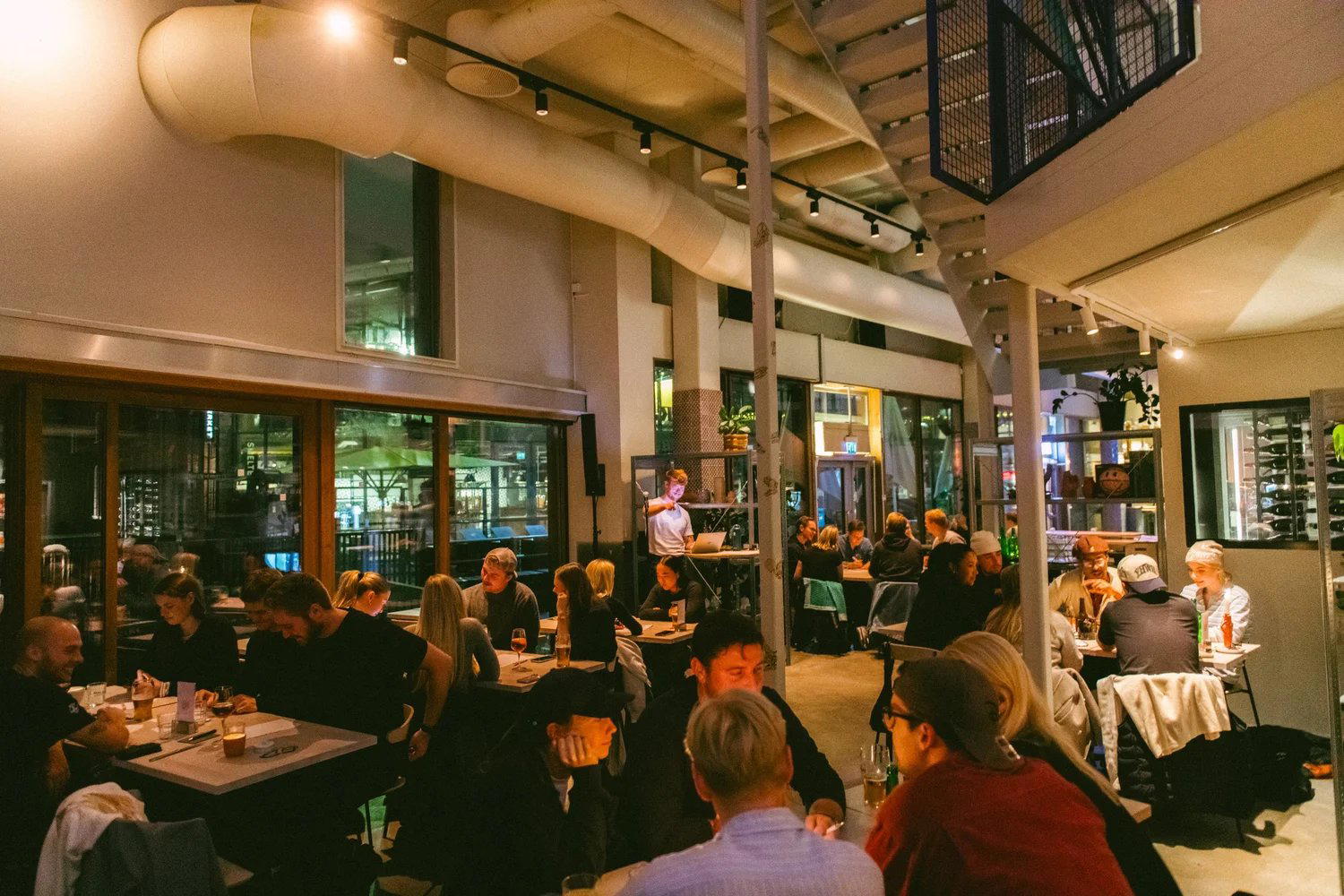
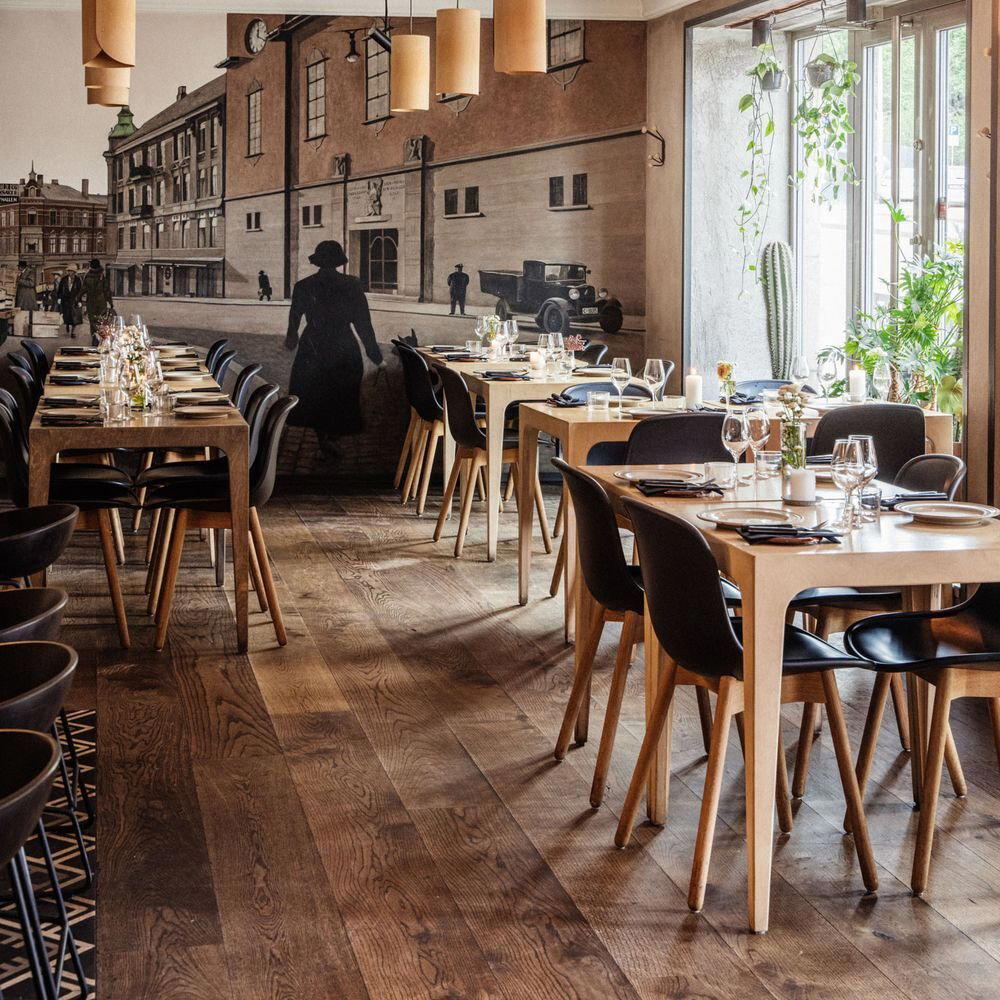
Lively and lively atmosphere with a mix of culinary stalls, social meeting places, and occasional DJ beats or live music creating an energetic food hall experience.