La Pubilla del Taulat sits on Carrer de Marià Aguiló in the Poblenou district, a neighbourhood whose market culture and proximity to the sea have long shaped how its bars and restaurants source and serve. The address places it within a stretch of Barcelona that operates at a different tempo from the Gothic Quarter or Eixample, with a local clientele that expects substance over spectacle.
Pearl is the En Primeur Club membership app — saves, bookings, and concierge access live there. Same editors, same standards.
- Address
- Carrer de Marià Aguiló, 131, L'Amistat, 12, 08005 Barcelona, Spain
- Phone
- +34 938 58 02 11
- Website
- lapubilladeltaulat.com
- Directions
- Get directions
 Saves & bookings on Pearl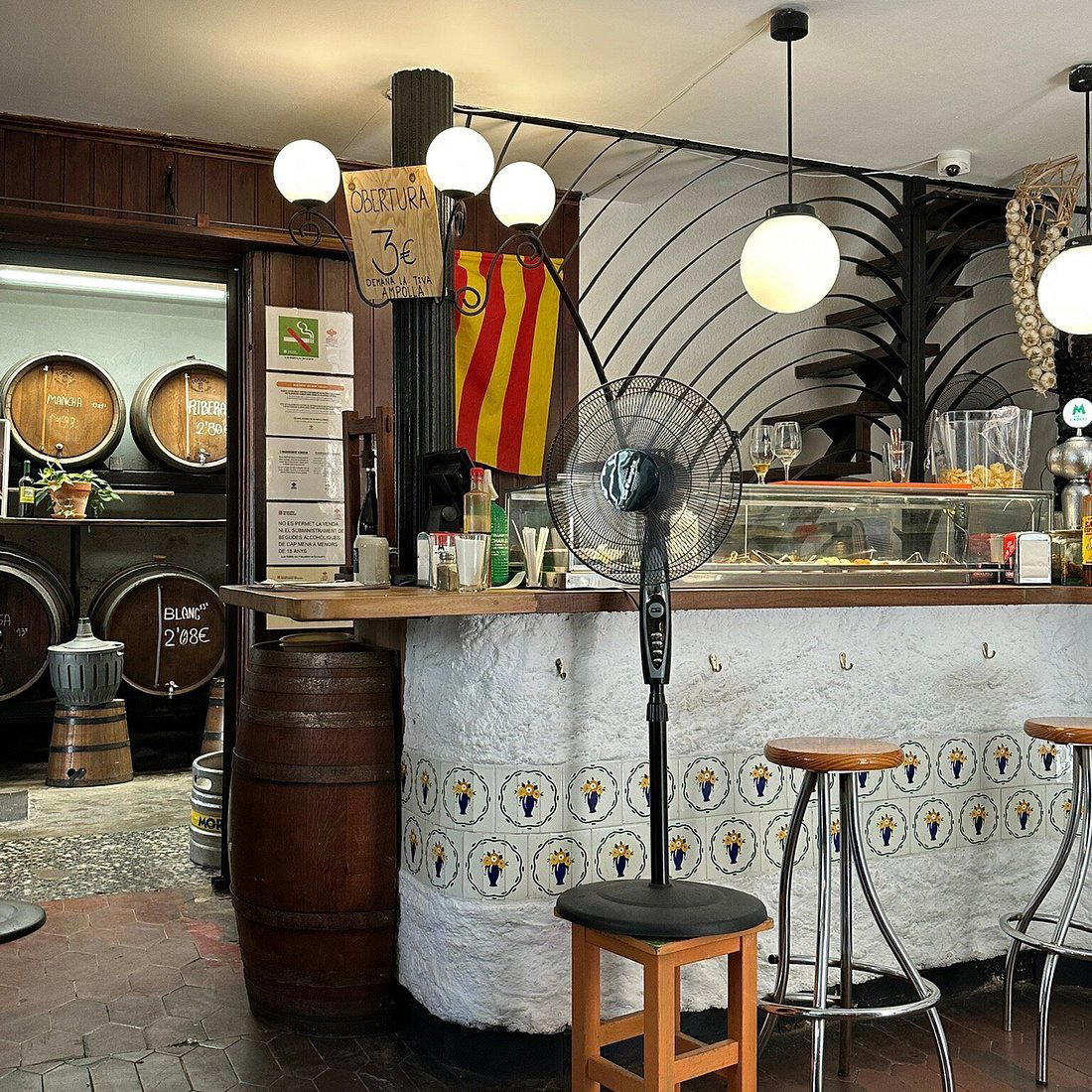
Where Poblenou's Market Tradition Meets the Glass
Carrer de Marià Aguiló runs through a part of Barcelona that has been quietly re-establishing its identity for the better part of two decades. Poblenou was the city's industrial backbone through the nineteenth century, and its slow conversion into a residential and creative district has produced something rarer than a gentrification story: a neighbourhood that retained its working character even as rents climbed and design studios moved in. The Mercat de la Barceloneta and the proximity to the waterfront have kept a direct relationship between what arrives fresh in the morning and what ends up on the plate or in the glass by evening. La Pubilla del Taulat, on this street in the L'Amistat section of Poblenou, operates within that tradition rather than against it.
Bars in this part of Barcelona tend to be shaped by their immediate geography. The Sant Martí district, which contains Poblenou, has a density of neighbourhood regulars that makes a place accountable in ways that a tourist-facing venue rarely is. You cannot rely on turnover from visitors who will not return; you rely on people who will be back on Thursday. That accountability tends to produce kitchens and bar programmes that are honest about what they can deliver, sourced as close to the door as the season allows.
The Sourcing Logic of a Neighbourhood Address
The ingredient sourcing question in Barcelona is more complicated than it first appears. The city sits at the intersection of three distinct agricultural and fishing traditions: the coastal catch from the Mediterranean, the vegetable and legume production of the Catalan interior, and the cured and fermented goods that travel in from the wider Iberian peninsula. A bar or restaurant that takes its address seriously on Carrer de Marià Aguiló is not far from the Mercat de l'Encants or the weekend producers who work the Rambla del Poblenou. The supply chain, for a place operating in this district, can be genuinely short.
That matters because it changes what ends up in front of you. Catalan bar food at its most considered is not elaborate; it is precise. Pa amb tomàquet relies on the quality of the bread, the ripeness of the tomato, and the pressure applied. Anchovies depend entirely on origin and curing time. The logic extends to drinks: vermouth served from a good local producer tastes different from the same label that has sat on a bar shelf in a venue that does not rotate stock. Neighbourhood bars in this part of the city tend to move product faster, which is its own form of quality control.
For context on how Barcelona's bar culture has developed across different districts, the city's older cocktail institutions, including Boadas in the Raval, and technically driven venues like Dr. Stravinsky in the Born, represent different poles of what the city's drinking scene can produce. Dry Martini in the Eixample operates at the formal end of that spectrum. La Pubilla del Taulat sits outside all of those peer sets, geographically and temperamentally, in a district where the bar's relationship with its street matters more than its relationship with a wider reputation economy.
The Poblenou Context and What It Asks of a Venue
Poblenou's transformation from industrial zone to residential neighbourhood accelerated significantly after the 1992 Olympics and again with the 22@ technology district project in the early 2000s. That history matters because it produced a resident population that spans long-established Catalan families, younger creative professionals, and a significant daytime worker population. A bar on Carrer de Marià Aguiló in 2024 serves all three groups, often at different hours. The morning vermouth crowd, the lunch regulars, and the evening crowd watching football are not the same people, and a neighbourhood institution has to function for all of them without losing coherence.
That kind of venue is different in character from the cocktail bars that have defined Barcelona's international reputation in recent years. Foco represents the technically ambitious, design-conscious end of the city's bar scene. La Pubilla del Taulat represents something older and, in its own way, more demanding: a place that earns its place through daily repetition rather than a single high-concept proposition.
Across Spain, this model of the embedded neighbourhood bar is under real pressure from rising operating costs and changing demographic patterns. Angelita in Madrid has navigated a version of this tension by maintaining neighbourhood roots while developing a serious wine and vermouth programme. Bar Sal Gorda in Seville and Bar Gallardo in Granada hold similar positions in their respective cities. Further afield, La Margarete in Ciutadella, Garito Cafe in Palma de Mallorca, and Garden Bar in Calvià show how the same kind of embedded local character translates across the Balearic Islands. Even Bar Leather Apron in Honolulu draws on a comparable philosophy of placing local sourcing at the centre of its drinks programme. The category of serious neighbourhood bar is not uniquely Catalan, but Catalonia has historically been good at it.
Getting There and What to Expect
Carrer de Marià Aguiló is reachable from the Llacuna or Ciutadella-Vila Olímpica metro stops on Line 4, which makes it accessible from the city centre in under fifteen minutes without a taxi. The address, at number 131, places it in the quieter upper section of the street rather than the more commercial lower stretch near the beachfront. That positioning is consistent with a local rather than tourist-facing operation: you arrive on foot from the neighbourhood, not from a hotel concierge recommendation.
Given the sparse public data available, specific hours, booking arrangements, and pricing are best confirmed directly with the venue before visiting. Neighbourhood bars in this part of Barcelona often operate on schedules shaped by local custom, including extended closures in August, shortened hours in winter, and the kind of Sunday service that runs only as long as the kitchen feels like running it. That unpredictability is not a flaw; it is a feature of a place that has not needed to standardise its offering for a mass audience.
For a broader map of where La Pubilla del Taulat sits within the city's wider eating and drinking scene, see our full Barcelona restaurants guide.
Recognition Snapshot
| Venue | Awards |
|---|---|
| La Pubilla del TaulatThis venue — the venue you are viewing | This venue |
| Boadas | World's 50 Best |
| Dr. Stravinsky | World's 50 Best |
| Dry Martini | World's 50 Best |
| Paradiso | World's 50 Best |
Continue exploring
More in Barcelona
Bars in Barcelona
Browse all →
Restaurants in Barcelona
Browse all →

Hotels in Barcelona
Browse all →
At a Glance
- Classic
- Cozy
- Rustic
- Casual Hangout
- After Work
- Historic Building
- Seated Bar
- Counter Only
- Conventional Wine
Current opening hours
- Monday
- 9 AM–11 PM
- Tuesday
- 9 AM–11 PM
- Wednesday
- 9 AM–11 PM
- Thursday
- 9 AM–11 PM
- Friday
- 9 AM–12 AM
- Saturday
- 9 AM–12 AM
- Sunday
- 9 AM–10 PM
Hours can change for holidays and private events. Last verified .
Warm, welcoming, old-school neighborhood atmosphere reminiscent of home with a typical Catalonian feel.
Know Before You Go
- Getting there
- Carrer de Marià Aguiló, 131, L'Amistat, 12, 08005 Barcelona, Spain