La Grenouille
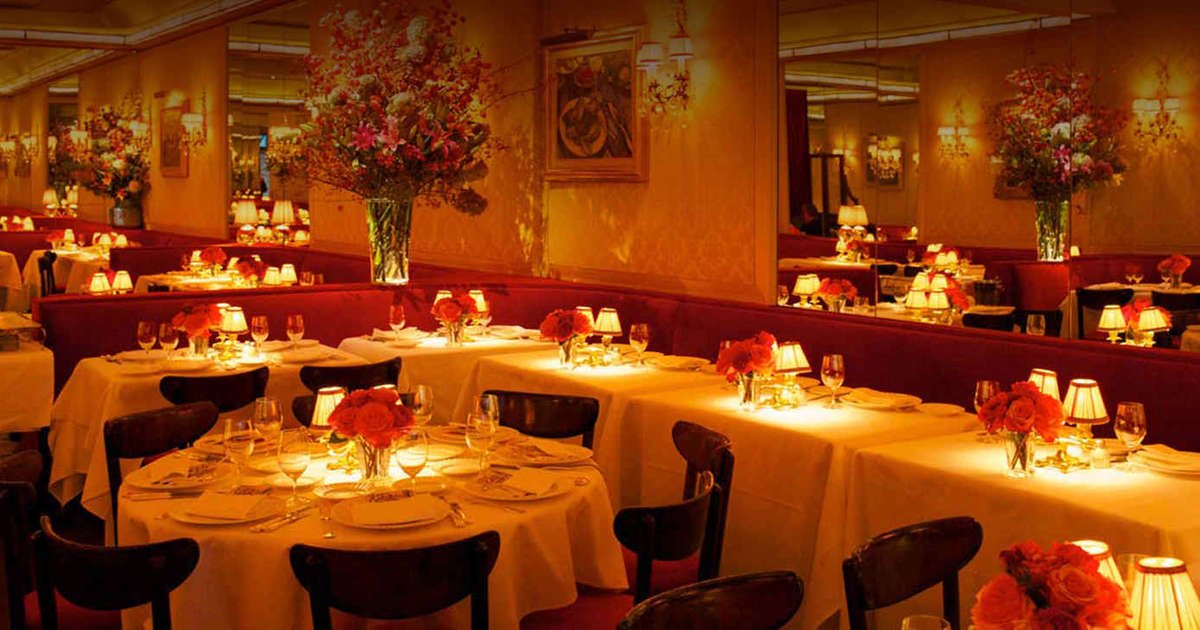
La Grenouille has occupied its East 52nd Street address since 1962, making it one of the longest-running French restaurants in New York City. The dining room is synonymous with extravagant floral arrangements and a formality that has largely disappeared elsewhere in the city. It represents a direct, unbroken line to the era of classic haute cuisine in Midtown Manhattan.
- Address
- 3 E 52nd St, New York, NY 10022
- Phone
- +1 212 752 1495
- Website
- la-grenouille.com
A Relic That Refuses That Label
French haute cuisine in New York has a complicated relationship with its own past. The great mid-century French rooms that once defined Midtown dining have, almost without exception, closed or reinvented themselves beyond recognition. La Grenouille, at 3 East 52nd Street, opened in 1962 and has remained in continuous operation since, which places it in a category of its own among the city's French establishments. It is not a revival or a reimagining. It is, as far as the public record shows, the original article.
That kind of longevity changes the terms of the conversation. Where younger French restaurants in New York position themselves against current trends, La Grenouille is the trend's reference point. The brasserie revival, the bistro naturel movement, the neo-Lyonnaise wave: all of these are responses, in part, to what La Grenouille represents. Understanding it means understanding what French dining in America once aspired to be, and why that aspiration still carries weight in certain rooms.
The Cultural Logic of the Grand French Dining Room
Classic French restaurants of La Grenouille's generation were built around a specific set of ideas: that the dining room itself was a form of theater, that flowers and table settings communicated seriousness of purpose, and that service operated as a discipline rather than a performance. These premises came directly from the grandes maisons of Paris and were transplanted, with varying success, to American cities during the postwar decades. New York, with its concentration of European emigres, corporate expense accounts, and cultural ambition, was the most receptive soil.
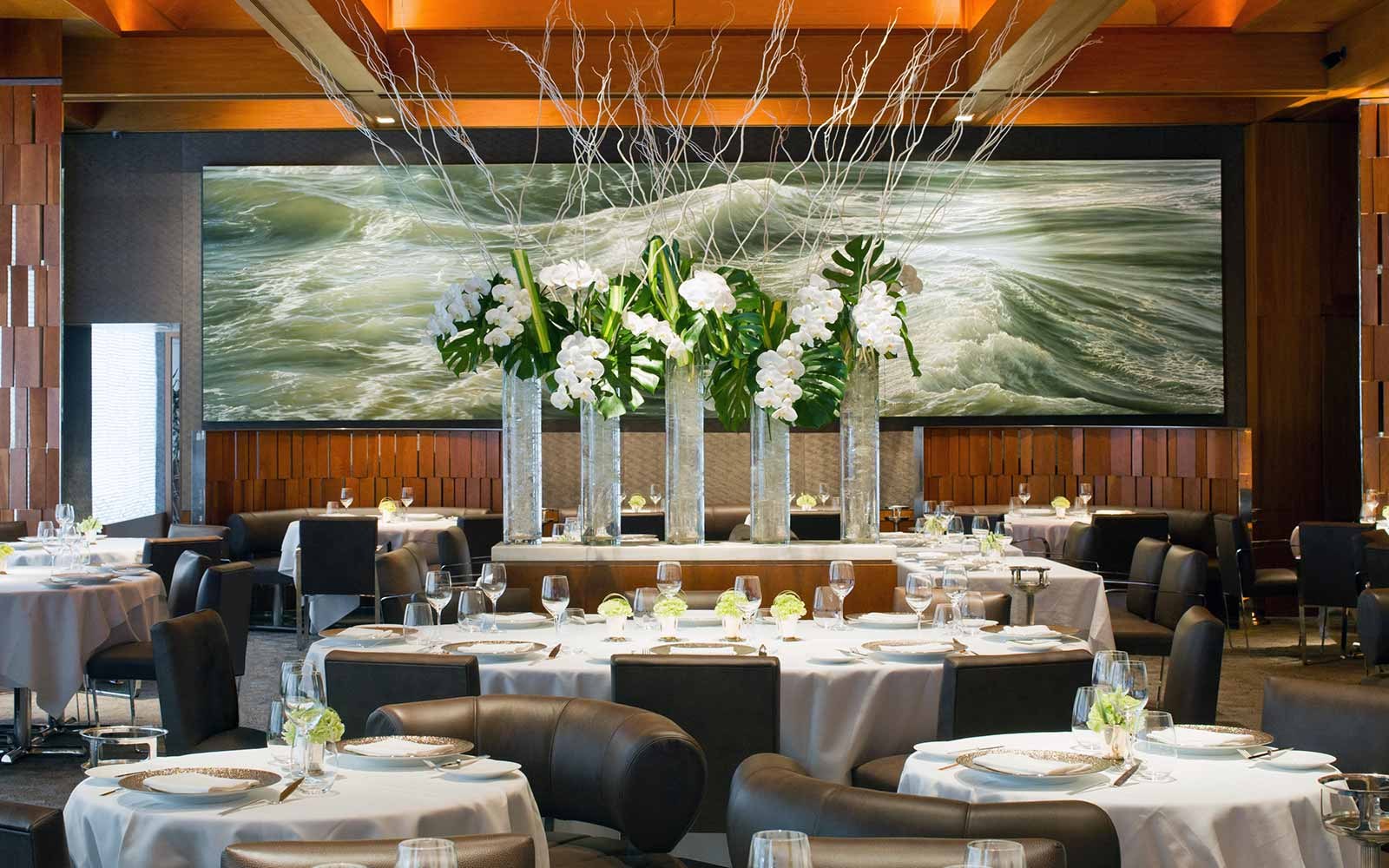
The floral arrangements at La Grenouille became the most legible sign of this philosophy. Fresh flowers, changed frequently and arranged at a scale that most restaurants would consider extravagant even today, have been a constant of the room since the restaurant's founding. In the context of French dining culture, this is not decoration for its own sake. It communicates that the space is maintained with intention, that the experience of being in the room is considered as carefully as the food on the plate. The gesture is as much about hospitality grammar as it is about aesthetics.
This puts La Grenouille in sharp contrast with the direction New York's French dining has taken over the past two decades. A restaurant like Dirty French in the Lower East Side operates on deliberate informality, collapsing the distance between diner and kitchen. The appetite for that register is real and, in many parts of the market, dominant. But the formal French room has not disappeared so much as contracted to a very small number of addresses, of which La Grenouille is the most historically continuous.
Midtown's Changing Register
The East 52nd Street block sits in a part of Midtown that has changed substantially around it. The corporate lunch culture that once sustained formal French restaurants at this price point has thinned considerably, and many of the original peer set, Le Pavillon, Le Cirque in its early incarnation, Lutèce, have not survived. La Grenouille's continued operation in that context is a data point worth taking seriously. It suggests either a clientele that has maintained loyalty across decades or a reputation that continues to draw visitors specifically because there is no equivalent alternative in the city.
For those planning a visit, the address itself is worth noting for logistics. The 52nd Street corridor between Fifth and Park Avenues is walkable from several Midtown hotels and accessible from the Fifth Avenue and 51th Street subway stations. Reservations, given the restaurant's reputation and limited competition in its specific category, are advisable well in advance, particularly for dinner seatings and weekend service.
Where La Grenouille Sits in the Broader Drinking City
A visit to La Grenouille fits naturally into a broader Midtown evening, though the bar culture immediately surrounding it operates at a different register. New York's cocktail scene in 2024 is largely concentrated in neighborhoods like the Lower East Side, East Village, and Brooklyn, where programs at venues like Attaboy NYC, Angel's Share, and Amor y Amargo have built sustained international reputations. The technical ambition at a place like Superbueno, with its focus on Latin American spirits and format, represents exactly the kind of category specificity that defines New York's current bar moment.
That energy is not what La Grenouille offers at its bar, nor should it be. The restaurant's bar, like the dining room, operates within French classical conventions: the aperitif, the digestif, the wine list as the primary vehicle for exploration. For readers who want to map the broader range of ambitious drinking in the United States, the contrast is instructive. Kumiko in Chicago and Allegory in Washington, D.C. represent the kind of narrative-led cocktail programming that has redefined what an American bar can do. Jewel of the South in New Orleans and Julep in Houston anchor their programs in regional tradition. ABV in San Francisco and Bar Leather Apron in Honolulu show how far this bar culture has distributed geographically. Even internationally, The Parlour in Frankfurt on the Main reflects how American cocktail ideas have traveled. La Grenouille occupies a different axis entirely: less about the glass than about the table, the room, and the occasion built around both.
Who This Restaurant Is For Now
The honest answer to that question is not a single demographic. La Grenouille draws from at least three distinct groups: long-standing regulars for whom the restaurant is a reliable constant in a city that discards its institutions quickly; visitors from outside New York who arrive specifically because the restaurant's reputation has traveled; and a smaller cohort of younger diners drawn by precisely the things that make it unfashionable elsewhere, the formality, the flowers, the sense that dinner here is treated as an occasion rather than a transaction.
That third group is worth watching. In cities where the dominant dining register has been casual for long enough, the formal room starts to read as counterculture. La Grenouille has not needed to position itself this way; it simply stayed in place while the market shifted around it. For a fuller picture of where New York's restaurant culture sits today, including the full range of formats and price points, the EP Club New York City guide covers the city's dining and drinking in broader detail.
Planning a Visit
La Grenouille is located at 3 East 52nd Street in Midtown Manhattan. Given the restaurant's standing as one of the few remaining formal French rooms operating in the city, and the absence of a close equivalent at this level of historical continuity, securing a reservation before arriving in New York is advisable. The dress code reflects the room's register: this is not a restaurant where casual dress is expected, and the experience of the dining room is substantially shaped by that formality. First-time visitors would do well to arrive without a tight schedule; the rhythm of service here is measured, and attempting to compress it defeats the purpose of the room.
What It’s Closest To
A compact peer snapshot based on similar venues we track.
| Venue | Awards |
|---|---|
| La GrenouilleThis venue — the venue you are viewing | |
| The Long Island Bar | World's 50 Best |
| Dirty French | |
| Superbueno | World's 50 Best |
| Amor y Amargo | World's 50 Best |
| Angel's Share | World's 50 Best |
Continue exploring
More in New York City
Bars in New York City
Browse all →
Restaurants in New York City
Browse all →
Hotels in New York City
Browse all →


At a Glance
- Romantic
- Elegant
- Classic
- Opulent
- Sophisticated
- Date Night
- Special Occasion
- Historic Building
- Seated Bar
- Lounge Seating
- Private Rooms
- Booth Seating
- Classic Cocktails
Glamorous and timeless with plush red banquettes, abundant flower arrangements, mirrors, deco details, and an elegant, intimate setting evoking old-world Paris romance.