The Whiskey Ward
On Essex Street in the Lower East Side, The Whiskey Ward occupies the direct end of New York's whiskey bar spectrum: no reservation system, no cocktail theatrics, just a serious spirits list in a neighborhood that has long rewarded that kind of directness. The bar sits within walking distance of the LES's densest concentration of independent drinking rooms, making it a practical anchor for an evening that moves.
- Address
- 121 Essex St, New York, NY 10002
- Phone
- +1 646 682 9016
- Website
- thewhiskeyward.com
- Directions
- Get directions
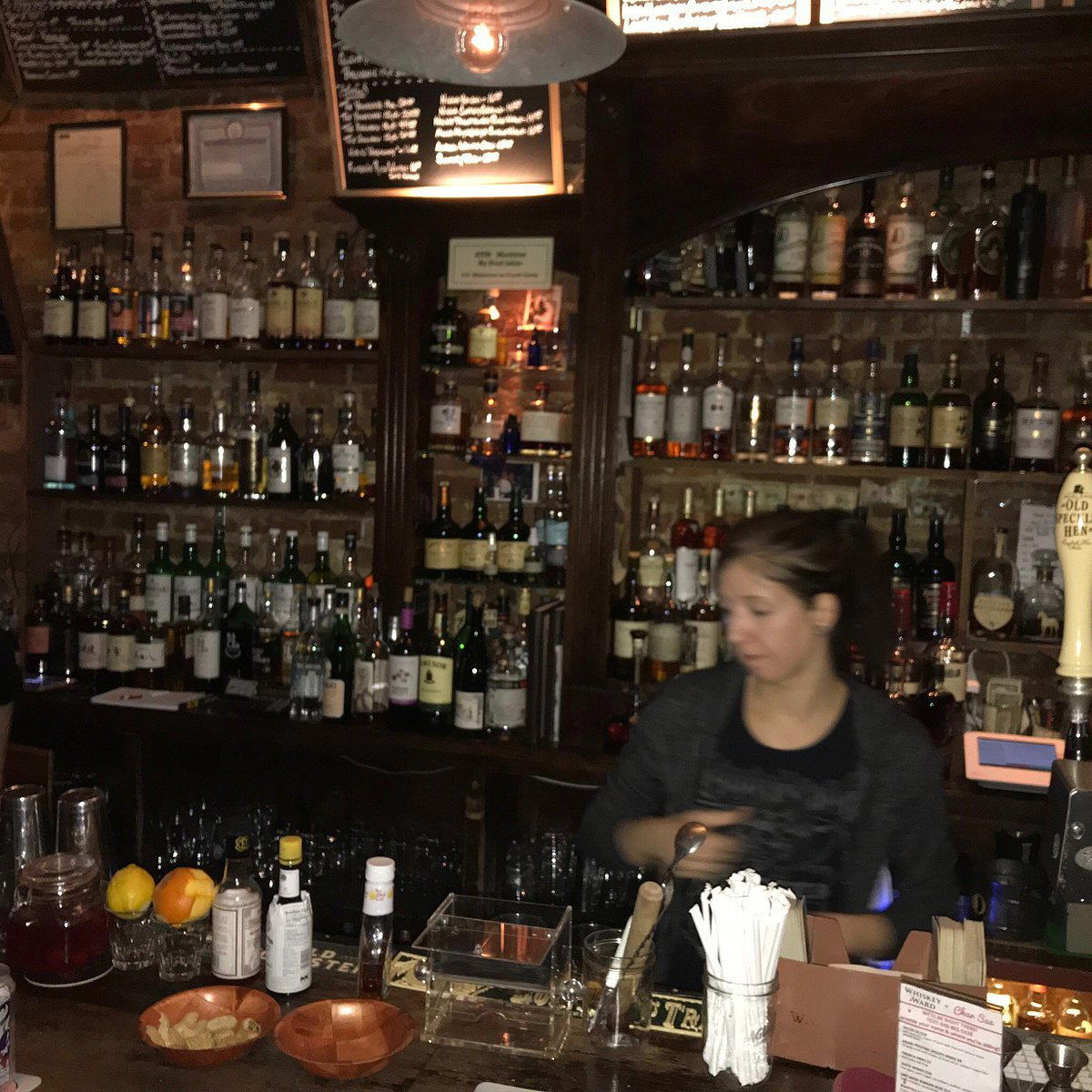
Essex Street and the Case for No-Frills Whiskey
New York's bar scene has spent the better part of two decades bifurcating. On one side: the highly produced cocktail program, the clarified milk punch, the tasting menu for drinks. On the other: the whiskey bar, which has largely resisted that pressure and kept its format intact. In a city where format drift is constant, staying a whiskey bar is a choice.
The Lower East Side has historically been New York's most tolerant neighborhood for that kind of straightforwardness. Its drinking culture developed alongside its function as a landing point for successive waves of new residents, each of whom brought a different relationship to spirits, to communal space, and to the idea of what a bar should do. What survived that churn was a preference for the direct over the elaborate. The Whiskey Ward fits that lineage in both address and approach.
Where the LES Sits in New York's Drinking Map
To the north, the East Village has trended toward cocktail-forward programming, with bars like Amor y Amargo representing the serious, technique-driven end of that shift. Further west, venues such as Attaboy NYC on Eldridge Street operate in the low-ego, high-craft register that defined the post-speakeasy era. And in the East Village proper, Angel's Share has held its ground as one of the city's more disciplined Japanese-influenced drinking rooms for decades.
Against that backdrop, a whiskey-focused bar on Essex Street reads as a counterpoint rather than a product of the same movement. The format is older, the margin logic is different, and the customer relationship is more transactional in the leading sense: you know what you're getting, the bar knows what it's providing, and that clarity is the point. Bars built around a single category of spirits tend to attract a different kind of regularity than cocktail bars do. The whiskey drinker comes back for specific bottles, specific price points, specific pours they cannot replicate at home.
The Whiskey Bar Format in a Global Frame
Across premium drinking cities, the spirits-focused bar has developed in two distinct directions. The first is curatorial and expensive: allocated bottles, vertical tastings, staff who can explain the mash bill on every shelf. The second is democratic and high-volume: a long list at accessible prices, a relaxed atmosphere, and the expectation that the whiskey itself carries the experience. Both formats have their adherents. What differentiates them is not quality but philosophy.
You can see both ends of that spectrum in cities outside New York. Kumiko in Chicago approaches spirits with the same architectural discipline it brings to cocktails, using Japanese whisky as part of a broader menu logic. Bar Leather Apron in Honolulu demonstrates that serious whiskey programs can coexist with place-specific identity without requiring either to compromise. Jewel of the South in New Orleans and Julep in Houston each show how Southern spirits traditions can be expressed with varying degrees of curatorial intention. And on the West Coast, ABV in San Francisco has built a program that treats spirits as seriously as it does its fermented and low-ABV alternatives.
The Whiskey Ward's role in this broader map is as a neighborhood bar rather than a destination program. That is not a diminishment. Neighborhood anchors serve a function that destination bars cannot: they create a regular relationship with a specific community, they absorb the spillover from nearby bars, and they give the area a functional identity that survives trend cycles. The LES needs bars like this as much as it needs its more ambitious rooms.
The LES as a Drinking Destination in 2024
The Essex Street corridor has evolved considerably since its peak as New York's most concentrated block of independent bars roughly a decade ago. Some of that density has thinned. What remains is a more curated version of the original proposition: fewer venues, more intentional ones. Superbueno, for instance, brings a specific Latin American spirits focus to the neighborhood that contrasts productively with the whiskey orientation at the Ward end of Essex. The two bars are not competing for the same customer, which is exactly the kind of complementary diversity that makes a drinking neighborhood worth spending an evening in.
For anyone building an itinerary around the LES, the practical advantage of the neighborhood is its walkability. The concentration of independent bars within a few blocks means that a single evening can move through several different formats and spirits philosophies without requiring a cab or a significant planning effort. The Whiskey Ward functions well as either an opening drink or a late stop, given that its format doesn't require the focused attention that a cocktail bar or tasting program might demand.
Bars built on transparency about what they are tend to age better than those built on novelty. The clearest signal that a whiskey bar is operating from a stable foundation is the return rate of its regulars, and Essex Street has enough residential density and enough local loyalty that a well-run whiskey program can sustain itself against the ambient pressure to become something more complicated. That is a harder thing to maintain in New York than it sounds.
Those planning to extend the comparison further afield might also consider Allegory in Washington, D.C. or The Parlour in Frankfurt on the Main, both of which demonstrate how spirits-forward programming translates across different city contexts.
Cost and Credentials
Comparable venues nearby, for context on price, style, and recognition.
| Venue | Cuisine | Price | Notes |
|---|---|---|---|
| The Whiskey WardThis venue — the venue you are viewing | Lower East Side, Bar | $$ | Not listed |
| The Mercury Lounge | Lower East Side, lounge | $$ | Not listed |
| Sendo | Midtown South-Flatiron-Union Square, Bar | $$ | Not listed |
| CHILI | Midtown-Times Square, lounge | $$ | Not listed |
| Spritzenhaus33 | Not listed | $$ | Greenpoint, beer_bar |
| Il Corso | Midtown-Times Square, lounge | $$ | Not listed |
Continue exploring
More in New York City
Bars in New York City
Browse all →
Restaurants in New York City
Browse all →
Hotels in New York City
Browse all →




At a Glance
- Rustic
- Classic
- Cozy
- Casual Hangout
- After Work
- Late Night
- Group Outing
- Standalone
- Historic Building
- Seated Bar
- Standing Room
- Booth Seating
- Whiskey
- Classic Cocktails
- Craft Cocktails
Current opening hours
- Monday
- 5 PM–4 AM
- Tuesday
- 5 PM–4 AM
- Wednesday
- 5 PM–4 AM
- Thursday
- 5 PM–4 AM
- Friday
- 5 PM–4 AM
- Saturday
- 12 PM–4 AM
- Sunday
- 12 PM–4 AM
Hours can change for holidays and private events. Last verified .
Mellow and unassuming with dark wood paneling, pool table in back, and hip-hop music played at conversational volume creating a serene yet welcoming atmosphere.