Google: 4.6 · 9,620 reviews
Keens Steakhouse
Few dining rooms in Manhattan carry as much accumulated history as Keens Steakhouse, operating at 72 West 36th Street since 1885. The restaurant built its reputation on prime mutton chops and a clay pipe collection that numbers in the thousands, situating it firmly in the tradition of the great American chophouse. It remains one of the city's most recognisable steakhouses, drawing a mixed crowd of regulars, tourists, and theatre-district diners.
 Discover on Pearl
Pearl is the En Primeur Club membership app — saves, bookings, and concierge access live there. Same editors, same standards.
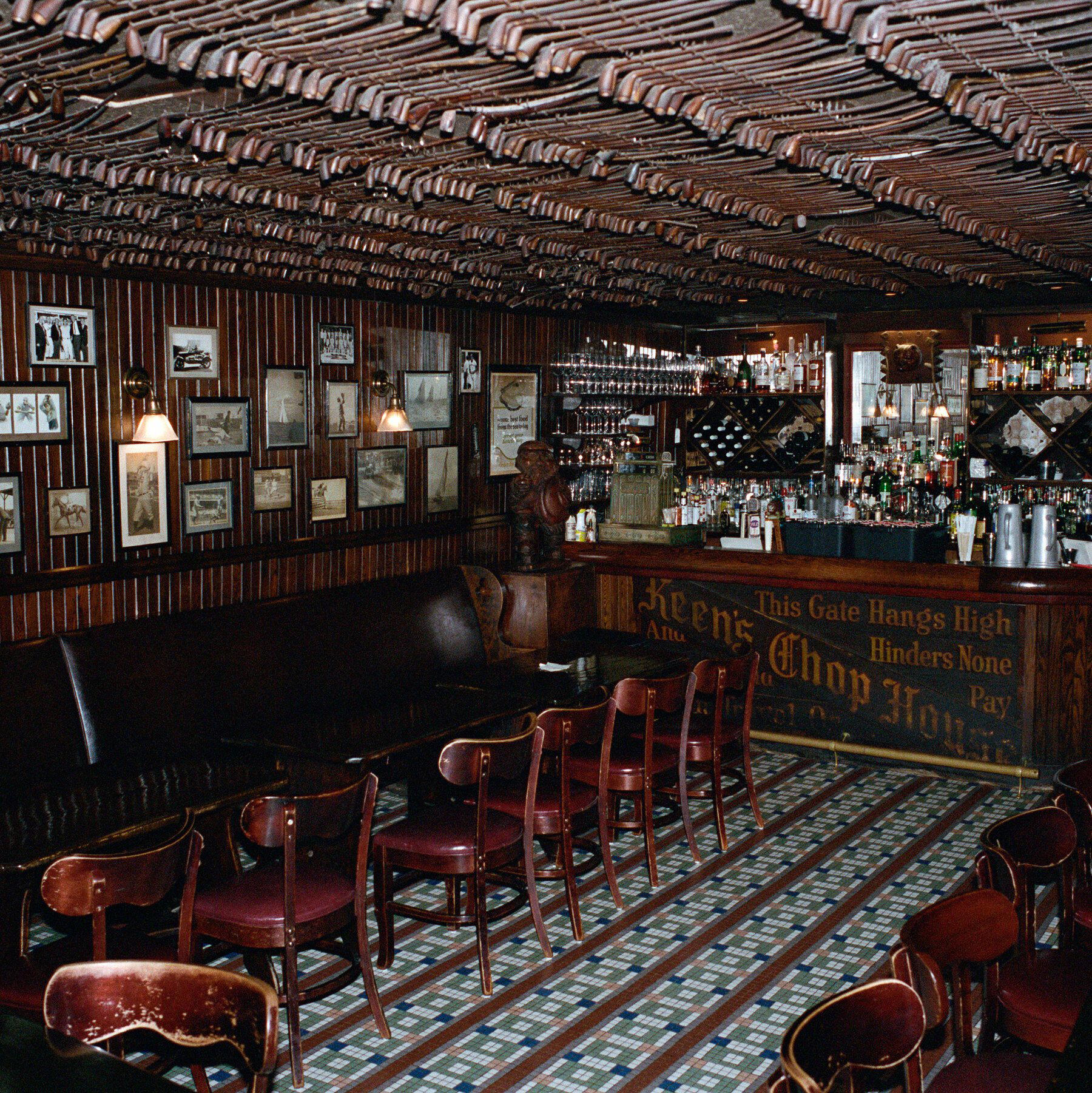
A Room That Has Outlasted Almost Everything Around It
Walk into 72 West 36th Street on any given evening and the first thing you register is not the menu but the ceiling. Thousands of clay churchwarden pipes hang in dense rows above the dining rooms, each one tagged and catalogued, a physical archive of the club-like pipe-smoking culture that defined New York's Herald Square district in the late nineteenth century. The room itself does not try to evoke a past era; it simply has not stopped being in one. Dark wood panelling, low light, and a persistent smell of aged wood and rendered fat place the visitor inside a working steakhouse that opened in 1885 and has been absorbing decades ever since.
That atmosphere is not accidental, nor is it a restoration project. Keens belongs to the small category of American restaurants where the interior is a primary argument for the place — the kind of room where the weight of continuous operation reads in the surfaces themselves. In a city that cycles through dining concepts on a roughly three-year rhythm, a room with 140-plus years of uninterrupted service is its own editorial statement.
What the Evolution of the American Chophouse Looks Like from the Inside
The American chophouse tradition that Keens represents has shifted considerably since its founding year. The late nineteenth century model was built around male-dominated club dining: pipe rooms, private booths, mutton on the menu alongside beef, and a membership culture that gave certain midtown establishments the character of private clubs with public access. Keens operated within that model and, notably, was the subject of one of New York's early documented cases of gender discrimination in dining when actress Lillie Langtry successfully sued for the right to be served there in the early 1900s — a verifiable episode in the restaurant's public record that marks a transitional moment in how these rooms understood their own clientele.
By the mid-twentieth century, the chophouse model had largely consolidated around beef, shedding much of its pipe-room club character as post-war dining shifted toward French-influenced fine dining and then, decades later, toward the expense-account steakhouse format dominated by national chains. Keens neither pivoted to fine dining nor franchised. It held its format and its room, and that consistency eventually became a competitive position: the original against a field of newer entrants with no comparable depth of material history.
The current direction sits somewhere between preservation and quiet modernisation. The mutton chop, long a signature that no comparable Manhattan steakhouse bothers with, remains on the menu as a marker of continuity. The wine program has expanded over the decades in line with what a contemporary steakhouse audience expects. The kitchen operates within the chophouse tradition but against a competitive set that now includes ambitious modern steakhouses with broader menus and higher celebrity profiles. Keens' answer to that pressure has been to lean further into what it already is rather than to chase the newer format.
Where Keens Sits in the Current New York Steakhouse Field
New York's steakhouse market divides roughly into three tiers: the national chain operators with consistent but formulaic programs; the celebrity-chef-branded or hospitality-group rooms that run steakhouse menus alongside broader modern American formats; and a smaller group of independently operated houses with genuine institutional depth. Keens occupies the third tier, alongside a handful of other rooms that predate the post-1990s steakhouse boom. Within that group, its midtown Herald Square address puts it in a slightly different geographic position than the prime east-side or Meatpacking-area competitors, drawing a mix of theatre-district diners, business lunchers, and deliberate visitors who have made the trip specifically for the room and the mutton chop.
The price tier places it in the premium independent category, comparable to other long-running Manhattan chophouses rather than to the newer high-design expense-account rooms, though the gap between those categories has narrowed as beef prices and midtown overheads have converged across the market. For context on how New York's broader hospitality scene is currently positioned, the full New York City restaurants guide maps the major dining categories and neighbourhoods across the city.
The Pipe Collection as Living Context
The churchwarden pipe collection deserves more than a passing mention because it functions as the clearest evidence of what kind of institution Keens has historically been. The pipes were held on behalf of members and regular patrons, retrieved when those individuals visited and returned at the end of the meal, a practice that formalised the relationship between the establishment and its regulars in a way that no loyalty program has since replicated. Among the documented pipe holders were figures including General William Sherman, Buffalo Bill Cody, and Albert Edward, Prince of Wales, a roster that places the collection in the public record rather than in promotional mythology. The pipes are no longer in active use, but their display turns the ceiling into a kind of physical guest list for every generation of the room's operation.
Drinking in the Context of Midtown Manhattan
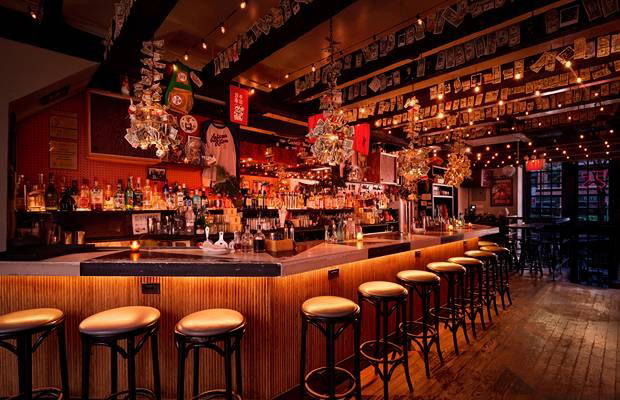
Bar at Keens functions as a proper pre-dinner destination in its own right, operating within the chophouse tradition of substantial whisky programs and classic cocktail formats rather than the modernist technical-bar idiom that dominates the current New York cocktail conversation. For visitors interested in tracing how American bar culture has evolved alongside and separately from the steakhouse tradition, New York offers a wide comparative field: Attaboy NYC and Angel's Share represent the deliberate craft-bar end of the spectrum, while Amor y Amargo occupies a specialised amaro-focused niche, and Superbueno represents the genre-bending Latin-inflected direction that has been one of the more interesting developments in New York bar programming over the past several years.
Further afield, for those building a comparative picture of American bar culture across cities, programmes worth understanding include Kumiko in Chicago, Jewel of the South in New Orleans, Julep in Houston, ABV in San Francisco, Allegory in Washington, D.C., and Bar Leather Apron in Honolulu. For European reference, The Parlour in Frankfurt on the Main illustrates how the American cocktail-bar format translates into a European context.
Know Before You Go
Know Before You Go
- Address: 72 W 36th St., New York, NY 10018
- Neighbourhood: Herald Square / Garment District, Midtown Manhattan
- Getting there: B, D, F, M, N, Q, R, W trains to 34th Street–Herald Square; also accessible from Penn Station
- Booking: Reservations are strongly advised, particularly for dinner and weekend service; the dining room fills quickly from the theatre-district crowd on weekday evenings
- Seasonal note: The lunch service draws a heavy business crowd on weekdays; the room is noticeably quieter at lunch in August when the surrounding office population thins, making it a reasonable window for first-time visitors who want to examine the room at a slower pace
- Format: Full à la carte chophouse service; the mutton chop is the signature order and requires advance planning as availability is limited
Continue exploring
More in New York City
Bars in New York City
Browse all →

Restaurants in New York City
Browse all →
Hotels in New York City
Browse all →


At a Glance
- Classic
- Iconic
- Cozy
- Elegant
- Sophisticated
- Special Occasion
- Celebration
- After Work
- Group Outing
- Historic Building
- Standalone
- Seated Bar
- Booth Seating
- Private Rooms
- Classic Cocktails
- Whiskey
- Conventional Wine
- Bottle Service
Dark mahogany walls, tin ceilings, and low lighting create a 1920s-era clubhouse atmosphere with theatrical memorabilia and historical photographs throughout.