Hôtel du Buet
In the Vallorcine valley at the foot of the Aiguilles Rouges, Hôtel du Buet sits on the route du col as one of the area's established stopping points between Chamonix and the Swiss border. The property occupies a position in the quieter, more local tier of Mont Blanc-area hospitality, away from the resort infrastructure of the larger valley towns. For travellers passing through or based in Vallorcine, it functions as a grounded base in a genuinely remote alpine setting.
 Discover on Pearl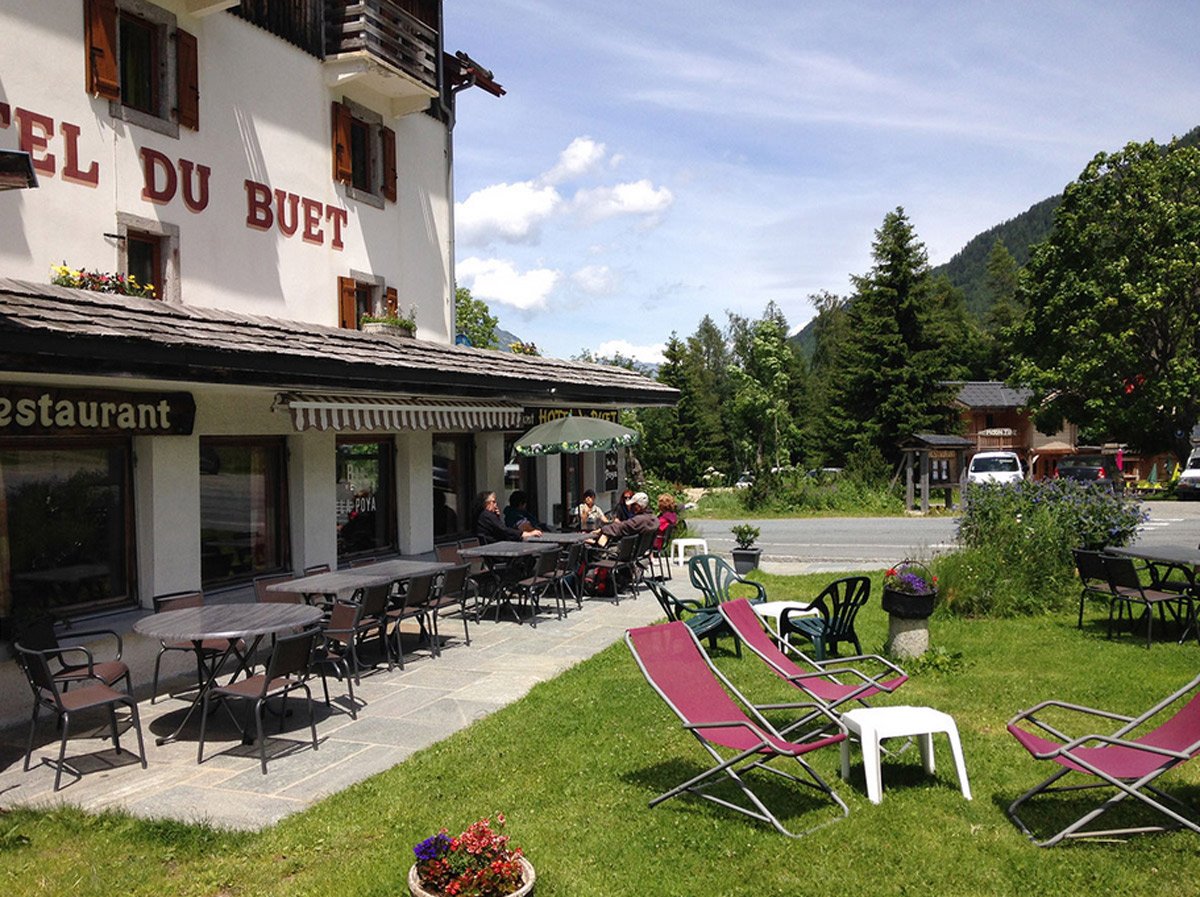
At the Edge of the Valley
The road that climbs out of Vallorcine toward the Col des Montets carries a particular quality of light in the late afternoon, when the Aiguilles Rouges catch the last of the sun and the valley below settles into shadow. Hôtel du Buet sits along this route at 2026 route du col, positioned at a point where the road begins to feel more like passage than destination. The building reads as part of the landscape rather than imposed upon it, which is consistent with the broader character of Vallorcine itself: a village that has remained substantially quieter than its proximity to Chamonix might suggest, and one that draws a different kind of traveller than the larger resort towns down the valley.
Vallorcine occupies a specific niche in the Mont Blanc area. It sits above Chamonix but below the Swiss border crossing at Le Châtelard, accessible by the Mont Blanc Express train and by road through the Chamonix valley. The village has not developed the dense resort infrastructure of Les Houches or Argentière, which means the accommodation options here function differently from those further down the valley. Properties like Hôtel du Buet are less likely to compete on spa square footage or ski-in-ski-out positioning, and more likely to hold their appeal through location, accessibility, and the particular stillness that comes with a smaller alpine commune.
Where This Property Sits in the Regional Picture
The Mont Blanc corridor has, over the past decade, seen considerable investment in high-specification resort accommodation, particularly in Chamonix itself where several properties have repositioned toward the premium end. Vallorcine has largely stayed outside that pressure. The village's appeal is tied to its quieter pace and its position as a genuine transit and base point for walkers, climbers, and cyclists using the GR Tour du Mont Blanc and the local trail network rather than primarily ski-area visitors.
Within that context, Hôtel du Buet operates in the category of local, independently positioned alpine properties rather than in the same peer set as the larger branded hotels in Chamonix. This is not a criticism; it reflects a functional reality about what Vallorcine is and what travellers arriving here are typically seeking. For comparison, visitors who want the full concentration of Chamonix's bar and restaurant scene might look at options closer to the town centre, where places like the more developed hospitality circuits operate. Vallorcine offers something structurally different.
For those interested in how mountain hospitality varies across French alpine settings, it is worth noting that the Haute-Savoie has developed distinct tiers of provision: the large resort towns, the quieter satellite villages, and the genuine transit settlements. Vallorcine sits firmly in the third category, and accommodation there reflects that positioning.
Drinks in an Alpine Setting
The bar and drinks culture of smaller alpine villages in the French Alps tends toward functional rather than elaborate. The emphasis in properties operating at this scale and location is usually on après-ski basics, local beers, regional spirits, and direct wine lists that support the food rather than standing as independent programming. This is structurally different from the technical cocktail programmes you find in larger urban settings.
France's cocktail scene has shifted considerably in recent years. Urban bars such as Bar Nouveau in Paris and Danico have pushed the category toward precise technique and ingredient-led menus. In the south, Papa Doble in Montpellier and Bar Casa Bordeaux in Bordeaux sit in a regional tier that takes cocktail programming seriously as a standalone offer. Further north, Au Brasseur in Strasbourg and Coté vin in Toulouse represent different expressions of the same general shift toward intentional beverage programming. Properties in alpine villages like Vallorcine sit outside this wave almost by design: the audience is different, the pace is different, and the drinks offer reflects those conditions.
That does not mean the category is without interest. The Savoie and Haute-Savoie have their own drinks traditions, including génépi, the local alpine liqueur made from artemisia plants, and Savoie wines, which include light reds from Mondeuse and whites from Altesse that pair naturally with mountain cooking. A drinks list that draws on these regional references tends to read more authentically than one reaching toward international cocktail trends that have no particular connection to the alpine context. Whether the bar at Hôtel du Buet follows this local approach is not confirmed in available data, but it is the frame against which mountain hospitality bars in this area are most usefully assessed.
For drinks programmes built specifically around regional French production, BOUVET LADUBAY in Saumur and House of Cointreau in Angers offer a different kind of reference point, each rooted in specific Loire Valley production traditions. The Le Petit Nice Passedat in Marseille shows what drinks programming looks like when it is integrated into a high-specification hotel offer along the French coast. La Maison M. in Lyon and Le Café de la Fontaine in La Turbie represent different points on the spectrum between urban cocktail culture and village bar character. For those who want a completely different reference point, Bar Leather Apron in Honolulu demonstrates how technically driven bar programmes operate at the highest level internationally.
Planning a Stay
Vallorcine is reachable by train from Chamonix on the Mont Blanc Express line, which runs from Saint-Gervais-les-Bains through to Martigny in Switzerland. The train stops at Vallorcine village, making it one of the more accessible remote valley stops without requiring a car. By road, the village is approximately 17 kilometres northeast of Chamonix town centre via the D1506. The area sits at around 1,260 metres elevation, which means summer and autumn visits offer walking access to the Réserve Naturelle des Aiguilles Rouges directly from the village. Winter access depends on road and rail conditions on the col routes.
Contact details and booking information for Hôtel du Buet are not confirmed in current available data; reaching out through local tourism resources for Vallorcine or the Chamonix valley is the practical route for reservations. For a broader orientation to eating and drinking in the area, see our full Vallorcine restaurants guide.
Side-by-Side Snapshot
These are the closest comparables we have in our database for quick context.
| Venue | Cuisine | Price | Awards | Notes |
|---|---|---|---|---|
| Hôtel du Buet | This venue | |||
| Bar Nouveau | World's 50 Best | |||
| Buddha Bar | World's 50 Best | |||
| Candelaria | World's 50 Best | |||
| Danico | World's 50 Best | |||
| Harry's Bar | World's 50 Best |
Continue exploring