Au Brasseur
Au Brasseur occupies a address on Rue des Veaux in Strasbourg's old town, where Alsace's brewing tradition and a considered drinks programme meet in a setting shaped by the city's Franco-German character. The bar draws on a region where beer culture is taken as seriously as wine, and where the line between brasserie and drinking destination has always been productively blurred.
 Discover on Pearl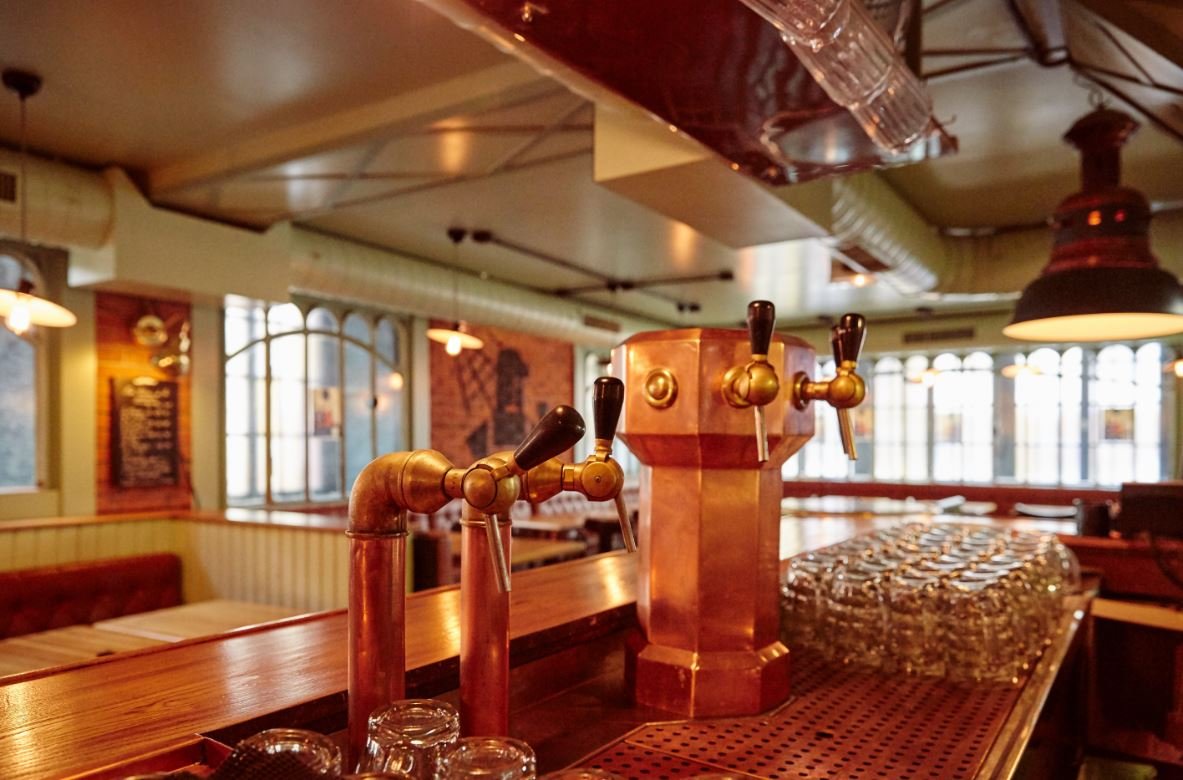
Where Alsace Pours Itself a Drink
Rue des Veaux sits inside the dense medieval grid of Strasbourg's Grande Île, a few minutes from the cathedral and the canals of Petite France. This is not a neighbourhood that needs a theme: the half-timbered facades, the Franco-German street signage, the smell of warm pretzels from the bakeries on the corner — the context arrives before you do. In a city where brasserie culture predates the word itself, Au Brasseur at number 22 operates in a tradition that Strasbourg has been refining for centuries. The question worth asking of any bar in this neighbourhood is not whether it fits the setting, but what it does with it.
The Drinks Programme: Alsace as Argument
Alsace produces some of France's most technically distinctive ingredients for a bar programme. The region's eau-de-vie tradition, particularly its framboise, mirabelle, and quetsch distillates, gives local bartenders raw material that has no real equivalent elsewhere in France. Any serious drinks programme in Strasbourg that ignores this is making a choice; one that engages with it is making a point. The bar at Au Brasseur sits in a city where Riesling and Gewurztraminer are the house whites not just in restaurants but in the cultural consciousness, and where a well-constructed drink can reasonably draw on both the wine cellar and the distillery without affectation.
The shortlist, unlocked.
Hard-to-book tables, cellar releases, and concierge-planned trips.
Get Exclusive Access →Strasbourg's drinking culture has historically leaned toward the brasserie format: large, convivial, anchored by lager and choucroute rather than the kind of technique-forward cocktail programme that has reshaped bars in Paris or Lyon. That shift toward craft and specificity has arrived in Alsace later than in France's larger cities, which means the bars that have committed to it occupy a more distinctive position in the local market than their counterparts elsewhere. For a sense of how French bar culture has been evolving in that direction, Bar Nouveau in Paris and La Maison M. in Lyon illustrate the more mature end of that trajectory in their respective cities.
The Room and the Rhythm
Brasserie architecture in Strasbourg tends toward the generous: high ceilings, wood panelling, tiled floors built to absorb noise rather than suppress it. The result is a particular kind of acoustic warmth — loud enough to feel alive, not so loud that conversation requires effort. This format suits a city that has always treated drinking as social infrastructure rather than performance. Where some French cities have moved toward the intimate, low-capacity bar as a marker of seriousness, Strasbourg's character still leans toward the communal table and the long evening.
That said, the most interesting development in Strasbourg's bar scene over the past several years has been the emergence of venues that hold both registers: a room built for volume and conviviality, combined with a drinks list that rewards attention. Le Purgatoire and Pavillon Régent Petite France represent different points on that spectrum within the city. Au Brasseur sits on Rue des Veaux in a part of the old town where the foot traffic is sustained throughout the day, which means the bar operates across multiple modes: lunchtime drinks, afternoon pauses, evening sessions that extend well past dinner.
Strasbourg in the Broader French Bar Context
France's regional bar culture has been quietly diversifying. Cities like Montpellier, Bordeaux, Toulouse, and Marseille have each developed distinct drinking identities that reflect their local ingredient cultures and their relationships with wine, spirit, and hospitality tradition. Papa Doble in Montpellier operates in a Mediterranean-inflected register; Bar Casa Bordeaux in Bordeaux draws on one of France's great wine regions as backdrop; Coté vin in Toulouse reflects the southwest's particular relationship with the cellar. Even further afield, Le Café de la Fontaine in La Turbie and Le Petit Nice Passedat in Marseille show how the south builds its drinking programmes around coastal and provençal identity. Strasbourg's claim to a distinct position in this map rests on Alsace's unusual combination: a wine culture that produces varieties rare in the rest of France, a brewing heritage that predates the industrial era, and a distilling tradition that turns surplus orchard fruit into spirits of genuine character.
For comparison outside France, BOUVET LADUBAY in Saumur demonstrates how Loire producers have built drinking destinations around the logic of terroir; Alsace bars that engage seriously with local production are making an analogous argument from a different ingredient set. Even at the far end of the geographic range, Bar Leather Apron in Honolulu shows that the most credible bar programmes in any city tend to be those most fluent in their local context.
Planning Your Visit
Au Brasseur is located at 22 Rue des Veaux in Strasbourg's UNESCO-listed Grande Île, walkable from the cathedral in under ten minutes and accessible from Strasbourg's central tram network at several stops within the old town. As with most Strasbourg venues in the historic core, the area becomes busier from Thursday evening through the weekend, and during the Christmas market season (late November through December) the entire neighbourhood operates at a significantly higher volume of visitors. Contact and booking details are not currently available through this listing; checking directly with the venue before visiting on a peak night is advisable. For a broader view of where Au Brasseur fits in the city's drinking and dining scene, our full Strasbourg restaurants guide maps the old town's key venues by neighbourhood and category.
Frequently Asked Questions
- What's the leading thing to order at Au Brasseur?
- Given the venue's location in Alsace, drinks that draw on the region's distinctive raw materials , its Riesling-based mixology potential, its eau-de-vie tradition, and its brewing heritage , are the most coherent choices. If the programme includes any locally sourced spirits or regional wine-based cocktails, those reflect what Strasbourg does that other French cities cannot replicate as directly.
- What is Au Brasseur known for?
- Au Brasseur occupies an address on Rue des Veaux in Strasbourg's medieval core, within a city where brasserie culture is a genuine civic institution rather than a hospitality trend. Its position in the Grande Île places it at the centre of Strasbourg's food and drink identity, and the bar operates in a tradition shaped by Alsace's Franco-German drinking culture.
- How far ahead should I plan for Au Brasseur?
- Strasbourg's old town experiences significant visitor pressure during the Christmas market period (late November through December), when the city draws visitors from across Europe. Booking or arriving early in the evening is advisable during that window. Outside of peak season, the bar's central location means it serves a steady flow of local and visitor traffic; contact details are not currently listed, so arriving in person or checking the venue's own channels directly is the most reliable approach.
- What's Au Brasseur a strong choice for?
- Visitors who want to drink within Strasbourg's actual cultural context , brasserie tradition, Alsatian ingredients, a room that functions as part of a living neighbourhood rather than a curated experience , will find Au Brasseur positioned for exactly that. It suits an evening that begins with drinks and extends naturally into the wider old town rather than one that requires advance ceremony.
- Does Au Brasseur reflect Alsace's brewing heritage specifically?
- Strasbourg has been a brewing city since the medieval period, and Alsace accounts for a substantial share of French beer production. A bar operating under the brasserie designation on Rue des Veaux sits directly within that tradition, whether or not it brews on-site. For context, Alsatian brewing culture is distinct from the craft beer movement that emerged elsewhere in France over the past two decades: it is older, more industrially rooted, and more tightly linked to the region's identity as a crossroads between French and German food culture.
At-a-Glance Comparison
A fast peer set for context, pulled from similar venues in our database.
| Venue | Cuisine | Price | Awards | Notes |
|---|---|---|---|---|
| Au Brasseur | This venue | |||
| Bar Nouveau | World's 50 Best | |||
| Buddha Bar | World's 50 Best | |||
| Candelaria | World's 50 Best | |||
| Danico | World's 50 Best | |||
| Harry's Bar | World's 50 Best |
Need a Table?
Our members enjoy priority alerts and concierge-led booking support for the world's most difficult bars and lounges.
Get Exclusive AccessThe shortlist, unlocked.
Hard-to-book tables, cellar releases, and concierge-planned trips.
Get Exclusive Access →