Cozy Royale
Cozy Royale occupies a corner of Bushwick-adjacent Williamsburg where Brooklyn's bar culture has grown more deliberate and less performative over the past decade. The address on Humboldt Street places it within reach of the borough's most considered drinking rooms, and the format rewards guests who treat their evening as a conversation rather than a transaction.
Pearl is the En Primeur Club membership app — saves, bookings, and concierge access live there. Same editors, same standards.
- Address
- 434 Humboldt St, Brooklyn, NY 11211
- Phone
- +1 718 734 2792
- Website
- cozyroyale.com
- Directions
- Get directions
 Saves & bookings on Pearl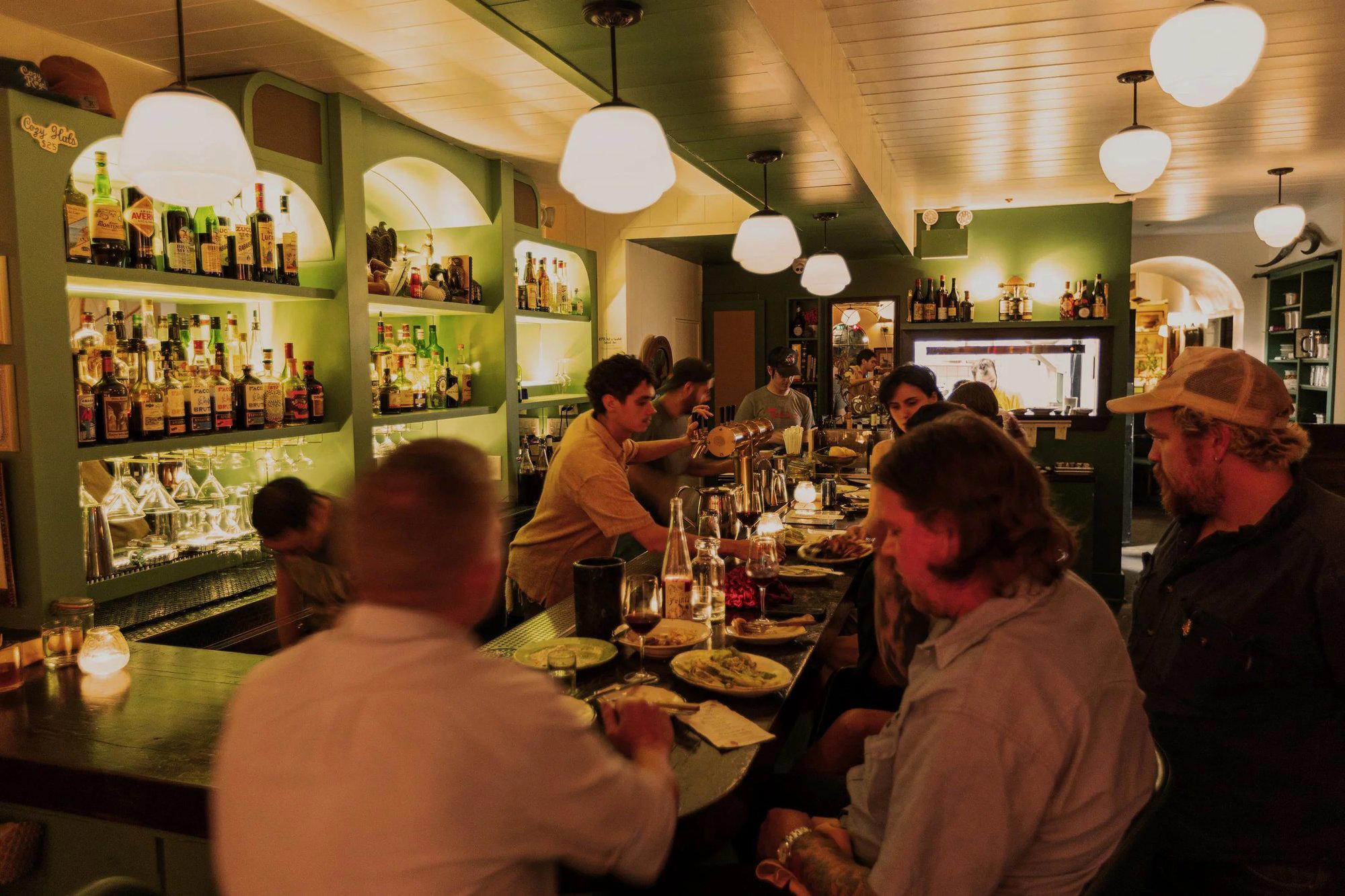
Humboldt Street and the Shift in Brooklyn's Bar Character
Williamsburg's drinking culture has moved through several identifiable phases since the early 2000s: dive bars serving the artist-colony crowd, craft-beer taprooms capitalising on Brooklyn's brewing revival, and then, more recently, a cohort of serious cocktail rooms where the service model and the liquid program carry equal weight. Cozy Royale at 434 Humboldt Street sits inside this third wave, occupying a neighbourhood that has grown progressively more deliberate about what it puts in a glass and how it explains that choice to the person sitting across the bar.
The address itself is instructive. Humboldt runs through a section of Brooklyn where the blocks alternate between residential quiet and pockets of considered hospitality, a pattern that tends to produce bars where regulars outnumber tourists and where the room's atmosphere is set by returning guests as much as by the design brief. That dynamic shapes the social contract at places like this: the expectation is engagement, not spectacle.
The Case for Team-Led Service in a City of Solo Auteurs
New York's cocktail culture has long celebrated the individual: the visionary bar director whose name appears in press releases, whose résumé anchors the venue's credibility, whose departure triggers an anxious reassessment of whether the place is still worth the trip. The counter-model, less common but arguably more durable, distributes that credibility across a team. When the cocktail program, the wine and spirits selection, and the floor service operate as a coordinated system rather than a hierarchy with one named talent at the leading, the guest experience becomes more consistent and, over time, more interesting.
Brooklyn has produced several examples of this team-dynamic model in recent years, particularly in Williamsburg and its adjacent neighbourhoods. The logic is partly economic: smaller rooms with tighter margins cannot afford to stake everything on a single personality. But it is also philosophical. Bars that treat front-of-house knowledge as equivalent in value to back-bar technique tend to produce guests who order more adventurously, ask better questions, and return more frequently. The conversation between what the bartender builds and what the floor communicates to the guest is where the actual experience happens.
This is the framing through which Cozy Royale reads most clearly. Without a single named figure dominating the venue's public identity, the program's coherence depends on how well the constituent parts speak to each other. In rooms that get this right, the sommelier-equivalent knowledge of spirits and fermented drinks, the bartender's technical execution, and the floor team's ability to read the room and guide choices all function as a single instrument. When they fall out of sync, the guest notices, even if they cannot name exactly what has gone wrong.
Brooklyn's considered cocktail rooms occupy a specific tier in New York's broader drinking geography. They are not the Manhattan flagships that appear on the North America's 50 Best Bars longlist, places like Attaboy NYC on the Lower East Side or Angel's Share in the East Village, with decades of documented recognition and international visitor traffic built into their booking patterns. Nor are they the neighbourhood dives where price point is the primary draw. They occupy a middle register defined by intentional programs, moderate capacity, and a guest mix that skews local but includes informed visitors who have done the research.
Amor y Amargo, with its bitters-forward specialism in the East Village, and Superbueno, which has built a reputation around agave-led cocktails and Latin-American spirits, both illustrate what a tightly defined program can do for a bar's identity and longevity. Cozy Royale operates in that same tier of intent, where the editorial decision about what the bar believes in, and what it chooses not to do, matters as much as the execution of any individual drink.
For a broader map of where serious drinking rooms sit across New York's boroughs and neighbourhoods, the EP Club New York City guide offers the most granular breakdown by area and format.
The Broader Context: What Brooklyn Adds to the National Conversation
New York's cocktail geography is worth understanding at the macro level. The city's program sits within a national network of rooms that have advanced the craft in distinct regional directions: Kumiko in Chicago through Japanese technique and ingredient sourcing, Jewel of the South in New Orleans through historical cocktail recovery, Julep in Houston through Southern-spirits advocacy, and ABV in San Francisco through a wine-bar-meets-cocktail-room format. Further afield, Bar Leather Apron in Honolulu and Allegory in Washington, D.C. have each carved out identities rooted in narrative and specificity of place, while The Parlour in Frankfurt demonstrates how the same team-dynamic model translates to a European context.
Brooklyn's contribution to this national picture has been a kind of productive informality: rooms that carry serious programs without the reverence that can make Manhattan's leading bars feel transactional in a different way. The borough's better bars tend to be warmer in tone even when they are technically rigorous, and that combination, technical seriousness with social ease, is harder to achieve than it looks.
Planning a Visit
Humboldt Street in the Williamsburg-Bushwick corridor is accessible via the L train (Montrose Avenue or Graham Avenue stops place you within a short walk), and the surrounding blocks reward arrivals who build in time to explore before or after. The area's density of considered small restaurants and bars makes it well-suited to an evening that moves between two or three stops rather than anchoring to a single venue.
| Venue | Location | Program Focus | Booking |
|---|---|---|---|
| Cozy Royale | Williamsburg, Brooklyn | Cocktail room, team-led service | Walk-in recommended; check current policy directly |
| Attaboy NYC | Lower East Side, Manhattan | No-menu, guest-led cocktails | Walk-in only, queue from opening |
| Amor y Amargo | East Village, Manhattan | Bitters-forward specialism | Walk-in, compact capacity |
| Angel's Share | East Village, Manhattan | Japanese-influenced classics | Walk-in, seated service required |
| Superbueno | Greenwich Village, Manhattan | Agave and Latin-American spirits | Walk-in and reservations |
Continue exploring
More in New York City
Bars in New York City
Browse all →
Restaurants in New York City
Browse all →
Hotels in New York City
Browse all →




At a Glance
- Cozy
- Rustic
- Intimate
- After Work
- Casual Hangout
- Group Outing
- Standalone
- Seated Bar
- Booth Seating
- Classic Cocktails
- Craft Cocktails
Current opening hours
- Monday
- 5 PM–12 AM
- Tuesday
- 5 PM–12 AM
- Wednesday
- 5 PM–12 AM
- Thursday
- 5 PM–12 AM
- Friday
- 5 PM–12 AM
- Saturday
- 11:30 AM–12 AM
- Sunday
- 11:30 AM–12 AM
Hours can change for holidays and private events. Last verified .
Know Before You Go
- Getting there
- 434 Humboldt St, Brooklyn, NY 11211