Google: 4.1 · 2,550 reviews
Congee Village
Congee Village on Allen Street has anchored the lower edge of Manhattan's Chinatown dining scene for years, drawing crowds with a menu built around Cantonese congee in its many forms alongside a broader roster of Chinese-American dishes. The space is large, loud, and deliberately casual, operating at a price point that puts it in a different tier from the neighborhood's newer, more curated openings.
 Discover on Pearl
Pearl is the En Primeur Club membership app — saves, bookings, and concierge access live there. Same editors, same standards.
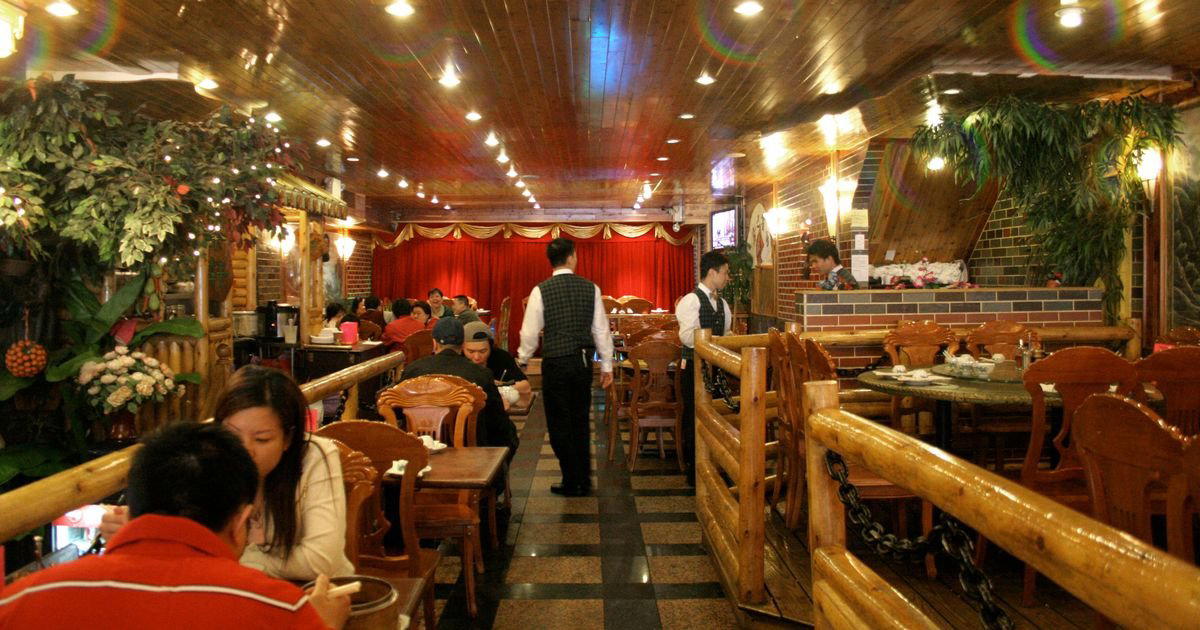
Allen Street at Night: What the Room Tells You Before the Menu Arrives
Walking south on Allen Street toward the Lower East Side's boundary with Chinatown, the shift in dining character is immediate. The wine bar density of Orchard Street gives way to brighter storefronts, larger tables visible through glass, and the kind of foot traffic that suggests a restaurant is working at volume rather than at exclusivity. Congee Village, at 100 Allen Street, reads as a room that has earned its crowd rather than engineered it. The interior runs deep, with multiple dining areas that fill quickly on weekends, and the ambient noise level signals communal eating rather than quiet contemplation. This is not a destination for a hushed tasting menu. It is a destination for a specific tradition of Cantonese comfort food, served at a pace that suits the dish.
What a Menu Built Around Congee Actually Says About the Kitchen
In Cantonese culinary tradition, congee occupies a position that Western dining culture rarely assigns to a single dish: it functions simultaneously as everyday sustenance, restorative food for the unwell, and the base for demonstrating kitchen precision. The quality of congee tells you how much attention a kitchen pays to process. A well-made jook, as it is known in Cantonese, requires long cooking times, correct ratios, and restraint with seasoning. It should be silky without being gluey, savory without masking the rice flavor entirely, and it should hold its temperature at the table.
Congee Village built its identity around exactly this dish category, which is a deliberate editorial choice in a city where Chinese-American menus often pursue breadth over depth. The menu architecture here does something different: it uses congee as an anchor and builds outward from it. The range of congee variations signals a kitchen that treats the dish seriously, with proteins and accompaniments chosen to complement rather than overwhelm the base. This structure distinguishes the restaurant from peers on the broader Chinatown dining circuit, where congee sometimes appears as a single line item in a menu of several hundred dishes rather than as an organizing principle.
Beyond the congee section, the menu moves into Cantonese standards: roast meats, clay pot preparations, seafood, and stir-fried vegetables. The breadth is considerable, but the menu reads as genuinely Cantonese in its logic rather than as a hybrid document designed for non-Chinese diners. That distinction matters in a neighborhood where the customer base is mixed but the culinary reference point remains specific.
Where Congee Village Sits in New York's Chinese Dining Picture
New York's Chinese dining scene divides roughly into three tiers by price and format. At the leading end, a newer generation of regional Chinese restaurants in Flushing, Sunset Park, and increasingly in Manhattan charge accordingly for specialist cooking from Sichuan, Shanghainese, and Yunnanese traditions. In the middle sits a range of neighborhood staples with moderate pricing and menus that mix regional Chinese cooking with Cantonese-American conventions. At the more accessible end, high-volume operations prioritize turnover and familiarity.
Congee Village occupies a position in the lower-to-middle band of that picture, with pricing that makes it accessible for groups eating a full spread of dishes. Its longevity on Allen Street, in a corridor that has seen significant turnover as the Lower East Side's dining identity shifted, is itself a form of credential. Restaurants that survive the transition from one neighborhood era to the next without dramatically reformatting their offer have typically built genuine loyalty rather than trend-dependent traffic. For context on the broader New York City dining picture, see our full New York City restaurants guide.
The Neighborhood Frame: Lower East Side to Chinatown Boundary
Allen Street runs along what is effectively a culinary border zone. To the north and east, the Lower East Side bar and restaurant scene is dense with cocktail programs, natural wine lists, and small-plates formats that track closely with national dining trends. To the south, Chinatown's core blocks maintain a different rhythm, with older establishments, produce markets, and a clientele that includes both long-term residents and visitors arriving with specific dishes in mind.
Congee Village's address places it at this intersection, which partly explains its customer mix. Diners arriving after drinking sessions at nearby spots along the Lower East Side corridor have made it a late-night destination, while Chinatown regulars treat it as a reliable neighborhood anchor. For those exploring the cocktail side of the neighborhood, bars like Attaboy NYC, Angel's Share, and Amor y Amargo represent the technical cocktail programming that now defines much of the area's bar identity. Superbueno adds a Latin-influenced dimension to that mix. Across the United States, comparable late-night anchors built around comforting, accessible food exist in most major dining cities: Jewel of the South in New Orleans, Kumiko in Chicago, and ABV in San Francisco each anchor their respective neighborhoods in analogous ways, even when their formats differ significantly. Internationally, bars like Bar Leather Apron in Honolulu, Allegory in Washington, D.C., Julep in Houston, and The Parlour in Frankfurt on the Main demonstrate how a well-defined identity sustains neighborhood relevance across different city contexts.
Planning Your Visit
Congee Village operates as a walk-in-friendly, high-turnover space. Weekend evenings bring the longest waits, and the room is leading experienced with a group that can order across several menu categories rather than narrowing to one or two dishes. Groups of four to six can move efficiently through congee, roast meat plates, and vegetable dishes without the meal feeling rushed. Solo diners and pairs tend to order more conservatively, which undersells what the menu is structured to deliver. The address is 100 Allen Street, in the Lower East Side at the edge of Chinatown.
Quick reference: 100 Allen St, New York, NY 10002. Walk-in format. Leading visited with a group for full menu range.
Continue exploring
More in New York City
Bars in New York City
Browse all →
Restaurants in New York City
Browse all →
Hotels in New York City
Browse all →








At a Glance
- Lively
- Group Outing
- Celebration
- Booth Seating
- Private Rooms
Cozy yet lively atmosphere in a spacious dining room with warm service.