BOYFRIEND co-op café + bar
A co-op café and bar on Myrtle Avenue in Bushwick, BOYFRIEND operates in the tradition of community-anchored drinking spaces that blur the line between neighborhood gathering spot and serious cocktail program. Its position on one of Brooklyn's most restless commercial corridors places it in a different register than Manhattan's polished bar circuit, more local in character, less transactional in feel.
Pearl is the En Primeur Club membership app — saves, bookings, and concierge access live there. Same editors, same standards.
- Address
- 1157 Myrtle Ave, Brooklyn, NY 11206, USA
- Phone
- +1 718 283 4389
- Website
- boyfriend.coop
- Directions
- Get directions
 Saves & bookings on Pearl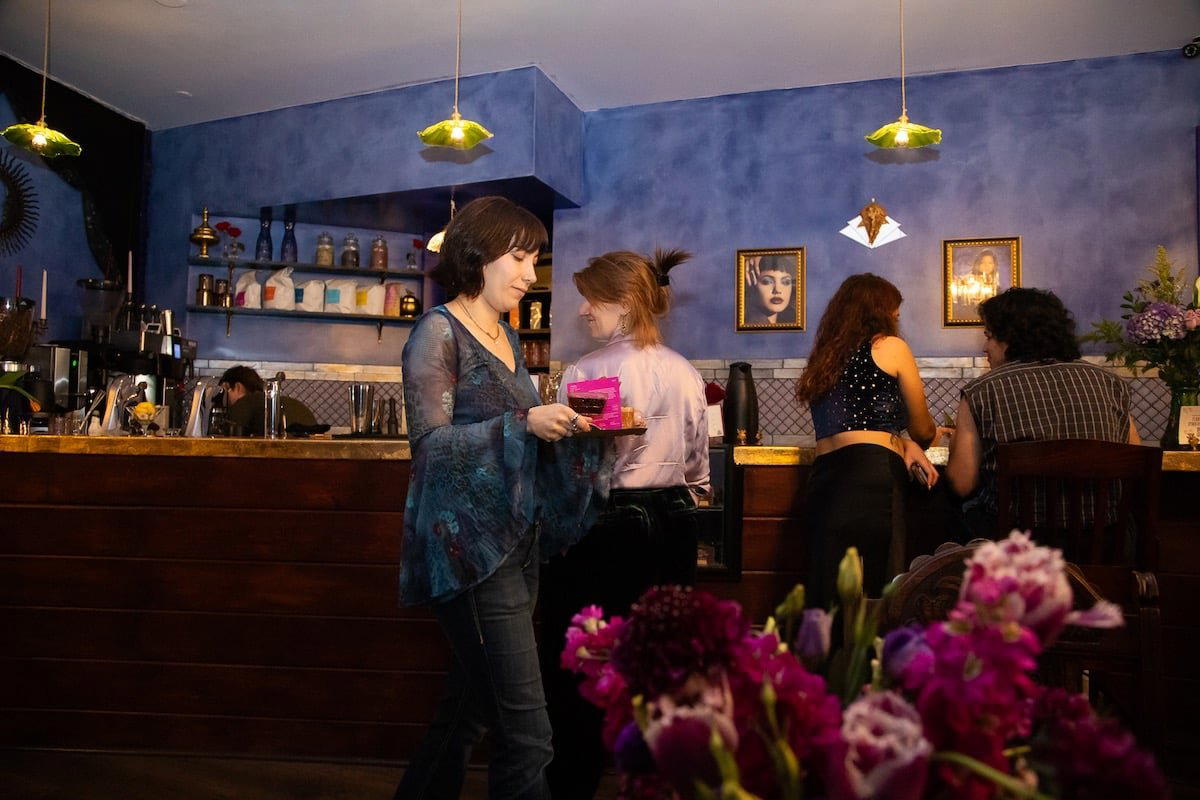
Myrtle Avenue and the Brooklyn Bar Counter
Brooklyn's bar culture has fractured productively over the past decade. The borough that once imported Manhattan's speakeasy playbook, low light, cryptic menus, velvet ropes by another name, has largely moved past that phase. What replaced it, particularly along corridors like Myrtle Avenue in Bushwick and its borders with Bed-Stuy, is something harder to categorize and more interesting to visit: spaces that combine a working café during daylight hours with a considered drinking program after dark, and that carry a cooperative or community ownership model into their operating structure. BOYFRIEND co-op café + bar at 1157 Myrtle Ave sits squarely in that current. It is a casual Brooklyn bar And it typically runs as a walk-in-friendly spot at about $15 per person.
The co-op designation is not incidental branding. Cooperative hospitality models in New York have a longer history than the recent wave of worker-owned restaurants suggests, but they remain a minority format in a city where high rents and investor capital dominate bar economics. A co-op structure changes the relationship between the people behind the bar and the people sitting in front of it, stakes are distributed differently, and that tends to produce a different kind of service culture. Whether the result reads as warmth, investment, or simply a less performative hospitality depends on the individual program, but the structural premise at BOYFRIEND is already doing editorial work before a single drink arrives.
The Craft Behind the Counter
The editorial angle that matters most at a place like BOYFRIEND is the mode of bartending it represents. The café-bar hybrid format, now well established across Brooklyn, places demands on the person behind the counter that a single-format venue does not. A bartender at a co-op café-bar works across registers: morning coffee service, afternoon walk-in traffic, and an evening program that may run from approachable house cocktails to something more technique-driven. That range either produces generalists or forces a deliberate philosophy about what a drinking space is actually for.
In New York's broader cocktail geography, the bar counter has become a site of distinct schools. Downtown Manhattan's program bars, Attaboy NYC on the Lower East Side, or the bitters-focused precision of Amor y Amargo, have built reputations on technical specificity and menu architecture. Angel's Share in the East Village represents an older model of quiet Japanese-influenced craft that predates the current conversation. Superbueno has pushed a high-energy agave-led format in a different direction entirely. BOYFRIEND operates outside that Manhattan circuit, which is partly a geographic fact and partly a positioning statement. The Myrtle Avenue address places it inside a neighborhood economy rather than a destination-bar economy, and the co-op model reinforces that orientation.
Craft bartending in community-anchored spaces like BOYFRIEND tends to express itself through accessibility and relationships rather than through tasting menus or elaborate theatrical service. The leading analog bars in American cities, Kumiko in Chicago, Jewel of the South in New Orleans, Julep in Houston, ABV in San Francisco, all draw a line between hospitality as a transaction and hospitality as a sustained local relationship. BOYFRIEND's structure implies the same priority, even if its format is less codified than those reference points.
Bushwick and the Myrtle Avenue Corridor
Myrtle Avenue runs along the northern edge of Bushwick, functioning as a commercial seam between two neighborhoods in active transition. The stretch around BOYFRIEND's address has accumulated a loose cluster of independent food and drink businesses over the past several years, with no single dominant format. Coffee shops that double as event spaces, wine bars with rotating natural producers, and cocktail rooms with afternoon café service all coexist on the same few blocks. BOYFRIEND fits that pattern and participates in the corridor's broader character rather than departing from it.
For visitors arriving from outside Brooklyn, the Myrtle-Broadway J/M/Z stop places Myrtle Avenue within reasonable reach of Lower Manhattan. The walk north from the subway puts you on a stretch of commercial real estate that looks nothing like the bar districts around Williamsburg's Bedford Avenue or the more polished blocks of Greenpoint. That contextual gap is part of what makes Bushwick's bar scene read differently: the surroundings are less curated, which tends to reward bars that earn their own atmosphere rather than borrowing it from a neighborhood's ambient aesthetic.
How BOYFRIEND Fits a Wider Map
For travelers planning a bar itinerary across New York, or comparing it to drinking destinations in other American cities, BOYFRIEND occupies a specific tier. It is not a destination bar in the way that Allegory in Washington, D.C. or Bar Leather Apron in Honolulu function as deliberate travel anchors. It is not trying to be. Its comparable set is the network of community-scale bars across Brooklyn and the outer boroughs that operate on neighborhood logic: regulars over tourists, sustained relationships over single notable visits, a program that shifts with the week rather than one engineered for review-maximizing consistency. Internationally, the closest parallel might be something like The Parlour in Frankfurt, a bar whose identity is rooted in a specific local context rather than exported appeal.
That positioning is not a limitation. Particularly rewarding bar experiences in any city come from places that are not trying to travel well, whose identity is inseparable from the neighborhood they serve. BOYFRIEND's co-op structure and Myrtle Avenue address are both signals in that direction.
Planning Your Visit
Address: 1157 Myrtle Ave, Brooklyn, NY 11206. Reservations: Walk-ins are welcome. Budget: About $15 per person. Hours: Mon to Thu 8 AM to 12 AM; Fri 8 AM to 2 AM; Sat 10 AM to 2 AM; Sun 10 AM to 12 AM.
A Tight Comparison
Comparable venues nearby, for context on price, style, and recognition.
| Venue | Cuisine | Price | Notes |
|---|---|---|---|
| BOYFRIEND co-op café + barThis venue — the venue you are viewing | Not listed | $$ | Not listed |
| Cafe Erzulie | Not listed | $$ | Bedford-Stuyvesant (East), cocktail_bar |
| Cypress Cafe & Bar | Ridgewood, lounge | $$ | Not listed |
| Million Goods | Greenpoint, Bar | Not listed | Not listed |
| Un Posto Italiano | Park Slope, lounge | $$ | Not listed |
| Parkside Lounge | Not listed | $$ | Lower East Side, dive_bar |
Continue exploring
More in New York City
Bars in New York City
Browse all →
Restaurants in New York City
Browse all →
Hotels in New York City
Browse all →




At a Glance
- Cozy
- Trendy
- Whimsical
- Intimate
- Casual Hangout
- Date Night
- After Work
- Design Destination
- Lounge Seating
- Booth Seating
- Craft Cocktails
Current opening hours
- Monday
- 8 AM–12 AM
- Tuesday
- 8 AM–12 AM
- Wednesday
- 8 AM–12 AM
- Thursday
- 8 AM–12 AM
- Friday
- 8 AM–2 AM
- Saturday
- 10 AM–2 AM
- Sunday
- 10 AM–12 AM
Hours can change for holidays and private events. Last verified .
Moody maximalist space with eclectic vintage decor, plush couches, deep blue walls, mismatched chandeliers, and a witchy whimsical vibe.