BierCaB sits on Muntaner in the Eixample, operating as one of Barcelona's more serious craft beer destinations at a time when the city's bar scene has grown well beyond wine and cocktails. The address places it within walking distance of the neighbourhood's cocktail corridor, yet its identity runs in a distinct direction, tap lists over spirit menus, beer culture over mixed-drink theatre.
Pearl is the En Primeur Club membership app — saves, bookings, and concierge access live there. Same editors, same standards.
- Address
- C/ de Muntaner, 55, Eixample, 08011 Barcelona, Spain
- Phone
- +34 644 68 90 45
- Website
- biercab.com
- Directions
- Get directions
 Saves & bookings on Pearl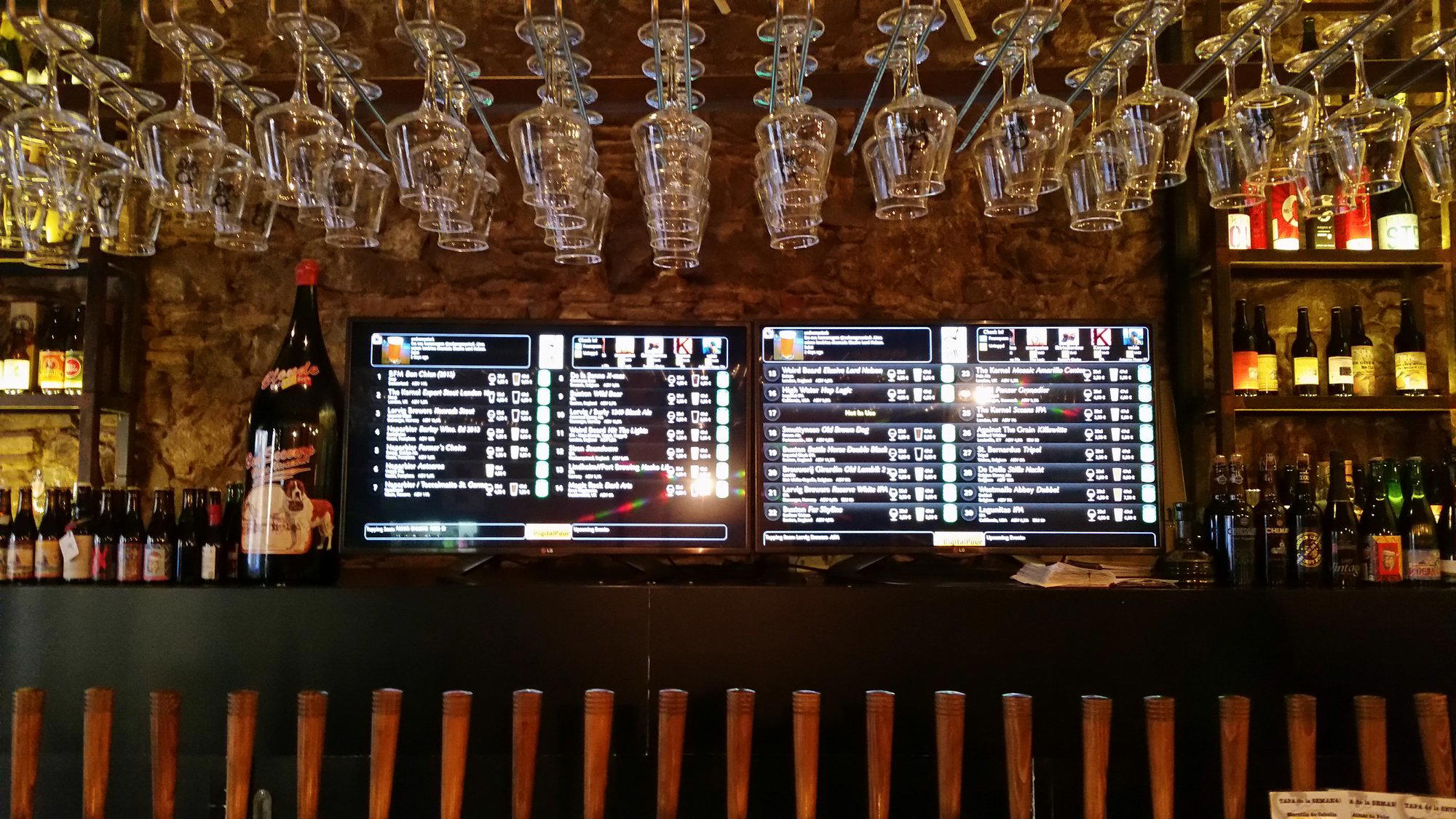
Craft Beer in the Eixample: Where Barcelona's Tap Culture Found a Home
Barcelona's drinking culture has long been structured around wine, vermouth, and, more recently, the technically ambitious cocktail bars that earned the city a place in serious international bar conversations alongside Boadas, Dry Martini, and Dr. Stravinsky. What shifted more quietly, over the past decade, was the arrival of a smaller cohort of establishments treating beer with the same curation rigour applied elsewhere to natural wine lists or spirits collections. BierCaB is a bar in Barcelona's Eixample, at C/ de Muntaner, 55,315 reviews and an estimated price of about $25 per person. BierCaB on Carrer de Muntaner is among the more established addresses in that cohort.
The Eixample context matters. The grid-plan neighbourhood, built out through the nineteenth and early twentieth centuries, has historically been associated with upscale Catalan bourgeois life: wide pavements, modernista facades, and bars that tended toward formality or at least a certain civil composure. Craft beer, with its informal northern European associations, was a harder sell in this setting than in, say, the Raval or Poblenou. That BierCaB found its footing here, rather than in the more obviously experimental quarters of the city, is itself a statement about how the format has matured.
The Cultural Logic Behind Serious Beer in Spain
Spain's relationship with beer has historically been defined by light lager consumed cold and fast, typically alongside tapas rather than as the main event. The country produces significant volumes of industrial cerveza, and the category occupied a distinctly lower register than wine in the national drinking hierarchy. What happened from roughly the 2010s onward tracked a pattern visible across southern Europe: a small but growing number of bars and producers began treating beer as a product deserving the same sourcing attention, provenance framing, and service discipline that wine had always received.
This shift was never purely domestic. Spanish craft beer culture drew heavily on Flemish and German traditions, on American West Coast brewing, and eventually on a domestic wave of small producers in Catalonia, the Basque Country, and Asturias. The result, at the better Barcelona addresses, is a tap list that can sit alongside what you might encounter at serious beer bars in Copenhagen or Portland, not as an imitation, but as a locally inflected version of the same underlying seriousness. Foco represents a different expression of Barcelona's experimental bar scene, but the common thread across the city's more thoughtful drinking venues is a move away from defaulting to volume and toward defaulting to selection.
Across Spain more broadly, this evolution appears in scattered form. Angelita in Madrid demonstrates how natural wine curation has reshaped expectations in the capital; Bar Sal Gorda in Seville and Bar Gallardo in Granada reflect Andalusian bar culture's own recalibrations. In the Balearics, addresses like La Margarete in Ciutadella and Garden Bar in Calvia show how island drinking culture has absorbed influences from mainland and northern European scenes. BierCaB sits within this broader Spanish recalibration of what a bar should do with its list.
What Carrer de Muntaner Looks Like at Ground Level
Muntaner runs diagonally through the left side of the Eixample, cutting across the neighbourhood's otherwise strict grid at an angle that gives it a slightly different character from the main cross-streets. The address at number 55 places BierCaB in the lower section of the street, within reasonable reach of the Universitat area and the dense bar and restaurant zone that extends toward Poble Sec. Walking in, the spatial logic follows what serious beer bars in other European cities have settled on: counter service or minimal table formality, visible tap lines, a format that signals knowledge without requiring ceremony.
That physical informality is part of the cultural argument these bars make. A twelve-tap setup framed by knowledgeable staff, a rotating selection across styles and origins, and a room where you can order a session ale or a 10% Trappist quad without either choice feeling out of place, this is what distinguishes venues operating in the specialist tier from those simply stocking a few craft labels alongside their standard list.
Peer Context and What It Tells You
Within Barcelona, BierCaB occupies a different register from the cocktail bars that receive international press attention. It does not compete with Dry Martini's long-form drinks history or with the molecular ambition of venues like Paradiso. It operates, instead, in a niche where the reference points are beer-specific: the quality of the keg rotation, the range across styles and origins, the coherence of the food pairing if food is offered, and the staff's ability to guide a drinker from an unfamiliar producer or style without condescension.
That comparable set extends across Europe. At a comparable level of seriousness, you are looking at bars in Bruges, Brussels, Amsterdam, or Berlin where the list is short by design, the turnover is deliberate, and the format has been stripped back so that the beer itself carries the experience. Comparing across categories, Garito Cafe in Palma De Mallorca and Bar Leather Apron in Honolulu illustrate how specialist drinking venues in different geographies can share a common discipline around selection and service format, even when the product category differs entirely.
Planning a Visit
BierCaB's address on Carrer de Muntaner, 55, in the Eixample, is accessible from multiple metro lines serving the neighbourhood, with Universitat and Hospital Clínic both within walking distance. As with most specialist beer bars in this category across European cities, the format suits dropping in without a reservation, though evenings on weekends draw a consistent local crowd that can compress the space. Coming earlier in the evening on a weekday is the more comfortable approach if you want room to work through several pours with attention.
Price and Recognition
Comparable venues nearby, for context on price, style, and recognition.
| Venue | Price | Notes |
|---|---|---|
| BierCaBThis venue — the venue you are viewing | $$ | Not listed |
| Moog | $$ | el Raval, dive_bar |
| Bar del Pla | $$ | Sant Pere, Santa Caterina i la Ribera, wine_bar |
| La Pepita | $$ | la Vila de Gracia, cocktail_bar |
| Bar Restaurant Pinotxo | $$ | Sant Antoni, wine_bar |
| Libertine Cocktail Bar at Casa Bonay | $$$ | la Dreta de l'Eixample, cocktail_bar |
Continue exploring
More in Barcelona
Bars in Barcelona
Browse all →
Restaurants in Barcelona
Browse all →
Hotels in Barcelona
Browse all →
At a Glance
- Lively
- Rustic
- Energetic
- Group Outing
- Casual Hangout
- After Work
- Standalone
- Seated Bar
- Counter Only
- Craft Beer
Current opening hours
- Monday
- Closed
- Tuesday
- 2 PM–12 AM
- Wednesday
- 2 PM–12 AM
- Thursday
- 2 PM–12 AM
- Friday
- 2 PM–12 AM
- Saturday
- 2 PM–12 AM
- Sunday
- Closed
Hours can change for holidays and private events. Last verified .
Rustic-chic pub atmosphere with an American gastropub feel and Spanish twist; lively and welcoming for beer enthusiasts and groups.