Bar Pisellino
Bar Pisellino on Grove Street in the West Village has operated as one of New York's most committed aperitivo bars, drawing on northern Italian café culture to anchor its format. The ritual here runs from mid-afternoon Campari spritzes to late-night amaro pours, with a standing-room bar culture that resists the city's usual table-service rhythm.
Pearl is the En Primeur Club membership app — saves, bookings, and concierge access live there. Same editors, same standards.
- Address
- 52 Grove Street, 7th Ave S at, New York, NY 10014
- Phone
- +1 347 859 7624
- Website
- barpisellino.com
- Directions
- Get directions
 Saves & bookings on Pearl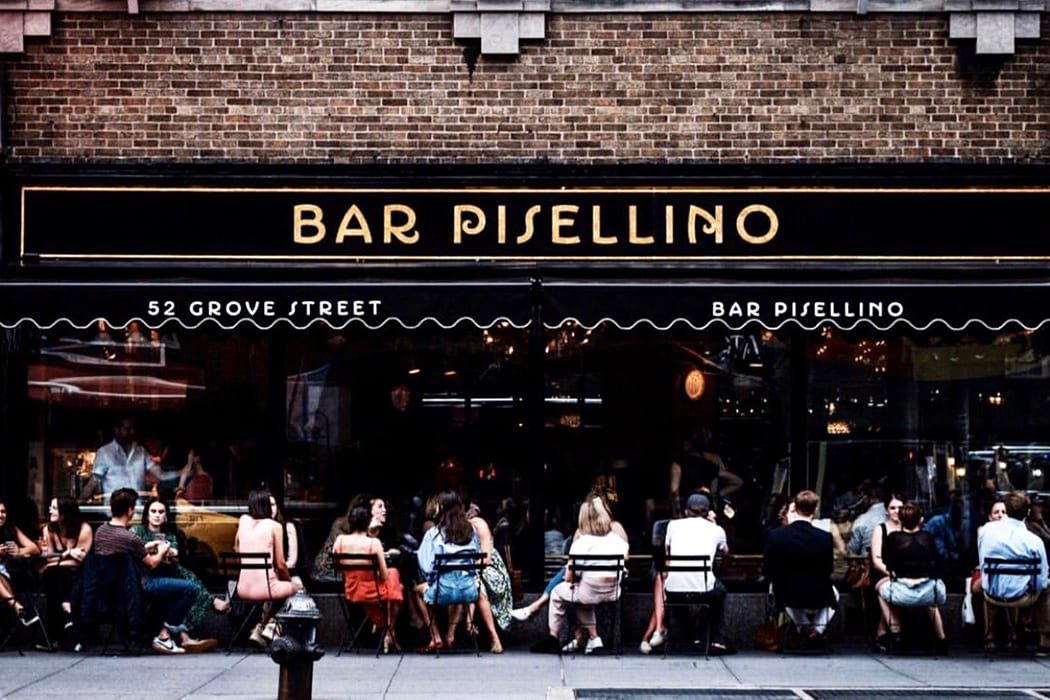
The Grove Street Aperitivo Hour, Extended to Midnight
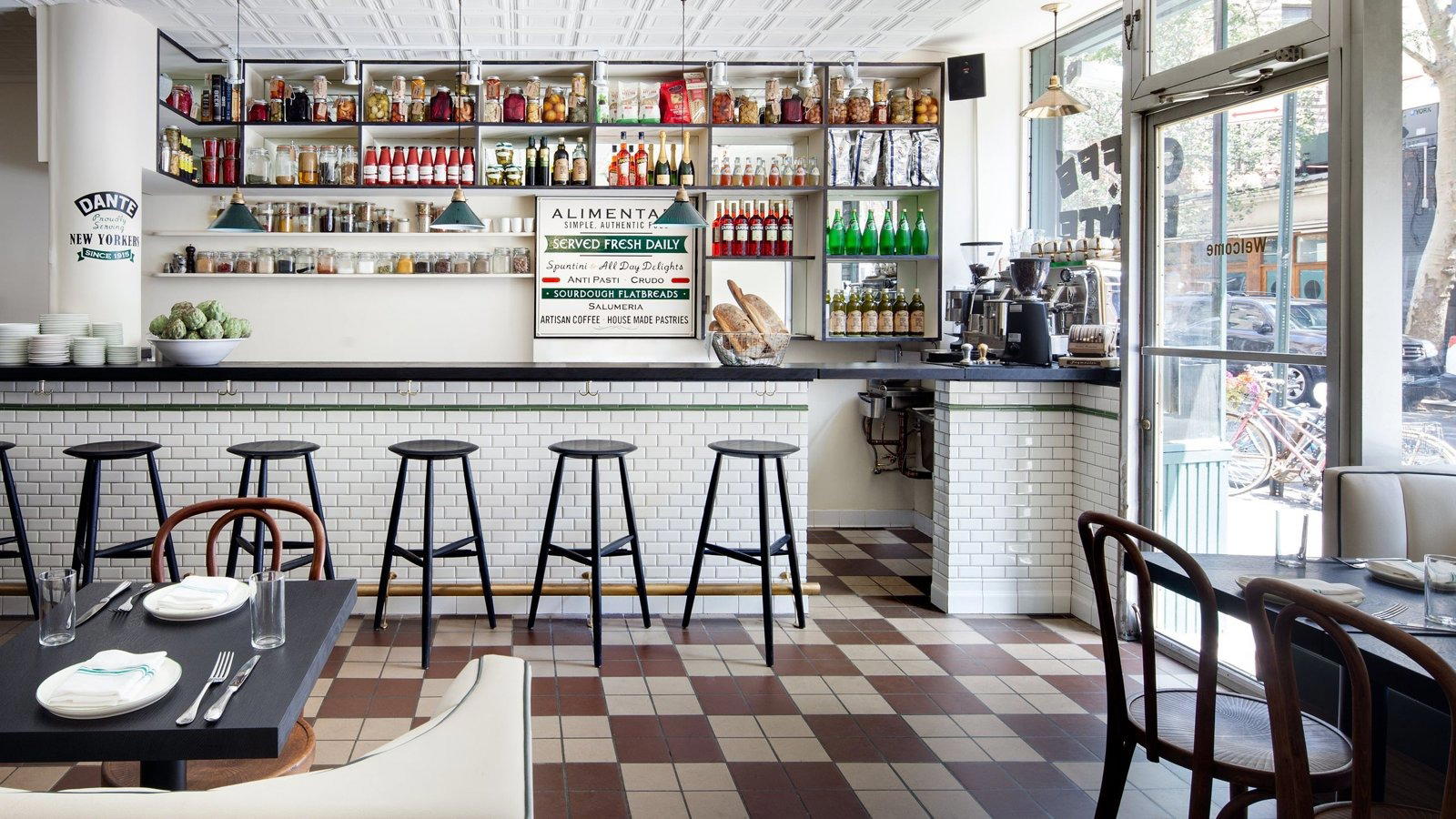
On Grove Street at the corner of Seventh Avenue South, Bar Pisellino occupies a sliver of the West Village that has held onto its pre-gentrification character longer than most. The bar is small — a mosaic tile floor, marble counter, and a few inches between patrons at the zinc bar — and it runs on a format borrowed directly from northern Italian café culture rather than anything native to Manhattan. You order at the bar. You stand, or you find a stool. The pace is set by whoever is pouring, not by a reservation clock.
That physical format is the premise of the whole experience. New York's aperitivo bars have multiplied in the past decade, but most adapt the ritual to local expectations: a table, a server, a list. Pisellino imports the Italian version more faithfully, where the standing bar is not a concession to space but the actual point. The bar functions as the room's social infrastructure, and the counter culture here runs closer to a Milanese caffè than to the table-service model that dominates most of the city's drinking establishments.
The Ritual Before the Ritual
The aperitivo tradition that Bar Pisellino draws on has a defined logic. It begins with a bitter, low-ABV drink, typically a spritz or Campari-based pour, taken before a meal to stimulate appetite, and it shades into amaro territory as the evening extends. The format presupposes that drinking and eating are adjacent activities, not sequential ones, and so the bar's food program runs accordingly: cicchetti, small plates, items designed to accompany rather than anchor a sitting.
This pacing resists the New York instinct to optimize. The aperitivo hour in its original context is not efficient, it is deliberately open-ended, designed to extend conversation and slow the transition from afternoon to evening. At a bar operating in the West Village at the intersection of a residential neighborhood and a tourist corridor, that ethos is tested constantly. Pisellino has held to it, which is the more editorially interesting claim. The format has not been bent toward brunch service or high-volume cocktail production. It remains, in structure, an aperitivo bar.
Where It Sits in the New York Bar Scene
New York's cocktail culture has split across several distinct formats over the past fifteen years. The speakeasy-and-secrets model that defined the mid-2000s revival has largely given way to a more transparent technical tier, where programs are judged on sourcing, clarity of flavor, and format discipline. Attaboy NYC operates in that mode, no menu, high-trust service, an emphasis on the bartender's read of the guest. Angel's Share holds its East Village position as one of the city's older cocktail institutions, with a different kind of discipline rooted in Japanese bar culture.
Pisellino belongs to a third tier that has grown more confident in recent years: the tradition-anchored bar, where the program is organized around a single cultural format executed with rigor rather than range. Amor y Amargo operates a similar logic in the East Village, with a bitters-only program that forces a coherent identity. Superbueno does it through a Latin spirits frame. Pisellino does it through the Italian aperitivo. What these bars share is a willingness to narrow the offering in order to deepen it.
Across American cities, this format has gathered critical credibility. Kumiko in Chicago built its program around Japanese-inflected spirits with similar discipline. Jewel of the South in New Orleans anchors itself in a specific historical tradition. Bar Leather Apron in Honolulu operates at a similar remove from the dominant local drinking culture. ABV in San Francisco, Allegory in Washington, D.C., Julep in Houston, and The Parlour in Frankfurt on the Main each hold a comparable position in their respective cities: format-led, tradition-anchored, resistant to the catch-all menu approach. The pattern across these bars suggests the tradition-anchored format is no longer a niche position, it has become a recognized mode of serious bar operation.
What You're Actually Ordering
The Italian aperitivo canon runs through a relatively fixed set of base ingredients: Campari, Aperol, Cocchi Americano, Select, various vermouths, and the amaro spectrum from light (Aperol, Montenegro) to medicinal (Fernet, Averna). A bar working seriously within this tradition has to make decisions about sourcing, about proportions, and about which variations to build out, the Negroni alone generates a dozen defensible formats depending on vermouth choice and orange bitter weight.
Pisellino's program is built around these ingredients executed cleanly rather than reimagined. The Negroni is the reference drink here, as it is at most serious aperitivo bars: a three-ingredient formula where the only variable is quality and ratio. The spritz runs alongside it as the lower-ABV entry point. The amaro list extends the session for those inclined to stay. None of this is inventive in the cocktail-competition sense. That is, again, the point, the tradition is the frame, and the execution is what's being judged.
The West Village Context
The West Village's bar scene clusters around a handful of durable formats: the wine bar, the neighborhood tavern, the late-night cocktail room. Bar Pisellino sits at a slight angle to all of them. It is too European in pace for the neighborhood tavern category, too casual in format for the wine bar tier, and too early-evening in orientation for the late-night rooms. It occupies its own slot in the West Village's hospitality ecology, which partly explains why it has become a reference point for that neighborhood's bar culture without trying to compete directly with any single peer.
The address on Grove Street is walkable from most of the Village's residential blocks and from the major transit connections along Seventh Avenue South. The bar does not take reservations for the standing counter in the traditional sense, the aperitivo format presupposes drop-in culture, which is the appropriate model for a standing bar operating on Italian café logic. Evenings from Thursday onward run busy enough that early arrival, in the five o'clock window, reflects the European timing the bar is designed around rather than any strategic move on the drinker's part. See our full New York City restaurants guide for broader context on the city's bar and restaurant scene.
Continue exploring
More in New York City
Bars in New York City
Browse all →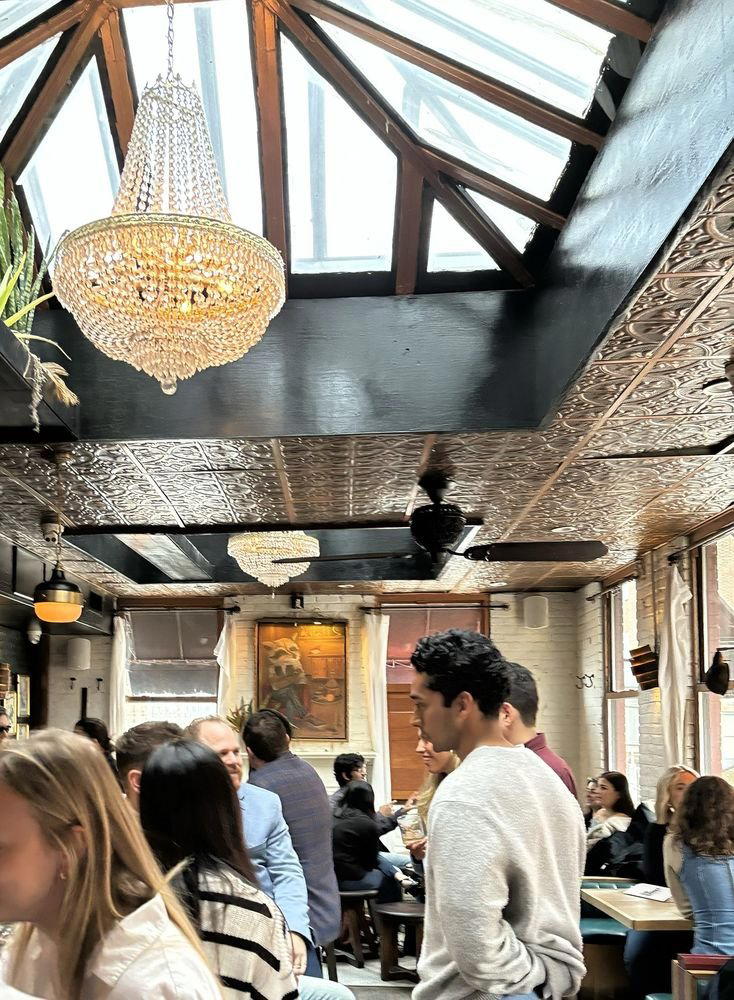
Restaurants in New York City
Browse all →
Hotels in New York City
Browse all →







At a Glance
- Cozy
- Classic
- Intimate
- Trendy
- Date Night
- After Work
- Casual Hangout
- Standalone
- Seated Bar
- Outdoor Terrace
- Classic Cocktails
- Street Scene
Current opening hours
- Monday
- 8 AM–11 PM
- Tuesday
- 8 AM–11 PM
- Wednesday
- 8 AM–11 PM
- Thursday
- 8 AM–11 PM
- Friday
- 8 AM–11 PM
- Saturday
- 8 AM–11 PM
- Sunday
- 8 AM–11 PM
Hours can change for holidays and private events. Last verified .
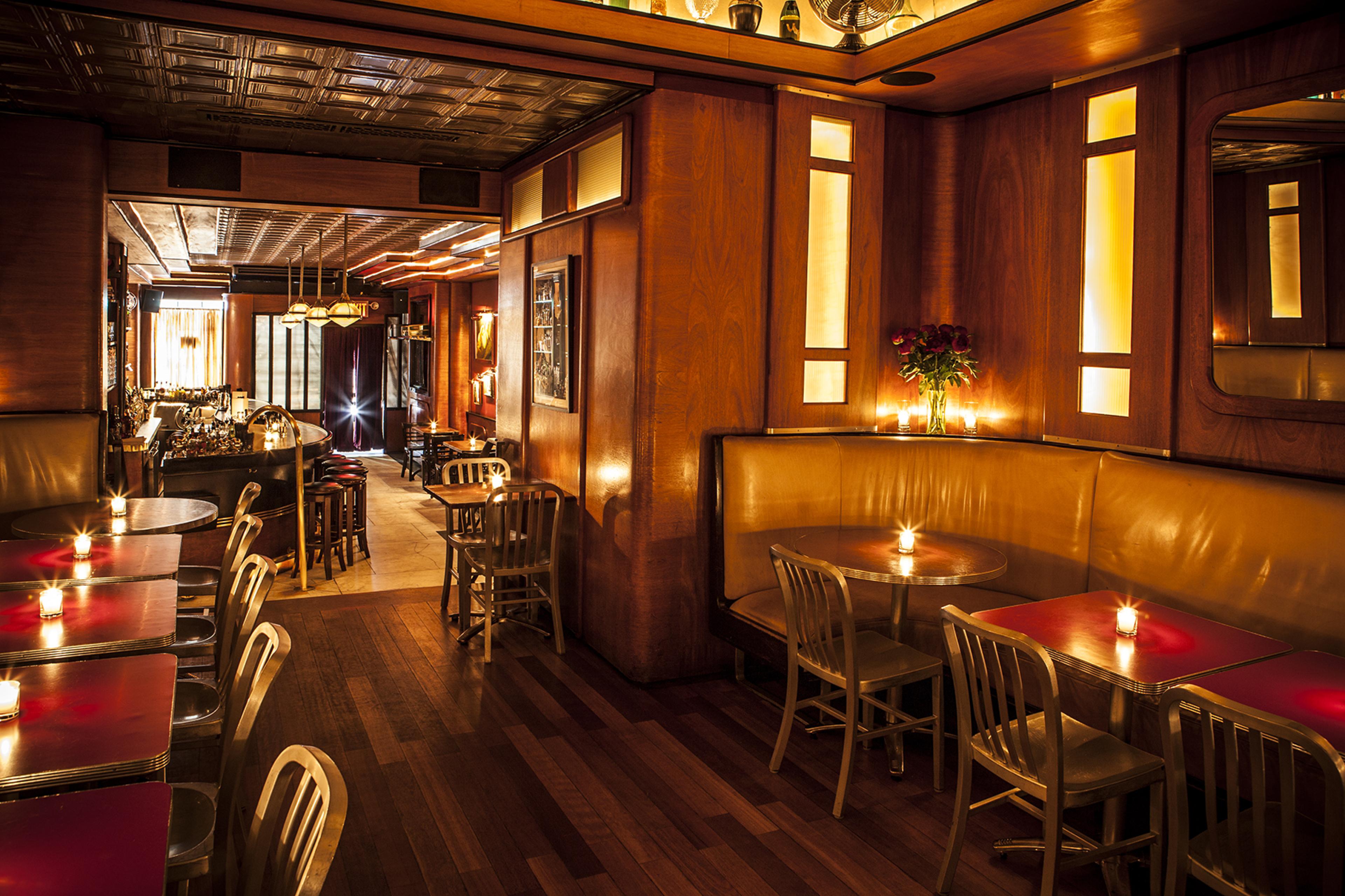
Warm wood interior, marble bar, and old-school Italian charm with cozy, elegant lighting well-suited for people-watching on tiny sidewalk tables.
Know Before You Go
- Getting there
- 52 Grove Street, 7th Ave S at, New York, NY 10014