Weingut Reichsrat von Buhl

Weingut Reichsrat von Buhl is one of the Pfalz's most historically rooted estates, based on Weinstraße 18 in Deidesheim and recognised with a Pearl 3 Star Prestige award in 2025. The estate represents a tier of German Riesling production built on site-specific viticulture and long institutional memory, placing it alongside the Pfalz's most closely watched addresses for both collectors and serious wine travellers.
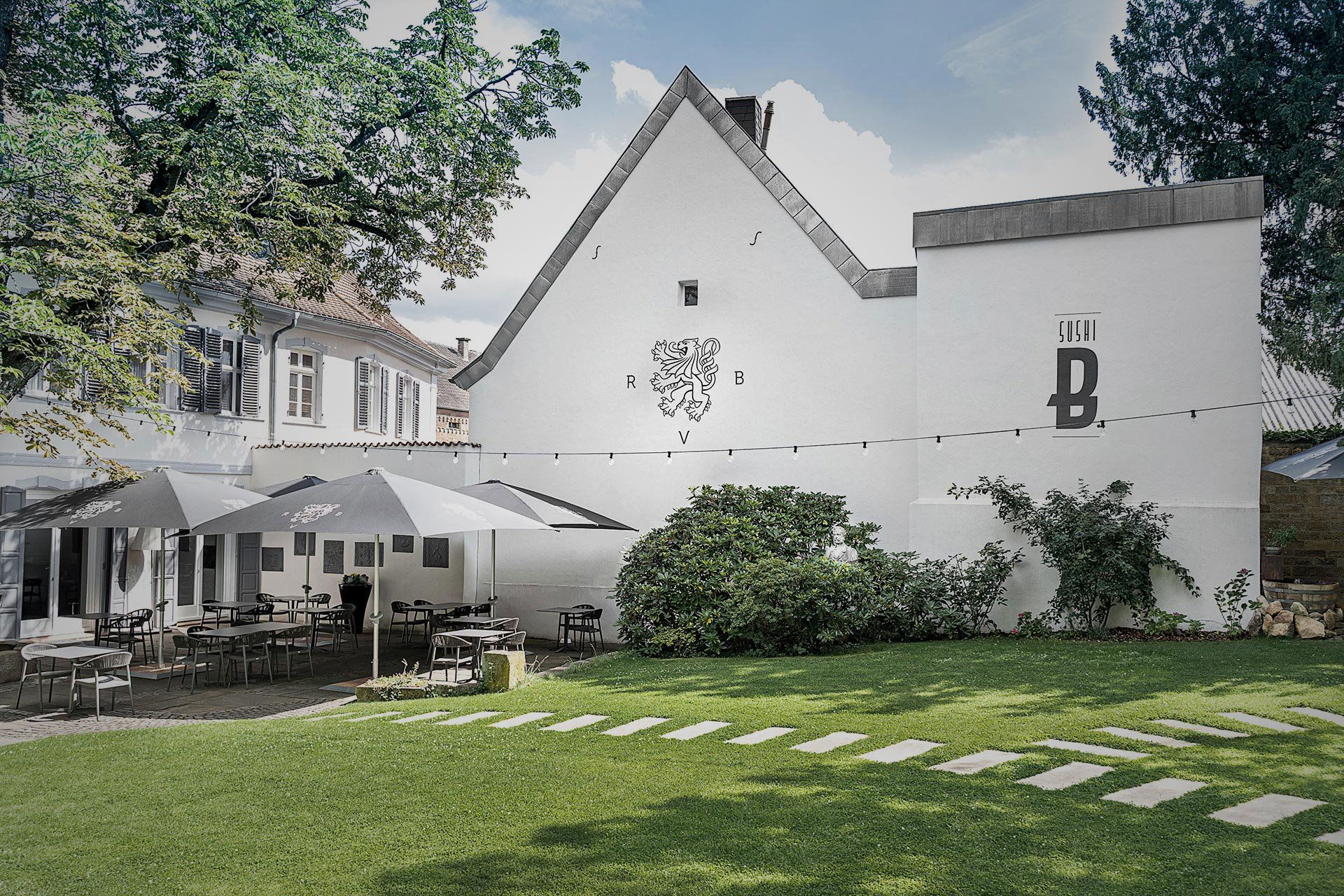
Deidesheim and the Architecture of Pfalz Prestige
The Weinstraße runs south through a corridor of vine-covered hills where the Pfalz earns its reputation as Germany's most generously productive fine-wine region. Within that corridor, Deidesheim occupies a particular position: a compact medieval town where three of the region's most historically significant estates share a postcode and, in some cases, a street. The concentration is not accidental. The town's clay-loam soils, broken by sandstone and basalt, and its position in the rain shadow of the Haardt Mountains, create conditions that Riesling producers have been mapping in granular detail for centuries. Weingut Reichsrat von Buhl, at Weinstraße 18, sits inside this geography and inside a peer group that includes Weingut Bassermann-Jordan and Weingut Von Winning — estates with similarly long records and similarly demanding followers.
That peer-set proximity matters. In Deidesheim, comparative tasting across these estates is not an abstract exercise. The same grand-cru-equivalent sites — Forster Jesuitengarten, Ruppertsberger Reiterpfad, Deidesheimer Hohenmorgen , appear across multiple producer portfolios, which means differences in winemaking approach become legible through direct comparison. Von Buhl's position in this field, reinforced by its 2025 Pearl 3 Star Prestige recognition, places it in the upper tier of Pfalz addresses that serious wine travellers structure visits around.
The Weight of an Old Name in a Changing Region
German wine estates with nineteenth-century origins carry a particular kind of burden: the weight of historical classification, the expectation of stylistic continuity, and the pressure to reconcile both with a market that has moved considerably since the era when sweetness was a mark of prestige. The Pfalz has navigated this more successfully than some German regions, partly because its leading estates maintained site focus even during the decades when German wine's international reputation was eroding, and partly because producers here began moving toward drier, more site-expressive styles earlier than counterparts in other regions.
Von Buhl sits inside that transition. The estate's vineyards span a set of classified sites whose reputations predate modern wine criticism, and the challenge any custodian of such a portfolio faces is the same across comparable German estates: how much to lean on historical prestige as a signpost, and how much to let current winemaking choices lead the conversation. Estates like Weingut A. Christmann in Neustadt an der Weinstraße and Weingut Battenfeld-Spanier in Hohen-Sülzen represent slightly different answers to that question within the same regional context. Von Buhl's 2025 award places it firmly in the group for which both history and current form are relevant arguments.
Riesling as a Site Document
The editorial angle most useful for understanding von Buhl is not the estate's history or ownership structure but the wines' relationship to specific parcels of Pfalz earth. Riesling's particular transparency to terroir , its ability to register soil mineral character, slope aspect, and harvest timing with unusual fidelity , makes it a useful lens through which to read a site's properties. In the Pfalz, where basalt outcrops in Forster Ungeheuer meet heavy clay in parts of Ruppertsberger Gaisbohl, the range of expressions available from a single grape variety is considerable.
German wine classification at the leading end operates through the VDP's hierarchy of Grosse Lage and Grosses Gewächs designations, which function as an unofficial but widely followed ranking of the country's most capable vineyard sites and estates. Estates operating at this level , Von Buhl among them , produce wines that are priced and reviewed against international Riesling benchmarks rather than against the broader German market. The comparison set includes leading producers in the Mosel, the Rheingau (where Kloster Eberbach in Eltville and Schloss Vollrads in Oestrich-Winkel anchor a different but related tradition), and the Nahe (where Schlossgut Diel in Rümmelsheim occupies a similarly serious tier). The 2025 Pearl 3 Star Prestige recognition positions Von Buhl within this broader German fine-wine conversation, not just within the Pfalz.
The Winemaking Argument in Deidesheim
Across the Pfalz's leading estates, winemaking philosophy tends to resolve around a few recurring tensions: whole-cluster pressing versus destemming, steel versus old wood, early bottling versus extended lees contact. These are not purely technical questions. They carry aesthetic positions about whether a wine's primary virtue is freshness and precision or texture and development. In Deidesheim's concentrated cluster of leading producers, these positions are implicitly tested against each other each vintage, and collectors who follow the region closely tend to have strong opinions about where each estate sits on these axes.
Von Buhl's approach, as read through its site selection and award trajectory, aligns with the restraint-and-precision end of that spectrum , the camp that believes the winemaker's job is to preserve what the site offers rather than add a signature of their own. This is a position with considerable support among critics who cover German Riesling seriously, and it is the position that tends to produce wines with the longest useful cellaring windows. It also places Von Buhl in a tradition with roots in the Mosel's most ascetic producers, even if the Pfalz climate produces wines with more body and less knife-edge acidity than their northern counterparts.
Planning a Visit to Weinstraße 18
Deidesheim sits on the Deutsche Weinstraße roughly midway between Neustadt an der Weinstraße to the south and Bad Dürkheim to the north, making it accessible from Frankfurt, Stuttgart, or Heidelberg as a day trip or a natural centrepiece for a longer Pfalz itinerary. The town is walkable at its core, and the proximity of Von Buhl, Bassermann-Jordan, and Von Winning means a serious tasting day across all three estates is logistically practical without a car. Visitors who want to extend beyond the cellar door will find the full range of local options across our full Deidesheim restaurants guide, our full Deidesheim hotels guide, our full Deidesheim bars guide, our full Deidesheim experiences guide, and our full Deidesheim wineries guide.
Specific visiting hours, tasting formats, and booking requirements for Von Buhl are leading confirmed directly with the estate, as these details vary by season and are subject to change. Autumn, when harvest activity adds texture to cellar visits across the Pfalz, is the period most wine-focused visitors target, though spring tastings, when the previous vintage is freshly bottled and comparative notes from the winemaking team are most readily available, have their own logic. For collectors looking further afield within the German fine-wine tier, Weingut Bürgerspital zum Heiligen Geist in Würzburg represents a comparable institutional scale in Franconia, while Abadía Retuerta in Sardón de Duero and Aberlour in Aberlour offer a sense of how other European traditions approach the estate-winery format with comparable institutional ambition.
Frequently Asked Questions
- What is the signature bottle at Weingut Reichsrat von Buhl?
- Von Buhl's most closely followed releases are its Grosses Gewächs Rieslings from classified Pfalz sites, wines produced under the VDP's highest vineyard designation and reviewed against top-tier German Riesling benchmarks. The estate's 2025 Pearl 3 Star Prestige award reflects sustained performance at this level. Specific current releases are leading confirmed via the estate or specialist German wine importers, as allocations vary by market.
- What is the main draw of Weingut Reichsrat von Buhl?
- The draw is the convergence of historical vineyard holdings, Deidesheim's position as one of the Pfalz's most concentrated addresses for serious Riesling, and current-form recognition through the 2025 Pearl 3 Star Prestige award. For collectors and wine travellers, it offers direct comparison with immediate neighbours Bassermann-Jordan and Von Winning from some of the same classified parcels.
- How far ahead should I plan for Weingut Reichsrat von Buhl?
- No specific booking window is publicly documented for Von Buhl. As a Deidesheim estate with award-level recognition and a position in the top tier of Pfalz producers, cellar visits and tastings during peak autumn harvest season will have higher demand. Contacting the estate directly in advance, particularly for group visits or structured tastings, is advisable. Current contact and opening details are available through the estate's own channels.
- What is Weingut Reichsrat von Buhl a good pick for?
- Von Buhl is suited to wine-focused travellers who want to engage with the Pfalz's top-classification tier, collectors tracking German Riesling across the VDP's Grosses Gewächs format, and visitors using Deidesheim as a base for comparative tastings across multiple estate addresses. The 2025 Pearl 3 Star Prestige award makes it a credible anchor for any serious Pfalz itinerary.
- How does Weingut Reichsrat von Buhl fit within the broader German fine-wine classification system?
- Von Buhl is a VDP member estate, which places it within Germany's most rigorous voluntary quality pyramid and subjects its leading wines to the Grosses Gewächs designation framework. That framework requires site-specific production, hand harvesting, and minimum must-weight thresholds. The 2025 Pearl 3 Star Prestige recognition adds an independent external benchmark alongside the VDP's own classification, positioning the estate in the upper tier of Pfalz producers for both critics and collectors who follow the region closely from Deidesheim.
Credentials Lens
A small set of peers for context, based on recorded venue fields.
| Venue | Classification | Awards | First Vintage | Notes |
|---|---|---|---|---|
| Weingut Reichsrat von Buhl | 1 awards | This venue | ||
| Jacquart | 1 awards | 1962 | ||
| Lingua Franca | 1 awards | 2015 | ||
| Schloss Vollrads | World's 50 Best | |||
| Weingut Bassermann-Jordan | 1 awards | |||
| Weingut Von Winning | 1 awards |
Access the Cellar?
Our members enjoy exclusive access to private tastings and priority allocations from the world's most sought-after producers.
Access the Concierge