Weingut A. Christmann

Weingut A. Christmann is a Pfalz estate based in Neustadt an der Weinstraße, recognised with a Pearl 3 Star Prestige award in 2025. The property sits within one of Germany's most consequential Riesling and Spätburgunder corridors, where Haardt foothills and sandstone-rich soils push wines toward textural weight and aromatic precision. For visitors planning time in the region, it belongs in the same conversation as the Pfalz's most serious addresses.
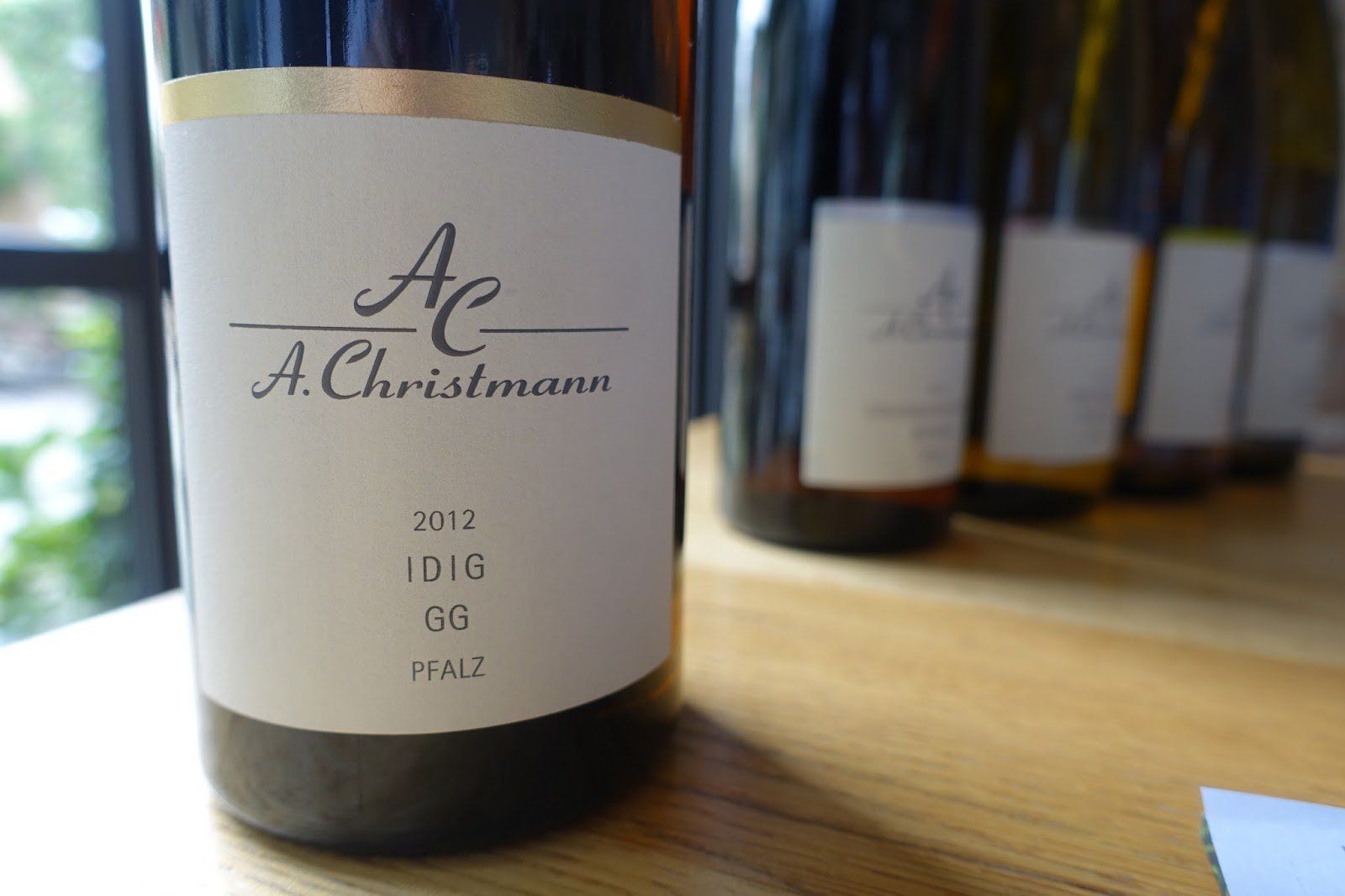
Where the Haardt Foothills Begin to Matter
Approach Neustadt an der Weinstraße from the north on a clear morning and the Haardt mountains resolve slowly from a forested ridge into something more purposeful: a chain of vine-covered slopes that has been producing serious German wine for centuries. The town itself sits at the southern edge of the Deutsche Weinstraße, the wine route that threads the length of the Pfalz, and the estates concentrated here occupy a different register than the cheerful cooperative wine culture found further north. The Pfalz is Germany's second-largest wine region by area, but its most compelling producers are clustered in a narrow band along the Mittelhaardt, where the combination of protected microclimate, basalt and sandstone soils, and exposure to Palatinate sun creates conditions that routinely yield wines of concentration and longevity.
Weingut A. Christmann, based at Peter-Koch-Straße 43 in Neustadt, operates within this tradition. The estate received a Pearl 3 Star Prestige designation in 2025, a recognition that places it among the region's serious producers rather than in the broader category of reliable Pfalz addresses. In the context of German wine estates, that distinction matters: the Pfalz has a long tail of producers making approachable, commercially oriented wine, and the estates that pursue precision and site expression occupy a clearly differentiated tier.
Terroir as the Operating Principle
The Pfalz's geological complexity is not incidental to the wines produced here. The Haardt foothills are a continuation of the Vosges Mountains across the French border, and the soils shift across short distances from sandstone and conglomerate to limestone, basalt, and loess. Each substrate handles water retention and heat radiation differently, and producers who farm multiple parcels across this variation work with a range of expressive possibilities that single-terroir estates cannot access.
For Riesling, the Pfalz's cooler northern sub-zones yield wines with higher acidity and more restrained fruit; the warmer southern band, where Neustadt sits, tends toward fuller body and a riper aromatic profile. This positioning means that wines from the Neustadt area occupy a middle ground in the German Riesling canon: they carry the structure and minerality expected of great German white wine, but with a textural weight that distinguishes them from Mosel productions or the leaner style associated with parts of the Nahe. Estates like [Weingut Clemens Busch in Pünderich](/wineries/weingut-clemens-busch-pnderich-winery) or [Schlossgut Diel in Rümmelsheim](/wineries/schlossgut-diel-rmmelsheim-winery) operate in related but geologically distinct German wine corridors, and comparing their stylistic signatures helps clarify what makes Pfalz production from this southern stretch specific.
Spätburgunder — German Pinot Noir — is increasingly relevant as a second axis for the region's leading estates. Warming vintages across the past decade have pushed Pfalz Spätburgunder toward a style with genuine structure rather than the thin, pallid reds that once characterised warmer German growing regions. The leading examples now compete seriously with entry-level Burgundy and with the more accomplished productions from [Weingut Battenfeld-Spanier in Hohen-Sülzen](/wineries/weingut-battenfeld-spanier-hohen-slzen-winery), another estate working through a rigorous terroir-led approach in an adjacent region.
The Christmann Position in Regional Context
Within the Pfalz's competitive estate hierarchy, Christmann sits in a peer group defined by long-established site holdings, a commitment to classified Grosse Lage parcels under the VDP classification system, and the kind of sustained critical recognition that the 2025 Pearl 3 Star Prestige award reflects. The VDP (Verband Deutscher Prädikatsweingüter) is Germany's most consequential producer association, and membership signals a commitment to quality tiers and site classification that separates serious estates from the broader regional market.
The neighbouring estate [Weingut Müller-Catoir](/wineries/weingut-mller-catoir-neustadt-an-der-weinstrae-winery), also based in Neustadt, provides a useful point of comparison. Both estates operate at a level above standard Pfalz production, and their proximity means visitors interested in understanding the southern Mittelhaardt can conduct a meaningful comparative tasting without extensive travel. Across a broader German frame, the estates at [Kloster Eberbach in Eltville](/wineries/kloster-eberbach-eltville-winery) and [Schloss Vollrads in Oestrich-Winkel](/wineries/schloss-vollrads-oestrich-winkel-winery) represent the Rheingau tradition, where Riesling from steep slate slopes produces wines of an entirely different architecture. The comparison sharpens understanding of what the Pfalz's warmer, more varied terroir contributes that the Rheingau cannot.
Internationally, serious German estates sit in a peer conversation that increasingly includes high-precision producers from other regions: [Weingut Bassermann-Jordan in Deidesheim](/wineries/weingut-bassermann-jordan-deidesheim-winery), one of the Pfalz's longest-established names, operates nearby and reinforces the concentration of serious estates along this particular stretch of the Mittelhaardt. For visitors with a broader itinerary, [Weingut Bürgerspital zum Heiligen Geist in Würzburg](/wineries/weingut-brgerspital-zum-heiligen-geist-wrzburg-winery) offers a comparative view of how Franconian terroir shapes white wine expression differently again.
Planning a Visit to Neustadt and the Estate
Neustadt an der Weinstraße is accessible by direct rail from Mannheim and Karlsruhe, both of which connect to the broader German high-speed network. The town functions as the informal capital of the Pfalz wine route and has more infrastructure for wine tourism than many of its surrounding villages. Accommodation in Neustadt tends toward smaller hotels and guest houses with wine-country character rather than large-footprint international brands; the [full Neustadt an der Weinstraße hotels guide](/cities/neustadt-an-der-weinstrae) maps the current options across price tiers.
Visiting a Pfalz estate at the Christmann level typically requires advance contact for tastings. These are not cellar-door walk-in operations. The serious estates in this region schedule appointments and work within a tasting structure that reflects the depth of their portfolio rather than a quick pour-and-purchase model. Autumn, around harvest in late September through October, is when the vineyards are most visually compelling and when there is the highest likelihood of encountering estate activity, though spring offers clearer appointment availability as producers are not mid-harvest. Estate visits in this tier typically run one to two hours and cover vertical comparisons or site-specific pours; arriving with some framework for German wine classification will make the conversation substantially more useful.
While in Neustadt, the surrounding town and its restaurants make a full day of it direct. The [Neustadt an der Weinstraße restaurants guide](/cities/neustadt-an-der-weinstrae) covers the dining options by format and price point; the [bars guide](/cities/neustadt-an-der-weinstrae) covers the wine bar and drinks scene. For visitors structuring a broader Pfalz itinerary, the [experiences guide](/cities/neustadt-an-der-weinstrae) and the comprehensive [Neustadt an der Weinstraße wineries guide](/cities/neustadt-an-der-weinstrae) are worth consulting before arrival.
Frequently Asked Questions
What should I expect atmosphere-wise at Weingut A. Christmann?
Pfalz estates of this standing generally operate with a working-winery atmosphere rather than a hospitality venue sensibility. Expect functional cellar spaces, professional but not theatrical tasting conditions, and a focus on the wines themselves rather than staging or experience design. Neustadt is a town with genuine local character rather than a tourist-polished façade, and the estate sits within Peter-Koch-Straße's residential-agricultural fabric. If you are travelling from a major German city and the Pearl 3 Star Prestige designation of 2025 is what's drawing you, the experience will reward preparation: read the VDP site classifications for the Pfalz, understand the key Grosse Lage parcels in the Mittelhaardt, and arrive with specific questions about vintages or sites. That preparation, more than any price or booking decision, will determine what you take away from the visit.
What wine is Weingut A. Christmann famous for?
The Pfalz's dominant white grape is Riesling, and for an estate at Christmann's level, Riesling from classified Grosse Lage sites is where the critical and competitive weight lies. The Mittelhaardt's sandstone and basalt parcels produce Riesling with more body and fruit richness than cooler German regions, alongside acidity that allows the wines to age considerably. The 2025 Pearl 3 Star Prestige award, the estate's most recent documented recognition, confirms a standard of production consistent with the Pfalz's serious-estate tier. While specific winemaker details and current portfolio specifics are not in our database, the regional frame is clear: this is a Riesling-led operation working within the VDP classification system, in one of Germany's most geologically varied and climatically privileged white-wine corridors.
Nearby-ish Comparables
A quick snapshot of similar venues for side-by-side context.
| Venue | Classification | Awards | First Vintage | Notes |
|---|---|---|---|---|
| Weingut A. Christmann | 1 awards | This venue | ||
| Jacquart | 1 awards | 1962 | ||
| Lingua Franca | 1 awards | 2015 | ||
| Schloss Vollrads | World's 50 Best | |||
| Weingut Müller-Catoir | 1 awards | |||
| Kloster Eberbach | 1 awards |
Access the Cellar?
Our members enjoy exclusive access to private tastings and priority allocations from the world's most sought-after producers.
Access the Concierge