Weingut Peter Jakob Kühn

Weingut Peter Jakob Kühn operates from Mühlstraße 70 in Oestrich-Winkel, a Rheingau address that places it at the geographic and qualitative centre of German Riesling production. The estate holds a Pearl 2 Star Prestige award for 2025, positioning it within the upper tier of Oestrich-Winkel producers. For those tracing the Rheingau's most serious white wine addresses, this is a reference point.
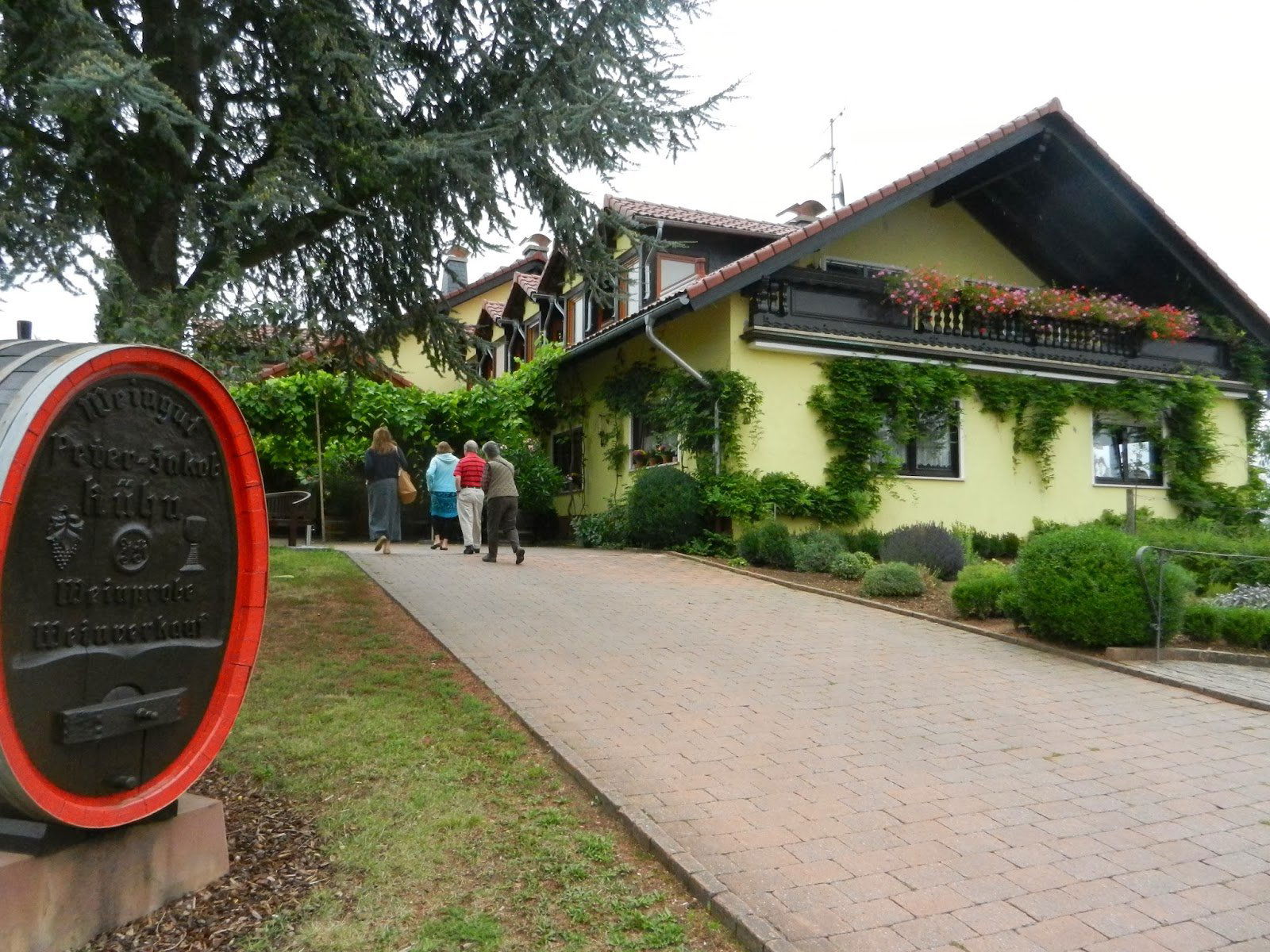
Where the Rhine Bends and the Vines Begin
The road into Oestrich-Winkel follows the Rhine's northern bank in a way that makes the relationship between river and vine immediately legible. The water moderates temperatures, the south-facing slopes catch the afternoon light, and the slate and loess soils beneath the vines store warmth through the night. This is the physical logic that has made the Rheingau one of Germany's defining white wine regions for centuries, and it is the same logic that informs every serious producer operating along this stretch. Weingut Peter Jakob Kühn, based at Mühlstraße 70 in Oestrich-Winkel, sits inside that tradition and, on the strength of its Pearl 2 Star Prestige recognition for 2025, at a meaningful point within its quality hierarchy.
Oestrich-Winkel is not a single character but a composite: the town of Oestrich with its crane-marked riverfront, Winkel with its long-documented vine history, and Mittelheim between them. The estates that operate here do so in a setting where the agricultural and the historical are inseparable. The terraced vineyards above the town are not decorative backdrops but working sites whose orientation and soil composition have been debated and documented for generations. For visitors arriving with a serious interest in German Riesling, the physical approach to any estate here carries its own orientation.
A 2025 Pearl 2 Star Prestige Estate in the Rheingau's Upper Tier
Germany's wine quality classification runs through a combination of institutional frameworks, including the VDP (Verband Deutscher Prädikatsweingüter), and external critical recognition. Pearl 2 Star Prestige, the award carried by Weingut Peter Jakob Kühn for 2025, places it in a tier where peer comparison matters more than category description. Along the same corridor of Oestrich-Winkel, estates including Schloss Vollrads, Weingut Allendorf, Weingut Josef Spreitzer, and Weingüter Wegeler each occupy different positions in the quality and stylistic spectrum. The 2 Star Prestige designation signals that Kühn is competing in the upper bracket of this peer set, not merely a respectable local address.
Across the broader Rheingau, the reference estates are well-established. Kloster Eberbach in Eltville carries the weight of monastic wine history and a substantial production footprint. Further afield in the German wine world, estates such as Schlossgut Diel in Rümmelsheim, Weingut A. Christmann in Neustadt an der Weinstraße, and Weingut Bassermann-Jordan in Deidesheim define the Pfalz's premium register. A Prestige-tier Rheingau estate belongs in comparison with this cohort, not simply with its immediate neighbours. That is the frame in which Kühn's 2025 recognition reads most clearly.
Rheingau Riesling and What This Terroir Produces
The Rheingau's geological character separates it from other German Riesling regions in ways that show in the glass. Where the Mosel produces wines shaped by steep slate sites and the Nahe by a more fractured range of soil types, the Rheingau runs predominantly on phyllite slate, quartzite, and loess deposits laid down across the river's bend. The result, in the hands of careful producers, is Riesling with a particular structural firmness, a mineral edge, and an ageing trajectory that rewards patience. Dry Rheingau Riesling, once secondary to the region's botrytis-driven Spätlese and Auslese tradition, now claims serious critical attention, with estates across the VDP spectrum producing GG (Grosses Gewächs) wines that compete at the highest level of German dry white wine.
The shift toward dry expression is not universal but it is directionally significant. Producers who committed early to site-specific, low-intervention approaches now occupy a different market position than those who followed the broader Lieblich (off-dry) mainstream. Where a given estate sits on that axis, and how consistently its wines express the specific geological signatures of their parcels, are the questions that separate the 2 Star Prestige tier from the broader field. For visitors evaluating Oestrich-Winkel's wine estates, understanding that axis is more useful than any ranking list.
Planning a Visit: What to Know Before You Go
Oestrich-Winkel is reached from Frankfurt in approximately 45 minutes by car, or by regional train to the Oestrich-Winkel station on the Rhine-Main network, placing it within a realistic day-trip radius for most visitors staying in the city. The town itself is compact enough that multiple estate visits can be combined in a single afternoon without logistical difficulty, provided appointments are confirmed in advance, as serious Rheingau producers typically operate by prior arrangement rather than open-door drop-in. The harvest period, running from late September through October in most years, brings the vineyards to their most active state and the riverside villages to life, but tasting room access can be tighter during that window. Spring visits, particularly April through June, offer quieter estate access and the early vine growth that makes the slope geography most visually legible.
For context on accommodation and dining options in the area, our full Oestrich-Winkel hotels guide and our full Oestrich-Winkel restaurants guide cover the practical range. Those building a wider Rhine itinerary should also consult our full Oestrich-Winkel bars guide, our full Oestrich-Winkel wineries guide, and our full Oestrich-Winkel experiences guide to extend the visit beyond any single estate.
For comparative scale, premium wine tourism in other European regions, from Abadía Retuerta in Sardón de Duero to distillery visits such as Aberlour in Aberlour, has normalised the expectation that appointment-based estate visits deliver more depth than open cellar doors. The Rheingau operates on a similar logic: the estates that reward the most serious visits are rarely the ones with the largest tasting room footprints.
Frequently Asked Questions
- What should I taste at Weingut Peter Jakob Kühn?
- The Rheingau's most coherent argument as a wine region runs through Riesling, both dry and in the residual-sugar styles that the region built its historical reputation on. At an estate carrying Pearl 2 Star Prestige recognition for 2025, the wines most worth prioritising are those that most directly express a specific vineyard site, whether labelled as Grosses Gewächs or under site-specific designations. The Oestrich-Winkel corridor produces Riesling with a particular mineral tension that distinguishes it from Mosel or Pfalz expressions of the same grape, and that distinction is what a tasting here should be structured around.
- What is Weingut Peter Jakob Kühn leading at?
- Based on its Pearl 2 Star Prestige standing for 2025, Kühn operates at the quality level where site expression and production discipline are the primary differentiators within the Oestrich-Winkel peer set. In a town that includes several VDP-member and prestige-recognised estates, that places it in the upper tier of a competitive local field. The Rheingau address itself signals a particular style register: structured, mineral-forward Riesling suited to ageing, rather than the lighter, more immediately accessible expressions produced in other German regions.
- Do I need a reservation for Weingut Peter Jakob Kühn?
- Prestige-tier Rheingau estates at the Pearl 2 Star level typically operate on an appointment basis rather than open walk-in access, and Oestrich-Winkel's most serious producers follow that pattern. Contact details are not publicly listed in all directories, so approaching via the estate's official website or direct inquiry is advisable before planning a visit. Given the estate's recognition level and the general pattern for estates of this standing in the region, assuming a booking requirement is the practical starting point.
- How does Weingut Peter Jakob Kühn fit within the broader Rheingau quality hierarchy?
- The Pearl 2 Star Prestige award for 2025 places Kühn within the upper bracket of recognised producers in Oestrich-Winkel, a town with a notably dense concentration of serious estates relative to its size. In regional terms, that means it belongs in the same critical conversation as the Rheingau's most-discussed addresses, competing on wine quality and site specificity rather than on cellar-door scale or tourism infrastructure. For collectors and buyers working through the Rheingau's premium tier systematically, it represents a reference-point estate in one of the region's most historically significant sub-districts.
Cuisine and Credentials
A quick context table based on similar venues in our dataset.
| Venue | Classification | Awards | First Vintage | Notes |
|---|---|---|---|---|
| Weingut Peter Jakob Kühn | 1 awards | This venue | ||
| Schloss Vollrads | World's 50 Best | |||
| Weingut Allendorf | 1 awards | |||
| Weingut Josef Spreitzer | 1 awards | |||
| Weingüter Wegeler | 1 awards |
Access the Cellar?
Our members enjoy exclusive access to private tastings and priority allocations from the world's most sought-after producers.
Access the Concierge