Weingüter Wegeler

Weingüter Wegeler is a Rheingau estate with deep roots in Oestrich-Winkel, recognised with a Pearl 2 Star Prestige rating in 2025. Positioned among the Rheingau's serious Riesling producers, the estate draws visitors drawn to the region's tradition of site-driven, age-worthy whites. It sits on Friedensplatz at the heart of a village where viticulture and daily life remain closely intertwined.
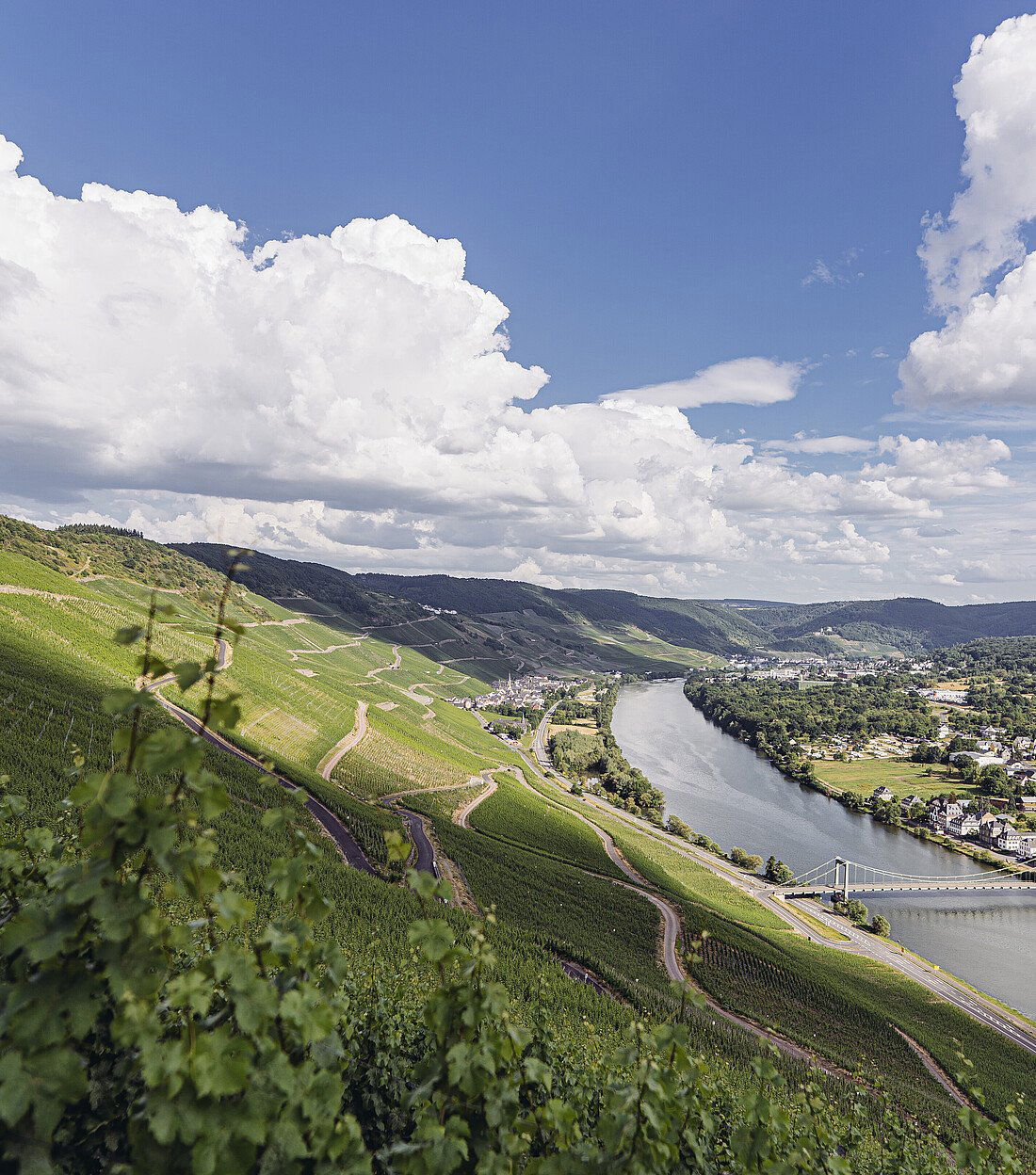
Riesling, Slate, and the Rheingau's Long Game
The Rhine bends sharply just west of Oestrich-Winkel, and for centuries that bend has governed everything: the angle of sunlight, the retention of warmth into autumn, the way morning fog lifts off the river and delays the ripening curve just enough to build acidity in the grapes. Estates along this stretch have understood that geography is their primary argument, and the better ones have spent generations learning to stay out of its way. Weingüter Wegeler, located on Friedensplatz 9 in the centre of Oestrich-Winkel, operates within that tradition. Its 2025 Pearl 2 Star Prestige recognition places it in a tier where the conversation is about site fidelity and long-term consistency, not novelty.
Oestrich-Winkel itself is not a wine destination that announces itself loudly. The Rhine promenade is quieter than Rüdesheim, the wine bars more deliberate than spectacular. What the village offers instead is concentration: a cluster of serious estates within walking distance of one another, each with a different interpretation of the same river-facing slopes. Weingüter Wegeler is among the addresses that give the town its density of serious production. Nearby, Schloss Vollrads, Weingut Allendorf, Weingut Josef Spreitzer, and Weingut Peter Jakob Kühn represent different points on the spectrum from classical to contemporary Rheingau Riesling. Together they make the town one of the more productive stops on any serious German wine itinerary.
The Viticulture Argument in a Region That Has Made It for Centuries
Sustainability in viticulture is often framed as a recent development, a correction to the chemical-intensive era of the 1970s and 1980s. In the Rheingau, however, the underlying logic is older than that. Estates with centuries of site observation have generally been the ones most reluctant to disturb the soil biology and vine stress patterns that define their parcel character. The contemporary movement toward organic and biodynamic certification in German wine regions connects to that longer instinct: that the vineyard, left to function as an ecosystem rather than a production unit, reliably outperforms one managed for short-term yield.
Wegeler's positioning in the 2025 Pearl 2 Star Prestige tier reflects a standard that rewards consistency and site expression over volume. In a region where the Grosses Gewächs classification (the VDP's dry grand cru equivalent) imposes strict yield limits and requires manual harvest, the estates holding serious classification status have structural reasons to farm carefully. The Rheingau's south-facing slopes above the Rhine, particularly around the Geisenheim and Oestrich sections, hold warm, well-drained soils over quartzite and loam, with pockets of slate that enforce the vine stress necessary for concentrated, age-worthy Riesling. Estates that manage these parcels responsibly do so partly because the terroir rewards it: stressed vines on thin soils do not respond well to chemical shortcuts.
For context across the broader German wine estate tier, Kloster Eberbach in Eltville and Schlossgut Diel in Rümmelsheim represent adjacent regional traditions where the relationship between historic site stewardship and wine quality has been similarly long-established. Further afield, Weingut A. Christmann in Neustadt an der Weinstraße and Weingut Bassermann-Jordan in Deidesheim show how the Pfalz has developed a parallel conversation around biodynamic and low-intervention approaches within VDP-classified estates.
What a Pearl 2 Star Prestige Rating Signals
Award tiers in wine function differently from restaurant accolades. A Michelin star rewards a single meal's execution. A wine estate rating like the Pearl 2 Star Prestige designation, as received by Weingüter Wegeler in 2025, reflects cumulative assessment across a range of wines, vintages, and site expressions. It positions the estate above entry-level regional producers and within a cohort where typicity and terroir clarity are the primary criteria. In practical terms, that means visitors arriving with serious intent will find wines worth extended attention rather than approachable tourist-facing bottlings.
The Rheingau's prestige tier is a competitive one. The region's leading VDP estates have international followings, and allocation for the leading Grosses Gewächs parcels can be limited. Wegeler, with addresses across multiple classified sites, operates at a scale that gives it range without diluting focus. That breadth is part of what a two-star prestige classification implies: not a single standout wine, but a programme with enough consistency across the portfolio to warrant the designation.
Planning a Visit: Practical Orientation
Oestrich-Winkel is accessible from Frankfurt in under an hour by regional train to Oestrich station, making it a viable day trip from the city or an anchor point for a longer Rheingau circuit. The estate address at Friedensplatz 9 sits in the village centre, a short walk from the Rhine promenade. For visitors building an itinerary around the wine towns of the Rheingau, the logical sequence runs from Rüdesheim and Assmannshausen in the west through Geisenheim and Oestrich-Winkel toward Eltville and Wiesbaden in the east, with the B42 road following the river the entire way.
Given that specific booking methods, tasting hours, and pricing for Weingüter Wegeler are not confirmed in our current data, visitors should verify directly with the estate before arrival. German wine estates vary considerably in their visitor formats: some operate walk-in Straußenwirtschaft-style tastings for part of the year, others require appointments, and a few conduct visits exclusively through trade. The estate's Friedensplatz location suggests proximity to village amenities, and the broader Oestrich-Winkel wine circuit means that even if scheduling requires some flexibility, adjacent estates can fill the itinerary.
For those combining the wine circuit with broader travel, our full Oestrich-Winkel restaurants guide, hotels guide, bars guide, wineries guide, and experiences guide cover the full scope of what the town and its immediate surroundings offer. Internationally, the estate-visit format translates well to comparisons with Abadía Retuerta in Sardón de Duero for those interested in how historic agricultural estates frame the visitor experience around serious production. And for readers whose interests extend beyond wine entirely, Aberlour in Aberlour shows how a different tradition of estate-level production and place-specificity operates in Speyside.
Frequently Asked Questions
- What wine should I prioritise at Weingüter Wegeler?
- The estate's Pearl 2 Star Prestige recognition in 2025 reflects strength across its portfolio, and the Rheingau context points clearly toward Riesling as the primary reference point. The region's south-facing, river-adjacent slopes produce wines that range from entry-level Kabinett to classified dry Grosses Gewächs, and Wegeler holds parcels across multiple recognised sites. Within those, the estate-level Rieslings from named vineyard sites in the Oestrich-Winkel area represent the most direct expression of what the prestige designation recognises. Confirm current availability and format with the estate directly, as allocation and tasting access vary by season and visitor type.
- Why do visitors make a point of coming to Weingüter Wegeler?
- The combination of location, classification, and recognition drives most serious wine visitors to Oestrich-Winkel estates. Wegeler sits at the centre of a village with strong production density, awarded a Pearl 2 Star Prestige in 2025, and historically associated with some of the Rheingau's most recognised vineyard parcels. For visitors whose interest is in understanding how the Rheingau's site-specific Riesling tradition works at a serious production level, an estate with that depth of classification and regional presence offers a different order of engagement than a wine bar or cooperative tasting room. Specific pricing and format details should be confirmed with the estate before visiting.
Comparable Spots, Quickly
A quick context table based on similar venues in our dataset.
| Venue | Classification | Awards | First Vintage | Notes |
|---|---|---|---|---|
| Weingüter Wegeler | 1 awards | This venue | ||
| Schloss Vollrads | World's 50 Best | |||
| Weingut Allendorf | 1 awards | |||
| Weingut Josef Spreitzer | 1 awards | |||
| Weingut Peter Jakob Kühn | 1 awards |
Access the Cellar?
Our members enjoy exclusive access to private tastings and priority allocations from the world's most sought-after producers.
Access the Concierge