Weingut Josef Spreitzer

Weingut Josef Spreitzer is a Rheingau estate in Oestrich-Winkel holding a Pearl 2 Star Prestige rating for 2025, placing it among the region's more decorated producers. The address on Rheingaustraße puts it squarely within a corridor of historic Riesling houses, where the Rhine's north-facing slopes have shaped the style of German white wine for centuries. A visit here is an exercise in understanding what the Rheingau does at its more serious end.
The Rheingau Riesling Tradition and Where Spreitzer Sits Within It
The Rhine's north bank between Wiesbaden and Rüdesheim has been producing white wine since Benedictine monks first mapped its slate and loess soils in the Middle Ages. That history has created something specific: a region defined almost entirely by Riesling, and one in which the gulf between a competent estate and a genuinely decorated one is measured not in grape varieties or winemaking fashions, but in the precision with which individual vineyard plots are handled. Oestrich-Winkel, the town where Weingut Josef Spreitzer is based, sits at the geographic centre of this tradition, flanked by the older monastic holdings of Kloster Eberbach in Eltville to the east and the aristocratic wine estates that cluster around the town's historic core.
Spreitzer holds a Pearl 2 Star Prestige rating for 2025, a designation that places it in the upper tier of the regional peer group. In Oestrich-Winkel alone, that puts it in the same conversation as Schloss Vollrads, one of the oldest wine estates in the world, and Weingüter Wegeler, whose holdings span some of the Rheingau's most cited Einzellagen. The rating signals that Spreitzer is operating at a level where the wines draw comparison against regional benchmarks, not merely local ones.
What the Tasting Room Format Reflects About Rheingau Wine Culture
The Rheingau's approach to receiving visitors has historically been more formal than, say, the cooperative-heavy Mosel or the tourist-oriented Pfalz. Estates here tend to present wines within a framework that foregrounds the vineyard hierarchy: Gutsriesling and regional blends at one end, Großes Gewächs and Spätlese from named Lagen at the other. This is not incidental. The Rheingau was the region that petitioned the Prussian state in the nineteenth century for the first legally recognised quality classification of German vineyards, and that impulse toward classification still shapes how tastings are structured and what questions are considered worth asking.
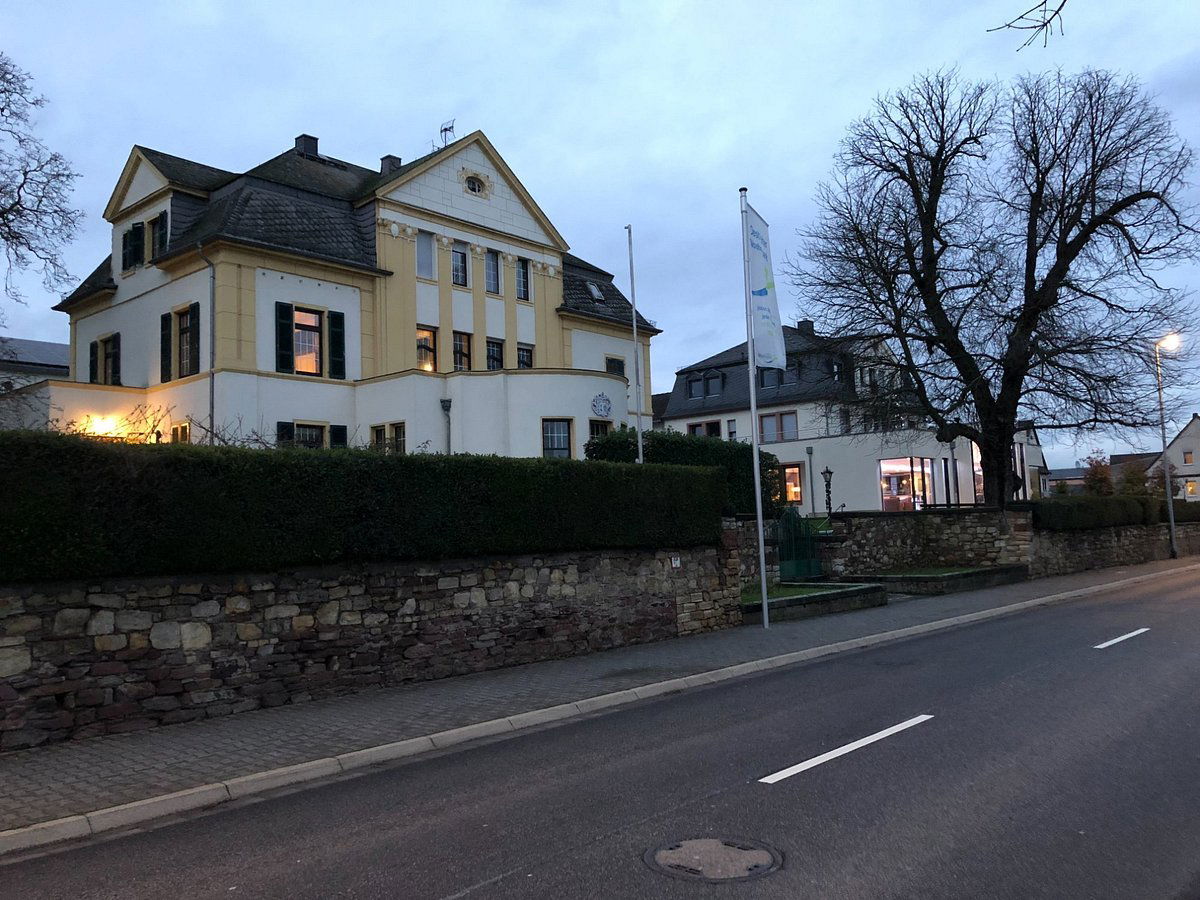
At Rheingaustraße 86, Spreitzer occupies a position on the main road through Oestrich-Winkel that is typical of the region's working estates: a street-facing address that doubles as both production site and visitor point, without the theatrical staging of a purpose-built tasting centre. In a region where Schloss Vollrads can draw on a moated tower as backdrop, the experience at a family estate like Spreitzer reads as more intimate, structured around the wines themselves rather than around architectural spectacle. That format suits the Rheingau's professional visitor well: the emphasis falls on the glass, the vineyard map, and the conversation about site and vintage.
The Peer Set in Context
Understanding Spreitzer means understanding the competitive density of Oestrich-Winkel as a wine address. Weingut Allendorf and Weingut Peter Jakob Kühn are both based in the same town and have their own distinct critical followings. Kühn in particular has built a profile around biodynamic viticulture that places it in conversation with producers outside the Rheingau altogether, including Weingut A. Christmann in Neustadt an der Weinstraße and Weingut Bassermann-Jordan in Deidesheim further south in the Pfalz. Within that field, Spreitzer's Pearl 2 Star Prestige positions it as a serious estate rather than a boutique experiment, with the kind of sustained critical recognition that accumulates from consistent performance across vintages rather than a single breakout year.
The broader German fine wine scene, which increasingly circulates across regions and compares estates against international benchmarks, has also brought producers like Schlossgut Diel in Rümmelsheim into the same conversation, despite that estate sitting in the Nahe rather than the Rheingau. The point is that premium German Riesling is now evaluated on a national and international grid, and Spreitzer's 2025 rating reflects where it lands on that grid.
Thinking About What to Taste
The Rheingau's vineyard hierarchy gives a useful structure for approaching any serious estate here. The regional Riesling appellation provides the entry point, but the more instructive wines are those tied to specific Lagen: Oestrich's Doosberg and Lenchen sites, or the Hattenheim and Erbach vineyards within reach of estates that farm across multiple communes. The Prädikat system, which classifies wines by must weight from Kabinett through Trockenbeerenauslese, adds a second axis. A tasting that works across both the site and the Prädikat dimensions tells you considerably more about a producer's range than a single dry Spätlese, however polished.
At a 2 Star Prestige level, the expectation is that both the dry Großes Gewächs tier and the traditional Prädikat styles are handled with equal conviction. That dual competence is rarer than it sounds: the last two decades of German wine politics have seen producers align strongly either with the dry GG style favoured by the VDP classification or with the traditional off-dry and sweet styles that built the Rheingau's pre-war reputation. Estates that manage both without compromise occupy a specific and valued niche.
Planning a Visit to Oestrich-Winkel
Oestrich-Winkel is reachable from Frankfurt in under an hour by regional train, with the S-Bahn running to nearby Eltville and a connection or taxi covering the remaining stretch. The Rheingau's wine season runs broadly from late spring through autumn harvest, with August and September bringing the most visitor activity and the harvest tastings that let you assess a vintage before it reaches bottle. Spreitzer sits on Rheingaustraße 86, the main road through town that also traces the historic route of the Rheingau wine trail. Visiting multiple estates in a single day is logistically direct given the compact geography, and a planned itinerary might bracket Spreitzer alongside Weingut Peter Jakob Kühn and Weingüter Wegeler to cover the range of approaches currently practised in Oestrich-Winkel. Contact details and confirmed tasting hours are not available in the current EP Club database record; checking directly with the estate before a visit is advisable, as smaller Rheingau producers frequently require appointments rather than accepting walk-ins.
For those building a longer stay around the region's wine programme, the EP Club guides to restaurants in Oestrich-Winkel, hotels in Oestrich-Winkel, and bars in Oestrich-Winkel cover the full visitor picture. The complete Oestrich-Winkel wineries guide and the experiences guide provide further context for structuring a serious wine trip to the region.
How Spreitzer Compares Beyond the Rheingau
For visitors whose reference points extend beyond German wine, the Pearl 2 Star Prestige rating places Spreitzer in a bracket that draws comparison with regionally decorated producers in other European fine wine zones. The discipline of Riesling at serious Rheingau level, with its combination of high natural acidity, measured residual sugar calibration, and age-worthiness, has more in common with top-tier Burgundy Chardonnay or Loire Chenin Blanc in structural intent than it does with most New World whites. Producers at a comparable decorative level from other traditions, such as Abadía Retuerta in Sardón de Duero, operate in entirely different stylistic registers, which underlines how specific the Rheingau's proposition remains. Even a producer from a category as different as Aberlour in Aberlour shares a quality-certification logic with Spreitzer, in the sense that both carry formal recognition that functions as a shorthand for a minimum standard of production seriousness.
The Rheingau's case for relevance in contemporary wine culture rests not on novelty but on the argument that its leading producers have spent longer getting Riesling right than almost anyone else. Spreitzer's 2025 rating is one data point in that argument, and for a visitor approaching the region with serious intent, it is a property worth including on any itinerary that aims to understand the Rheingau at its more demanding level.
Frequently Asked Questions
- What is the general vibe at Weingut Josef Spreitzer?
- Spreitzer sits in Oestrich-Winkel, one of the Rheingau's most established wine addresses, at Rheingaustraße 86. The estate holds a Pearl 2 Star Prestige rating for 2025, placing it in the upper tier of the region's working producers. The setting and format are consistent with serious Rheingau estates: focused on the wines and the vineyard context rather than on hospitality spectacle. Pricing is not confirmed in the EP Club record; contacting the estate directly is advisable.
- What should I taste at Weingut Josef Spreitzer?
- The Rheingau is a Riesling region, and a structured tasting at a 2 Star Prestige estate should ideally cover both the dry Großes Gewächs tier and at least one traditional Prädikat style to understand the full range of what the estate produces. Specific winemaker and vineyard details are not confirmed in the current EP Club database; the estate itself is the authoritative source on current releases and tasting format.
- What is the defining thing about Weingut Josef Spreitzer?
- The Pearl 2 Star Prestige award for 2025 is the clearest external signal of where the estate sits. In Oestrich-Winkel, a town with several well-regarded producers including Schloss Vollrads and Weingüter Wegeler, that rating distinguishes Spreitzer as operating at a formally recognised level of quality rather than purely on local reputation.
- Should I book Weingut Josef Spreitzer in advance?
- If you are travelling specifically to visit, booking ahead is advisable. Smaller Rheingau estates regularly operate by appointment rather than open-door, and with no confirmed phone or website in the current EP Club record, the estate should be contacted directly to confirm availability and tasting format. The Pearl 2 Star Prestige recognition suggests demand from serious wine visitors, which adds further reason to confirm before arriving.
Cuisine and Recognition
A short peer set to help you calibrate price, style, and recognition.
| Venue | Classification | Awards | First Vintage | Notes |
|---|---|---|---|---|
| Weingut Josef Spreitzer | 1 awards | This venue | ||
| Schloss Vollrads | World's 50 Best | |||
| Weingut Allendorf | 1 awards | |||
| Weingut Peter Jakob Kühn | 1 awards | |||
| Weingüter Wegeler | 1 awards |
Access the Cellar?
Our members enjoy exclusive access to private tastings and priority allocations from the world's most sought-after producers.
Access the Concierge