Viña Tabalí operates from the Hacienda Santa Rosa de Tabalí in Ovalle, within Chile's Limarí Valley, one of the country's most compelling addresses for cool-climate whites and restrained reds shaped by coastal fog and limestone-rich soils..
Pearl is the En Primeur Club membership app — saves, bookings, and concierge access live there. Same editors, same standards.
- Address
- Hacienda Santa Rosa de Tabali s/n, 1844117 Ovalle, Coquimbo
- Phone
- +56 9 4025 9996
- Website
- tienda.tabali.com
- Directions
- Get directions
 Saves & bookings on Pearl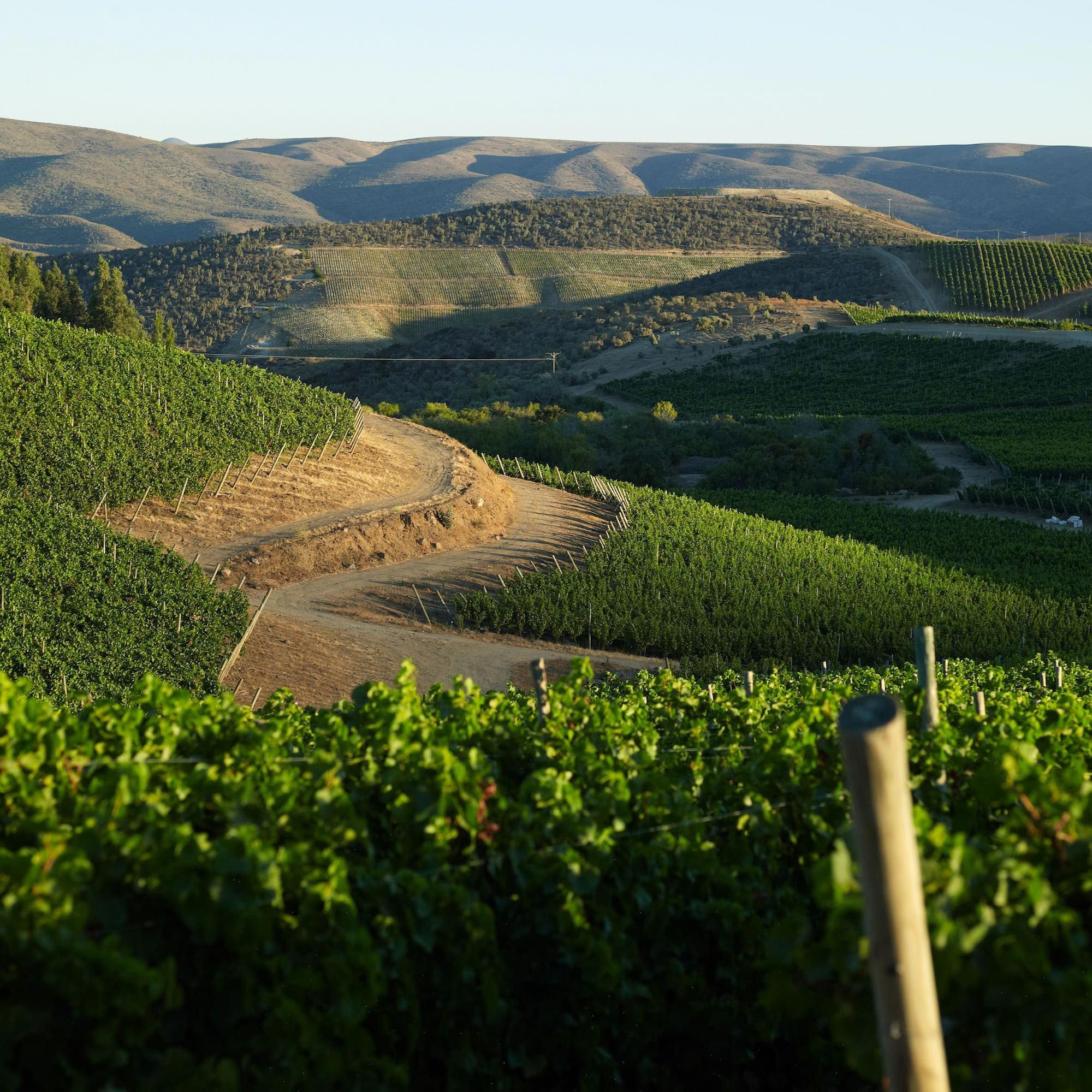
Limarí's Limestone Argument
Drive north from Santiago toward Ovalle and the terrain makes an unmistakable shift. The lush Central Valley gives way to a drier, more austere Atacama-adjacent landscape where the Pacific's cold Humboldt Current reaches inland through river valleys and morning fog banks. The Limarí Valley sits at roughly 30 degrees south latitude, further north than most Chilean wine country, and its limestone-dominant subsoils distinguish it sharply from the alluvial clay and granite-heavy profiles of Maipo, Colchagua, or Casablanca. Viña Tabalí occupies the Hacienda Santa Rosa de Tabalí within this zone, where elevation, marine influence, and soil chemistry combine to push viticulture in a direction most of coastal Chile cannot replicate.
This is not context-setting for a single estate visit. It is the central reason Limarí matters to anyone tracking where Chilean wine is moving. The valley's cool nights slow ripening and preserve natural acidity. Limestone imparts a mineral tension in whites, particularly Chardonnay and Sauvignon Blanc, that reads closer to Burgundy or the Casablanca coast than to the warmer-inflected Chardonnays that built Chile's early export reputation. Tabalí functions as one of the region's clearest demonstrations of what this geography can produce at the upper tier.
The Limarí Tier and Where Tabalí Sits Within It
Chile's premium wine conversation has historically centred on Cabernet Sauvignon from Maipo and blended reds from Colchagua. Over the past fifteen years, a credible alternative argument has emerged from the country's northern valleys and coastal zones, the case that Chile's most compelling wine identity may lie not in Cabernet concentration but in the acidity-driven, mineral-inflected whites and Pinot Noirs that cooler microclimates enable. Limarí sits at the forefront of that argument.
Within Limarí, a small number of producers have established reputations at the quality level where allocation and export recognition matter. Tabalí operates in that upper bracket, recognised through EP Club's 2025 rating system alongside producers in different Chilean geographies, estates like Viña Seña in Panquehue and Viña Casa Silva in San Fernando, both operating at premium or icon tier within their respective valleys. The comparison is instructive: Seña's identity is rooted in Cabernet-led blends with Napa-adjacent ambitions; Casa Silva anchors itself to Colchagua's deep red-wine heritage. Tabalí's positioning is structurally different, its claim is geographic specificity, built on a site that most Chilean producers cannot access from their existing operations further south.
Other Limarí producers make a related case. Viña Falernia in Vicuña, working the Elqui Valley immediately north, pursues altitude-driven aromatics through Syrah and Carménère. The two estates are not direct competitors, their soil profiles and elevations differ, but together they illustrate the north's growing credibility as a source of structured, site-expressive wine rather than easy, high-volume production.
Philosophy on the Ground: Restraint as Method
In winemaking terms, the Limarí approach demands a different set of instincts than what worked in Chile's warmer valleys during the export-volume era of the 1990s and early 2000s. High-intervention winemaking, extended maceration for colour and tannin extraction, heavy oak regimes, chaptalisation in cool years, tends to obscure what Limarí's limestone and fog-cooled canopy actually produce. The move at estates operating at this level has been toward restraint: preserving natural acidity, limiting new wood influence, and allowing fruit to express site rather than technique.
Tabalí's recognition signals alignment with that restraint-led approach. At this tier, the award reflects not just consistent technical execution but the ability to produce wines that read as place-specific rather than variety-generic. The parallel is easier to see in Burgundy or the Loire, where appellation logic enforces geographic identity, but Chile is building its own version of that argument from scratch, through producer choices rather than regulatory frameworks.
For comparison further down the Chilean wine map, producers like Viña De Martino in Isla de Maipo and Viña MontGras in Palmilla have moved in similar directions, emphasising organic or low-intervention farming and single-vineyard expressions within their own zones. The trend is national rather than local, but Limarí's distinct geology makes the expression of that philosophy more visually legible.
Ovalle as a Base and Limarí as a Circuit
Ovalle is not Santiago's wine-tourism circuit, and that distinction matters for how visitors should plan around Tabalí. The town sits roughly 400 kilometres north of Santiago, accessed via the Pan-American Highway or by flying into La Serena, approximately 90 kilometres northwest. The nearest international airport infrastructure is La Serena's La Florida Airport, which handles regional connections and some domestic routes from Santiago. Driving from La Serena into the Limarí Valley takes under two hours and passes through a landscape that shifts from coastal-influenced scrubland to the valley's more temperate agricultural floor.
The region's wine tourism infrastructure is thinner than Casablanca or the Colchagua Valley's tourist-oriented circuits, which means visits typically require advance arrangement directly with estates rather than walk-in access. For travellers combining Tabalí with other northern wine stops, Viña Falernia in Vicuña is feasible as a day extension into the Elqui Valley. Pisco is the other northern draw: Pisquera Casa Juliá operates in Ovalle itself, and Pisco Alto del Carmen Distillery in Huasco anchors the deeper Atacama-adjacent circuit for those committed to exploring the northern production corridor.
The contrast with central Chilean wine tourism is worth stating directly. Visiting Colchagua estates like Viña MontGras or Viña Undurraga in Talagante involves well-trodden tourist routes with reliable hospitality infrastructure. The north requires more logistical commitment but offers a wine country experience that has not been standardised for mass visitor flow. That's both its friction and its appeal.
The Broader Chilean Premium Tier
Chile's wine industry in 2025 spans an enormous range: from high-volume supermarket-oriented production to a small stratum of internationally recognised estates competing against Argentina, South Africa, and southern hemisphere rivals at the collector and sommelier level.
Across that stratum, the shared characteristic is specificity of origin. El Gobernador (Miguel Torres Chile) in Curicó brings Spanish investment and Curicó valley terroir into the conversation. Viña Ventisquero in Santiago and Viña Santa Rita in Buin represent different expressions of Central Valley identity. Viña Valdivieso in Lontué has built recognition through sparkling and varietal expressions from Maule. What distinguishes Tabalí's position within this field is its address: Limarí remains one of the few Chilean wine regions whose limestone-and-fog argument has not yet been duplicated elsewhere in the country's geography.
For those cross-referencing Chile's premium wine tier against international benchmarks, the relevant comparison is not Bordeaux or Napa, whose structural identities are built on different soil chemistry and regulatory context, but rather the emerging cool-climate wine regions of the southern hemisphere: Margaret River, parts of South Africa's Hemel-en-Aarde, and New Zealand's Central Otago. These are places where the argument for geographic specificity is being made through producer discipline rather than appellation law, and Limarí's standing within that conversation is growing.
Planning Your Visit
Viña Tabalí is located at Hacienda Santa Rosa de Tabalí, Ovalle, in Chile's Coquimbo region. Advance contact is advisable before planning a visit. La Serena provides one practical base for multi-estate touring across the Limarí and Elqui valleys. The cooler shoulder months, roughly March through May post-harvest and September through November pre-harvest, offer one direct engagement with the winemaking calendar. Summer visitors (December through February) will find the valley at peak heat, which affects both tasting conditions and estate activity levels.
Cost and Credentials
Comparable venues nearby, for context on price, style, and recognition.
| Venue | Cuisine | Price | Notes |
|---|---|---|---|
| Viña TabalíThis venue — the venue you are viewing | Ovalle, Pinot Noir, Chardonnay | $$$ | Not listed |
| Pisquera Casa Juliá | Not listed | Not listed | Limarí Valley, Moscatel Rosada, Moscatel de Alejandría |
| Pisco Horcón Quemado | Winery | Not listed | Not listed |
| Viña Falernia | Vicuña, Cabernet Sauvignon, Carmenère | $$$ | Not listed |
| Black Heron Pisco Distillery | Tulahuén, Moscatel | $$$ | Not listed |
| Hanaq Pacha Distillery | Winery | Not listed | Not listed |

At a Glance
- Scenic
- Modern
- Elegant
- Well Known
- Wine Education
- Group Outing
- Special Occasion
- Vineyard Tour
- Estate Grounds
- Barrel Room
- Panoramic View
- Terrace
- Sustainable
- Vineyard
- Mountain
- Limarí Valley
- Pinot Noir
- Chardonnay
- Sauvignon Blanc
- Syrah
- Cabernet Sauvignon
- Malbec
- Carmenère
- Cabernet Franc
- Viognier
- Still Red
- Still White
- Still Rosé
- Sparkling
- Guided Tasting
- Wine Education
- Food Pairing
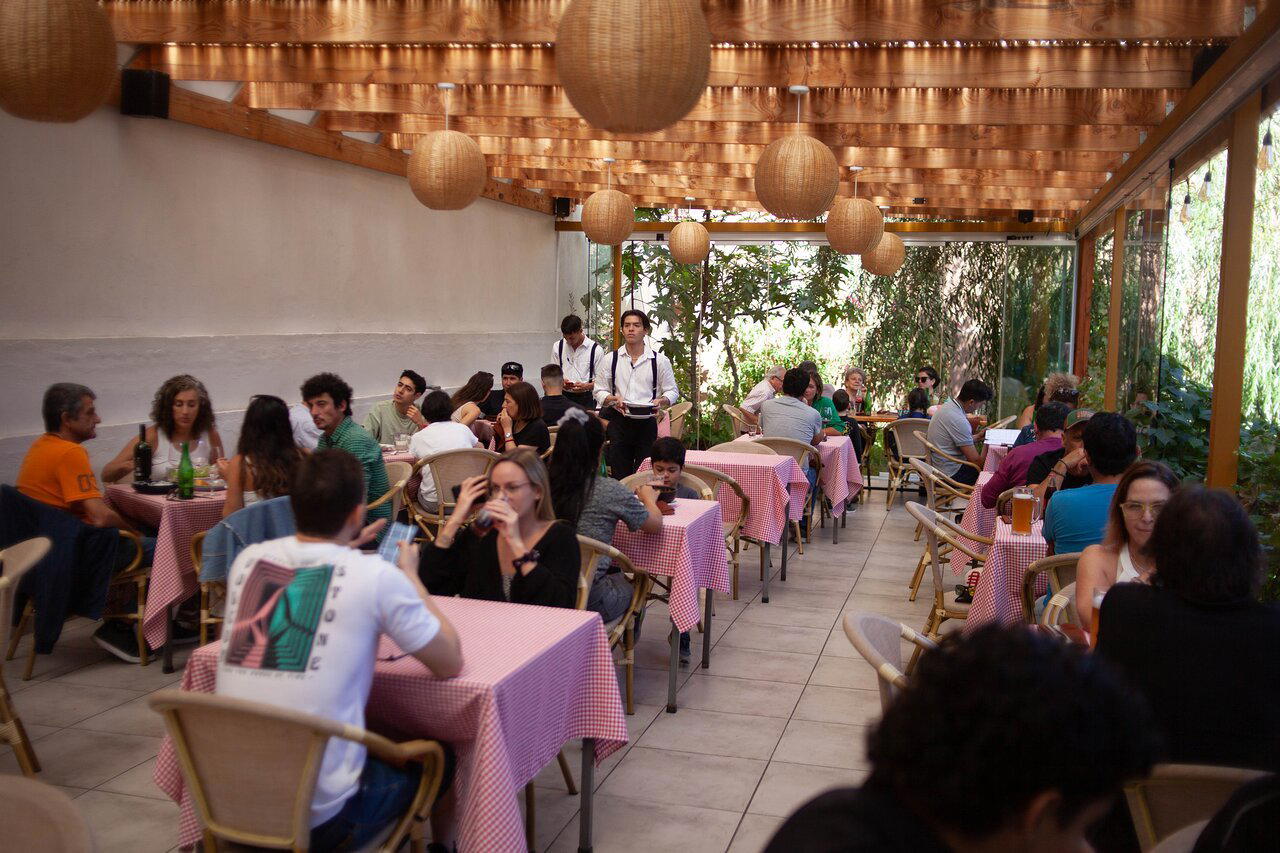
Modern, architecturally striking winery built into a ravine with open-air stainless steel tanks; outdoor tasting areas overlook the valley with coastal and mountain views.