
One of Santiago's oldest continually operating wine estates, Viña Cousiño-Macul sits in the Peñalolén district and holds a Pearl 2 Star Prestige rating (2025). The property represents a particular strand of Chilean wine history, where European varietals and long cellaring traditions took root before the country's modern export boom. For visitors to the capital, it offers a direct encounter with that heritage within city limits.
 Discover on Pearl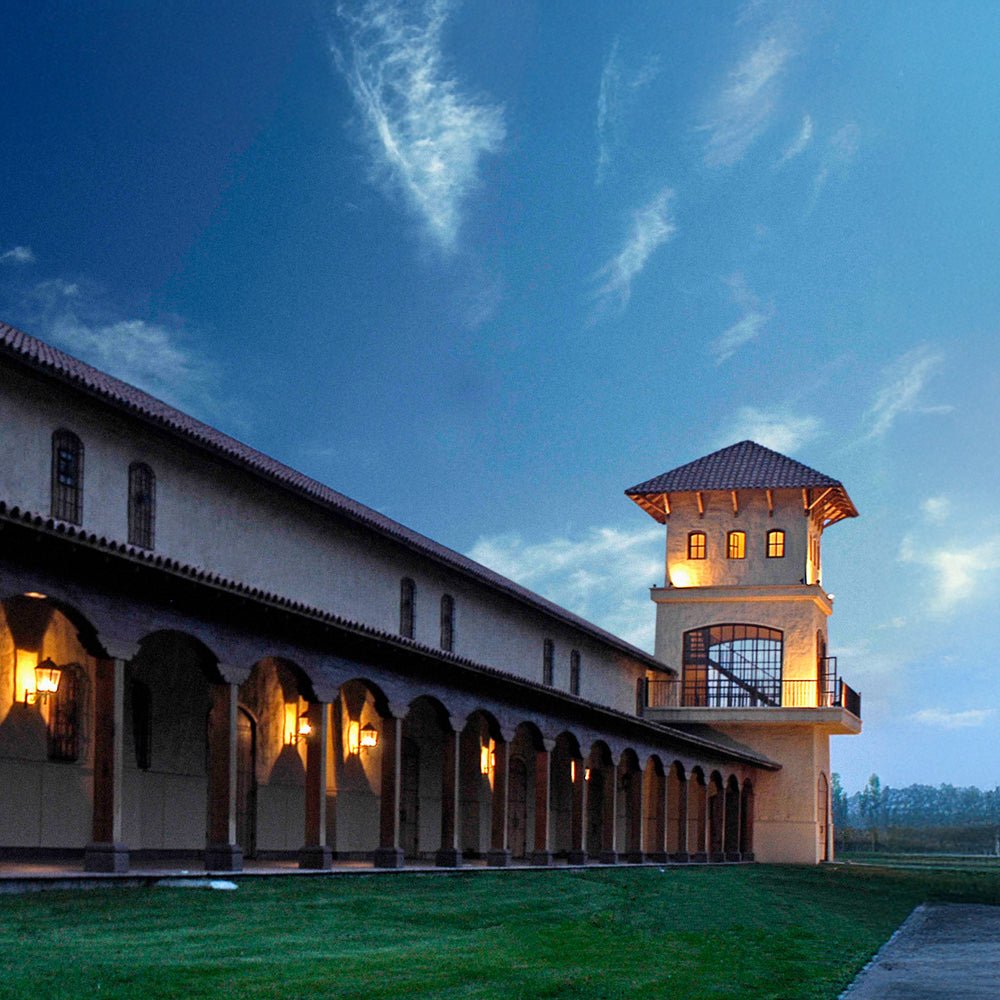
A Winery That Predates Modern Chile's Export Boom
Santiago's eastern suburbs are not where most international visitors expect to find a working winery. The city presses outward from the Andes foothills in every direction, and Peñalolén, where Viña Cousiño-Macul occupies Av. Quilin 7100, sits at an address that feels industrial until the estate opens before you. This proximity to the capital is, in itself, a historical argument: Cousiño-Macul was established here when Santiago's outskirts were agricultural land, and the city has since grown around it. That compression of urban sprawl and wine heritage is one of the more telling details about how Chilean wine production evolved.
Within the broader Santiago wine scene, the estate occupies a specific position. Where properties like Viña Ventisquero and Viña Aquitania operate with production models shaped by the late-twentieth-century export era, Cousiño-Macul carries an older lineage. Its 2025 Pearl 2 Star Prestige recognition places it in the upper tier of the EP Club assessment framework, a signal that its quality argument extends beyond historical sentiment alone.
The shortlist, unlocked.
Hard-to-book tables, cellar releases, and concierge-planned trips.
Get Exclusive Access →The Chilean Wine Tradition This Estate Represents
Chile's wine industry has long been characterized by a tension between its European inheritance and its New World commercial ambitions. The country received Bordeaux cuttings and Burgundian techniques through nineteenth-century European immigration, and several of Santiago's older estates functioned as direct expressions of that transfer. Cousiño-Macul belongs to that cohort. The persistence of traditional varietals and cellar practices across generations at estates like this one is less common than it once was; the pressure to modernize production for export volume has reshaped most of the country's large producers since the 1990s.
Understanding where Cousiño-Macul sits relative to that shift requires placing it alongside peers operating in different registers. Viña Santa Carolina, another Santiago-area historic house, has moved more aggressively into volume tiers. Cousiño-Macul's Pearl 2 Star Prestige standing suggests it has maintained a different trajectory, one more consistent with the prestige segment of Chilean production.
Across Chile's wine regions, the diversity of approach is considerable. Viña Seña in Panquehue has built its reputation through a joint-venture model and elevation-driven Cabernet, while Viña De Martino in Isla de Maipo has pursued organic certification and field-blend experimentation. Cousiño-Macul's historical position in Santiago itself represents a third path: institutional continuity rather than reinvention.
Winemaking Philosophy at Historical Estates
The editorial angle assigned to a winery like this inevitably circles back to questions of philosophy, but those questions are leading framed through what the estate's production record implies rather than what any individual winemaker has declared. At older Chilean houses, the philosophical stance is often architectural: it lives in decisions about which parcels to retain, which cellar infrastructure to preserve, and which market positioning to defend across decades. The Pearl 2 Star Prestige rating points toward a house that has answered those questions in a consistent direction.
Chilean Cabernet Sauvignon, as a category, has long carried a specific identity challenge. The country produces it at scale in the central valley, where yields can overwhelm structure, but the leading examples from older Santiago estates have historically shown darker fruit profiles and tobacco-inflected aging characteristics that distinguish them from Napa counterparts. The question any prestige-tier Chilean producer must answer is how to assert that distinction clearly enough to justify a separate value proposition from commodity production. Cousiño-Macul's continued presence at an assessed prestige level suggests that argument is being made in the glass.
For broader geographic context, comparing Santiago-based producers with peers farther afield shows how much terroir varies within Chile. Viña Falernia in Vicuña works with the extreme northern Elqui Valley, producing Syrah and Carménère at high altitude. Viña Casa Silva in San Fernando operates in the Colchagua Valley, where clay-heavy soils and cooler maritime influence shape a distinctly different Carménère profile. Cousiño-Macul's Maipo Valley base, by contrast, offers the warmer, drier conditions that have historically defined Chile's most structured Cabernets.
Visiting the Estate: What to Know
Reaching Av. Quilin 7100 in Peñalolén from central Santiago is direct by car or taxi, and the address sits within the metropolitan region rather than requiring a wine-country day-trip in the traditional sense. That accessibility is one of the more practical reasons to place this estate on a Santiago itinerary, particularly for visitors whose schedule does not permit travel south to the Maipo Valley floor or west to the coastal Casablanca appellation.
Specific booking methods, tour formats, pricing, and hours are not confirmed in the EP Club database for this property. Visitors should confirm current visit options directly before travelling, as estate programs at properties of this type can change seasonally. For additional Santiago wine and dining context, our full Santiago restaurants guide provides broader orientation to the city's hospitality scene.
The Pearl 2 Star Prestige designation (2025) provides the clearest available benchmark for the estate's current quality standing. Visitors planning a Chilean wine itinerary should consider how Cousiño-Macul fits within a longer route. Viña Undurraga in Talagante and Viña MontGras in Palmilla both operate as visitable estates with confirmed tour infrastructure, and pairing them with a Cousiño-Macul visit allows a comparison across different production philosophies within the central Chilean wine corridor.
Where This Fits in a Broader Chile Wine Route
Chile's wine tourism circuit has expanded significantly in recent years, drawing visitors who previously might have confined themselves to Argentina's Mendoza. The Santiago metropolitan region now functions as a genuine hub rather than merely a gateway, with several assessed estates reachable within an hour of the city center. That density of quality production near the capital is one of the structural arguments for spending more time in the region rather than rushing south.
For producers operating outside the central valley, the contrast is instructive. Viña Valdivieso in Lontué has built a distinct identity around sparkling wine production, an outlier in a Cabernet-dominated national conversation. El Gobernador (Miguel Torres Chile) in Curicó represents the Spanish investment strand of Chilean wine, where European house discipline has been applied to Chilean fruit. Further north, Pisco Alto del Carmen Distillery in Huasco steps outside the wine category entirely, producing pisco from Muscat grapes in conditions more arid than any of the country's wine appellations.
Cousiño-Macul occupies a different position from all of these: it is the urban estate with deep historical roots, assessed at prestige tier, accessible from the capital, and carrying a production legacy that few other addresses in Chilean wine can match. That combination is the case for including it in any serious engagement with what Santiago's wine culture actually looks like, as opposed to what visitors assume it must look like from a guidebook summary.
For reference comparison outside Chile's category entirely, producers working within long-established institutional frameworks, such as Aberlour in Aberlour for Scotch whisky or Accendo Cellars in St. Helena for Napa Cabernet, illustrate how heritage positioning functions across different beverage categories. In each case, the credibility of the house rests on consistency of approach over time, not on the novelty of any single vintage.
The shortlist, unlocked.
Hard-to-book tables, cellar releases, and concierge-planned trips.
Get Exclusive Access →Frequently Asked Questions
Budget and Context
A compact peer snapshot based on similar venues we track.
| Venue | Price | Awards | Notes |
|---|---|---|---|
| Viña Cousiño-Macul | This venue | ||
| Viña Ventisquero | |||
| Viña Aquitania | |||
| Viña Santa Carolina |
Access the Cellar?
Our members enjoy exclusive access to private tastings and priority allocations from the world's most sought-after producers.
Get Exclusive AccessThe shortlist, unlocked.
Hard-to-book tables, cellar releases, and concierge-planned trips.
Get Exclusive Access →