
Vallindras Distillery in Chalkio, Naxos, is one of Greece's oldest citrus-spirit producers, making the island's signature kitron liqueur from the leaves of the indigenous citronella tree. Awarded a Pearl 2 Star Prestige rating in 2025, the distillery sits at the intersection of Cycladic agricultural tradition and craft spirits production, offering a grounded introduction to a product found almost nowhere else in the Greek islands.
 Discover on Pearl
Pearl is the En Primeur Club membership app — saves, bookings, and concierge access live there. Same editors, same standards.
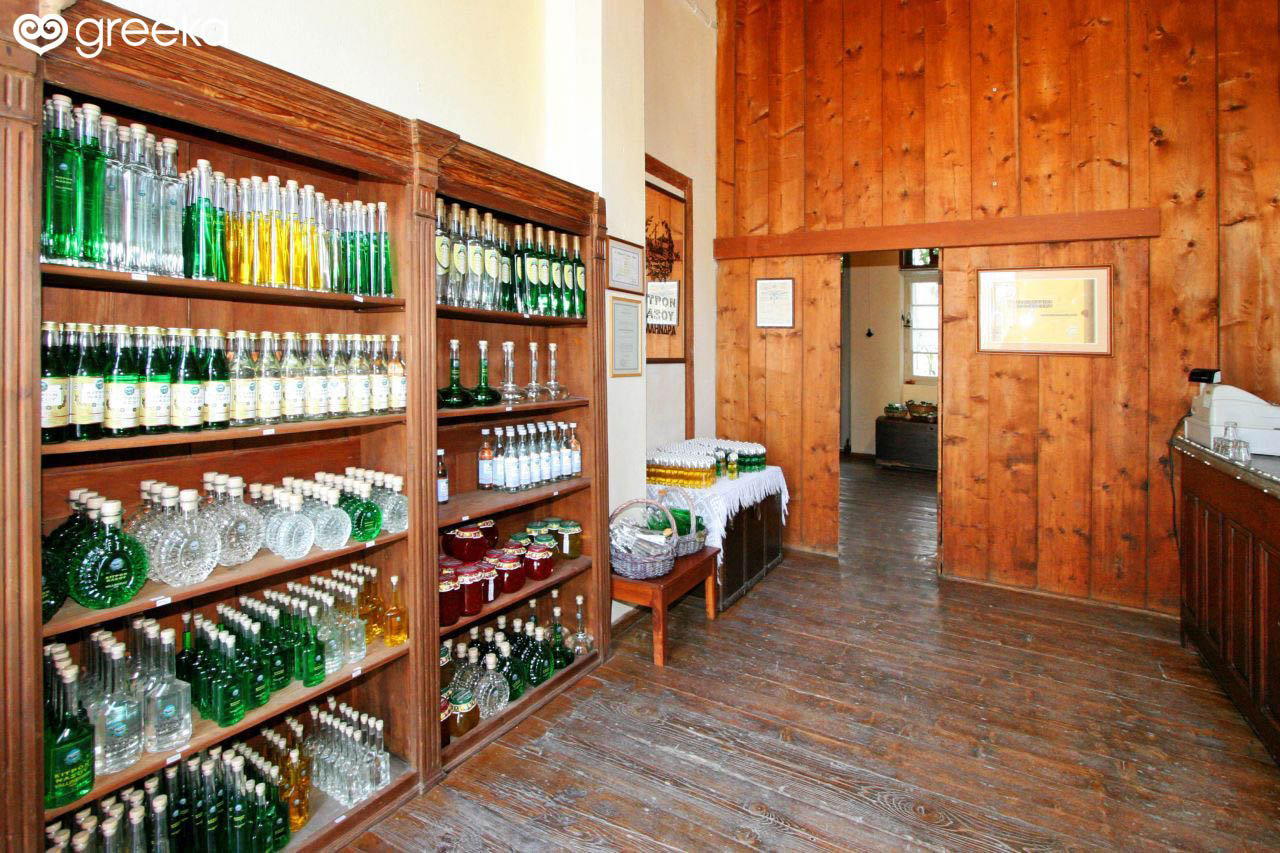
Kitron Country: The Liqueur That Naxos Made Its Own
Most Greek islands export olive oil, wine, or cheese to define their agricultural identity. Naxos exports all three, and then adds something no other island can replicate: kitron, a citrus liqueur distilled from the leaves of the Citrus medica tree, a variety that thrives in the Tragaea plateau at the island's interior. The Vallindras Distillery in Chalkio, a village of neoclassical tower-houses roughly in the centre of the island, has been producing kitron for generations, and the building itself encodes that history in stone and copper. Walking into a working distillery of this age anywhere in the Mediterranean feels like an interruption of something continuous, a process that proceeds whether visitors arrive or not, and Vallindras carries that quality with minimal theatre.
Chalkio sits on the edge of the Tragaea, the only fertile plain of its kind in the Cyclades, and that geography matters to what ends up in the bottle. The Citrus medica tree, known locally as the citron or cedro, has been cultivated on Naxos since antiquity. The leaves, harvested in late autumn, carry a volatile aromatic profile that differs markedly from lemon peel, orange blossom, or any of the more commercially familiar citrus bases used in European liqueur production. Kitron sits in a category largely on its own, which is precisely why the distillery's continued operation carries significance beyond nostalgia. It is the primary reason kitron holds a Protected Designation of Origin status under Greek and EU law, a credential that anchors the spirit's identity to this specific territory.
The Terroir Argument for a Distilled Spirit
Terroir is a concept borrowed from wine, but it applies here with unusual precision. The citron tree's sensitivity to soil composition, altitude, and the particular dry-heat pattern of the Cycladic interior means that kitron produced from Naxian leaves carries flavour compounds difficult to replicate in cultivation elsewhere. The Tragaea's calcareous soil and the rain shadow effect created by Mount Zas, the highest peak in the Cyclades at around 1,001 metres, create a microclimate that pushes the trees toward a concentrated aromatic output. This is not marketing language; it is the same logic that governs why Assyrtiko from Santorini's volcanic pumice expresses differently from Assyrtiko grown in mainland clay, a comparison worth noting when situating Naxian kitron alongside the broader geography of Greek terroir-driven production. For context on how Greek producers across different regions translate specific soil and climate conditions into distinctive spirits and wines, see producers such as Artemis Karamolegos Winery in Santorini and Alpha Estate in Amyntaio, both of which demonstrate how place-specific viticulture generates products that resist easy substitution.
Vallindras produces kitron in three colour grades, each reflecting a different sugar-to-alcohol ratio and, consequently, a different aromatic weight. The clear version sits at the highest alcohol and lowest sweetness, carrying the most direct expression of the leaf distillate. The yellow version occupies the middle register, and the green is the sweetest, aimed at a more accessible palate. Tasting across the range in sequence is the clearest way to understand how a single botanical source can be modulated into recognisably different products without losing its geographical character.
A Distillery Within a Village Context
The setting amplifies the experience in ways a dedicated tasting room in an industrial zone cannot. Chalkio was the medieval capital of Naxos, and the village retains an unusual concentration of Venetian-era tower-houses, some in active use, some in various states of preservation. The distillery occupies a building that fits this architectural register, with thick stone walls and a courtyard format typical of the region's vernacular construction. The physical environment of the visit is not incidental to the product; the two have existed together long enough that they have become contextually inseparable.
Within the broader range of Greek distillery tourism, Vallindras operates at a scale and with a specificity that places it closer to artisan production houses than to larger commercial operations. For comparison, Apostolakis Distillery in Volos represents a different regional tradition, and Achaia Clauss in Patras illustrates how a larger, historically grounded Greek producer navigates the interface between heritage and commercial scale. Vallindras sits at the opposite end of that spectrum: narrowly focused, geographically rooted, and producing a spirit for which no direct international analogue exists.
Recognition and Where It Places the Distillery
The Pearl 2 Star Prestige award in 2025 positions Vallindras within the upper tier of EP Club's recognition framework for producers of this type. In a category where the product itself is rare and the competitive set is thin by definition, the recognition functions as confirmation of quality standards rather than as a differentiator within a crowded field. The distillery does not need to compete with an adjacent cluster of kitron producers; it occupies a category largely shaped by its own output. The award matters most as a signal to visitors who may be unfamiliar with the product and are using external validation to calibrate expectations before a visit.
For those building a broader itinerary around Greek artisan production, the 2025 designation sits alongside a range of other Greek producers recognised by EP Club, including Abraam's Vineyards in Komninades, Acra Winery in Nemea, Aiolos Winery in Palaio Faliro, Akrathos Newlands Winery in Panagia, Anatolikos Vineyards in Xanthi, Aoton Winery in Peania, Artisans Vignerons de Naoussa in Stenimachos, and Avantis Estate in Chalkida. Together, these producers map a Greek artisan production circuit worth constructing a dedicated itinerary around.
Planning a Visit to Chalkio
Chalkio is approximately 17 kilometres from Naxos Town by road, accessible by local bus or by car along the route that cuts through the Tragaea. The drive itself passes through the citron-growing terrain that supplies the distillery, giving the approach its own contextual weight. Visitor information including current hours, tasting availability, and any booking requirements is best confirmed directly with the distillery, as operational details for producers of this size can shift seasonally. The autumn and winter months, when the citron leaves are harvested, offer the most immediate connection between the raw material and the finished product, though the distillery receives visitors across the broader tourist season. For a complete picture of where Vallindras sits within Naxos's broader food and drink offering, see our full Naxos restaurants guide.
Those with an interest in cross-referencing Cycladic terroir traditions against the wider European artisan spirits and winemaking context may also find value in the contrast offered by international producers such as Aberlour in Aberlour and Accendo Cellars in St. Helena, both of which represent how place-rooted production operates within established international categories. Kitron's distinction is precisely that it operates outside those categories entirely, on terms defined by one island's soil, one tree's leaves, and one distillery's sustained attention to both.
Continue exploring
More in Naxos
Restaurants in Naxos
Browse all →
At a Glance
- Historic
- Rustic
- Intimate
- Solo Exploration
- Wine Education
- Historic Building
Charming historic mansion with original 19th-century equipment, retro posters, and a welcoming family atmosphere.