
Falstaff Winery - Listed
The property occupies a position among Greece's emerging wine addresses, distinct from the Aegean island appellations that dominate international attention. For visitors with an interest in Greek wine beyond the familiar, it merits serious consideration.
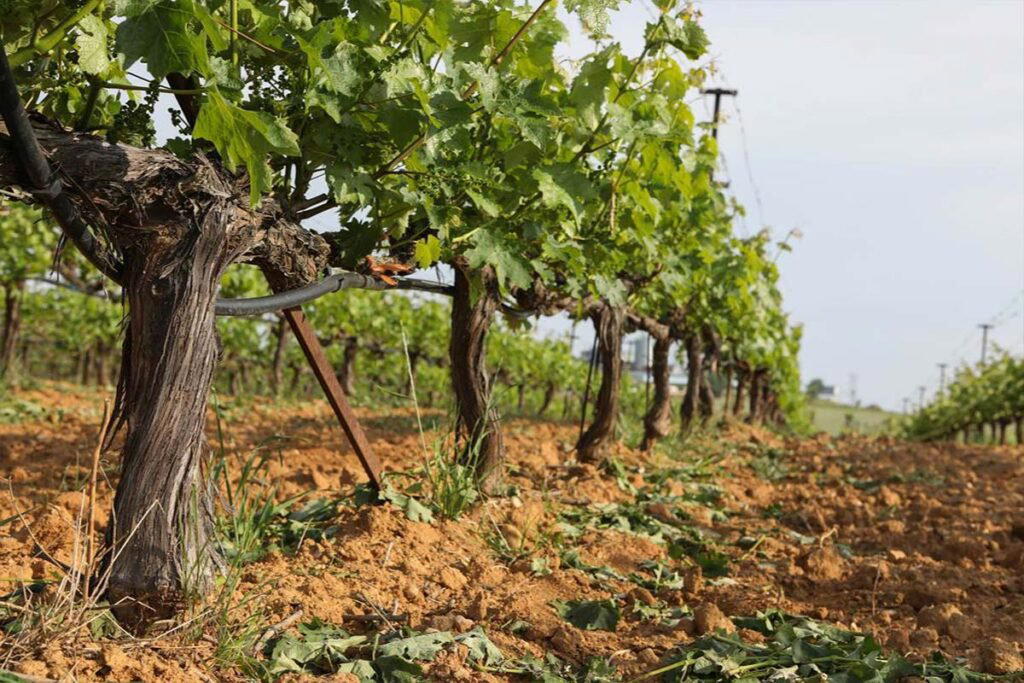
A Terroir with No Famous Shorthand
Greek wine conversation defaults to a small cluster of benchmarks: Santorini Assyrtiko on volcanic pumice, Naoussa Xinomavro on clay-limestone in Macedonia, Nemea Agiorgitiko on the Peloponnesian plateau. The region sits between the Rhodope mountain range to the north and the Aegean coastal plain to the south, a geography that creates multiple mesoclimates within short distances.
For context, compare the competitive position of Thracian producers against the better-documented northern Greek appellations. Alpha Estate in Amyntaio operates within the Florina–Amyntaio zone, where altitude and continental exposure have already established an international reference point for cool-climate Greek wine. Artisans Vignerons de Naoussa in Stenimachos works within an appellation that carries decades of critical attention. Anatolikos Vineyards competes from a less codified starting point, which means the terroir argument has to be made bottle by bottle rather than borrowed from appellation reputation. That is a harder commercial position, and it tends to produce producers who are either very serious or very uneven.
What Northeastern Greek Viticulture Actually Means
Thrace sits at the northeastern edge of Greek wine geography, historically a crossroads between Byzantine, Ottoman, and Hellenic agricultural traditions. The viticultural legacy is long but the modern fine wine infrastructure is comparatively recent, which places estates like Anatolikos Vineyards in a generation of producers working to translate historic vine presence into critically recognised quality. Each of these parent materials transmits differently to the vine, and the question any serious estate has to answer is which parcels carry the most distinctive character and how to preserve it through winemaking.
Greece's broader wine revival over the past two decades has demonstrated that indigenous varieties, when handled with technical precision and minimal intervention, produce wines that cannot be replicated elsewhere. The Assyrtiko lesson from Santorini has been absorbed broadly: the variety's acidity and mineral tension are inseparable from volcanic soil and near-constant Aegean wind, and any attempt to reproduce it in another geography produces a technically competent but geographically neutral wine. The same logic applies to whatever Thracian varieties and terroir expressions Anatolikos Vineyards works with.
Where Anatolikos Sits in the Greek Fine Wine Map
Greece has spent the past decade building a credible fine wine geography that extends well beyond the Aegean island appellations. The island-centric narrative remains dominant in export markets, but producers in Macedonia, Epirus, and Thrace have accumulated enough critical recognition to register as serious alternatives. Akrathos Newlands Winery in Panagia and Avantis Estate in Chalkida represent different facets of that geographic diversification, the former working in the Halkidiki peninsula's cooler northern exposure, the latter in Central Greece.
For visitors approaching Greece with a wine-focused itinerary, northeastern Greece offers a genuinely different proposition from the circuit of Santorini, Crete, and Peloponnese that most organised tours follow. Xanthi itself is a city with Ottoman-era architecture and a functioning old quarter that repays time; the surrounding Thracian plain and Rhodope foothills add landscape diversity that the island hops miss entirely. See our full Xanthi restaurants guide for the broader picture of what the city offers beyond the vineyard visit. The address implies a working estate outside the city proper rather than an urban tasting room, which means a car is the practical access method. Xanthi has a rail connection to Thessaloniki, roughly two hours west, making it possible to reach the city without flying into Athens first. The practical implication is that an itinerary built around northern Greek wine, incorporating producers like Abraam's Vineyards in Komninades alongside Anatolikos, is geographically coherent in a way that mixing northern and Peloponnesian producers is not.
No public booking contact or hours are listed in the available record, which is common among smaller Thracian estates that operate primarily through direct outreach or via regional wine tourism networks. Reaching out in advance through wine trade contacts or local tourism offices in Xanthi is advisable before making a dedicated trip. For comparison with established Greek wineries that have more developed visitor infrastructure, Artemis Karamolegos Winery in Santorini and Achaia Clauss in Patras offer a different point on the wine tourism spectrum, older, more organised for visitors, and working within appellations that have decades of international press behind them.
Other Greek producers worth considering alongside Anatolikos in a broader Greek wine context include Acra Winery in Nemea, Aiolos Winery in Palaio Faliro, and Aoton Winery in Peania. For those whose itinerary extends beyond Greece, Accendo Cellars in St. Helena and Aberlour in Aberlour represent entirely different traditions worth the contrast. Greek spirits enthusiasts passing through the region might note that Apostolakis Distillery in Volos and Babatzim Distillery in Thessaloniki cover the distilled side of northern Greek production.
Frequently asked questions
What should I expect atmosphere-wise at Anatolikos Vineyards?
The estate sits at the 5th kilometre of the Xanthi–Lagou road in the Vistonida area, which signals a working agricultural property rather than a polished resort-style operation. Northeastern Greece moves at its own pace: the Aegean coast is nearby, the terrain is open, and the focus here is on the vines and what they produce.
What should I taste at Anatolikos Vineyards?
The estate's interest lies in what Thrace can produce, a wine region that sits outside the standard Greek benchmarks of Santorini Assyrtiko or Naoussa Xinomavro. Specific current releases are not documented here, so checking directly with the estate before visiting will give the clearest picture of what is poured.
Where can I find Anatolikos Vineyards?
Anatolikos Vineyards is located at 5xlm Xanthis - Lagous, Vistonida 671 00, Xanthi.
What's the defining thing about Anatolikos Vineyards?
Its geography is the argument: Thrace is the northeastern edge of Greek wine country, historically shaped by Byzantine, Ottoman, and Hellenic agricultural traditions, and largely absent from mainstream wine itineraries. That combination, recognised quality in an under-documented appellation, is what sets the estate apart from better-known Greek producers.
Should I book Anatolikos Vineyards in advance?
Estate wineries in rural Thrace are not set up for walk-in volumes the way island destinations are, so confirming availability ahead of travel is advisable.
Is Anatolikos Vineyards a good destination for wine tourists exploring Greece beyond the islands?
For travellers whose Greek wine experience stops at the Aegean appellations, Xanthi and the Vistonida corridor offer a substantively different reference point. The estate's position on the Xanthi–Lagou road places it within reach of the Thracian coast while sitting in wine country that sees comparatively little international attention.
Quick Comparison
Comparable venues nearby, for context on price, style, and recognition.
| Venue | Cuisine | Awards | Notes |
|---|---|---|---|
| Anatolikos VineyardsThis venue (the venue you are viewing) | Assyrtiko, Malagousia | Falstaff Winery - Listed | Not listed |
| Lost Lake Distillery | Winery | Not listed | Egira |
| Fos Distillery | Winery | Not listed | Volos |
| Ouzo Mitsa Distillery | Winery | Not listed | Arta |
| Helion Distillery | Winery | Not listed | Athens |
| Varsamis Distillery | Winery | Not listed | Tinos |
Recognition history
Dated appearances from independent guides and award organizations, with the underlying list record or original source where available.
Falstaff Winery - Listed
Falstaff
Request a visit to Anatolikos Vineyards
Tell us when you would like to go and how many people, and we put the request to the estate and reply to you by email.
Continue exploring
More in Xanthi
Wineries in Xanthi
All wineries in Xanthi →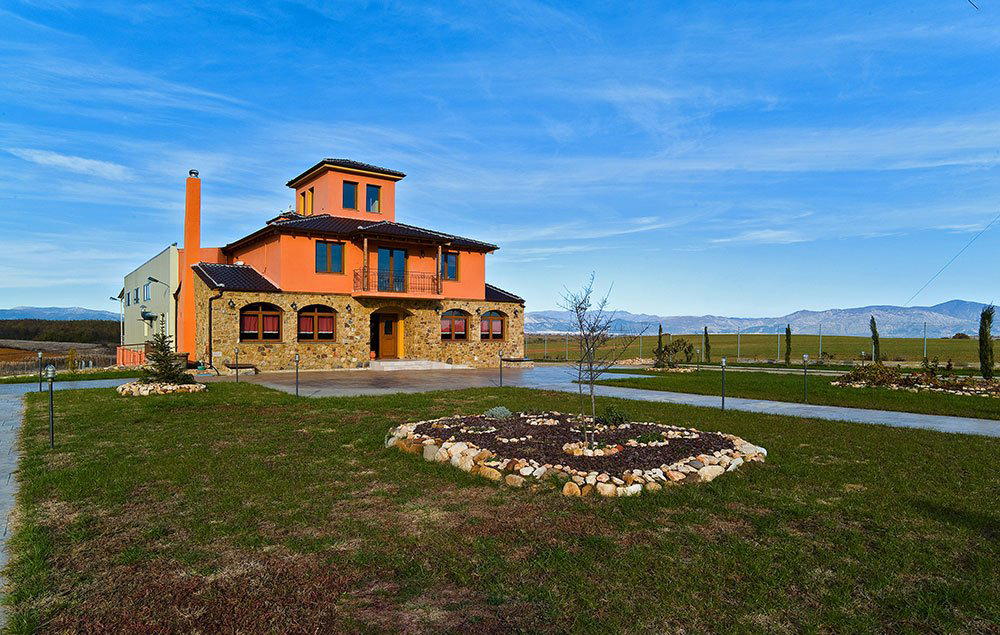
Details
- Rustic
- Scenic
- Intimate
- Wine Education
- Solo Exploration
- Vineyard Tour
- Estate Grounds
- Organic
- Vineyard
- Mountain
- Assyrtiko
- Malagousia
- Mavroudi
- Limnio
- Pamidi
- Moschato
- Cabernet Sauvignon
- Merlot
- Still White
- Still Red
- Orange
- Pet Nat
- Amphora
- Private Tasting
Rustic and natural atmosphere in a coastal hillside setting with cool sea breezes.