Stoller Family Estate

Stoller Family Estate sits on a certified sustainable estate in the Dundee Hills, where the scale of farming operations informs every bottle. The 2025 EP Club Pearl 2 Star Prestige recognition places it among the Willamette Valley's most seriously regarded producers. Visitors find a property where the land itself — rolling vine rows, panoramic views across the valley — is the primary argument.
 Discover on Pearl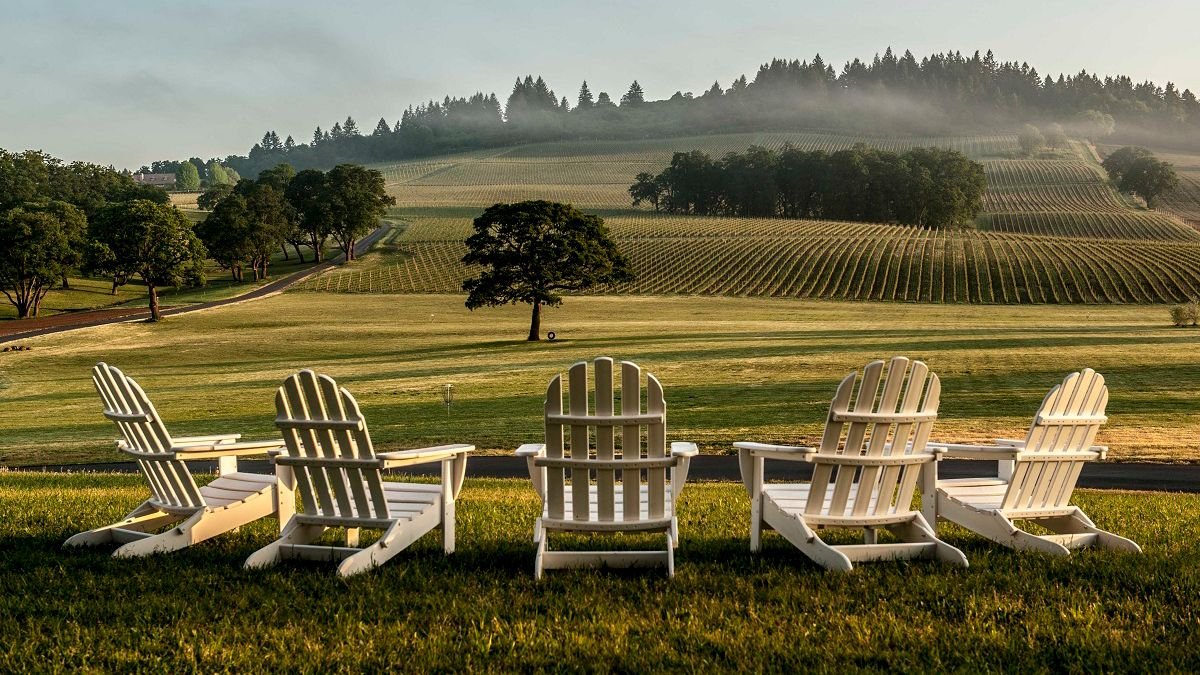
Farming at Scale in the Dundee Hills
The Dundee Hills sub-appellation of Willamette Valley has long attracted producers who believe that farming decisions, made in the vineyard rather than the cellar, determine what ends up in the glass. Stoller Family Estate operates one of the largest contiguous vineyard holdings in Oregon, and that scale is not incidental to its identity. Large estate ownership in a region dominated by small, plot-focused producers forces a different set of commitments: the land either gets farmed with discipline across hundreds of acres, or the argument for estate bottling falls apart. At Stoller, the commitment runs through LEED Gold-certified facilities and a long-standing focus on sustainable viticulture, positioning the estate on a different operational axis from boutique neighbors like White Rose Estate or Archery Summit.
What Sustainable Certification Means Here
Oregon's wine industry has developed one of the more credible sustainability frameworks in American viticulture, and the Dundee Hills sits at its center. Certification under the LIVE (Low Input Viticulture and Enology) program and Oregon Certified Sustainable Wine status require third-party audits covering soil health, water use, energy consumption, and labor practices. These are not marketing designations applied loosely; they involve documented evidence across seasons. At the estate level, that means managing cover crops between vine rows to build organic matter and reduce erosion, monitoring water runoff carefully on hillside sites, and sourcing energy in ways that reduce the operation's carbon profile. The LEED Gold certification of the winery building, relatively rare even among sustainability-focused producers, extends those principles into the physical structure of the facility. Peers across the valley such as Sokol Blosser Winery have pursued overlapping certifications, but few operate certified programs at comparable acreage.
The case for sustainability in Pinot Noir viticulture is partly philosophical and partly agronomic. Pinot is a thin-skinned variety that amplifies soil character more readily than thicker-skinned grapes; stressed or depleted soils show up in the wine as hollow midpalates or structural imbalance. Farming that builds organic matter, maintains microbial activity, and avoids synthetic inputs over many seasons tends to produce vines with better root depth and more consistent water access — conditions that matter significantly during the dry Oregon summers that separate good vintages from difficult ones. The vineyard's elevation and aspect in the Dundee Hills red-clay soils add a further argument: the Jory volcanic soils that define this sub-appellation drain well and warm readily, but they reward growers who work with those properties rather than correcting against them.
The Dundee Hills Peer Set
Willamette Valley's premium tier has consolidated around a recognizable peer group, many of them within a short radius of the estate on McDougall Road. Domaine Drouhin, whose Burgundian ownership gave the valley early international credibility, sits nearby, as does Domaine Serene Winery, which operates at the upper end of Oregon's prestige price tier. Adelsheim Vineyard in Newberg represents another anchor in the region's established production history. Stoller's 2025 EP Club Pearl 2 Star Prestige recognition places it within this upper bracket, a tier where vineyard provenance, farming credentials, and track record in difficult vintages carry more weight than marketing presence. That recognition is grounded in production consistency across seasons rather than single-vintage highs.
The comparison is instructive for visitors trying to locate the estate within Willamette Valley's range. Properties at the boutique end of the spectrum, including Archery Summit with its single-vineyard focus, offer a different visitor calculus: very small production, allocation-heavy purchasing, and a tasting experience built around rarity. Stoller operates with more production volume and a broader range of access points, which means wines are available at multiple price levels without sacrificing the estate's core farming argument. For visitors whose priority is understanding what Dundee Hills farming looks like at meaningful scale, that combination of access and rigor is a distinct offering.
Arriving and Experiencing the Estate
The approach along NE McDougall Road in Dayton puts the vineyard in immediate context. The Dundee Hills rise to the west of the Willamette River floodplain, and the road climbs into vine country within minutes of leaving the valley floor. The estate's site opens across the hillside, with views that reach toward the Coast Range on clear days. This is not a discreet or understated property: the scale of the operation is visible in the rows that extend across the slope, and the winery building's LEED-certified architecture is apparent from the approach.
Tasting experiences at Oregon wine estates have shifted toward appointment-based formats across most of the serious producers in the Dundee Hills, and visitors should confirm availability directly with the estate before planning around a spontaneous visit. The Willamette Valley's shoulder seasons, spring and early autumn, tend to offer the most atmospheric conditions for vineyard visits: harvest activity in September and October brings working winery energy, while spring flowering and canopy development give a different sense of the farming cycle. Summer weekends can draw significant visitor volume to the Dundee Hills corridor, and planning accordingly will affect the experience quality considerably. For broader orientation to what the Dayton area offers beyond the vineyard, see our full Dayton wineries guide and our full Dayton restaurants guide for dining in the area.
The Wines and What They Represent
Pinot Noir and Chardonnay define the estate's production, as they do across serious Dundee Hills producers. The volcanic Jory soils that make this sub-appellation distinctive produce Pinot with darker fruit profiles and firmer tannin architecture than the sedimentary Eola-Amity Hills sites to the south, and that character runs through the estate range at multiple price points. The Chardonnay program, less prominent in regional reputation than Pinot but grown with increasing seriousness across the valley, benefits from the same soil drainage and cooling afternoon winds that arrive from the Van Duzer Corridor.
Oregon's producers have generally resisted the extract-heavy stylistic pressure that affected some Napa programs during the early 2000s, and Stoller's farming orientation aligns with that restraint. Wines built on healthy, organically managed soils tend to carry acidity through to maturity more reliably, which supports the Willamette Valley's central value proposition: Pinot Noir with aging potential, not just immediate drinkability. Visitors considering how this production model compares to programs in other American regions might find useful reference in Adelaida Vineyards in Paso Robles, which operates a different soil type and climate regime but shares the estate farming emphasis, or Accendo Cellars in St. Helena for contrast with Napa's Cabernet-primary model.
Planning Your Visit
Stoller Family Estate is located at 16161 NE McDougall Rd, Dayton, OR 97114. The estate sits within easy reach of the wider Dundee Hills wine corridor, making it practical to combine with visits to neighboring producers in a single day. Visitors planning overnight stays in the area will find useful accommodation options in our full Dayton hotels guide. For evening plans after a day on the hill, our full Dayton bars guide and our full Dayton experiences guide cover what's available locally. Given the estate's 2025 Pearl 2 Star Prestige recognition, demand for appointments during peak harvest and summer periods is likely to be material; contacting the estate in advance remains the practical course regardless of timing. For context on the wider Willamette Valley programs beyond Oregon, the farming-forward model has international parallels in properties like Abadía Retuerta in Sardón de Duero, where estate-scale viticulture meets cellar ambition, and closer to Scotland's distilling tradition, Aberlour represents a different angle on place-rooted production.
Frequently Asked Questions
What kind of setting is Stoller Family Estate?
The estate occupies a hillside site in the Dundee Hills sub-appellation outside Dayton, Oregon, with vineyard rows extending across volcanic Jory soils and views across the Willamette Valley floor. The winery building holds LEED Gold certification, which is relatively rare among American wine producers. The EP Club's 2025 Pearl 2 Star Prestige award positions it at the upper end of the regional prestige tier.
What wines is Stoller Family Estate known for?
The estate focuses on Pinot Noir and Chardonnay grown in the Dundee Hills, where Jory volcanic soils produce wines with distinctive structure and fruit profile. The Dundee Hills sub-appellation is recognized as one of Willamette Valley's most serious growing zones, and the estate's sustainable farming certifications underpin its claims to terroir-driven production. The 2025 EP Club Pearl 2 Star Prestige recognition affirms the estate's standing among serious Oregon producers.
Why do people go to Stoller Family Estate?
Visitors come for the combination of estate-scale farming credentials, a significant vineyard setting, and the opportunity to understand how large-format sustainable viticulture works in the Dundee Hills. The Pearl 2 Star Prestige recognition from EP Club (2025) gives external grounding for the estate's position within the valley's competitive set. The Dayton location also places it within easy reach of the broader Dundee Hills wine corridor, including peers such as Sokol Blosser Winery and White Rose Estate.
Should I book Stoller Family Estate in advance?
Advance contact with the estate is the practical approach, particularly during summer weekends and harvest season when visitor demand across the Dundee Hills corridor is at its peak. The estate's EP Club Pearl 2 Star Prestige standing (2025) reflects a profile that draws visitors with genuine interest in the production program rather than casual walk-in traffic, and tasting availability tends to be managed accordingly. Contacting the estate directly before your visit is advisable regardless of when you plan to go.
Peer Set Snapshot
These are the closest comparables we have in our database for quick context.
| Venue | Awards | Notes |
|---|---|---|
| Stoller Family Estate | Pearl 2 Star Prestige | This venue |
| Archery Summit | Pearl 2 Star Prestige: 0pts | |
| Domaine Drouhin | Pearl 4 Star Prestige | Véronique Drouhin-Boss, Est. 1988 |
| Domaine Serene Winery | Pearl 4 Star Prestige | Michael Fay and Remi Cohen, Est. 1989 |
| Sokol Blosser Winery | Pearl 3 Star Prestige | |
| White Rose Estate | Pearl 2 Star Prestige |
Access the Cellar?
Our members enjoy exclusive access to private tastings and priority allocations from the world's most sought-after producers.
Get Exclusive Access