San Marcos Creek Vineyard

San Marcos Creek Vineyard sits in the Vineyard Drive corridor of Paso Robles, a stretch that has quietly become one of California's more concentrated winemaking addresses. The property holds a Pearl 2 Star Prestige recognition for 2025, placing it in a select tier of Paso producers. For visitors working through the region's westside appellations, it merits a deliberate stop rather than a casual drive-by.
 Discover on Pearl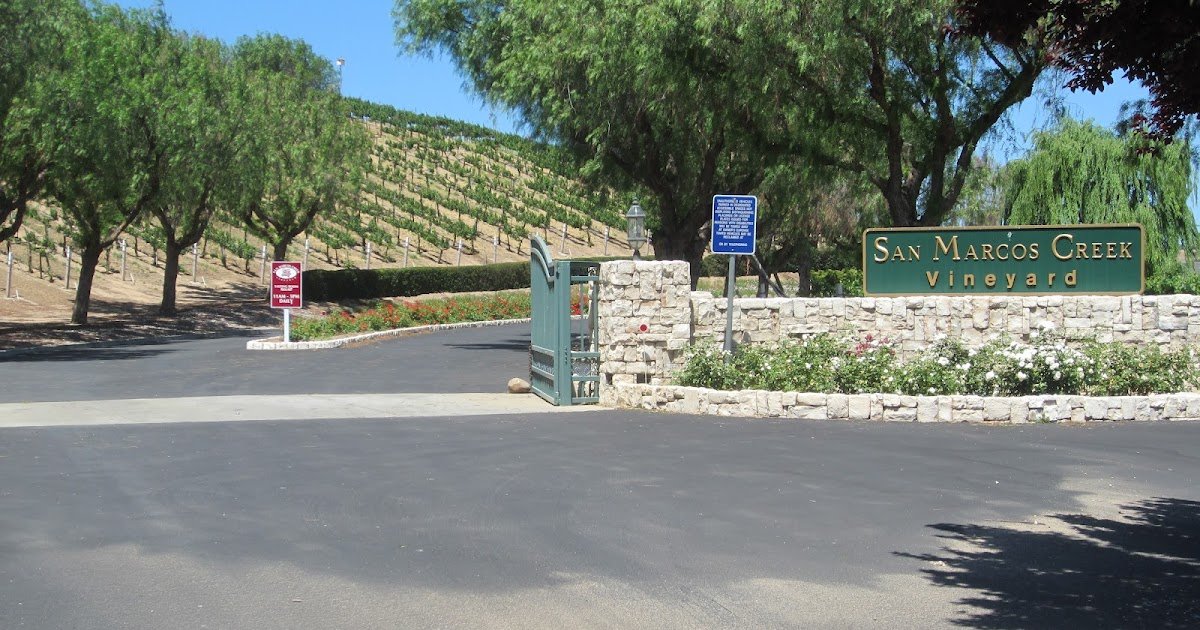
The Western Corridor and What It Produces
Paso Robles wine country divides, roughly, along Highway 101. The eastside runs warmer and flatter, dominated by fruit-forward Zinfandel and blends at accessible price points. The westside, where Vineyard Drive cuts through rolling terrain, operates under a different set of conditions: cooler marine influence drawn through the Templeton Gap, deeper calcareous soils, and a diurnal temperature swing that can exceed 50 degrees Fahrenheit on a summer day. That gap in temperature between midday heat and nighttime cold is not a minor footnote — it is the mechanism that lets fruit ripen fully while retaining the acidity that gives Paso's better westside wines their structure. San Marcos Creek Vineyard sits on Vineyard Drive at 4070, inside this corridor, and the address alone signals something about the wine it is positioned to make.
The concentration of serious producers along this stretch has grown considerably over the past two decades. Adelaida Vineyards and Halter Ranch Vineyard anchor the northern end of that reputation, while properties like DAOU Vineyards have drawn national attention to the sub-appellations clustered in the hills west of town. Against that backdrop, San Marcos Creek's Pearl 2 Star Prestige recognition in 2025 positions it within the tier of producers whose work is earning consistent external validation, not simply benefiting from the area's rising profile.
Arriving on Vineyard Drive
Vineyard Drive is not a road you find by accident. It runs west off Highway 46, narrowing as it gains elevation, with vine rows pressed close to the pavement on both sides for long stretches. The light on the westside tends to arrive at an angle, particularly in the late afternoon, and the oak-studded ridgelines that frame the drive cast early shade across lower sections of the valley floor. By the time you reach the 4070 address, the working-vineyard character of the corridor is unmistakable: dust on the gravel aprons, the smell of disturbed soil during harvest months from late August through October, and the silence that comes from being genuinely away from the town core.
That sensory register matters when you are visiting during the harvest window. The smell of fermenting fruit, the hum of sorting equipment in the distance, the particular quality of October morning air at elevation — these are the ambient conditions that distinguish an active wine property from a tasting room attached to sourced fruit. Whether or not visitors gain access to production areas, the harvest-season visit to the Vineyard Drive corridor carries a different weight than arriving in, say, February when the vines are dormant and the property is quieter.
Where San Marcos Creek Sits in the Paso Hierarchy
Paso Robles has fragmented, usefully, into a set of recognized sub-appellations that reflect actual soil and climate differences rather than marketing convenience. The Adelaida District, the Willow Creek District, and the broader Paso Robles Highlands each attract producers making claims about terroir specificity that would have seemed overstated a decade ago. The Pearl 2 Star Prestige designation that San Marcos Creek carries into 2025 places it in a mid-to-upper tier of recognized producers , not in the small cohort of nationally allocated cult producers, but clearly above the broad base of the region's output.
For context, the comparison set on Vineyard Drive includes properties with significant resources behind them. Halter Ranch operates across more than 900 acres with certified organic farming across its estate. Adelaida has been farming its calcareous hillside sites since the 1980s. Working within that peer set and earning external recognition requires something beyond location advantage. The 2 Star Prestige signal indicates that San Marcos Creek is producing at a level that invites comparison with established westside names rather than simply benefiting from their proximity.
Properties like Herman Story Wines and Bianchi Winery represent different points on Paso's quality and style spectrum, with Herman Story in particular occupying a cult-adjacent position built on small allocations and a following that predates the region's broader surge in national attention. San Marcos Creek's positioning is distinct: a property with a physical estate address on the prestige corridor, recognized externally, but without the noise of aggressive allocation lists or tasting fee theater.
Planning a Visit to the Vineyard Drive Corridor
The Vineyard Drive corridor runs about 15 miles from its eastern connection to the broader Paso wine country map to its far western reaches approaching the Santa Lucia Range foothills. A focused westside day, starting late morning and running through late afternoon, can cover four to six serious properties without rushing. San Marcos Creek at 4070 sits mid-corridor, making it a natural anchor for a half-day route that connects southward toward Templeton and northward toward the Adelaida Hills.
Booking ahead on weekends between May and October is advisable across the entire corridor; the westside has attracted enough visitor traffic that walk-in availability at higher-tier properties is no longer reliable on Saturdays. For visitors structuring a multi-day visit to Paso Robles, the Paso Robles hotels guide and restaurants guide cover the town-side logistics, while the full Paso Robles wineries guide maps the broader producer landscape across both sides of the highway. The bars guide and experiences guide round out the picture for visitors spending more than a single afternoon in the area.
Harvest season, roughly Labor Day through mid-October, remains the period when the corridor operates at its most kinetic. Crush pads are active, cellar doors are staffed by people who have slept five hours, and the wines being poured are typically the previous vintage while the current one is still fermenting in tank. Spring, particularly April and May, offers a different atmosphere: cover crops in bloom between vine rows, cooler temperatures, and considerably less competition for tasting appointments.
Paso Robles in the Wider California Context
California wine geography has expanded its serious-production footprint well beyond Napa and Sonoma, and Paso Robles is among the most convincing cases for that expansion. The region now counts over 40,000 planted acres and more than 200 bonded wineries, a scale that makes generalization difficult and curation necessary. Accendo Cellars in St. Helena, Alban Vineyards in Arroyo Grande, and the broader California premium tier each represent different answers to the question of what serious domestic wine production looks like in 2025. Paso's answer, at its westside leading, involves estate farming, climate complexity, and Rhône-leaning variety choices that have found genuine expression in the calcareous soils above the valley floor.
For visitors coming from outside California wine country entirely, the comparison extends internationally. Adelsheim Vineyard in Newberg represents Oregon's approach to cool-climate Pinot-led production; Abadía Retuerta in Sardón de Duero and Aberlour in Scotland's Speyside each anchor their respective regions with estate-driven, place-specific production philosophies. San Marcos Creek and its Vineyard Drive neighbors operate in a different register , warmer, more Rhône-inflected, less constrained by single-variety identity , but the underlying logic of estate location and recognition-tier positioning translates across all of them.
Frequently Asked Questions
- What do visitors recommend trying at San Marcos Creek Vineyard?
- The Vineyard Drive corridor is most closely associated with Rhône varieties , Syrah, Grenache, Mourvèdre, and Viognier , that perform well in the westside's calcareous soils and temperature-variable climate. San Marcos Creek's Pearl 2 Star Prestige recognition for 2025 suggests that its estate-grown wines are meeting a consistent quality standard validated by external review. Visitors to the westside generally find that Syrah and red Rhône blends from this corridor represent the region's strongest argument for serious attention, and that framing applies to producers earning recognition at this tier.
- What is San Marcos Creek Vineyard leading at?
- San Marcos Creek operates within Paso Robles' westside, where the combination of Templeton Gap marine influence and calcareous hillside soils produces conditions suited to structured, age-worthy reds. Its 2025 Pearl 2 Star Prestige places it in the recognized mid-to-upper tier of the region's producers , above the large base of commodity Paso output, and within a peer set that includes some of the most closely watched westside estates. That recognition positions it as a destination for visitors who are mapping the region's serious producers rather than treating Paso as a casual drive-through.
- Do I need a reservation for San Marcos Creek Vineyard?
- Across the Vineyard Drive corridor, including properties carrying external recognition comparable to San Marcos Creek's Pearl 2 Star Prestige, walk-in availability on weekends between May and October has become unreliable as Paso Robles' westside attracts more focused wine visitors. Contacting the property directly before visiting is advisable. The broader Paso Robles wineries guide covers booking norms across the region's recognized producers.
- How does San Marcos Creek Vineyard's recognition compare to other Paso Robles westside estates?
- San Marcos Creek holds a Pearl 2 Star Prestige designation for 2025, which places it in a defined recognition tier within the EP Club framework , above properties without external validation, and within the same general bracket as other westside estates earning consistent critical attention. Paso Robles' westside now includes a range of recognized producers at different scales, from large certified-organic operations to small-production specialists, and San Marcos Creek's Vineyard Drive address and current recognition align it with the corridor's more deliberately positioned estates rather than its volume producers.
Peer Set Snapshot
These are the closest comparables we have in our database for quick context.
| Venue | Awards | Notes |
|---|---|---|
| San Marcos Creek Vineyard | Pearl 2 Star Prestige | This venue |
| Aaron Wines | Pearl 2 Star Prestige | |
| Adelaida Vineyards | Pearl 3 Star Prestige | Jeremy Weintraub, Est. 1981 |
| Alta Colina | Pearl 2 Star Prestige | |
| Anglim Winery | Pearl 2 Star Prestige | |
| Asuncion Ridge Vineyards | Pearl 2 Star Prestige |
Access the Cellar?
Our members enjoy exclusive access to private tastings and priority allocations from the world's most sought-after producers.
Get Exclusive Access