Sadie Family Wines

Sadie Family Wines operates from the Paardeberg in the Swartland, one of the Western Cape's most consequential wine-producing areas. Recognised with a Pearl 3 Star Prestige rating in 2025, the estate sits within a peer set defined by terroir-led, low-intervention winemaking. Visitors come for the landscape as much as the wine: granite soils, wide Swartland skies, and a sense of agricultural remove that distinguishes the region from the more manicured estates to the south.
 Discover on Pearl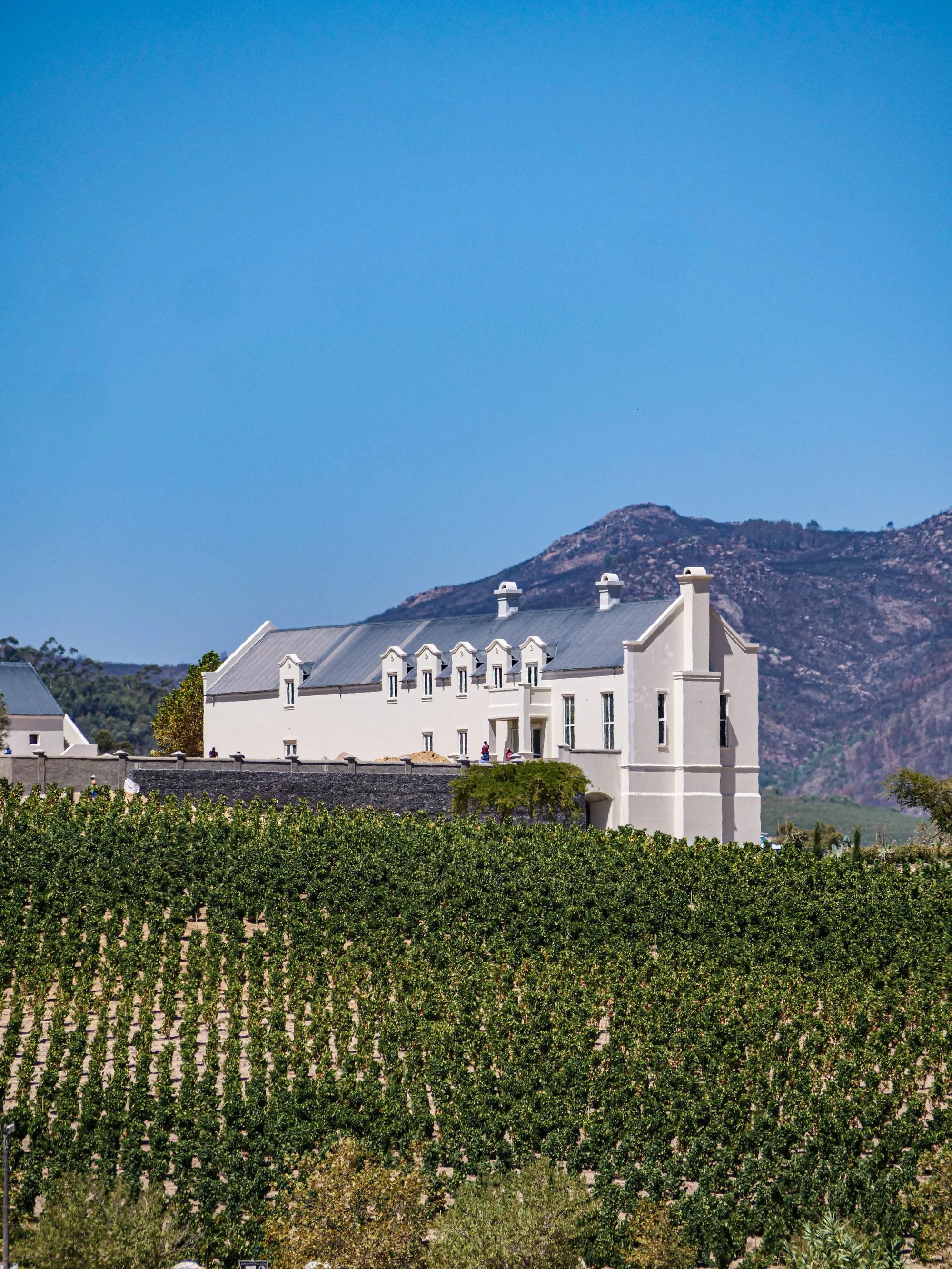
Granite, Distance, and the Paardeberg Horizon
The road to Sadie Family Wines does not announce itself. Babylonstoren Road cuts through the Paardeberg outside Malmesbury, and the approach is agricultural in the most literal sense: working land, wide skies, and a horizon uninterrupted by the tourist infrastructure that shapes visits to Stellenbosch or Franschhoek. That physical remove is not incidental. The Swartland's identity as a wine region was built partly on its distance from convention, and the estates on the Paardeberg granite dome are among the most emphatic expressions of that positioning. Arriving here feels different from pulling into a polished Winelands estate, and that difference is the point.
The Paardeberg itself is one of the Western Cape's more distinctive geological features: a rounded granite intrusion rising from the surrounding shale and clay of the Swartland floor. Granite-derived soils drain freely, stress vine roots, and are associated with wines of mineral tension and lower natural yields. These are not conditions that flatter volume production. The estates that have settled here have done so with a specific winemaking argument in mind, and Sadie Family Wines is among the names most closely associated with making that argument internationally credible.
The shortlist, unlocked.
Hard-to-book tables, cellar releases, and concierge-planned trips.
Get Exclusive Access →Where Sadie Family Wines Sits in the Swartland Peer Set
Swartland has, over the past two decades, developed a two-tier structure. There is a broader appellation of co-operatives, value producers, and estate wines that trade on the region's sunny, dry-farmed reputation. And there is a smaller cohort of domaine-scale producers on the Paardeberg whose wines circulate on allocation lists in export markets and whose critical profiles belong to the international fine wine conversation rather than the domestic tourist circuit. Sadie Family Wines occupies the upper tier of that second cohort, with a Pearl 3 Star Prestige rating in 2025 confirming its standing among South Africa's most recognised producers.
That peer set includes David & Nadia (Sadie Family), which shares both a family name and a philosophical alignment with Paardeberg terroir expression, and Kloovenburg Wine & Olive Estate, which operates across a different register but reinforces the Swartland's capacity for estate-level ambition. Org de Rac Organic Wines adds a certified organic dimension to the regional picture. Taken together, these producers have given the Swartland a critical mass that supports serious visits, not just detours from a Stellenbosch itinerary.
The contrast with other Western Cape fine wine addresses is instructive. Estates such as Vergelegen Wine Estate in Somerset West or Neethlingshof Estate in Stellenbosch operate within a more established hospitality framework, with formal tasting rooms, restaurant infrastructure, and visitor volumes that reflect their positioning in the Winelands tourism circuit. The Swartland producers on the Paardeberg have largely chosen a different model: lower visitor throughput, stronger allocation dynamics, and a reputation that travels through trade and critical channels rather than wine tourism numbers. Further afield, the contrast with Babylonstoren in Franschhoek is particularly sharp. Babylonstoren has built one of the Cape's most complete hospitality destinations; the Paardeberg producers have done almost the opposite, and the wines carry that restraint into the bottle.
The Physical Environment as Editorial Argument
Visiting the Paardeberg in spring, the landscape makes a case the winemakers do not need to articulate. The fynbos-edged vineyards, the granite outcrops, and the quality of light across the flat Swartland plain are as much a part of the experience as anything poured at a tasting. This is wine country where the land has not been groomed for photogenic effect; it reads as genuinely agricultural, and that authenticity is difficult to manufacture elsewhere in the Cape.
The editorial angle of the EA-WN-04 framing is not a conceit here. The Paardeberg's sense of place is a legitimate wine argument. Producers in this area have consistently maintained that the granite soils and the particular dry-farmed conditions of the Swartland produce a wine character that cannot be replicated on irrigated lowland sites, however skilled the winemaking. Visitors who engage with the landscape before engaging with the wine are better equipped to understand what is in the glass. The view from the Paardeberg granite, looking south across the Swartland toward the distant Boland mountains, frames that argument physically.
For visitors travelling from the Western Cape wine belt, the Swartland sits roughly an hour north of Cape Town, accessible via the N7. The route passes through Malmesbury before turning onto the farm roads of the Paardeberg. This is not a journey that fits neatly into a day-trip itinerary built around multiple estates; the distances and the character of the region reward a longer stay or a dedicated visit. See our full Swartland guide for context on planning time in the region.
Wines, Recognition, and What the 2025 Rating Confirms
The Pearl 3 Star Prestige rating awarded in 2025 places Sadie Family Wines in a tier occupied by a small number of South African producers. Pearl ratings at the three-star prestige level reflect consistent critical recognition and a wine profile that competes in the international fine wine market, not just on domestic shelves. That credential matters in the context of the Swartland because it confirms that the region's claims to fine wine relevance are not self-referential; they are being validated by external assessment frameworks.
The wines produced from Paardeberg granite share certain broad characteristics with other cool-climate, low-intervention producers in the Cape: lower alcohol registrations than the Stellenbosch norm, a texture associated with old-vine material, and a capacity for bottle development that is unusual in South African wine history. Visitors with experience of South African wine from a decade ago will find the Swartland palate reference a significant departure from the extracted, oak-forward profile that dominated the export conversation for much of the 1990s and 2000s. The shift has been genuine and generational, and Sadie Family Wines is among the producers most directly responsible for it.
For those building a broader Cape wine itinerary, the regional contrasts are worth mapping. Creation Wines in Hermanus and Beaumont Family Wines in Bot River represent the cooler Walker Bay register, while Graham Beck Wines in Robertson and Val de Vie Estate in Paarl map very different terroir and commercial propositions. Outside South Africa entirely, Constantia Glen in Cape Town provides a closer urban reference point for the Cape Bordeaux tradition that predates the Swartland movement by centuries. For those whose interest extends to distilled spirits alongside wine, Oude Molen Distillery in Grabouw sits in the Elgin Valley and represents a different branch of the Cape's fermented and distilled tradition. Further afield, Aberlour in Aberlour and Accendo Cellars in St. Helena round out a global reference set for serious wine travellers.
Planning a Visit
The address on Babylonstoren Road in the Paardeberg places Sadie Family Wines in a working farm context outside Malmesbury. Phone and website details are not available in the current record; visitors should approach through the South African fine wine trade or through EP Club listings for current booking intelligence. The Swartland is an area where advance contact with the estate is standard practice; walk-in tastings are not a feature of the Paardeberg producer model. Spring and autumn are the most rewarding periods to visit, when temperatures are moderate and the vineyards are either in new growth or approaching harvest. The summer Swartland heat, which shapes the very character of the wines, makes midday visits in January and February demanding without shade and water.
The shortlist, unlocked.
Hard-to-book tables, cellar releases, and concierge-planned trips.
Get Exclusive Access →Frequently Asked Questions
A Lean Comparison
A fast peer set for context, pulled from similar venues in our database.
Access the Cellar?
Our members enjoy exclusive access to private tastings and priority allocations from the world's most sought-after producers.
Get Exclusive AccessThe shortlist, unlocked.
Hard-to-book tables, cellar releases, and concierge-planned trips.
Get Exclusive Access →