
Roumpou Ouzo Distillery operates in Nafpaktos, western Greece, at the intersection of traditional spirit-making and the country's broader craft distillation revival. The operation holds a Pearl 1 Star Prestige award for 2025, placing it in a recognized tier of Greek producers whose work draws serious attention beyond local markets. For visitors to the Gulf of Corinth coast, it represents a grounded encounter with ouzo as a regional craft product rather than a tourist commodity.
 Discover on Pearl
Pearl is the En Primeur Club membership app — saves, bookings, and concierge access live there. Same editors, same standards.
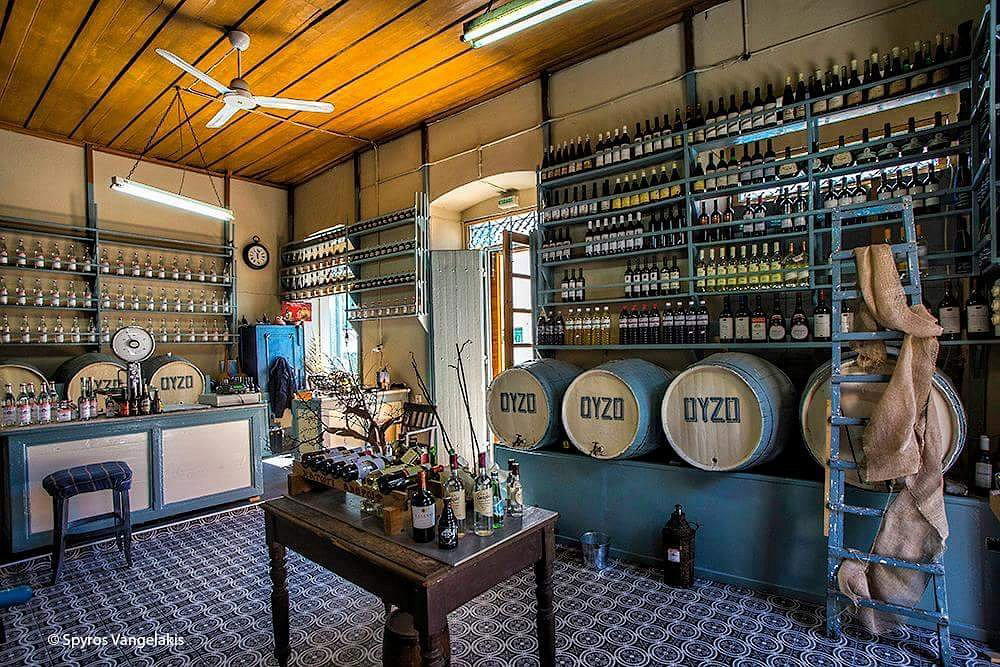
Where the Gulf Meets the Still
Nafpaktos sits on the northern shore of the Gulf of Corinth, a small fortified harbour town whose Venetian castle walls climb the hillside above whitewashed streets and fishing boats. The town is not a major tourist circuit stop, which means the producers working here operate for reasons other than visitor volume. Roumpou Ouzo Distillery is a Greek ouzo distillery in Nafpaktos, Greece. Arriving in Nafpaktos, the sense of place is immediate, the salt air, the narrow lanes leading up toward the citadel, the unhurried pace of a place that has not reconfigured itself for mass consumption. For more on the wider food and drink scene in the area, see our full Nafpaktos restaurants guide.
Ouzo and the Greek Terroir Argument
Ouzo occupies a specific position in the geography of Greek spirits. Legally protected as a product exclusive to Greece and Cyprus, it is distilled from neutral alcohol with anise as the defining botanical, though regional producers layer in additional aromatics, fennel seed, mastic, coriander, and others, that give each distillery's output a distinct character. The result is that ouzo is not a monolithic category but a regionally inflected one, where the botanical choices, distillation method, and even local water sources create meaningful differences between producers. Northern Aegean distilleries, particularly those on Lesvos, have long held the reference-point status in the category, but western Greece has its own tradition, shaped by proximity to the Ionian and the particular botanical resources of the Peloponnese hinterland and the Aetolia-Acarnania region.
This is the argument that distilleries like Roumpou make implicitly: that place matters in ouzo as much as it does in wine, that a spirit produced on the Gulf of Corinth carries different inflections than one from the Aegean islands. It is a position that aligns Roumpou with a broader shift in how Greek producers discuss and market their spirits, moving away from generic category messaging and toward a more granular, origin-led narrative. Comparison with peers elsewhere in the Greek spirits space is instructive: Apostolakis Distillery in Volos operates with a similar orientation on the Aegean coast, contextualizing its production within the specific character of Thessalian distilling tradition.
The 2025 Pearl 1 Star Prestige Recognition
Roumpou holds a Pearl 1 Star Prestige award for 2025. In the context of Greek spirits producers, formal award recognition at this level is not commonplace, and it places Roumpou in a tier of operations whose output has been assessed against a structured quality framework rather than relying solely on local reputation or heritage claims. Awards in this category function as a signal for the informed traveller: they indicate that a producer has been evaluated by a process external to its own marketing, which carries weight when the goal is identifying serious craft work rather than tourist-facing spectacle.
For a small-town Greek distillery, that kind of external recognition also matters competitively. Greece's wine and spirits sector has seen sustained critical attention over the past decade, with producers from less-visited regions using award credentials to establish credibility with international buyers and visitors who might otherwise default to better-known names. Among the Greek wine and spirits operations that have pursued this path, the pattern holds across categories: credentialed producers in secondary cities tend to attract a more engaged, knowledgeable visitor. For reference, the wine side of this dynamic is visible in operations like Alpha Estate in Amyntaio and Artisans Vignerons de Naoussa in Stenimachos, both of which have used critical recognition to position themselves within a serious national and international conversation about Greek terroir.
The Wider Greek Spirits and Wine Context
Understanding Roumpou means understanding where ouzo sits within the broader architecture of Greek drinking culture. Greece produces wine, tsipouro, mastiha liqueur, and ouzo across a range of producers ranging from large industrial operations to micro-distilleries with seasonal output. The premium end of this market has grown considerably since the early 2010s, driven partly by the interest of international spirits buyers in provenance-led Mediterranean products and partly by a domestic market that has become more willing to pay for craft quality over volume brands.
Ouzo's position within this shift is interesting because the category carries significant cultural weight, it is a daily ritual drink in Greek coastal communities, served with ice and water alongside meze, but it has historically resisted the premiumisation narrative that has transformed wine and whisky markets. Producers working at the prestige tier, as Roumpou's 2025 award implies, are making an argument that ouzo can sustain a quality conversation comparable to any other botanical spirit. That argument finds support in the growing international interest in anise-based spirits more broadly, where products like pastis, arak, and sambuca have all attracted serious critical attention in recent years. Comparable distillery-focused experiences in Greece include Apostolakis in Volos, and the regional wine context stretches from Achaia Clauss in Patras, a historic winery less than an hour from Nafpaktos, to newer operations like Avantis Estate in Chalkida and Abraam's Vineyards in Komninades.
Planning a Visit
Nafpaktos is accessible from Patras by road in under an hour, making it viable as a day trip from the Peloponnese or as a stop on a longer western Greece itinerary that might include the wine country of Nemea to the south, where Acra Winery operates, or the coastal route toward Messolonghi and the Ionian. Check locally for current access and hours before planning a visit. Greek distilleries of this size typically operate on schedules tied to production cycles rather than fixed retail hours, and the 2025 award recognition may have increased interest in visits. Given that Nafpaktos itself warrants time, the Byzantine and Venetian fortifications are among the most intact on the Greek mainland, combining a distillery stop with a broader day in the town makes practical sense.
Visitors interested in tracing the full arc of Greek spirits and wine production in this part of the country would find productive comparisons in producers farther afield: Aiolos Winery in Palaio Faliro near Athens, Akrathos Newlands Winery in Panagia, Anatolikos Vineyards in Xanthi, Aoton Winery in Peania, and Artemis Karamolegos Winery in Santorini each represent distinct regional expressions of Greek viticulture and production craft. For contrast from entirely different spirits traditions, Aberlour in Scotland and Accendo Cellars in St. Helena offer useful benchmarks for how heritage producers in other categories communicate terroir and craft to international visitors.
Quick Comparison
Comparable venues nearby, for context on price, style, and recognition.
| Venue | Cuisine | Price | Awards | Notes |
|---|---|---|---|---|
| Roumpou Ouzo DistilleryThis venue — the venue you are viewing | Winery | , | 1 recognition | |
| Alpha Estate | Xinomavro, Syrah | $$ | 1 recognition | Amyntaio |
| Vassilakis Distillery | Crete | $$ | 1 recognition | Neapoli |
| Babatzim Distillery | Cabernet Sauvignon, Merlot | $$ | 1 recognition | Ossa, Lagkada |
| Karonis Distillery | Winery | $$ | 1 recognition | Palamidi |
| Filippou Distillery | Winery | , | 1 recognition | Lesvos |