Red Hook Barrel Yard
Red Hook Barrel Yard belongs to Brooklyn’s working-edge drinking culture, where production spaces, waterfront warehouses, and tasting rooms sit closer to maker economies than polished Midtown hospitality. With no published database details for hours, pricing, awards, or winemaking, the editorial value is contextual: use it as a lens on how urban wine and spirits venues translate place when the vineyard is elsewhere and the barrel room is in Brooklyn.
Pearl is the En Primeur Club membership app — saves, bookings, and concierge access live there. Same editors, same standards.
- Address
- 185 Van Dyke St, New York, NY
- Phone
- +13476892432
- Website
- redhookbarrelyard.com
 Saves & bookings on Pearl
Red Hook's barrel-room idea starts with the waterfront
Approaching Red Hook means entering a pocket of Brooklyn that still feels shaped by freight routes, brick warehouses, low industrial buildings, and the harbor’s open air rather than subway convenience. That physical setting matters for any wine or spirits venue here. In traditional wine country, terroir begins with slope, soil, drainage, and climate. In urban Brooklyn, the conversation shifts: the land may not be under vine, but the place where wine is aged, poured, stored, blended, or discussed changes how visitors understand the glass. Red Hook Barrel Yard sits inside that broader urban-production idea, where barrels and hospitality belong to a city edge rather than a vineyard estate.
That distinction is useful because Brooklyn’s wine and spirits scene is not trying to imitate Napa, Burgundy, or Champagne. Its stronger identity comes from proximity to makers, small-format production, and neighborhoods where industrial architecture has not been fully converted into luxury retail. A barrel yard in Red Hook carries different expectations from a cellar door in Sonoma or a tasting room in Reims. The appeal is less pastoral romance and more material honesty: wood, concrete, working streets, harbor weather, and a borough that has made local production part of its food-and-drink vocabulary.
Terroir in Brooklyn is partly literal, partly interpretive
EA-WN-01, terroir expression, usually asks a simple question: how do land, climate, and soil show themselves in wine? For a Brooklyn venue with no published database information on wine region, winemaker, first vintage, grape varieties, or signature pours, the answer has to stay disciplined. What can be said is that urban wine culture often separates grape origin from hospitality setting. That separation makes the tasting context more explicit. Visitors are not looking across vines; they are reading place through sourcing, aging, storage, service, and the social character of the room.
Red Hook is well suited to that kind of reading. The neighborhood has long linked maritime trade, food production, small manufacturers, and destination drinking. When wine or barrel-aged drinks appear here, they enter a local grammar already shared by distilleries, breweries, roasters, bakeries, and warehouse restaurants. The terroir conversation becomes comparative: vineyard land may define the raw material, while Brooklyn defines the encounter. That is not a lesser experience. It is a different one, and it can be more transparent about the distance between agriculture and the city that consumes it.
For travelers who think of terroir only as vineyard geology, this is the useful correction. Soil and climate remain central to wine, but urban wine rooms show how place also includes logistics, labor, storage, architecture, and audience. A bottle poured in Red Hook is filtered through a borough with its own pace and values. The city does not replace the vineyard; it frames it.
How it compares with Brooklyn's producer-led drinking scene
Distilling, urban winemaking, gin production, and hybrid tasting rooms all sit within a compact borough ecosystem. Breuckelen Distilling, Fort Hamilton Distillery, Greenhook Ginsmiths, and Kings County Distillery show how spirits producers have helped normalize drinking at the point of production rather than only at cocktail bars. On the wine side, Brooklyn Winery represents the better-known urban winery model, where city infrastructure meets grape sourcing from outside the borough.
That comparison helps position Red Hook Barrel Yard without inventing details about its program. It belongs to a category where the built environment is part of the appeal, and where visitors often care about process as much as polish. Brooklyn’s conventional restaurant and bar circuits have their own gravity, covered in Our full Brooklyn restaurants guide and Our full Brooklyn bars guide, but producer-led venues ask for a different reading. The question is not only what is in the glass. It is how close the visitor gets to the systems that brought it there.
This is also why Red Hook has a stronger case than neighborhoods built mainly around nightlife density. Williamsburg and Greenpoint supply volume, late hours, and rapid turnover. Red Hook supplies space, texture, and a sense that production is not decorative. For wine and barrel-aged drinks, that matters. Barrels require room, patience, and an environment where industrial scale does not feel out of place.
What the absence of awards and published details tells the reader
That absence is not a license to embellish. It places the venue outside the easy shorthand used for heavily reviewed restaurants, Michelin-listed dining rooms, hotel bars with global rankings, or wineries with established critic scores. For editorial purposes, that means the assessment should be grounded in category and neighborhood rather than accolade language.
In Brooklyn, this kind of limited public record often changes the traveler’s planning style. A restaurant with published hours and a reservation platform can be scheduled tightly between galleries, hotels, and dinner. A production-adjacent wine or barrel venue with sparse available data needs verification before arrival. Search the venue’s current channels before going, especially for opening days, private events, ticketed tastings, or changes in service. That is practical intelligence rather than caution for its own sake. Red Hook is not a neighborhood where visitors should assume every door is open all afternoon.
The trust signal here is contextual rather than award-based: Brooklyn has a verifiable cluster of maker-led drinks venues, and Red Hook is one of the borough’s more credible settings for barrel culture because its built environment supports production-scale space. That is a different trust model from Michelin stars or wine-critic points, but it is still meaningful for travelers choosing between polished consumption and maker proximity.
Brooklyn versus wine country: a useful comparison
Set against California or European wine regions, a Brooklyn barrel venue changes the usual hierarchy of attention. At Andrew Murray Vineyards in Los Olivos, the broader Santa Ynez context points toward Rhône varieties and Central Coast conditions. At Au Bon Climat in Santa Barbara, regional identity is inseparable from cool-climate conversations around Pinot Noir and Chardonnay. B.R. Cohn Winery in Glen Ellen sits inside Sonoma’s estate-and-appellation logic, where vineyard setting carries immediate interpretive weight. Haute Cabrière in Franschhoek places wine within a South African valley with a long hospitality tradition, while Pommery in Reims belongs to Champagne’s historic house model and chalk-cellar mythology.
Brooklyn does not compete on those terms. It cannot offer vineyard adjacency, château lineage, or centuries of cellar history. Its strength is the modern city’s relationship with wine: import routes, refrigerated storage, urban hospitality, small production, and consumers who often know natural wine bars, cocktail technique, and restaurant lists before they know vineyard maps. That creates a sharper, more contemporary terroir question. When land is elsewhere, what does the city contribute? In Red Hook, it contributes atmosphere, scale, access to a curious drinking public, and a location where barrels feel materially plausible rather than staged.
The visitor experience: atmosphere before luxury cues
The likely draw is atmosphere, not formal luxury. Red Hook rewards visitors who prefer edges to lobbies, production rooms to polished lounges, and a slower approach to drinking than a high-turnover bar crawl. Because the record does not supply cuisine type, menu format, or signature bottles, it would be irresponsible to tell readers what to order. The more reliable guidance is categorical: go expecting the experience to be about barrel culture and Brooklyn context, then let the available list, flight, pour, or event format define the visit on the day.
This is where Red Hook Barrel Yard can make sense within a broader Brooklyn itinerary. Pairing it with the borough’s maker-led drinks addresses a different curiosity from restaurant booking alone. Travelers can use Our full Brooklyn wineries guide to compare urban wine venues, Our full Brooklyn experiences guide for culture-led planning, and Our full Brooklyn hotels guide for where to stay if the trip is built around the borough rather than Manhattan. The stronger plan is not to treat Red Hook as a quick detour. Give the neighborhood time, because the area’s appeal is partly in its separation from the subway-driven rhythm of northern Brooklyn.
Planning notes for Red Hook
There is no database address, phone number, website, booking method, hours, price range, dress code, or seat count. Before visiting, confirm current operating details through a current official source or a reliable same-day listing. Red Hook also requires more deliberate transit planning than neighborhoods with multiple subway lines. Build in time for rideshare, bus connections, cycling, or a walk from nearby transit, particularly in poor weather or late evening.
Price expectations should also stay open. Without a listed range, the safest assumption is that costs can vary by format: tasting, glass, bottle, flight, event, or retail purchase if offered. Those criteria are more useful than chasing accolade language in a category where public recognition may be incomplete or not the point.
Comparable Venues Nearby
Comparable venues nearby, for context on price, style, and recognition.
| Venue | Cuisine | Price | Notes |
|---|---|---|---|
| Red Hook Barrel YardThis venue — the venue you are viewing | : New York State | $$ | Not listed |
| New York Distilling Company | New York | $$ | Williamsburg |
| Kings County Distillery | New York | $$ | Brooklyn Navy Yard |
| Breuckelen Distilling | Brooklyn | $$ | Gowanus |
| Standard Wormwood Distillery | Winery | $$ | Sunset Park |
| Van Brunt Stillhouse | wheat, rye | $$ | Red Hook |
Continue exploring
More in Brooklyn
Wineries in Brooklyn
Browse all →


Bars in Brooklyn
Browse all →
Restaurants in Brooklyn
Browse all →
At a Glance
- Scenic
- Industrial
- Rustic
- Lively
- Group Outing
- Celebration
- Wine Education
- Special Occasion
- Solo Exploration
- Waterfront
- Terrace
- Panoramic View
- Design Destination
- Sustainable
- Waterfront
- Skyline
- New York State
- Still Red
- Still White
- Still Rosé
- Sparkling
- Bar Tasting
- Tasting Flight
- Guided Tasting
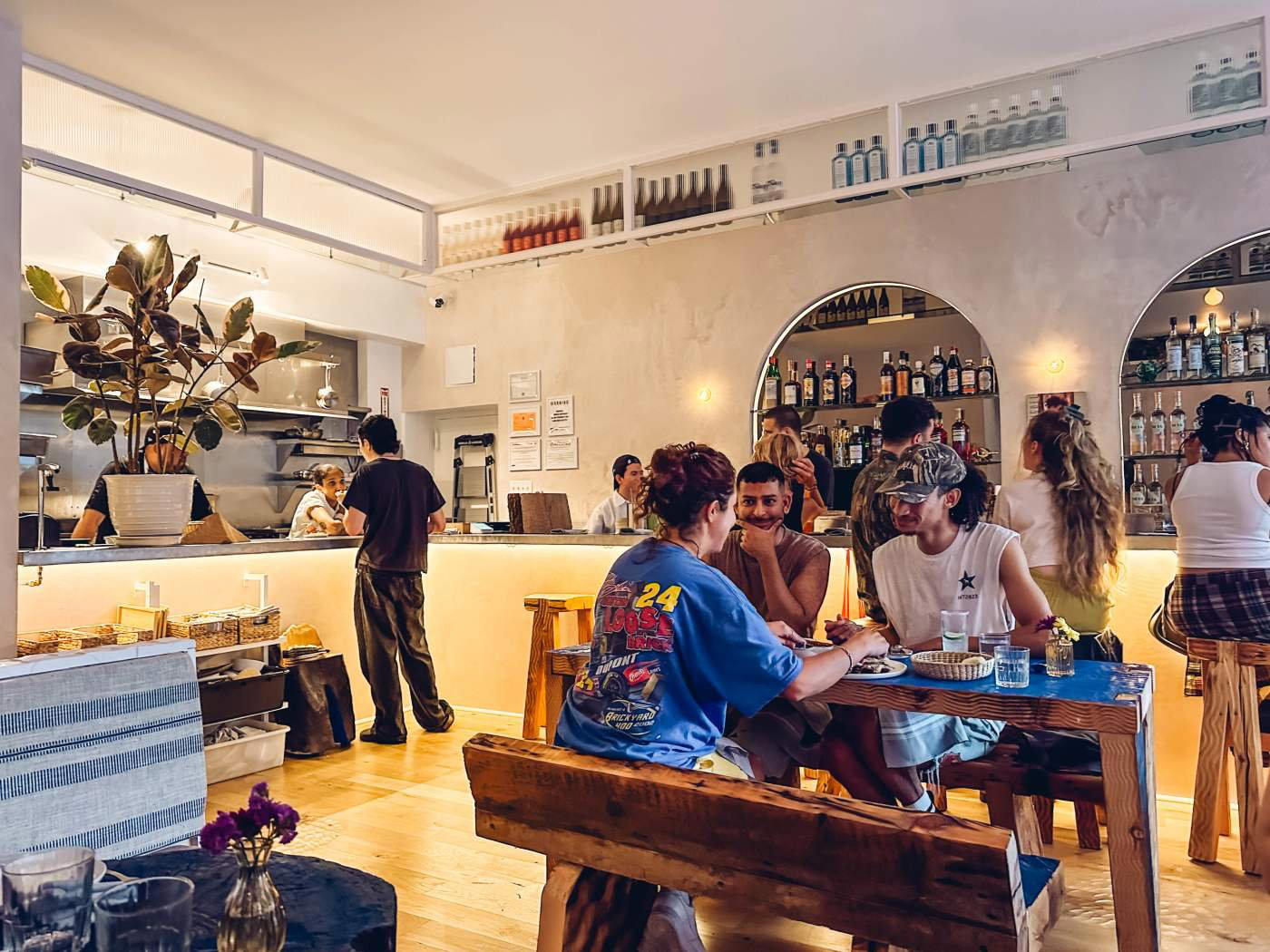
Expansive waterfront patios and industrial pier-side interiors create a lively, scenic atmosphere that feels removed from the city bustle while highlighting New York’s agricultural story from vineyard and orchard to glass.
Know Before You Go
- Getting there
- 185 Van Dyke St, New York, NY