
La Rojeña is the oldest active distillery in Latin America, operating continuously in the town of Tequila, Jalisco since 1758. Awarded Pearl 3 Star Prestige by EP Club in 2025, it sits at the top of the town's distillery visit hierarchy alongside Casa Sauza and Casa Orendain. The site anchors the Tequila appellation's claim to heritage depth in a way few production facilities anywhere in the spirits world can match.
 Discover on Pearl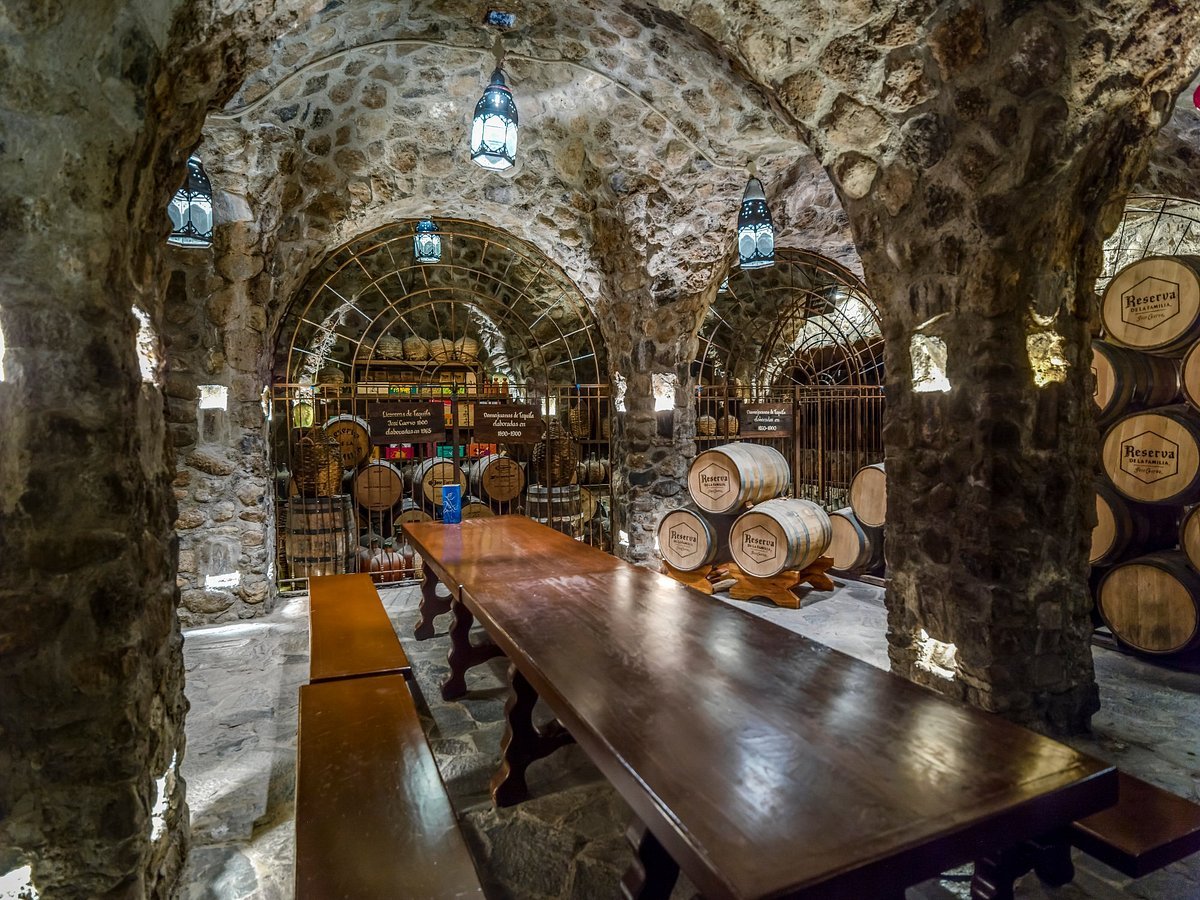
Where Agave Country Begins
The town of Tequila, Jalisco sits roughly 60 kilometres northwest of Guadalajara, in a valley where the blue agave fields run in geometric rows across volcanic red soil until they meet the lower slopes of the Tequila Volcano. The landscape has a spare, almost Mediterranean logic to it: rows of plants, open sky, and a horizon that pulls the eye outward rather than upward. Arriving by road from Guadalajara, the distillery quarter resolves itself gradually from the surrounding agave fields, and La Rojeña, the production facility behind the Jose Cuervo operation, is among the first large structures you register when approaching the town centre. It stands on Calle José Cuervo 33, in the historic core of a town whose entire civic identity is wound up in the spirit it produces.
That physical presence matters. La Rojeña has been in continuous operation since 1758, which makes it the oldest active distillery in Latin America by documented record. Heritage of that length is not merely a marketing figure; it is architectural, institutional, and geological. The buildings carry 260-plus years of incremental modification, and the production spaces exist in layers: older stone construction alongside more recent industrial-scale equipment, evidence of a site that has expanded around a core rather than replaced it. Comparable accumulations of distilling history in the spirits world are rare. Aberlour in Scotland's Speyside and Abadía Retuerta in Spain's Ribera del Duero offer analogous cases of deeply embedded, site-specific production histories in their respective categories, but for tequila, La Rojeña represents the benchmark of institutional continuity.
The Tequila Distillery Tier
Tequila's distillery visit scene has developed considerably over the past decade, splitting between large commercial operations with structured visitor programmes and smaller, craft-oriented houses with limited access. La Rojeña sits firmly in the first tier, alongside La Perseverancia (Casa Sauza) as the town's two major heritage production sites with established visitor infrastructure. Further down the scale in terms of output volume but distinct in character, Casa Orendain (La Mexicana), El Llano (Arette), El Tequileño (La Guarreña), and La Cofradía offer visitors a closer look at mid-scale and family-run production. Each occupies a different position in the town's distillery ecology, and serious visitors tend to move across at least two or three rather than treating a single site as definitive.
What distinguishes the La Rojeña visit from those smaller operations is scale of context. The site allows visitors to observe the full arc of tequila production, from cooked agave hearts through fermentation, distillation, and into the barrel ageing halls, within a single facility that has been producing without interruption for longer than Mexico has been an independent nation. That is a particular kind of authority that operational scale alone does not confer, and it positions La Rojeña differently from newer facilities with more polished visitor amenities but shallower roots.
EP Club awarded La Rojeña a Pearl 3 Star Prestige rating in 2025, placing it among the top-tier distillery experiences in the region. For context, the Pearl tier within EP Club's recognition framework reflects a combination of site significance, visitor experience quality, and production credentials that together clear a high threshold. Visitors travelling specifically for spirits tourism in Jalisco should factor this alongside comparable prestige-level recognitions in the regional distillery and mezcal space, including La Primavera (Don Julio) in Atotonilco El Alto, which operates in a different agave-spirits register but at a comparable tier of recognition.
Landscape as Production Logic
The editorial angle that makes La Rojeña compelling is not simply age but the relationship between the physical environment and what is produced within it. The Tequila Denomination of Origin, protected since 1974 and internationally recognised through geographic indication agreements, is defined by soil type, altitude, and the specific agave variety grown across the Jalisco highlands and lowlands. The red volcanic soils of the Tequila valley are not a backdrop; they are a production variable. Agave grown in this specific terrain develops different sugar concentrations and phenolic profiles than agave grown at higher elevations in the highland municipalities of Arandas or Tepatitlán. La Rojeña, producing from valley-floor agave, is making decisions about character that are inseparable from where the fields sit.
Walking the distillery grounds with that in mind changes how the architecture reads. The open fermentation vats, the brick ovens or autoclaves depending on the production line, the barrel warehouses with their wood-and-spirit smell on warm afternoons: these are not simply industrial spaces. They are the translation mechanism between a specific piece of Jalisco terrain and a finished bottle. For travellers with a working knowledge of how wine regions function, the logic is immediately legible. The distillery is the winery; the volcano slope is the vineyard; the appellation rules are the AOC. The vocabulary differs, but the governing relationship between land, climate, and finished product follows the same structure.
For comparison, mezcal producers like Los Danzantes in Santiago Matatlán or cooperative operations like Banhez (UPADEC cooperative) in San Miguel Ejutla operate under a related but distinct terroir logic tied to Oaxacan growing conditions and different agave species. Visiting both tequila and mezcal production regions in sequence is one of the more instructive routes through Mexico's agave-spirits geography.
Planning the Visit
La Rojeña is located at José Cuervo 33 in the Centro district of Tequila, Jalisco, accessible from Guadalajara by road in under an hour or by the Jose Cuervo Express train service that operates on selected days from Guadalajara's Antigua Central station. The train option is a practical choice for groups visiting primarily for distillery access, as it includes return transit and integrates with tour packages to the La Rojeña site.
The town itself warrants more than a single-distillery day. A full visit to Tequila typically runs across the central distilleries in the morning and extends into the surrounding agave fields in the afternoon, when the light on the volcanic slopes is at its most photographically direct. For dining, drinking, and accommodation, EP Club maintains dedicated guides: our full Tequila restaurants guide, our full Tequila bars guide, and our full Tequila hotels guide. Visitors planning a multi-day spirits itinerary can map the full distillery circuit through our full Tequila wineries guide, and our full Tequila experiences guide covers the agave field tours, harvest visits, and guided tastings that extend a standard distillery trip into something more involved.
Given the site's prominence and the volume of visitors it receives, particularly on weekends and during Mexican national holidays, structured tours at La Rojeña benefit from advance arrangement rather than walk-in visits. The EP Club Pearl 3 Star Prestige rating reflects an experience that rewards preparation: visitors who arrive with context about the production process and the appellation's geography consistently extract more from the tour than those treating it as a casual stop.
Frequently Asked Questions
- What is Jose Cuervo (La Rojeña) known for?
- La Rojeña is the production home of the Jose Cuervo brand and holds the distinction of being the oldest continuously operating distillery in Latin America, in operation since 1758. It sits in the centro of Tequila, Jalisco, within the protected Denomination of Origin zone, and received a Pearl 3 Star Prestige rating from EP Club in 2025. The site is the reference point for large-scale heritage tequila production in the town.
- What is the signature bottle at Jose Cuervo (La Rojeña)?
- The Jose Cuervo portfolio spans a wide range, from the widely distributed Especial blanco to the aged premium expressions under the Reserva de la Familia label. The Reserva de la Familia line, which includes extra añejo expressions and limited annual releases with artist-commissioned packaging, sits at the leading of the production hierarchy and represents the distillery's premium tier. It is the expression most directly tied to the site's heritage credentials and Pearl 3 Star Prestige recognition.
- Should I book Jose Cuervo (La Rojeña) in advance?
- Advance booking is advisable, particularly for weekend visits and during Mexican national holidays when the distillery receives its highest visitor volumes. The site's standing as Tequila's most prominent heritage distillery, now recognised with a Pearl 3 Star Prestige rating by EP Club in 2025, means demand for structured tours is consistent. Checking the official Jose Cuervo visitor programme or arriving early in the day improves access.
- How does La Rojeña compare to other Tequila distillery visits for a serious spirits traveller?
- For a traveller with an existing grounding in how terroir and appellation systems work, La Rojeña offers the most complete picture of how large-scale tequila production interfaces with historical continuity, operating since 1758 on the same Jalisco site. Complementing it with a visit to a smaller, family-run operation such as El Tequileño (La Guarreña) or El Llano (Arette) gives a more rounded view of the town's production range, from heritage-scale infrastructure to craft-focused method. The Pearl 3 Star Prestige recognition positions La Rojeña as the anchor visit around which a multi-distillery itinerary is logically built.
Peer Set Snapshot
These are the closest comparables we have in our database for quick context.
| Venue | Awards | Notes |
|---|---|---|
| Jose Cuervo (La Rojeña) | Pearl 3 Star Prestige | This venue |
| Casa Orendain (La Mexicana) | Pearl 2 Star Prestige | |
| El Llano (Arette) | Pearl 2 Star Prestige | |
| El Tequileño (La Guarreña) | Pearl 2 Star Prestige | |
| La Cofradía | Pearl 2 Star Prestige | |
| La Perseverancia (Casa Sauza) | Pearl 2 Star Prestige |
Access the Cellar?
Our members enjoy exclusive access to private tastings and priority allocations from the world's most sought-after producers.
Get Exclusive Access