Hiyu Wine Farm
Hiyu Wine Farm sits on the eastern slope of the Hood River Valley, where the Columbia Gorge's thermal contrasts and volcanic soils produce wines that read as distinctly Gorge rather than generically Pacific Northwest.
Pearl is the En Primeur Club membership app — saves, bookings, and concierge access live there. Same editors, same standards.
- Address
- 3890 Acree Dr, Hood River, OR 97031
- Phone
- +15414364680
- Website
- hiyuwinefarm.com
- Directions
- Get directions
 Saves & bookings on Pearl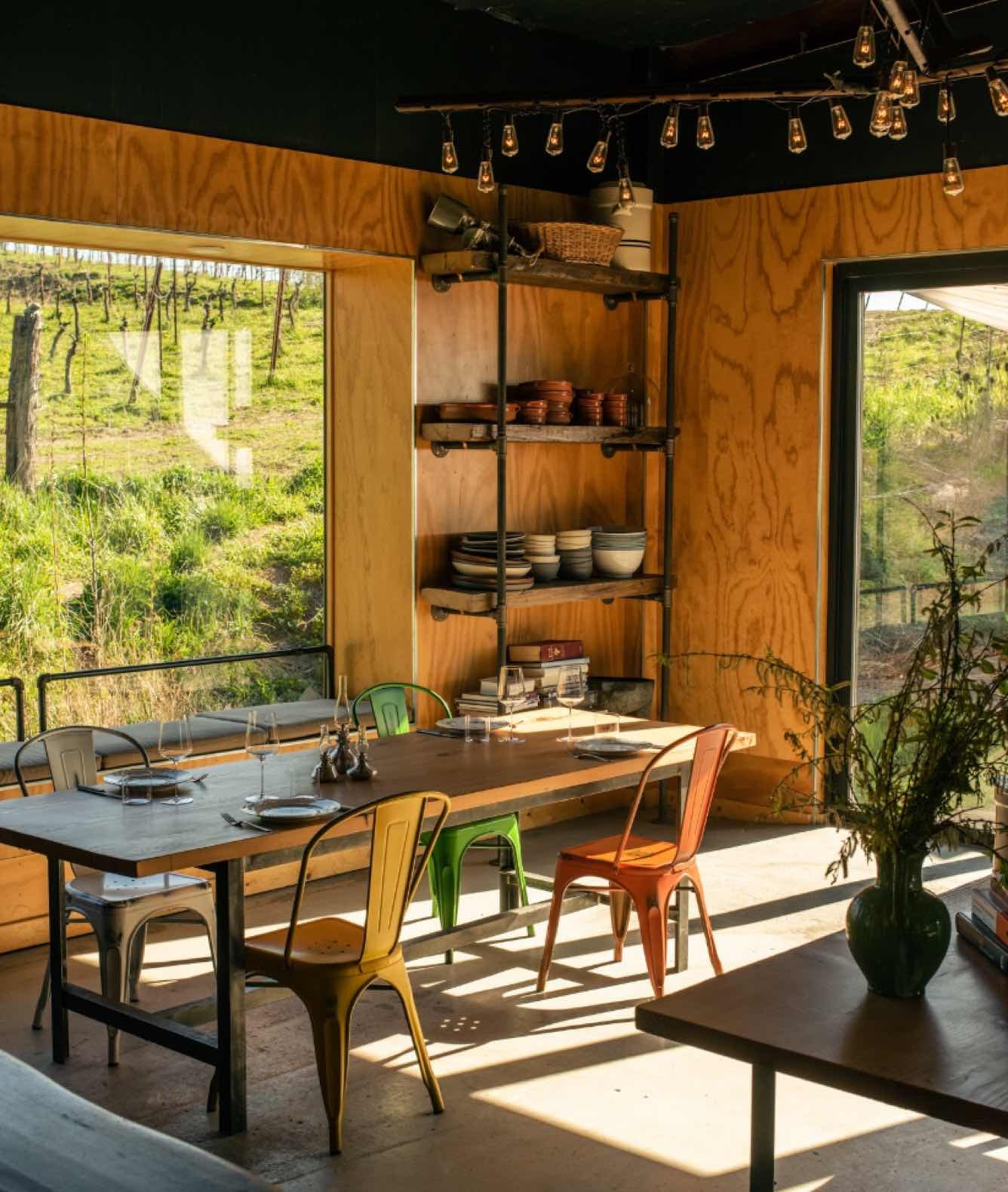
Where the Gorge Speaks Through the Vines
The Columbia River Gorge has always been a place of competing forces. Cold Pacific air pushes east through the narrow passage, while high-desert heat rolls west from the interior. At Hood River, those pressures meet at an elevation and angle that forces growers to make decisions that winemakers in more stable climates never face. Hiyu Wine Farm, located at 3890 Acree Drive on the eastern slope of the Hood River Valley, sits directly inside that tension, and the wines made here reflect it more candidly than most properties in the region.
Oregon winemaking tends to be discussed through the Willamette Valley lens, where Pinot Noir and Burgundian method dominate the conversation. The Gorge operates on different logic. Here, the diurnal temperature swings are sharper, the basalt-derived soils behave differently from Willamette's volcanic Jory, and the wind is a genuine agricultural variable rather than a romantic backdrop. Hiyu treats those conditions as the raw material for a farming and winemaking approach that prioritizes what the site actually produces over what the market typically rewards.
The Terroir Argument for Hood River
To understand Hiyu, it helps to understand why Hood River is a credible wine address at all. The valley sits at the western edge of the Gorge, where Mount Hood's snowpack feeds the irrigation that makes commercial agriculture viable and where elevation changes within a short horizontal distance create meaningfully different mesoclimates. Growers here can choose sites that behave more like cool-climate western Oregon or sites that tip toward the warmer, semi-arid character of eastern Washington, sometimes within the same property.
The Columbia Gorge American Viticultural Area, which Hood River falls within, spans the Oregon-Washington border and covers a range of soil types that include basalt, loess, and glacial deposits from the Missoula Floods. That geological complexity is part of what makes the appellation interesting and part of what makes it difficult to generalize. Producers who work within a specific slice of that complexity, rather than sourcing broadly across it, tend to make wines with more distinct address. Hiyu's focus on its farm site rather than a broader sourcing model places it in that more geographically specific category, comparable in ambition if not in varietal focus to what Adelsheim Vineyard in Newberg built in the Willamette over decades, or what Adelaida Vineyards in Paso Robles has demonstrated about limestone-driven site expression in a warmer California context.
Farm Logic, Not Winery Logic
The distinction between a farm and a winery is not purely semantic. Properties that call themselves farms tend to organize production decisions around what the land requires in a given year rather than what a consistent brand profile demands across vintages. That approach produces wines with more vintage variation, which some consumers read as inconsistency and others read as honesty. Hiyu sits firmly in the honest-expression camp.
This positions Hiyu differently from high-volume Gorge operations and differently again from the allocation-model Cabernet houses of Napa, such as Accendo Cellars in St. Helena or Alpha Omega Winery in Rutherford, where cellar precision is used to smooth vintage variation into a recognizable house style. The Hiyu model is closer to what biodynamic and polyculture farms in the Rhône Valley or Jura have long practiced: the farm as a complete system, where animals, vegetables, and vines share the same land and the health of each supports the others. In the American West, that approach remains rare enough to function as genuine differentiation. For comparison, a property like Alban Vineyards in Arroyo Grande has made a comparable argument for Rhône varieties in a California site that the market historically undervalued; Hiyu makes a structural argument about how wine should be farmed as much as what should be grown.
The Atmosphere on the Ground
Visiting Hiyu requires a different mental frame than visiting a tasting room designed for throughput. The property on Acree Drive reads as a working farm first, a wine destination second. Orchards, gardens, and vineyard blocks occupy the same space without the manicured separation that characterizes most premium wine tourism destinations. The views toward Mount Hood and the valley below arrive as context for the farming rather than as backdrop designed for photographs.
That physical character carries into the tasting experience. Hood River's wine tourism infrastructure is smaller and less developed than Willamette Valley's, which means visits here involve more direct contact with the production environment and less of the hospitality machinery that insulates guests from the agricultural reality of winemaking. Visitors who arrive expecting the polished service protocols of, say, Artesa Vineyards and Winery in Napa will need to recalibrate. Visitors who want to understand where wine actually comes from will find the format more informative than almost anything the Willamette Valley's more visitor-oriented operations offer.
The Hood River town itself, roughly five miles from the property, has a compact but serious food and drink scene built around outdoor recreation culture. The town draws cyclists, windsurfers, and climbers, which has produced a local demand for food and drink that punches above what a town of its size would normally support.
Hiyu operates at limited capacity by design, and Hood River is not a drop-in wine destination. The drive from Portland takes approximately an hour and a half via Interstate 84, which makes it a viable day trip but not a casual stop. Given the farm's scale and the immersive format of its visits, booking well in advance is the appropriate approach; the property's low profile relative to its critical standing means availability can close faster than newer visitors expect. Confirmed booking and visit details are leading verified directly through current listings, as hours and formats at farm-scale operations change seasonally.
Hiyu is best approached as an appointment-only farm visit, with reservations essential. Operations like Au Bon Climat in Santa Barbara or Andrew Murray Vineyards in Los Olivos have made analogous arguments for under-discussed California appellations; Hiyu makes the same argument for the Columbia Gorge, and the critical recognition suggests it is landing.
Side-by-Side Snapshot
Comparable venues nearby, for context on price, style, and recognition.
| Venue | Cuisine | Price | Notes |
|---|---|---|---|
| Hiyu Wine FarmThis venue — the venue you are viewing | Pinot Noir, Grenache | $$$$ | Not listed |
| Maison Nicolas-Jay | Pinot Noir | $$$$ | Dundee Hills |
| Adelsheim Vineyard | Pinot Noir, Chardonnay | $$ | Chehalem Mountains |
| White Rose Estate | Pinot Noir, Chardonnay | $$$ | Dundee Hills |
| Elk Cove Vineyards | Pinot Noir, Pinot Gris | $$ | Gaston |
| Resonance (Jadot) | Pinot Noir, Chardonnay | $$$ | Carlton |
Continue exploring
More in Hood River
Restaurants in Hood River
Browse all →

Hotels in Hood River
Browse all →
At a Glance
- Rustic
- Scenic
- Cozy
- Intimate
- Whimsical
- Special Occasion
- Wine Education
- Estate Grounds
- Vineyard Tour
- Organic
- Mountain
- Vineyard
- Columbia Gorge AVA
- Pinot Noir
- Grenache
- Riesling
- Albarino
- Gewurztraminer
- Syrah
- Still Red
- Still White
- Still Rosé
- Food Paired Tasting
Enchanting natural atmosphere with animal sounds, insects, and oscillating light in an alpine river valley, centered around an open kitchen in the tasting room.