Clarens Distillery

Clarens Distillery holds a Pearl 2 Star Prestige rating (2025), placing it among the more decorated craft producers operating out of the Eastern Free State. Located in the arts village of Clarens, it represents a growing argument that South Africa's distilling ambition extends well beyond the Western Cape's established corridors. For travellers making the mountain pass route, it warrants a deliberate stop.
 Discover on Pearl
Pearl is the En Primeur Club membership app — saves, bookings, and concierge access live there. Same editors, same standards.
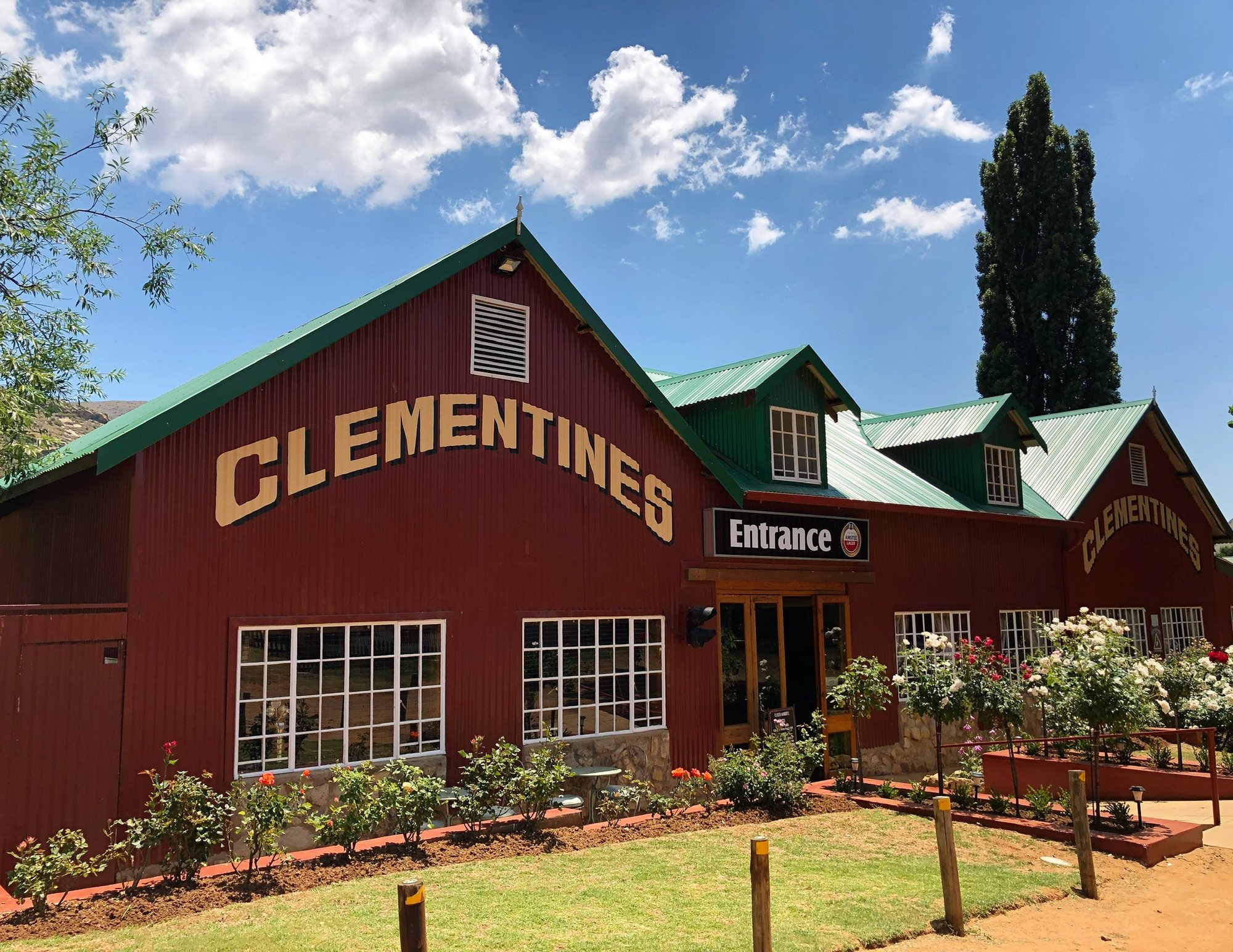
Where the Eastern Free State Makes Its Case in a Glass
The road into Clarens arrives through sandstone ridges and grassland plateau, the kind of terrain that makes you recalibrate assumptions about where serious craft production happens in South Africa. The Western Cape has long held the narrative: its winelands, its distilleries, its coastal cellars. But a smaller cluster of producers has been building credibility in less-discussed geography, and Clarens Distillery, operating out of a retail address on Market Street in this Free State arts village, now carries the credentials to anchor that argument. A Pearl 2 Star Prestige rating awarded in 2025 is not an entry-level distinction; it positions the distillery within a peer set that includes producers with far larger marketing footprints and established regional reputations.
Clarens itself is a useful frame for understanding what the distillery represents. The town sits at roughly 1,890 metres above sea level in the foothills of the Maluti Mountains, within reach of the Golden Gate Highlands National Park. At that altitude, the diurnal temperature swings are pronounced, winters are cold enough to see regular frost, and the surrounding grasslands carry a botanical character distinct from fynbos-dominated Western Cape terroir. Whether or not those conditions influence the distillery's specific process is not confirmed in available data, but the principle is well-established across global distilling: altitude and climate shape raw material, water source, and barrel maturation in ways that lowland producers cannot replicate. The Eastern Free State is not a compromise location; it is a different argument altogether.
The Pearl Rating in Context
South African craft distilling has expanded considerably over the past decade, moving from a landscape dominated by established brandy estates and a handful of heritage producers to a wider field of smaller, more experimental operations. Within that expansion, formal recognition has become an important sorting mechanism. The Pearl rating system evaluates producers on a multi-tiered scale, and a 2 Star Prestige designation at the 2025 level indicates consistent quality across submitted expressions rather than a single strong bottle. For a distillery operating from a shop-front address in a town more commonly associated with weekend tourism and gallery visits than serious craft production, that rating carries additional weight as a signal of intent.
For comparison, producers like Oude Molen Distillery in Grabouw and Boplaas Winery and Distillery in Calitzdorp have built their reputations through sustained award accumulation in brandy and pot-still categories over many years. Clarens Distillery is a younger entrant to that conversation, but the 2025 Pearl recognition places it on a trajectory worth tracking. The Bezalel Wine and Brandy Estate in Upington offers another data point for producers operating outside the Western Cape's gravitational pull, demonstrating that altitude and inland climate can produce results that earn serious critical attention.
Terroir at the Margins: What the Free State Altitude Means
South Africa's most discussed terroir stories tend to run through Stellenbosch, Franschhoek, Swartland, and the Walker Bay corridor. Sadie Family Wines in Swartland reframed what dry-farmed, old-vine production could mean nationally. Creation Wines in Hermanus and Beaumont Family Wines in Bot River have made the case for the Hemel-en-Aarde and Bot River valleys as serious sites. Vergelegen in Somerset West and Constantia Glen in Cape Town carry the weight of long institutional history. Neethlingshof Estate in Stellenbosch, Val de Vie Estate in Paarl, Graham Beck Wines in Robertson, and Babylonstoren in Franschhoek collectively represent the broadening of the Western Cape's premium identity.
Clarens Distillery sits outside all of that. The Free State is grain country, livestock country, and increasingly, a proving ground for producers willing to work without the infrastructure and visitor traffic that the winelands confer. The Maluti Mountain foothills provide a distinct raw material environment. Spring water sources in the area tend toward mineral clarity rather than the brackish profiles of some coastal zones. The cold winters and warm summers create slow, pronounced seasonal cycles that affect both fermentation and ageing in ways that a temperature-controlled Cape lowland cellar does not. None of this is a claim about what Clarens Distillery specifically does with these conditions; the available data does not confirm production specifics. What it does confirm is a 2025 Pearl 2 Star Prestige rating that says the output is worth serious attention.
Visiting Clarens: Format and Logistics
Clarens is a small town, and the distillery occupies a retail address rather than a dedicated production facility with formal tasting infrastructure in the mould of a large estate. The address at Shop 1, Rosemary Centre on Market Street places it within the town's central commercial strip, where galleries, restaurants, and artisan producers share space in a compact, walkable area. This format is common among craft distilleries that have scaled their production without necessarily scaling their hospitality footprint, and it shapes the visit accordingly. Expect a more direct, less ceremonial interaction than you would get at a large winelands estate. That informality is, for many visitors, the point.
Clarens is accessible from Johannesburg in approximately three to four hours via the R26 and R712 through Fouriesburg, or via the N3 to Harrismith and then south. It sits on the route commonly used for Golden Gate Highlands National Park visits, which means the distillery integrates naturally into a longer Eastern Free State itinerary rather than requiring a standalone journey. The town itself has a resident community of artists and a consistent weekend visitor flow from Gauteng, which keeps the central strip reasonably active across most of the year. For planning purposes, the summer months from October through April bring more reliable weather, while the winter months, though cold, carry the drama of frost-covered sandstone ridges that the area is known for.
Booking and contact details are not confirmed in available data, and given the retail format, a walk-in approach during trading hours is likely viable. Travellers planning specifically around the distillery visit should verify current hours and availability through direct contact before arrival. For broader context on what the town offers, our full Clarens restaurants guide maps the wider food and drink scene in the area. For travellers with an appetite for comparing craft distilling across South Africa's less-discussed regions, pairing a Clarens stop with Aberlour or Accendo Cellars on a broader tasting itinerary offers useful reference points across very different production traditions.
Comparison Snapshot
These are the closest comparables we have in our database for quick context.
| Venue | Cuisine | Price | Awards | Notes |
|---|---|---|---|---|
| Clarens Distillery | This venue | |||
| Babylonstoren | ||||
| Boschendal | ||||
| Constantia Glen | ||||
| Graham Beck Wines | ||||
| Groot Constantia |
Continue exploring
More in Clarens
Restaurants in Clarens
Browse all →
At a Glance
- Lively
- Rustic
- Scenic
- Group Outing
- Celebration
- Terrace
- Mountain
Modern warm ambience with fun lively atmosphere at the foot of Maluti Mountains.