
Château Climens is the reference address for Sauternes-adjacent Barsac, where the commune's distinctive limestone-clay soils and the early-morning mists off the Ciron river produce a style of botrytised Sémillon that reads lighter and more mineral than Sauternes proper. Under winemaker Bérénice Lurton, the domaine holds a Pearl 4 Star Prestige rating for 2025 and occupies the top tier of sweet Bordeaux production.
 Discover on Pearl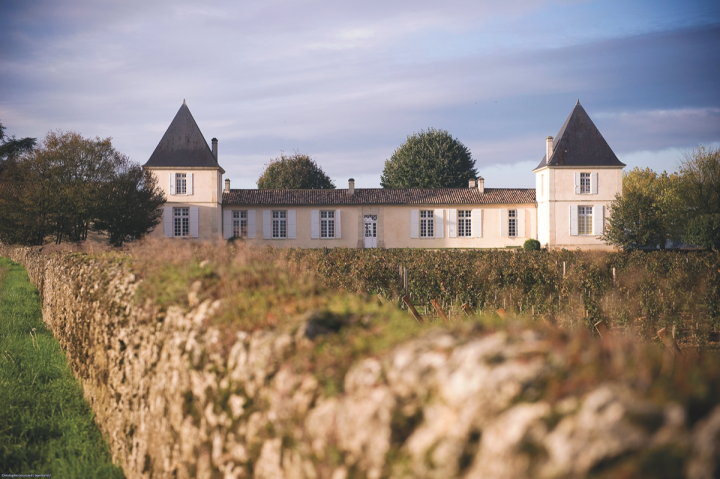
Barsac and the Terroir That Defines Climens
The Ciron, a small tributary of the Garonne, is responsible for one of the more consequential microclimates in French wine. Each autumn, the cool water of the Ciron meets the warmer Garonne and produces dense morning mists that hang over the vineyards of Barsac and Sauternes, creating the humid conditions that allow Botrytis cinerea to develop with unusual precision. This is not a gentle weather event: it requires the mist to burn off each afternoon so that the grapes dehydrate rather than rot. The entire production logic of the region depends on this daily oscillation, and in years when the pattern breaks, the vintage suffers accordingly.
Barsac sits within the broader Sauternes appellation but retains the right to use its own communal name, and serious estates in the commune do so with purpose. The soils here shift from the heavier clay of Sauternes toward a more pronounced limestone and red clay mix, a distinction that shows up in the wine as a finer texture and a more saline, stony register in the finish. That mineral inflection is the reason Barsac's leading properties occupy a distinct critical position, even when placed alongside first-growth Sauternes.
Château Climens, at Climens lieu-dit in the heart of the commune, sits on some of the deepest concentrations of this limestone subsoil. The property's vineyards are planted almost exclusively to Sémillon, which is standard for the appellation but here expresses itself with a particular transparency: the botrytis character is present but never heavy, and the acidity that holds the wine's structure over decades comes directly from the soil's mineral load rather than from extraction or manipulation in the cellar. This is what terroir expression looks like when the conditions are right and the winemaking stays out of the way.
The Winemaker and the Estate's Current Standing
Bérénice Lurton has led Château Climens for several decades, making her one of the longer-tenured winemakers at any first-tier Bordeaux estate. That continuity matters in a region where sweet wine production is as much about accumulated knowledge of individual parcels as it is about annual technique. Understanding when to send pickers through a specific row, how to read the botrytis progression on a vine-by-vine basis, and when a vintage's conditions call for restraint rather than richness: these are the skills that build across harvests, not across textbooks.
In the competitive framework of Sauternes and Barsac, Climens sits in the upper bracket. The estate earned a Pearl 4 Star Prestige rating from EP Club in 2025, positioning it alongside the most carefully evaluated properties in the region. For context, nearby estates such as Château Doisy-Daëne and Château Nairac operate in the same appellation zone and share some of the limestone-clay soil characteristics, but each reads differently at the glass, a reminder that Barsac's geology, while broadly consistent, delivers site-specific variations that matter at this level of production.
How Barsac Sits Within the Wider Sweet Wine Tradition
Sweet wine from botrytis-affected Sémillon is one of the few wine styles where the production process is almost entirely dependent on conditions outside the producer's control. A winemaker in Barsac cannot manufacture botrytis; they can only set up conditions that allow it to develop favourably and then respond to what the vintage offers. This makes the region's leading producers less engineers than interpreters, and it gives the wines a vintage variation that is informative rather than inconsistent.
Internationally, the closest stylistic parallels are Trockenbeerenauslese from Germany and Austria, and the Tokaji Aszú wines of Hungary. But the Sémillon-dominated Barsac style has its own profile: richer than most German TBAs in body weight, more restrained in sweetness than many Tokaji bottlings, and anchored by an oxidative richness that comes from the way botrytis metabolises the grape's sugars. The leading Barsac ages for twenty to forty years without losing freshness, which is partly a product of the appellation's acidity levels and partly a function of the limestone soils that give the wine its structural backbone.
For collectors and serious wine drinkers, Barsac and Sauternes represent one of the few categories in French wine where primary releases can be followed directly by en primeur purchasing, making the timing of acquisition as strategically important as the selection itself. Properties like Château Bastor-Lamontagne in Preignac, which operates in the neighbouring commune, offer a comparative reference point for how the appellation's style modulates across different soil profiles in the Graves gravel zone south of the Garonne.
Visiting Barsac and Situating Climens Within It
The Sauternes and Barsac region sits roughly forty kilometres southeast of Bordeaux city, accessible by car in under an hour and by regional train with a change at Langon. The area is compact enough that a focused visit can cover several estates in a day, though the nature of botrytised wine production means cellars are more dynamic in October during harvest than at other points in the year. Spring and early summer are quieter but offer the chance to walk the vineyards and read the soil directly.
Barsac as a commune is small, and the hospitality infrastructure around it is oriented toward wine tourism rather than broad leisure. For guidance on where to eat and stay in the area, our full Barsac restaurants guide, our full Barsac hotels guide, and our full Barsac bars guide map the available options with editorial specificity. The full Barsac wineries guide and Barsac experiences guide are useful for building a multi-estate itinerary that places Climens in its peer context.
Beyond Bordeaux, the editorial logic of visiting a terroir-focused sweet wine estate applies across several European regions. Albert Boxler in Niedermorschwihr in Alsace offers a useful comparison point for how a different climate and variety, Riesling and Gewurztraminer on granite and limestone soils, produces late-harvest wines with an entirely different structural framework. The contrast is instructive: both regions make wines that age for decades, but the mechanisms that produce that longevity differ in ways that are legible in the glass.
For those tracking the broader French artisan-producer landscape, estates like Château de l'Aumérade and Château de Selle in Provence represent a different axis of French terroir expression, oriented around dry rosé and red production in the Var, and they provide useful context for how site-specific production philosophy operates across different appellation types. Further afield, Abadía Retuerta in Sardón de Duero and Château Batailley in Pauillac demonstrate how estate-scale ambition maps onto very different soil and varietal conditions across Iberia and the Médoc respectively.
The Case for Barsac at the Table
One persistent challenge for botrytised sweet wine is the question of when to drink it and with what. The conventional pairing of Sauternes with foie gras is well-established in the French gastronomic tradition, but it represents a fraction of what wines at this level of complexity can handle. The saline, mineral edge of a well-aged Climens works with blue-veined cheese, langoustine, and mature poultry preparations in ways that dry white Bordeaux cannot. The wine's structure allows it to cut through fat without losing its own detail.
Barsac's production levels are small relative to the appellation's profile, which means that allocation and cellar release timing matter for anyone building a collection. Estates in this zone, including those at the 4-star prestige level, rarely produce large commercial volumes, and the most expressive vintages circulate primarily through specialist merchants and en primeur channels. This scarcity is a function of the production method rather than artificial positioning: in years when botrytis development is incomplete or too aggressive, estates like Climens have historically reduced output or declassified entirely rather than release wines below their threshold.
That kind of production discipline is what the Pearl 4 Star Prestige rating signals at its core, a commitment to the terroir's expression over commercial volume, and it is the reason Château Climens retains its position at the front of serious discussions about what Barsac is capable of producing.
Frequently Asked Questions
- What kind of setting is Château Climens?
- Château Climens is an estate winery in the commune of Barsac, within the Sauternes appellation of Bordeaux, France. The property is production-focused rather than visitor-resort in orientation, set within its own vineyard parcels on the limestone-clay soils that define the Barsac style. It holds a Pearl 4 Star Prestige rating for 2025. For broader orientation around the commune, the full Barsac wineries guide and Barsac experiences guide provide planning context.
- What is the wine to try at Château Climens?
- The estate's primary bottling, made almost entirely from Sémillon grown on Barsac's distinctive limestone and red clay soils, is what defines the property's reputation. Under winemaker Bérénice Lurton, the wine is regarded as one of the clearest expressions of Barsac terroir: mineral, precise, and built to age. The Pearl 4 Star Prestige rating (2025) places it in the upper tier of the appellation. Comparative context from neighbouring producers such as Château Doisy-Daëne and Château Nairac helps calibrate where Climens sits within the Barsac peer set.
Peer Set Snapshot
These are the closest comparables we have in our database for quick context.
| Venue | Awards | Notes |
|---|---|---|
| Château Climens | Pearl 4 Star Prestige | This venue |
| Château de l'Aumérade | Pearl 2 Star Prestige | Fabienne Fabre, Est. 1740 |
| Château de Selle | Pearl 2 Star Prestige | Jean-Pierre Perrin, Est. 1940 |
| Château Doisy-Daëne | Pearl 4 Star Prestige | Denis Dubourdieu (deceased in 2016), followed by his sons Jean-Jacques and Fabrice Dubourdieu. |
| Château Nairac | Pearl 4 Star Prestige | Thomas Duroux, Est. 1879 |
| A. Margaine | Pearl 2 Star Prestige |
Access the Cellar?
Our members enjoy exclusive access to private tastings and priority allocations from the world's most sought-after producers.
Get Exclusive Access