Château Malbec

Falstaff Winery - Listed
Château Malbec reads as Bordeaux in miniature: a historic Sainte Eulalie estate, south-facing vines, mixed clay-limestone, sand and gravel soils, and a red blend built around Merlot, Cabernet Sauvignon, Cabernet Franc and a measured share of Malbec. Its strongest case is terroir expression rather than spectacle, with Terra Vitis certification and a restrained oak approach giving structure without pushing the fruit out of frame.

Pearl is the En Primeur Club membership app — saves, bookings, and concierge access live there. Same editors, same standards.
- Address
- Sainte-Eulalie, Entre-Deux-Mers, Nouvelle-Aquitaine, Frankreich
- Directions
- Get directions

Approach the Bordeaux hinterland around Sainte Eulalie and the language changes from city polish to vineyard grammar: slopes, small valleys, limestone underfoot, Atlantic weather moving through the Gironde. Château Malbec belongs to that quieter register. The estate’s appeal is not built on architectural theatre or hospitality choreography, but on the old Bordeaux premise that a red wine can carry the shape of its site when the blend is handled with discipline.
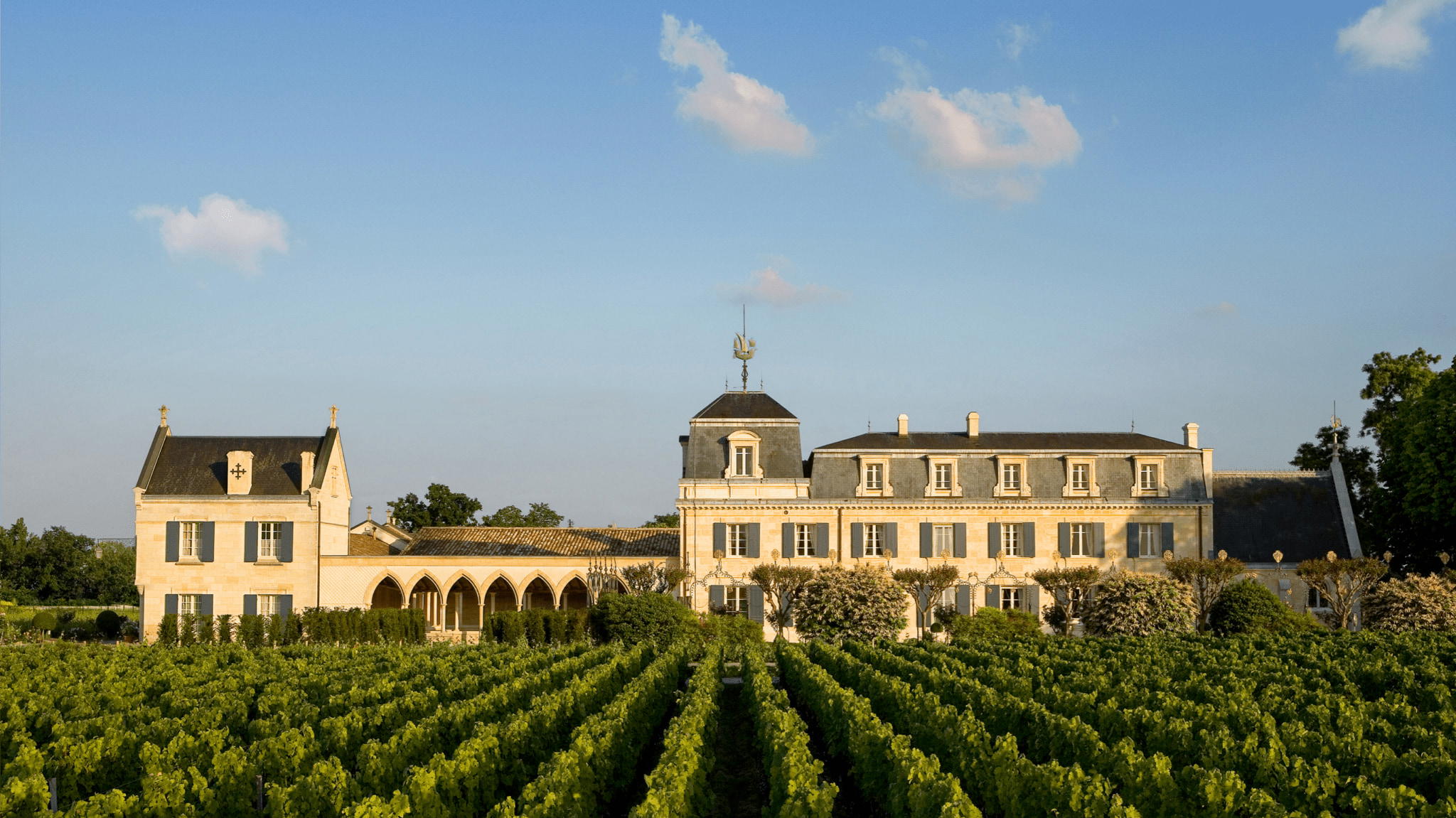
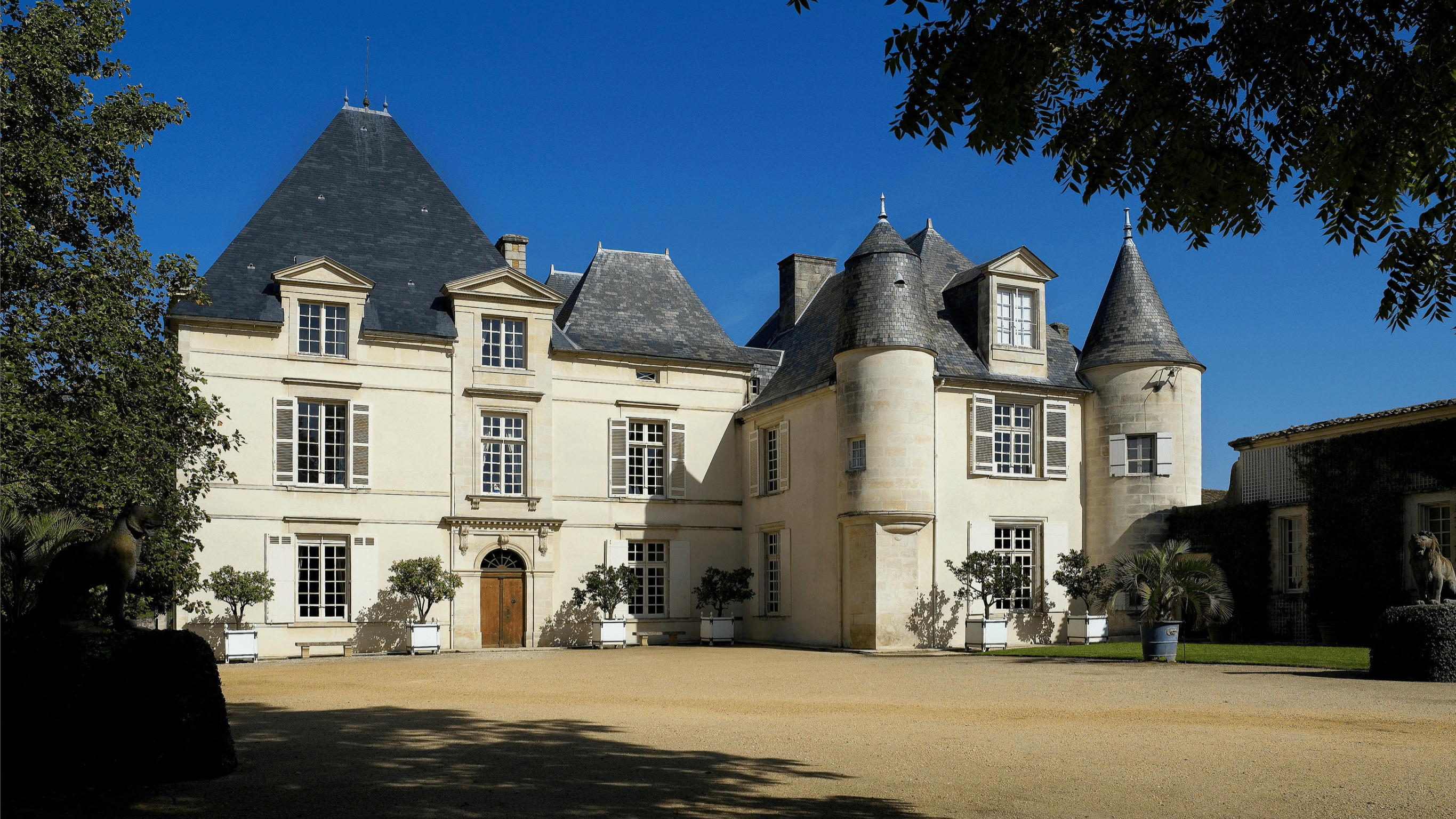
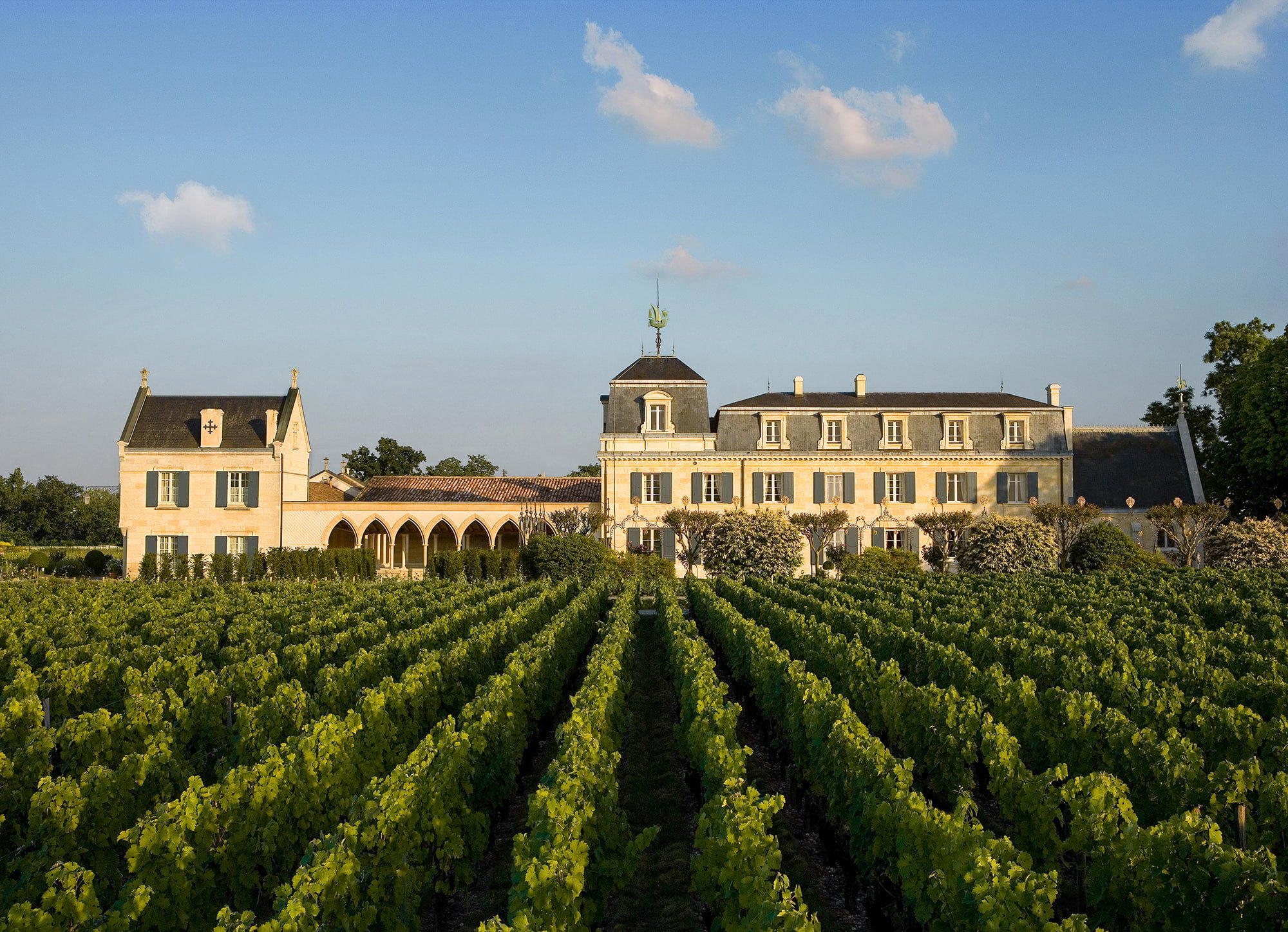
That makes it a useful address for readers trying to understand Entre-Deux-Mers-adjacent Bordeaux beyond the famous labels. The property traces its viticultural role back to an 18th-century farmstead, with a major château reconstruction in 1860 by Mathurin Guignard and Marie Lescouzères; their initials and blason remain part of the façade identity. Castel acquired the estate in 1991, adding the resources of a large French wine group to a property whose character remains tied to a single 38-hectare contiguous vineyard.
South-facing slopes give the blend its Bordeaux logic
Bordeaux blending is often discussed as style, but here it is more accurately a response to land. The vineyard combines clay-limestone, sandy soils and gravel, with slopes and small valleys that help drainage. South-facing exposure matters in an oceanic climate: ripeness is earned through orientation and patience rather than heat alone.
The blend follows a classic structural order. Merlot leads at 60%, suited to the clay-rich parcels and responsible for roundness and fruit density. Cabernet Sauvignon makes up 25%, drawn from gravelly sectors where drainage and warmth support tannic frame. Cabernet Franc accounts for 10%, bringing freshness and aromatic lift, while Malbec sits at 5%, less common in contemporary Bordeaux blends and used here for darker spice and musky depth rather than volume. The name on the gate is not a gimmick; it points to a small but defining component inside an otherwise traditional assemblage.
In glass terms, the house profile is described around black cherry and blackberry, with Cabernet structure and subtle barrel influence rather than heavy oak imprint. That restraint is the point. Modern Bordeaux at this level often fails when extraction and wood try to imitate more expensive neighbors. This estate’s better argument is proportion: fruit, tannin, freshness and oak kept in conversation.
Modern cellar practice without losing the estate's old frame
The production setup is pragmatic rather than romantic. Mechanical harvest is followed by rigorous sorting, and eight thermoregulated stainless steel tanks allow fermentation control by lot. That matters in a mixed-soil vineyard, because Merlot on clay and Cabernet Sauvignon on gravel do not behave the same way in the cellar. Separate handling gives the final blend a better chance of balance.
French oak is used with a discreet hand, a choice that places the wine within a contemporary Bordeaux preference for finesse over overt barrel signature. Terra Vitis certification, achieved in 2012, adds another relevant signal. In Bordeaux, sustainability claims can be vague; Terra Vitis is a named French certification focused on vineyard practice, biodiversity, reduced inputs and soil health. For a reader choosing between polished château branding and actual agricultural conduct, that distinction has weight.
The estate’s scale also matters. Thirty-eight hectares in one block is large enough for consistency across vintages but coherent enough to maintain a site identity. Technical sheets have covered vintages from 2016 through 2023, suggesting a steady flagship focus rather than a fragmented portfolio of cuvées. For a drinker seeking a red Bordeaux with a defined house blend and a clear soil story, that concentration is more useful than a long list of labels.
How to read Sainte Eulalie through this wine
Sainte Eulalie sits close to Bordeaux but outside the prestige shorthand that dominates many buying decisions. That distance is useful. It shifts attention toward the mechanics of Bordeaux: oceanic moderation, river-influenced weather, limestone geology, Merlot’s comfort on clay, Cabernet’s need for drainage, and the way a small share of a less fashionable grape can alter the register of a blend.
Château Malbec is strongest as an interpretive bottle, the kind to place beside a conversation about terroir rather than status. It suits drinkers who care about how Bordeaux works: not just the château image, but the agricultural logic underneath it. The setting is historic and rustic, yet the cellar choices are contemporary, and that tension is where the estate becomes interesting.
For wider planning in Sainte Eulalie, keep the wine route in context with Château Jean Guillot and our full Sainte Eulalie wineries guide. City coverage also sits across our full Sainte Eulalie restaurants guide, our full Sainte Eulalie hotels guide, our full Sainte Eulalie bars guide and our full Sainte Eulalie experiences guide. For readers mapping French and European wine addresses more broadly, useful next stops include A. Margaine in Villers-Marmery, Abbaye de Fontfroide in Narbonne, Abbotts & Delaunay in Marseillette, Advini in Saint Felix De Lodez, Agrapart & Fils in Avize, Alain Brumont in Castelnau Riviere Basse, Alain Gras in Saint-Romain, »der Steiner« Hans Steiner in Podersdorf am See and & Handwein in Mannheim.
Recognition history
Dated appearances from independent guides and award organizations, with the underlying list record or original source where available.
Falstaff Winery - Listed
Falstaff
Continue exploring
More in Sainte Eulalie
Wineries in Sainte Eulalie
Browse all →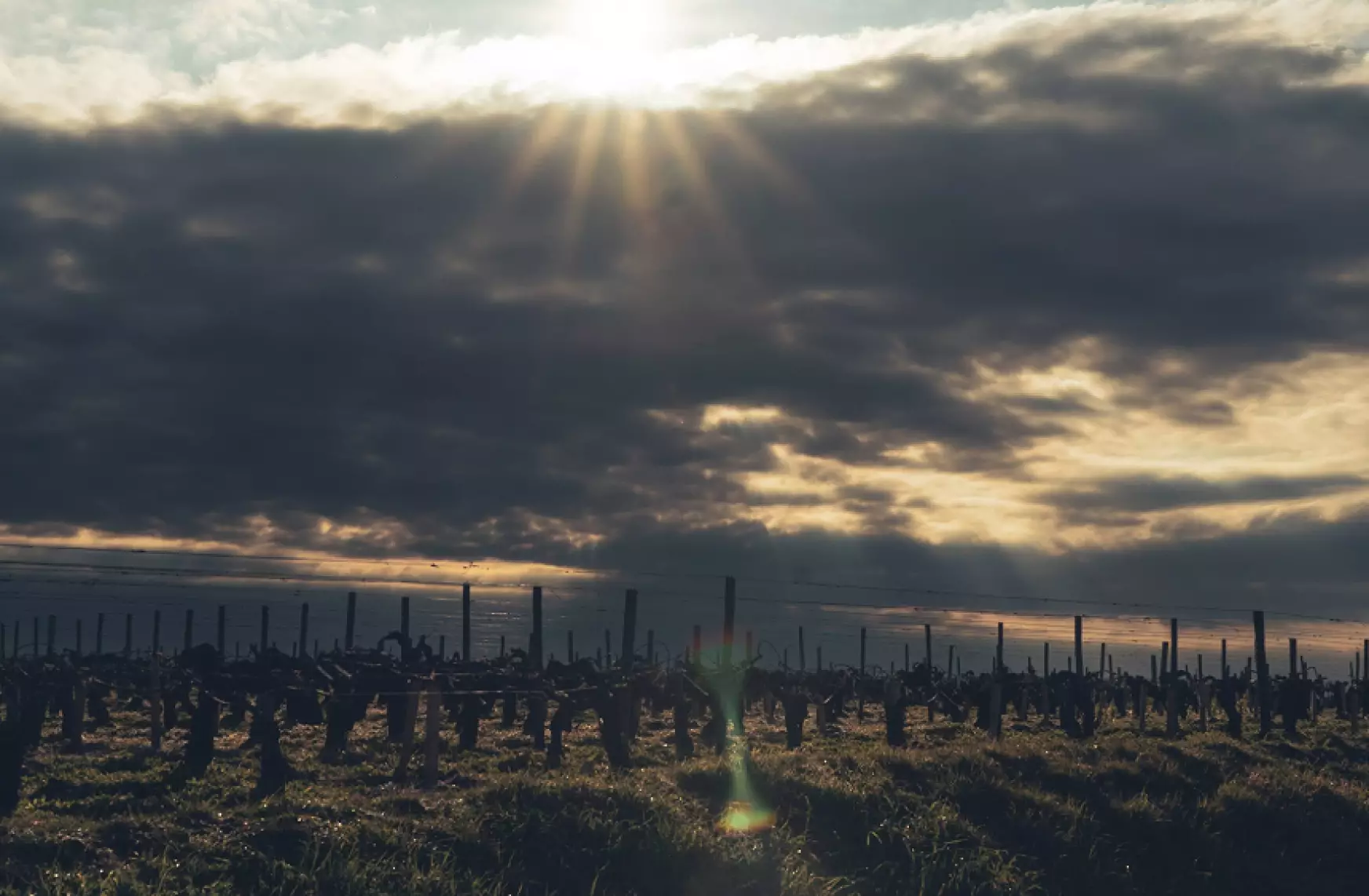
Bars in Sainte Eulalie
Browse all →
Restaurants in Sainte Eulalie
Browse all →
Details
- Classic
- Scenic
- Rustic
- Romantic
- Historic
- Romantic Getaway
- Group Outing
- Wine Education
- Solo Exploration
- Estate Grounds
- Vineyard Tour
- Historic Building
- Sustainable
- Vineyard
- Garden
- Merlot
- Cabernet Sauvignon
- Cabernet Franc
- Malbec
- Still Red
- Standard Tasting
- Estate Tour
- French
- English
Historic Bordeaux estate atmosphere with south-facing vineyards on clay, limestone, sand and gravel slopes, offering a classic, tranquil setting where powerful yet harmonious red wines are crafted with an emphasis on balance, finesse and subtle barrel-aging.