
Cerro Chapeu (Carrau) sits at Uruguay's northern frontier in Rivera, where the Brazilian border shapes a terroir unlike anything found in the country's southern wine belt. Holder of a Pearl 2 Star Prestige award (2025), this estate represents the northernmost serious viticulture in Uruguay, producing wines whose character is defined by altitude, laterite soils, and a markedly different thermal regime than Canelones or Colonia.
Where the Border Defines the Bottle
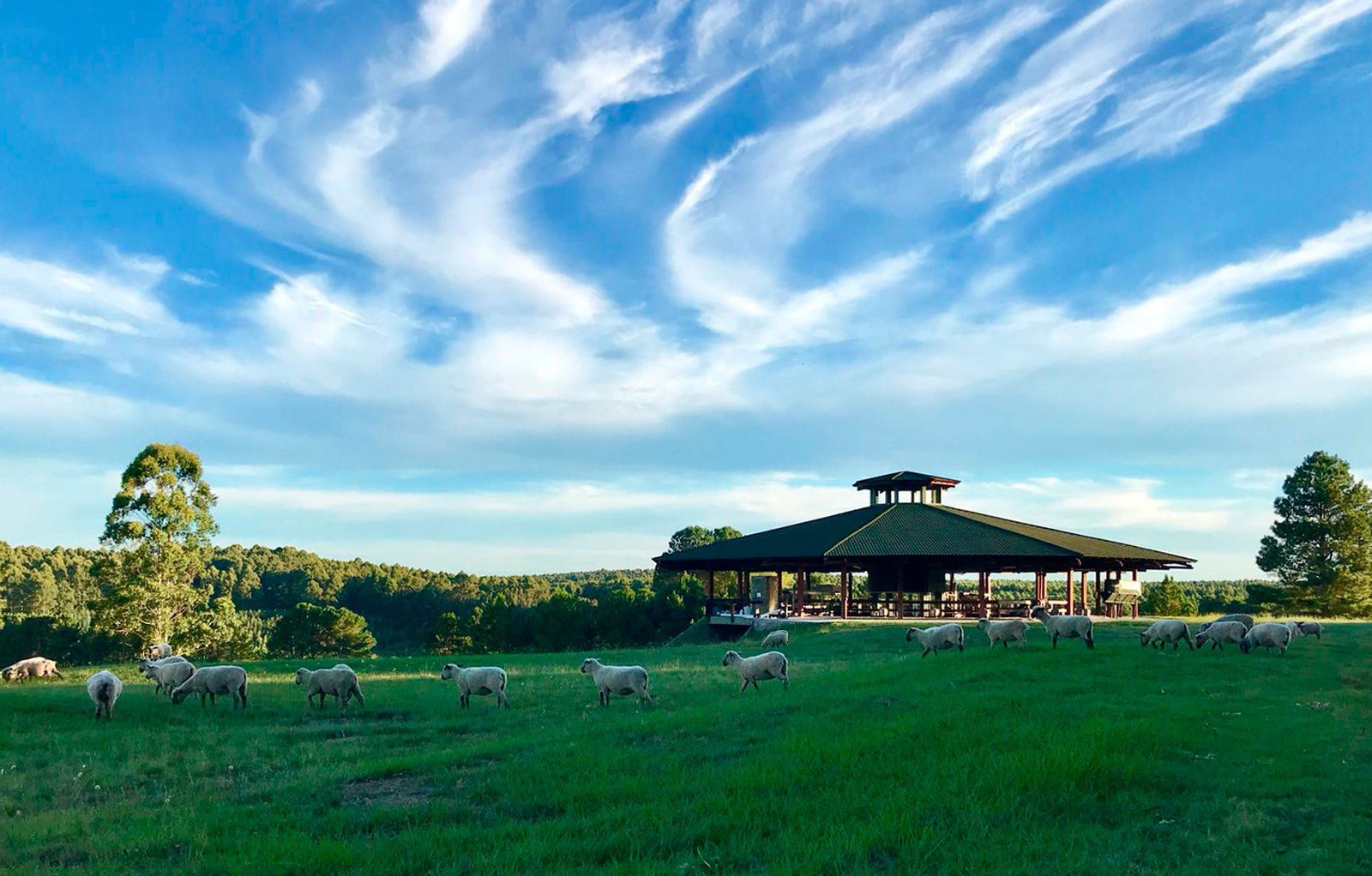
Rivera sits on Uruguay's northern edge, divided from Brazil by a single street in the city and by rolling red-soil hills in the countryside. Most of Uruguay's wine production clusters south — in Canelones, Colonia, and Maldonado — where Atlantic influence and cooler maritime air shape the country's Tannat-led identity. Cerro Chapeu (Carrau) operates in a different register entirely. At around 400 metres above sea level in the Cuchilla de Haedo hills, the estate sits where days run hotter, nights drop sharply, and the laterite-rich soils drain freely. That temperature differential is the defining winemaking variable here, not the winemaker's intervention. The land does most of the heavy lifting.
This is not an incidental detail of geography. The diurnal range at altitude in northern Uruguay creates the conditions for phenolic development that the flatter, warmer southern regions cannot replicate in the same way. Skins thicken. Aromatics concentrate. Acidity retains despite the heat. The result is a style of wine , particularly Tannat, the national grape , that reads differently on the palate than its southern counterparts: darker, more structured, with tannins that arrive early and resolve slowly over years of cellaring. To understand Cerro Chapeu (Carrau), you need to start with the topography.
The Carrau Lineage and Northern Uruguay's Place in the Wine Map
The Carrau family's involvement in Uruguayan viticulture spans generations, with their operations historically rooted closer to Montevideo at their Las Piedras estate. You can explore that property through our coverage of Bodega Carrau in Las Piedras. Cerro Chapeu represents the family's northern frontier experiment , a deliberate bet that altitude and latitude would unlock a distinct wine identity, not simply replicate what they were already producing further south.
That bet has been validated. The estate has earned a Pearl 2 Star Prestige recognition in 2025, a trust signal that places it inside Uruguay's premium wine tier rather than its volume production sector. In the context of Rivera's relative obscurity on the international wine circuit, that recognition matters: it signals that altitude viticulture in northern Uruguay has moved beyond curiosity status into a credible, assessed category. For comparison, much of Uruguay's critical attention concentrates on Canelones producers , see Varela Zarranz in Canelones , or coastal estates like Bodega Oceánica José Ignacio in Maldonado. Rivera barely registers in most international wine writing, which makes the award positioning here more pointed.
Laterite Soils and the Logic of Terroir at Altitude
The soils at Cerro Chapeu are the story. Laterite , iron-rich, reddish, free-draining , forces vines to work for water and nutrients, producing smaller berries with higher skin-to-juice ratios. Where heavier southern soils can encourage vigour and dilution, laterite at altitude acts as a natural check on excess. Yields stay lower not because of strict canopy management targets, but because the terroir demands it. The result is concentration by default rather than by design.
Altitude compounds this. At roughly 400 metres, the estate catches cooler air at night even when summer days push temperatures well above 30°C. For Tannat specifically, this matters enormously. The grape is naturally high in tannin and polyphenols; excess heat without overnight cooling produces wines that feel aggressive and unresolved. The diurnal swing at Cerro Chapeu allows the grape to ripen fully while preserving the structural backbone that makes aged Tannat compelling rather than exhausting. It is a climatic condition that the southern half of Uruguay simply cannot engineer.
For readers comparing Uruguay's regional diversity , from Bodega Los Cerros de San Juan in Colonia del Sacramento to Campotinto in Carmelo , Cerro Chapeu occupies a genuinely distinct position, not a northern variation of the same template.
The Setting: Rivera's Wine Country
Rivera as a wine destination requires a recalibration of expectations. There is no established visitor infrastructure here comparable to what you find around Montevideo or in the resort towns of the south. The address , Linea divisoria s/n , places the estate along the borderline itself, a detail that is geographically literal in Rivera's case: the departamento shares its boundary with Brazilian Rio Grande do Sul, a wine-producing state in its own right. Cross-border wine influence, in terms of climate, rootstock history, and even consumer market, is an undercurrent to every conversation about viticulture in this region.
The physical approach to any cellar in this zone means driving through red-dirt roads flanked by eucalyptus and native scrub. The sense of remoteness is not cultivated for tourism effect; it is simply what northern Uruguay looks like. That authenticity of place , the absence of the manicured, the designed, the marketed , is what serious wine travellers tend to find most compelling about estates at this latitude. For broader context on what Rivera offers as a destination, the our full Rivera wineries guide maps the region's options alongside resources for restaurants, hotels, bars, and experiences in the department.
Where Cerro Chapeu Sits in Uruguay's Premium Wine Tier
Uruguay's premium wine conversation is dominated by a small group of estates, many of them long-established around Montevideo and Canelones. Bodega Bouza in Montevideo represents the urban, tourism-integrated end of the premium spectrum. Bodega Cerro del Toro in Piriápolis operates in the coastal band. Cerro Chapeu (Carrau) sits apart from all of them by geography, soil type, and altitude profile, which gives its wines a distinct identity within the national conversation rather than a variant reading of the same southern template.
The Pearl 2 Star Prestige designation in 2025 places it alongside assessed prestige producers in the EP Club framework, which is a peer set defined by quality evidence rather than marketing position. In a country where Tannat's international reputation still lags behind Malbec and Carménère in terms of global awareness, estates working at altitude with laterite terroir represent an argument for what the grape can become under the right conditions , an argument being made with bottles rather than press releases.
For those comparing Uruguay with other New World prestige categories, it is worth noting that altitude viticulture producing concentrated, structured Tannat has more in common with high-elevation Argentine or South African terroir logic than with the Atlantic-influenced southern Uruguayan model. The reference points for understanding Cerro Chapeu (Carrau) run across hemispheres rather than just across the country.
Planning a Visit
Reaching Rivera from Montevideo involves roughly six hours by road or a shorter journey by domestic flight to Rivera's airport, which has scheduled connections to the capital. The estate's address on the Linea divisoria places it at the northern perimeter of the city. Given the absence of published phone or website details in the current record, visitors planning cellar access should approach through the Carrau family's wider network or via specialist tour operators covering Rivera's wine country. The Rivera experiences guide provides orientation for planning that type of itinerary. Travel to this region sits leading within a broader northern Uruguay circuit; the remoteness rewards commitment but does not suit a day-trip from Montevideo.
For those assembling a multi-estate Uruguayan wine itinerary, properties like Gin Pinares (Sacramento Spirits) in Punta del Este offer a contrast in coastal production style, while Abadía Retuerta in Sardón de Duero and Aberlour in Aberlour represent the kind of estate-led prestige model that Rivera's producers are increasingly measured against on the international circuit.
Frequently Asked Questions
What kind of setting is Cerro Chapeu (Carrau)?
Cerro Chapeu (Carrau) occupies a remote hill-country setting in Rivera departamento, on Uruguay's northern frontier with Brazil. The estate sits at altitude in the Cuchilla de Haedo range, with laterite soils and a pronounced diurnal temperature range that distinguishes it from Uruguay's southern wine belt. The holder of a Pearl 2 Star Prestige award in 2025, it operates in a part of the country with limited wine tourism infrastructure , which is precisely what gives it its character as a terroir-driven producer rather than a visitor-optimised operation.
What wines is Cerro Chapeu (Carrau) known for?
The estate's altitude and laterite terroir make it particularly suited to structured, age-worthy Tannat , Uruguay's flagship grape. The diurnal temperature swing at around 400 metres allows full phenolic development while preserving acidity, producing wines with firmer tannins and greater concentration than southern Uruguayan Tannat from flatter, lower-elevation sites. The Carrau family's winemaking lineage, based at their Las Piedras estate in addition to this northern property, gives the project deep Uruguayan production context alongside a distinct terroir argument.
What is Cerro Chapeu (Carrau) known for?
Cerro Chapeu (Carrau) is recognised as one of Uruguay's northernmost serious wine estates, operating in Rivera at altitude on the Brazilian border. Its 2025 Pearl 2 Star Prestige award positions it within Uruguay's assessed premium tier. The estate's identity is built on terroir specificity , altitude, laterite soils, and thermal range , rather than on wine tourism infrastructure or celebrity winemaker credentials. It represents the argument that northern Uruguay, long overlooked in favour of Canelones and Colonia, can produce wines with a distinct and credible identity of their own.
Cuisine and Credentials
A quick peer snapshot; use it as orientation, not a full ranking.
| Venue | Classification | Awards | First Vintage | Notes |
|---|---|---|---|---|
| Cerro Chapeu (Carrau) | 1 awards | This venue | ||
| Bodega Bouza | World's 50 Best | |||
| Varela Zarranz | 1 awards | |||
| ANCAP Alcoholes | 1 awards | |||
| Antigua Bodega Stagnari | 1 awards | |||
| Artesana | 1 awards |
Access the Cellar?
Our members enjoy exclusive access to private tastings and priority allocations from the world's most sought-after producers.
Access the Concierge