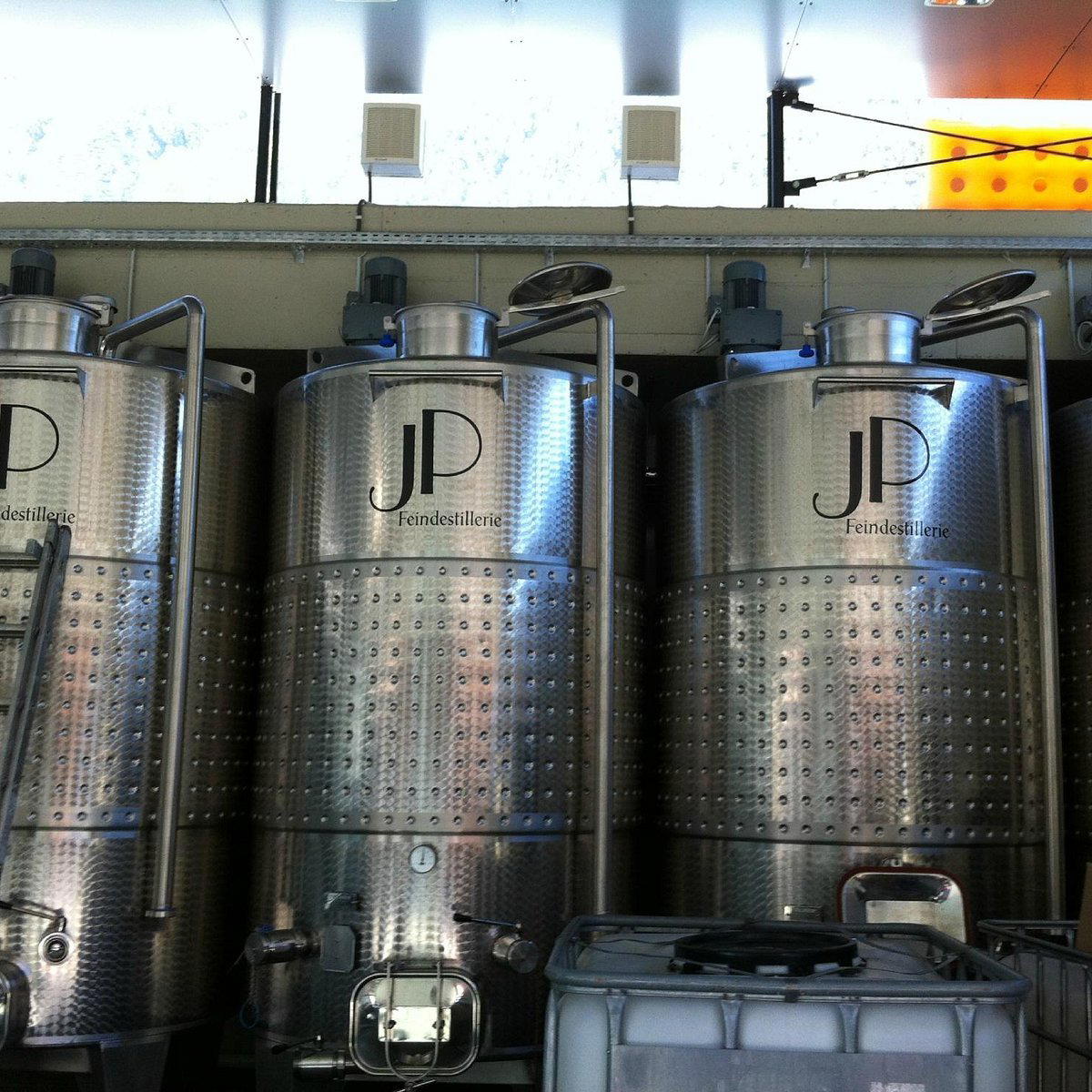
Baumann Obstbrand Distillery

Baumann Obstbrand Distillery operates in Stanz bei Landeck, a village deep in the Tyrolean Alps where the altitude, cold air, and orchard culture have long shaped what gets distilled rather than vinified. The operation earned a Pearl 1 Star Prestige in 2025, placing it among Austria's recognised craft spirits producers. For those tracing the arc of Austrian artisan distilling, it belongs on the itinerary alongside the Tyrolean peers that share its alpine context.
 Discover on Pearl
Pearl is the En Primeur Club membership app — saves, bookings, and concierge access live there. Same editors, same standards.
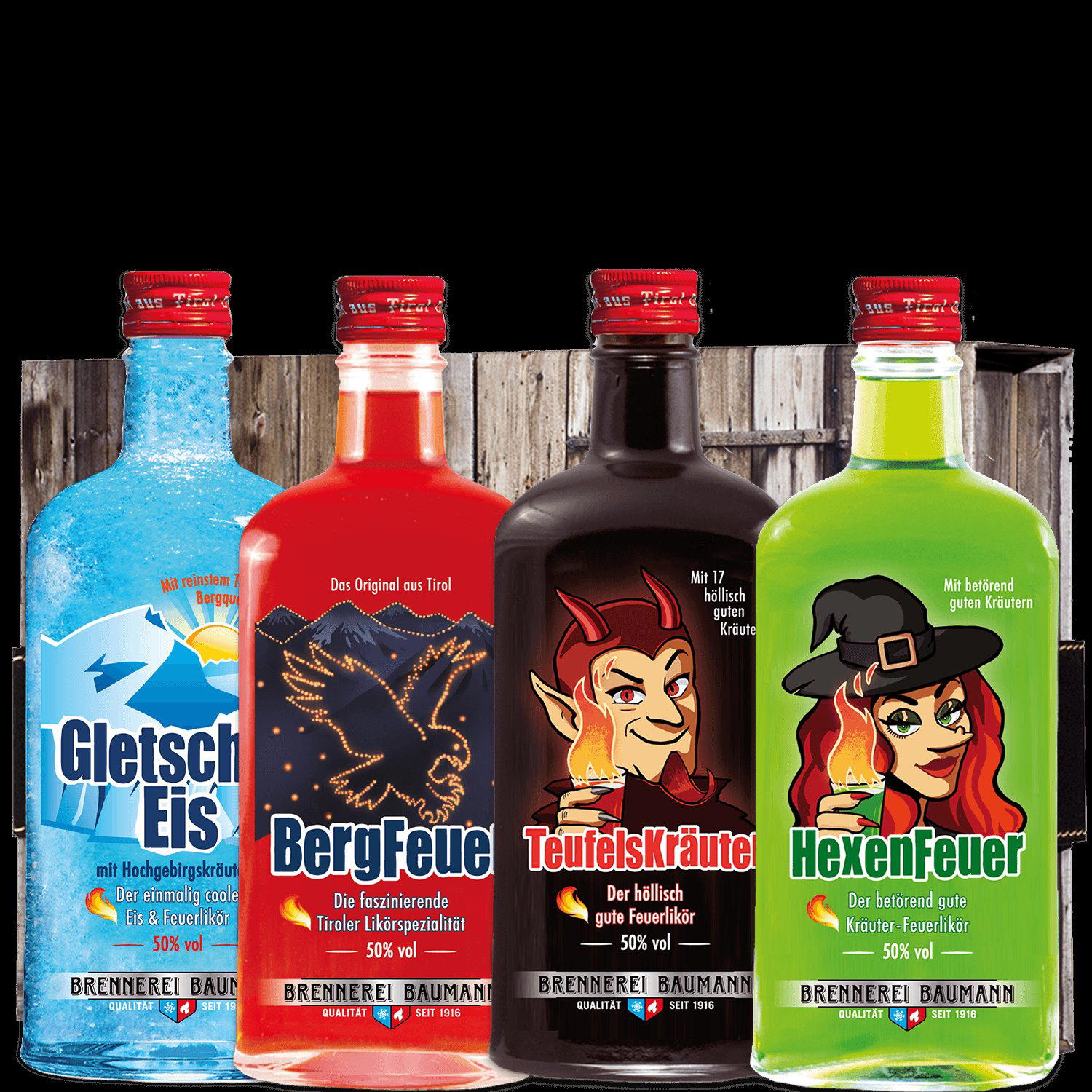
Alpine Distilling and the Terroir of the Inn Valley
The Austrian craft spirits scene has developed along two largely separate axes over the past two decades. Along the eastern wine belts, the Wachau, Burgenland, and Südsteiermark, producers like Weingut Emmerich Knoll in Dürnstein and Weingut Kracher in Illmitz have built international reputations on grape varieties suited to their particular soils and climates. In the alpine west, the logic runs differently. Here, the terrain is too steep and the growing season too short for consistent viticulture, so the distilling tradition draws instead from orchards: wild plums, pears, apricots, and mountain cherries that grow in the valleys carved by glacial rivers. Stanz bei Landeck sits in exactly this geography, a village at the confluence of the Inn and Sanna rivers in Tyrol, where the mountains press in from all sides and the fruit grown on lower valley slopes carries a sharpness and aromatic intensity that flatter distillation more than fermentation.
Obstbrand, the German term for fruit brandy, sometimes rendered as Obstler when made from a blend, is Austria's other fine spirits tradition, one that operates almost entirely outside the international recognition systems that track wine. The producers who do earn formal acknowledgement tend to be evaluated through specialist frameworks rather than mainstream wine media. Baumann Obstbrand Distillery's Pearl 1 Star Prestige award in 2025 places it within that acknowledged tier.
What the Land Produces Here
The altitude and climate of the Tyrolean Inn Valley impose conditions that fundamentally shape the character of any agricultural product emerging from it. Growing seasons are compressed. Diurnal temperature swings, warm days followed by cold nights, concentrate sugars and preserve acidity in fruit more dramatically than in lower, warmer growing zones. The result, in well-handled distillation, is a spirit that carries both aromatic brightness and structural tension rather than the soft, neutral profile that can come from fruit grown in less demanding conditions.
This is the terroir argument for alpine Obstbrand, and it mirrors what winemakers in high-altitude Austrian regions have long articulated: that stress on the plant produces more complex, characterful raw material. The parallel holds for distillers working with this fruit. Where producers in flatter, warmer Austrian regions might work with higher-yielding, more uniform orchard varieties, Tyrolean distillers are typically drawing on a narrower, more variable harvest whose character shifts year to year with the mountain weather. That variability is not a weakness in the category, it is, for serious producers, the point.
The Tyrolean distilling tradition has a direct counterpart in Destillerie Figerl, also based in Stanz bei Landeck, which shares the same raw material pool and alpine context. The existence of two recognised producers in the same small village is not coincidental. It reflects a concentration of orchard knowledge and distilling craft that the Inn Valley has accumulated over generations, much of it outside the visibility of international spirits media.
Reading the 2025 Prestige Recognition
A Pearl 1 Star Prestige award in 2025 positions Baumann Obstbrand Distillery within a specific recognition bracket: producers who have passed formal specialist evaluation but sit below the multi-star tier that would indicate sustained, consistent excellence across a wide range of expressions. In practical terms, this is the award level that identifies serious producers worth tracking rather than producers whose entire catalogue can be recommended without reservation. The distinction matters in alpine fruit distilling, where output volumes are typically small and quality can concentrate in particular varieties or vintages while others remain uneven.
Across Austria's broader producer landscape, the operations earning formal recognition have generally done so by applying winemaking-grade discipline to fruit selection, fermentation control, and still management. The producers who appear consistently in specialist evaluations, including alpine distillers from Tyrol and Vorarlberg, tend to be those who treat the orchard as a source of raw material requiring as much attention as a vineyard. This is a different proposition from the many small-scale Obstbrand producers across Austria whose output remains self-consumed or sold locally without external evaluation. Baumann's 2025 recognition places it in the formally assessed cohort.
For comparison, Austria's wine producers working at the prestige tier, including Weingut Bründlmayer in Langenlois, Weingut Wohlmuth in Kitzeck, and Weingut Pittnauer in Gols, have built their recognition on the interaction between site, variety, and seasonal variation. The same interpretive framework applies to Baumann's alpine context, even though the product category is entirely different.
The Wider Austrian Artisan Distilling Picture
Austria's craft spirits sector has expanded significantly since the early 2000s, driven partly by relaxed distilling regulations and partly by a broader European consumer shift toward origin-specific, artisanal spirits. The country now supports dozens of formally evaluated producers across categories from fruit brandy to gin to whisky. Some of these operations have developed in wine-producing regions, functioning as secondary operations within existing estates; Weingut Scheiblhofer Distillery in Andau and Weingut Heinrich Hartl in Oberwaltersdorf both represent this model, where wine production and distilling coexist under one roof. Others, like Baumann, operate in regions where distilling is the primary tradition rather than an adjunct to viticulture.
Within the non-wine distilling cohort, the geographical spread is instructive. Operations like 1310 Spirit of the Country Distillery in Sierning, 1404 Manufacturing Distillery in Sankt Peter-Freienstein, and A. Batch Distillery in Bergheim represent the broader Austrian artisan distilling map, each working from a distinct regional context. The 1516 Brewing Company Distillery in Vienna operates in an urban production environment entirely unlike the rural orchard-dependent model of Tyrolean Obstbrand. These distinctions are not just geographical, they reflect fundamentally different approaches to sourcing, raw material character, and the role of place in the final product.
Aberlour in Aberlour represents the kind of production culture, geographically specific, tradition-rooted, evaluated through specialist frameworks, that alpine fruit distillers share in spirit if not in product category. And for a benchmark from Napa's prestige tier to calibrate how production-focused estate operations translate into formal recognition, Accendo Cellars in St. Helena offers a useful reference point for how limited-output, site-specific production interacts with award systems.
Planning a Visit to Stanz bei Landeck
Stanz bei Landeck is a small settlement in the Tyrolean district of Landeck, reachable from Innsbruck by road along the Inn Valley (roughly 90 kilometres west) or via the Arlberg rail line, which connects the village to the broader Austrian and Swiss rail network. The area is primarily known as a mountain sports destination, which shapes the visitor profile and the practical rhythms of local producers. Distillery visits in this region tend to operate on request or by appointment rather than through fixed opening hours, and direct contact through the distillery's own channels is the reliable approach. The most practical route is to enquire locally on arrival in the Landeck area or seek current contact details through the regional tourism infrastructure before travelling specifically for this purpose. The 2025 Prestige recognition suggests the operation is active and producing at a recognised level.
Quick Comparison
Comparable venues nearby, for context on price, style, and recognition.
| Venue | Cuisine | Price | Awards | Notes |
|---|---|---|---|---|
| Baumann Obstbrand DistilleryThis venue — the venue you are viewing | Winery | , | 1 recognition | |
| Destillerie Figerl | Winery | , | 1 recognition | Stanz bei Landeck |
| Pfau Distillery | Kärnten | $$ | 1 recognition | Schleppekurve |
| Jules Spirits Distillery | Winery | $$ | 1 recognition | Radstadt |
| Weingut Hutter Distillery | Grüner Veltliner, Riesling | $$ | 1 recognition | Mautern an der Donau |
| Brennerei Hödl | Winery | , | 1 recognition | Klagenfurt |
Continue exploring