Azores Wine Company

Falstaff Winery - Listed
On the volcanic island of Pico, Azores Wine Company operates within one of the most geologically distinctive wine terroirs in the Atlantic.. For anyone travelling through Madalena, this is where the island's wine identity is most legibly expressed.

Pearl is the En Primeur Club membership app — saves, bookings, and concierge access live there. Same editors, same standards.
- Address
- Rua do Poço Velho, nº 34, Cais do Mourato, 9950-054 Bandeiras, Madalena, Pico, Portugal
- Phone
- +351918266989
- Website
- antoniomacanita.com
- Directions
- Get directions
Where the Atlantic Shapes the Glass
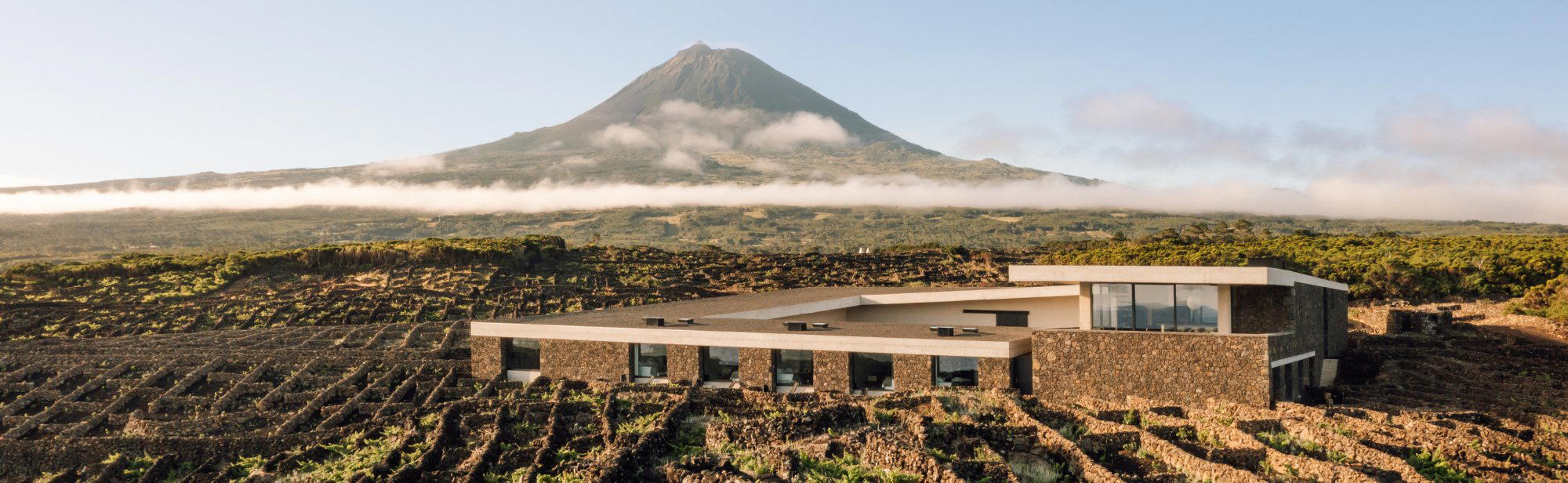
Approach Bandeiras from Madalena along Pico's southern coastline and the landscape makes an argument before you've tasted a thing. The vineyards here don't look like vineyards in any continental sense. Low basalt walls, called currais, divide the black lava into small rectangular enclosures that hold individual vines just above sea level. Wind off the Atlantic hits everything. The ocean is close enough to taste in the air. This is the physical context for Azores Wine Company, located on Rua do Poço Velho in Bandeiras, and that context is not decorative — it is the wine.
Pico's viticulture earned UNESCO World Heritage status in 2004, a designation that recognised the currais system as both a cultural and agricultural landmark. The island's winemakers have worked with basalt-filtered soils and Atlantic humidity for centuries, producing wines — principally from the Verdelho grape, that carry an iodine salinity and mineral tension that is almost impossible to replicate elsewhere.
Terroir That Earns Its Own Category
Atlantic island viticulture operates under conditions that most European wine regions never have to consider. On Pico, there is no topsoil in the conventional sense. Vines root into fractured basalt and hydrated volcanic rock, drawing minerals that leave a distinct imprint on the wine's structure. Rainfall is high but rarely predictable. The trade winds that cool the island in summer also refine acidity in the grapes, producing whites with a taut, saline quality that is more reminiscent of certain Canary Island Listáns or Azorean Terrantez than anything from the Portuguese mainland.
This places Pico in a specific conversation about volcanic wine. Comparisons are sometimes drawn to Etna's nerello-based reds or Santorini's Assyrtiko, wines where geological extremity translates directly into tension and minerality. Pico's Verdelho-based whites occupy a related register: lower alcohol than many southern European whites, high natural acidity, and a stone-and-sea character that resists easy categorisation.
For context on how Portugal's broader wine geography positions itself, producers like Herdade do Esporão in Reguengos de Monsaraz and Bacalhôa Vinhos in Azeitão represent the mainland's established wine culture, structured estates with long records and continental terroir. Pico operates in a different register entirely, defined by oceanic exposure and volcanic geology rather than warm Alentejo summers or Setúbal Peninsula clay. That difference is precisely what makes the Azores worth the journey.
How This Fits Into Portugal's Atlantic Wine Story
Portugal's wine identity has expanded considerably in international perception over the past decade. Port houses like Churchill's in Vila Nova de Gaia and Quinta do Bomfim in Pinhão anchor the country's most recognised export category, while Douro properties such as Quinta do Seixo in Tabuaço and Quinta do Vallado in Peso da Régua have attracted a new generation of buyers interested in dry reds from schist hillsides. Alentejo producers like Adega Cartuxa in Évora complete the continental picture.
The Azores sit outside all of that. No Douro heat, no Alentejo oak programs, no Setúbal Muscatel. What Pico offers instead is the Atlantic at full concentration, a wine identity defined by what the ocean does to a volcanic island over centuries. The Verdelho grape, historically associated with Madeira's fortified wines (as documented at producers like Blandy's Wine Lodge in Funchal), expresses itself very differently here in still, unfortified form: leaner, more mineral, with acidity that holds food well.
That structural quality matters for understanding why Azores Wine Company draws visitors who are already conversant with serious wine. This is not a stop for casual tourism. It is a reference point for what Atlantic volcanic terroir actually produces when the conditions are right.
Planning a Visit from Madalena
Azores Wine Company is located in Bandeiras on Pico's southern coast, a short drive east of Madalena along the EN1-1A coastal road. The island itself is accessible by ferry from Faial (the crossing from Horta takes approximately 30 to 40 minutes) or by TAP Air Portugal and SATA connections through Lisbon or the other Azorean islands. Madalena is Pico's main port town and a functional base for exploring the south coast. Our full Madalena (Pico) wineries guide covers the island's broader producer map, and our hotels guide for Madalena (Pico) lists accommodation options across the island's price tiers.
Pico's wine season aligns with harvest in September, when the currais enclosures are most active and the connection between landscape and wine production is most visible. Visiting in late summer through early autumn gives the clearest sense of how the basalt walls function as windbreaks and heat retainers, moderating the Atlantic exposure enough for the vines to ripen. Outside harvest, the island's weather is notoriously variable, and the volcanic profile of Pico itself, the highest mountain in Portugal at 2,351 metres, creates its own microclimatic effects along the coastline.
For those building a broader itinerary around the island, our Madalena (Pico) restaurants guide, bars guide, and experiences guide map the rest of what Madalena and its surroundings offer.
Award recognition in the Azores wine category is not yet as dense as in Portugal's established mainland regions. Within a wine category that is still gaining broader international visibility, that kind of recognition carries more signal than the same rating might in a region with decades of awards history behind it.
Producers holding comparable prestige-tier recognition elsewhere in Portugal, estates like Abadía Retuerta in Sardón de Duero, are typically positioned as category references rather than volume producers. Azores Wine Company operates in that mode, where the limited scale of island viticulture and the distinctiveness of the terroir point toward depth over breadth. This is where the volcanic Atlantic wine argument is made most concisely, in a glass of Verdelho from black basalt at the edge of Europe.
Comparable Venues
Comparable venues nearby, for context on price, style, and recognition.
| Venue | Cuisine | Price | Awards | Notes |
|---|---|---|---|---|
| Azores Wine CompanyThis venue — the venue you are viewing | Not listed | $150–200 | Falstaff Winery - Listed | Not listed |
| The Factory House | Not listed | Not listed | Not listed | Porto docks, Touriga Nacional, Touriga Francesa |
| Blandy's Wine Lodge | Funchal city center, Sercial, Verdelho | $30–50 | Not listed | Not listed |
| Henriques & Henriques | Câmara de Lobos, Verdelho, Terrantez | Not listed | Falstaff Winery - Listed | Not listed |
| Churchill's | Not listed | $20–30 | Falstaff Winery - Listed | Vila Nova de Gaia, Touriga Nacional, Touriga Francesa |
| Adega Regional de Colares | Winery | $20–30 | Not listed | Not listed |
Recognition history
Dated appearances from independent guides and award organizations, with the underlying list record or original source where available.
Falstaff Winery - Listed
Falstaff
Details
- Scenic
- Rustic
- Romantic
- Elegant
- Romantic Getaway
- Wine Education
- Special Occasion
- Group Outing
- Vineyard Tour
- Estate Grounds
- Panoramic View
- Private Tasting
- Terrace
- Sustainable
- Vineyard
- Mountain
- Waterfront
- Arinto Dos Açores
- Terrantez Do Pico
- Verdelho
- Saborinho
- Still White
- Sparkling
- Fortified
- Wine Dinner
- Guided Tasting
- Vineyard Tour
- Portuguese
- English
Rustic yet refined atmosphere overlooking expansive vineyard landscapes with views of Mount Pico, designed to evoke traditional Azorean 'adega' culture while offering modern comfort.