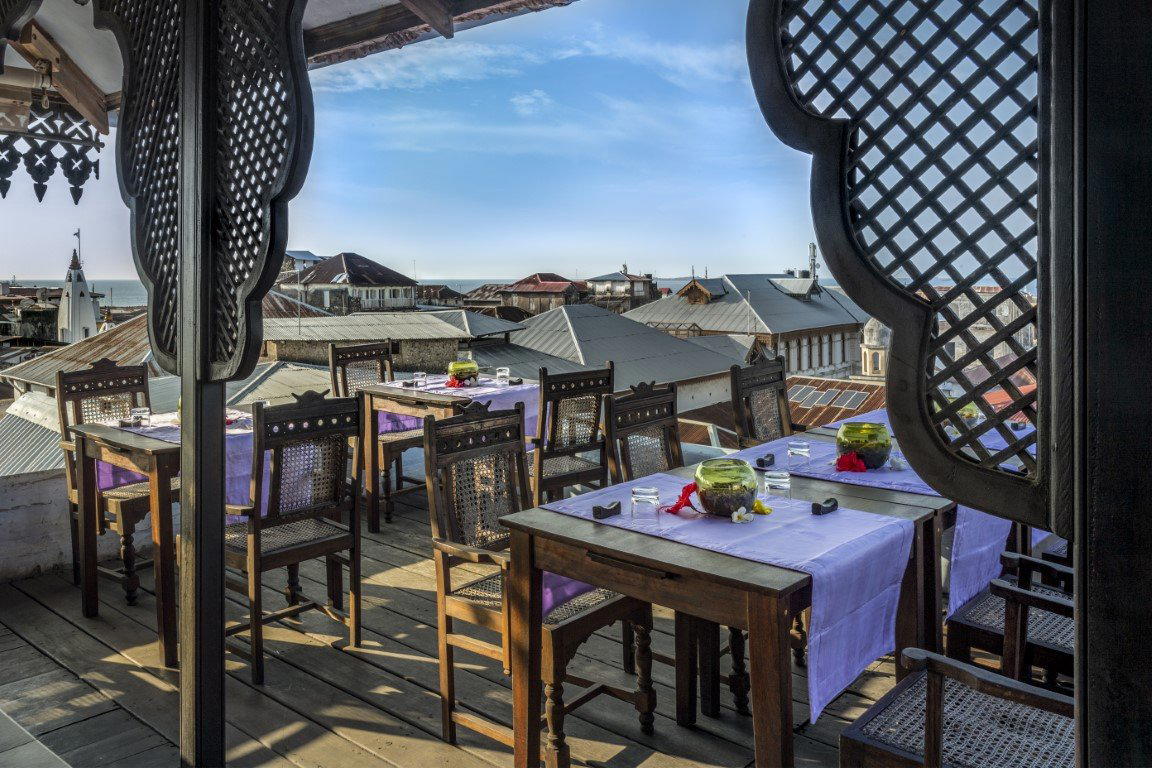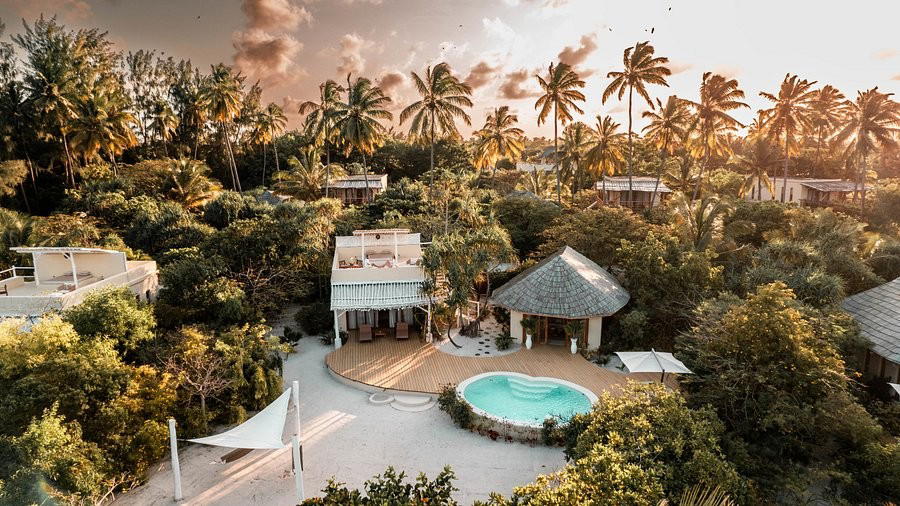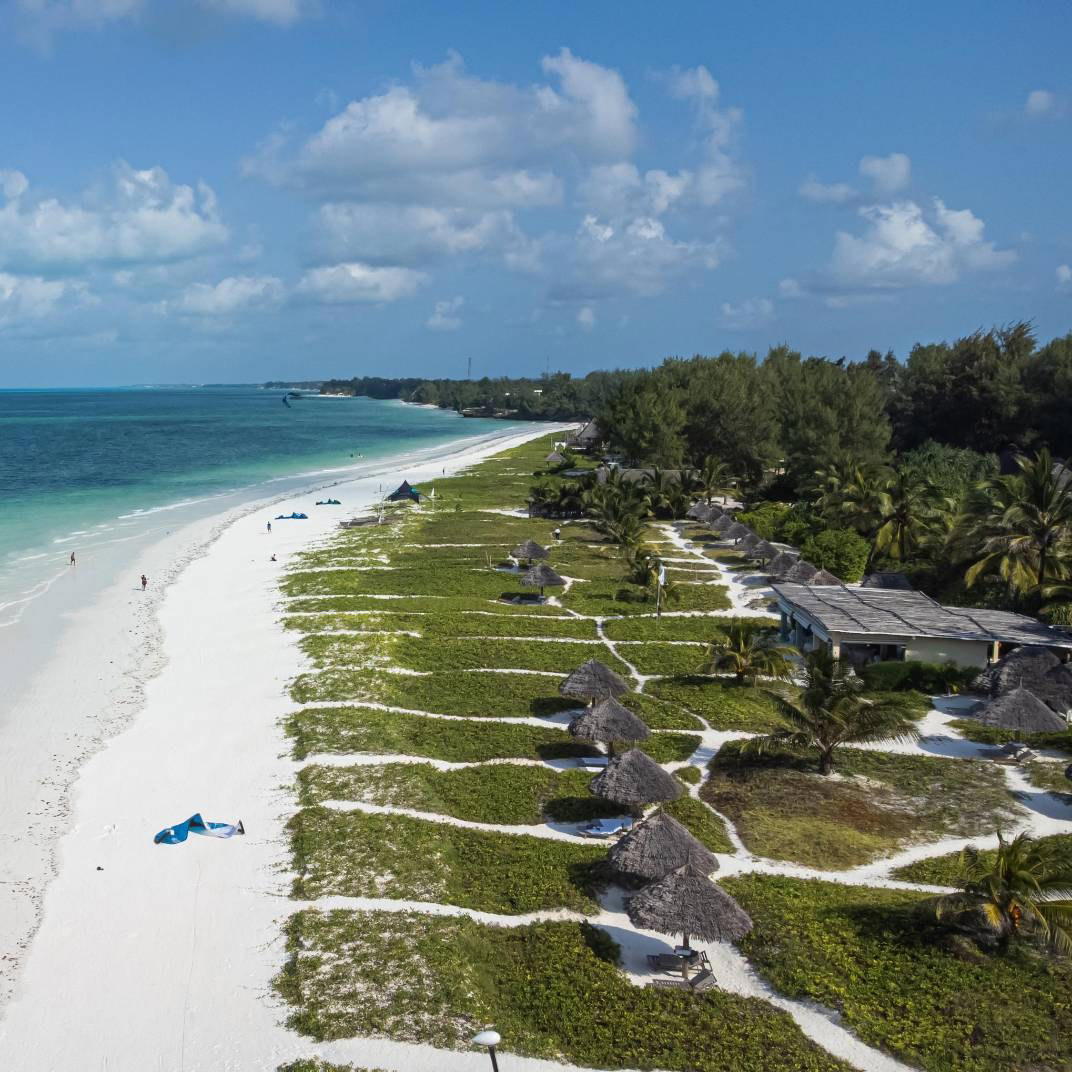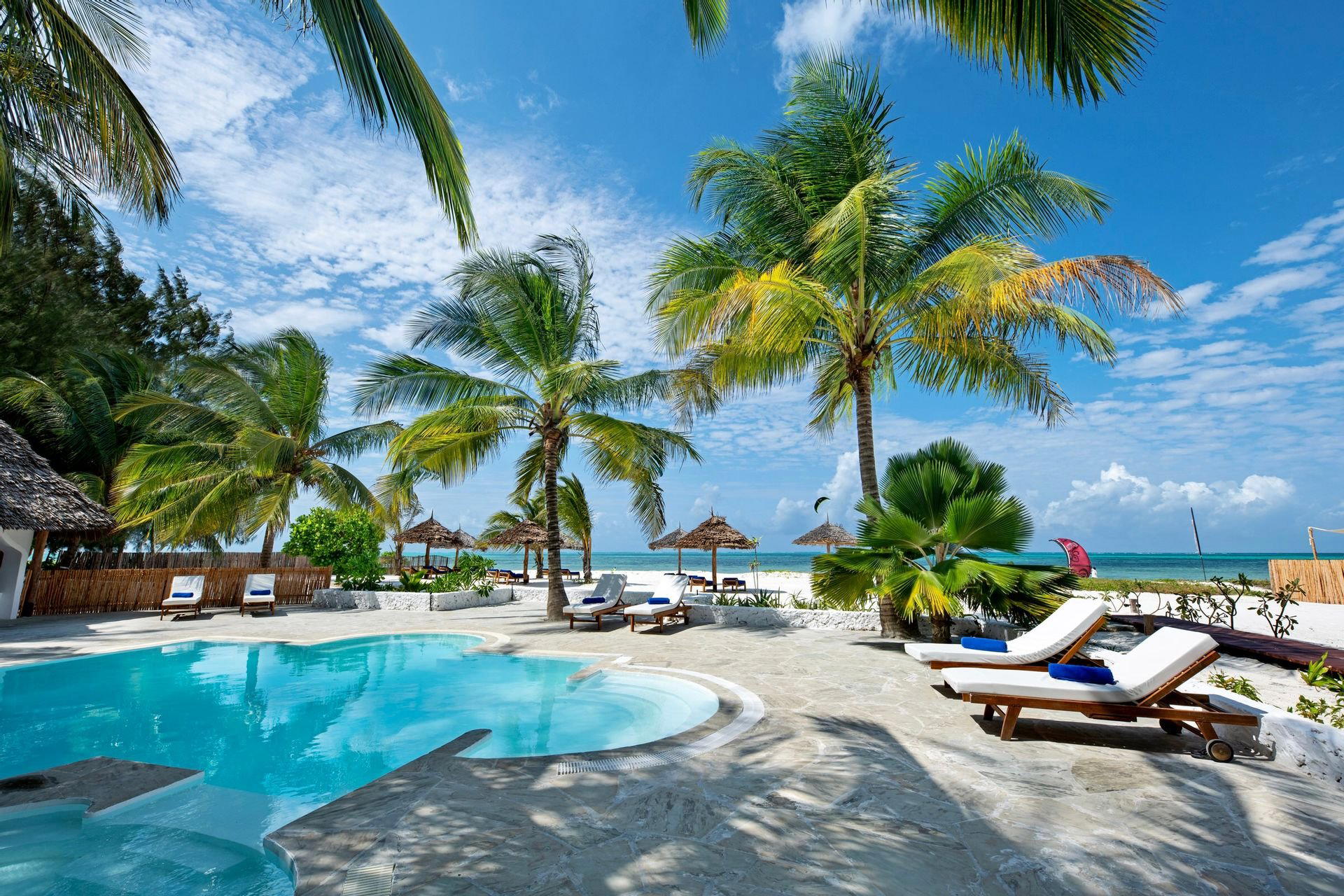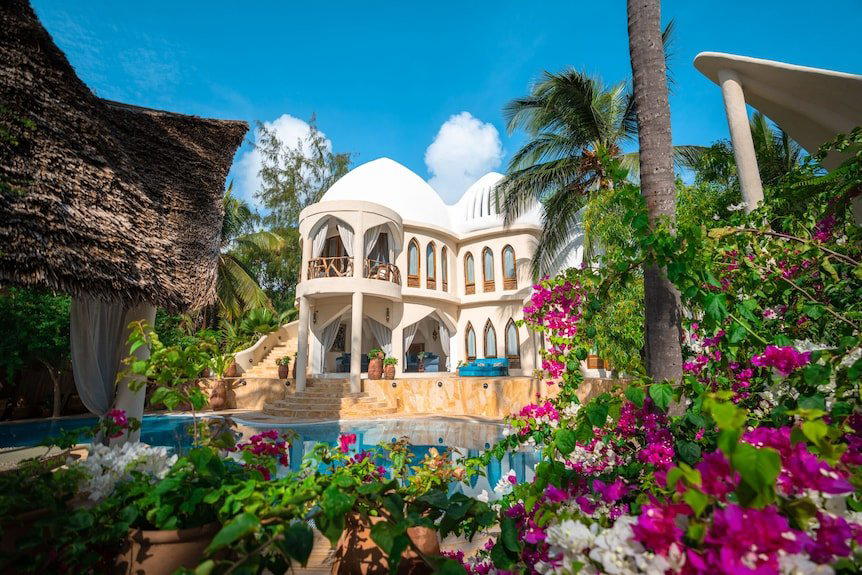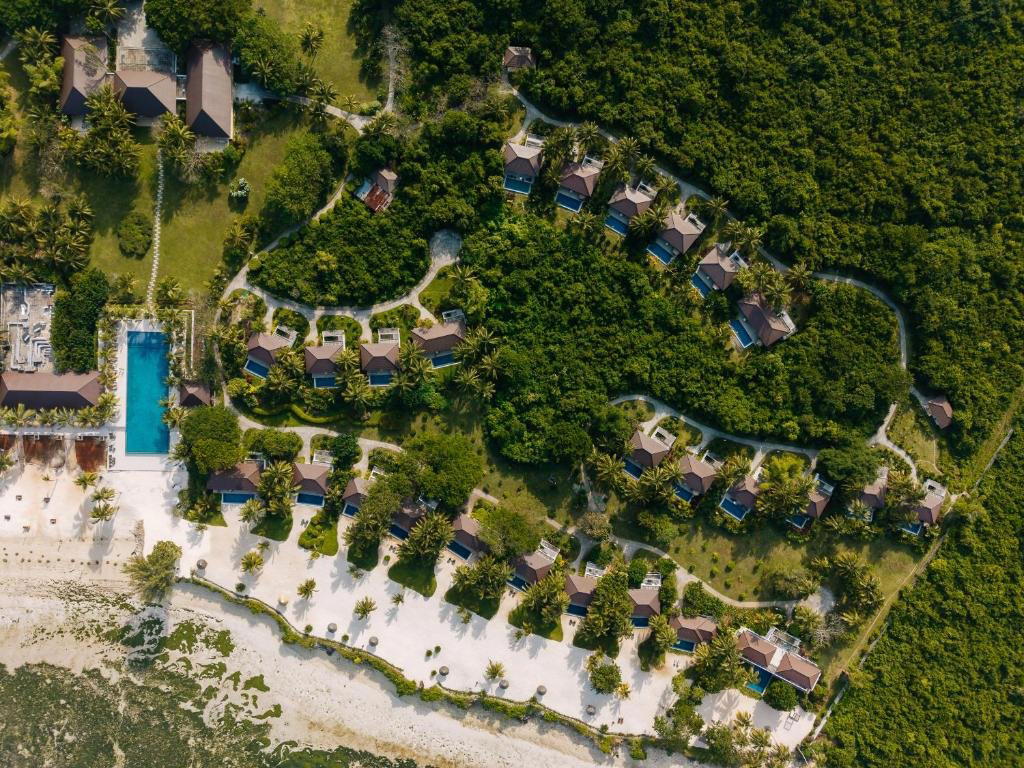
A beachfront ecolodge on Paje's kite-surfing coastline, Zanzibar White Sand Luxury Villas & Spa combines private-garden accommodation with Zanzibari seafood cuisine under Chef Yutaka Yamato. Rated 4.6/5 across 327 reviews, the property sits roughly one hour by road from Zanzibar International Airport and draws both families and independent travellers to one of Tanzania's most consistent stretches of white-sand shoreline.
 Discover on Pearl
Pearl is the En Primeur Club membership app — saves, bookings, and concierge access live there. Same editors, same standards.
- Address
- Paje Beach, Paje, Tanzania
- Phone
- +255 776 263 451
- Website
- whitesandvillas.com
Paje Beach and the Coastal Dining Tradition It Produces
The southeastern coast of Zanzibar has, over the past two decades, developed a distinct hospitality character shaped by two forces: the island's deep Swahili and Arab seafood traditions, and the international kite-surfing community that transformed Paje from a quiet fishing settlement into a destination with genuine culinary ambition. The result is a stretch of coastline where the raw ingredient supply, reef fish, octopus, crab, prawns pulled from the Indian Ocean within hours, is as serious as anywhere in East Africa, and where the leading properties have learned to treat that supply with the restraint it deserves.
Zanzibar White Sand Luxury Villas & Spa sits within this context, positioned on Paje Beach at GPS coordinates -6.2793, 39.5366. The property holds a 4.6/5 rating across 358 Google reviews, a signal that places it inside the consistent upper tier of Paje's accommodation and dining options rather than the crowded mid-market. Chef Yutaka Yamato leads the kitchen with a focus on Zanzibari seafood, a cuisine defined less by technique complexity than by ingredient provenance and timing, the same principles that govern serious raw-bar cooking from Le Bernardin in New York City to the coastal grill houses of the Swahili coast.
The Approach to Raw Preparation on the Swahili Coast
Raw and minimally processed seafood sits at the centre of Zanzibar's culinary identity in a way that often goes unrecognised by visitors expecting spiced stews or grilled whole fish. The island's position on historic Indian Ocean trade routes brought Persian, Arab, Indian, and Portuguese influences to its food culture, but the underlying logic of that cuisine, respect the protein, season with restraint, let the ocean temperature and the day's catch dictate the menu, is the same logic behind serious raw-bar traditions from the oyster counters of Brittany to the ceviche bars of Lima.
In Paje specifically, that tradition is expressed through what the water offers: reef octopus prepared cold with lime and coconut, thinly sliced raw kingfish dressed with green mango and chilli, prawns served barely cooked over seaweed ice. The craft is in the sourcing and the timing. A kitchen that understands this works with the morning's catch and builds the menu backward from what arrived, rather than forward from a fixed card. This is the same discipline that defines the crudo programs at places like Aponiente in El Puerto de Santa María, where marine ingredients are treated as primary rather than supporting material, though the register at a Paje ecolodge operates at a very different scale and formality.
The editorial point is that Zanzibar's raw seafood traditions are not a simplified version of something more sophisticated happening elsewhere. They are the original source material. Yamato's kitchen works with that inheritance rather than against it, which puts the dining here in a different competitive conversation than the internationally framed seafood restaurants of Nairobi or Dar es Salaam. Doors to Zanzibar (Seafood Grill) represents the more open-air, grill-forward end of Paje's seafood offer, providing useful contrast.
The Physical Setting and What It Does to a Meal
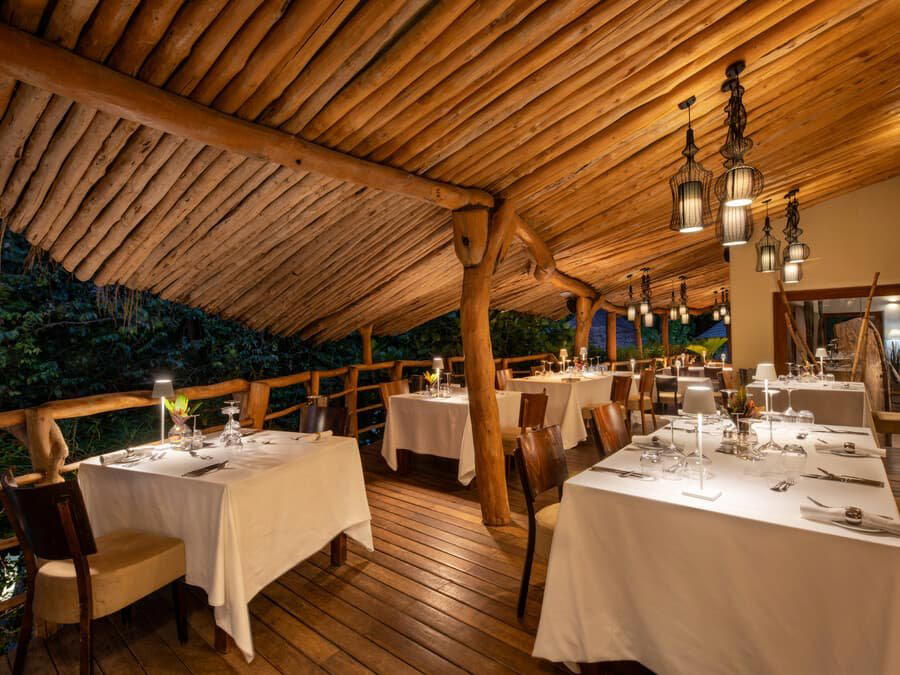
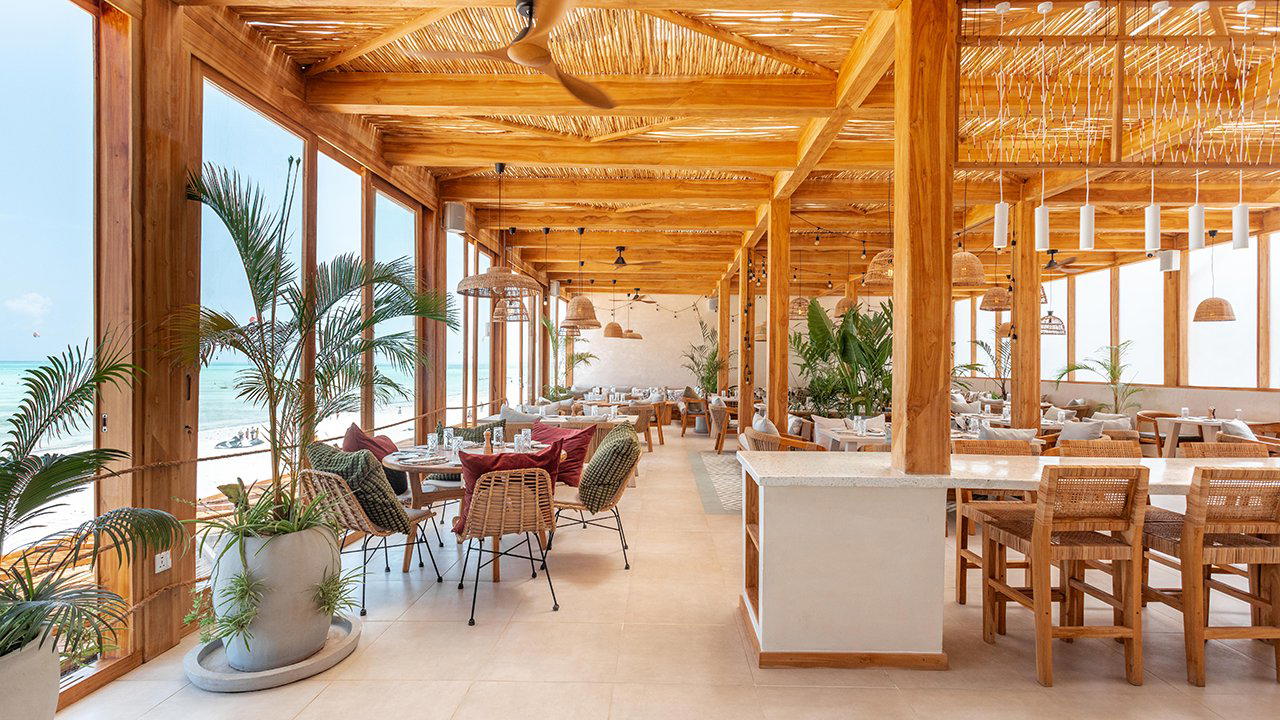
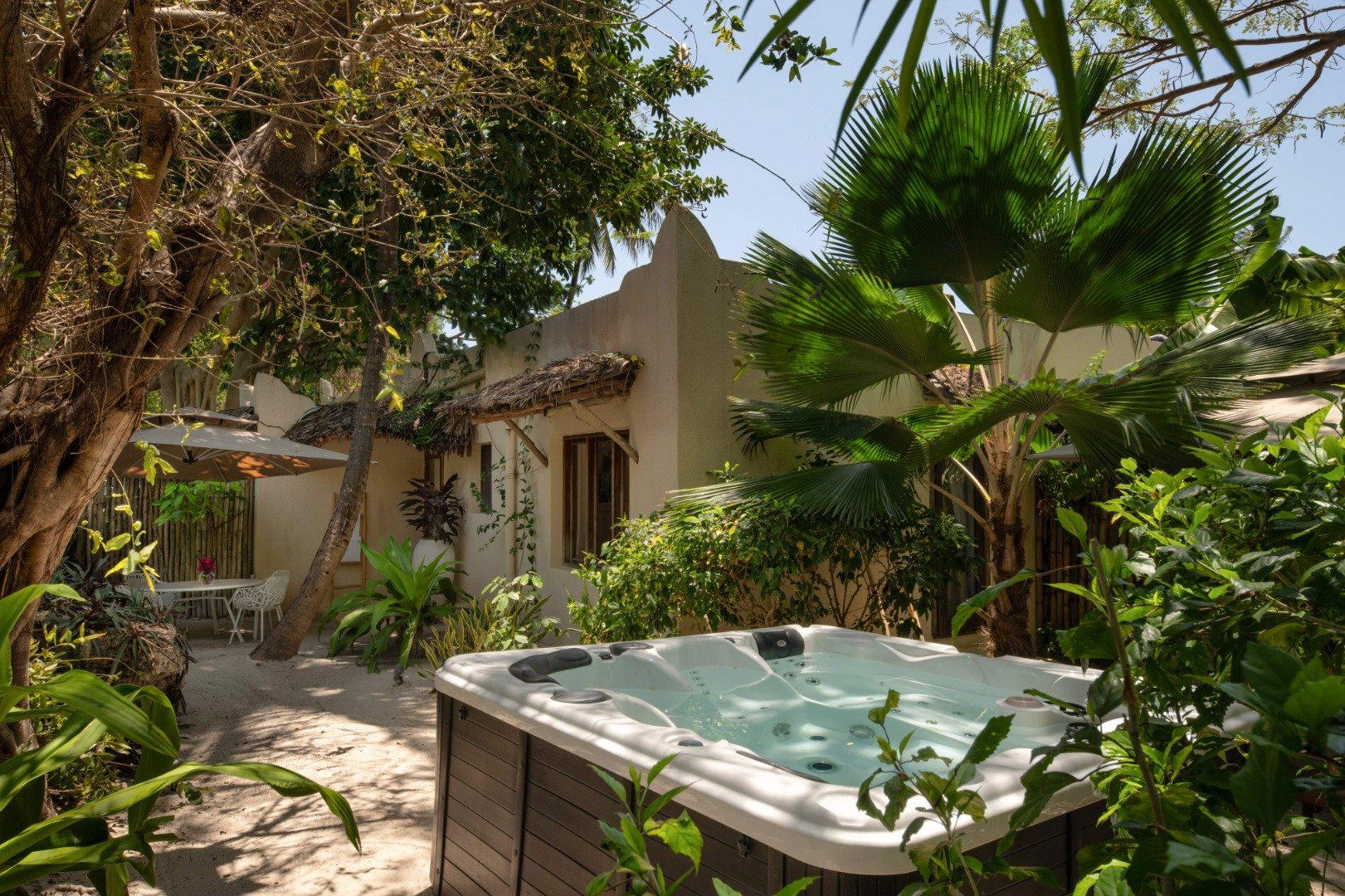
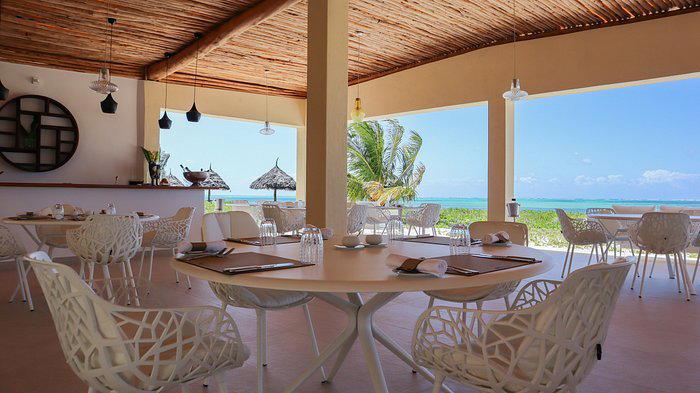
The atmospheric case for Paje Beach needs no embellishment. The tide on Zanzibar's southeastern coast retreats far enough at low water to turn the foreshore into a shallow lagoon, so the horizon from a beachfront terrace shifts colour and character across the day, blinding white at noon, deep turquoise in the afternoon, a flat copper register at dusk. Ecolodges with private gardens, of which Zanzibar White Sand is one, sit back from the beach far enough to provide shade and enclosure without sacrificing the view or the wind that makes the kite-surfing coastline consistently breezy.
That wind matters at the table as much as on the water. A breeze-cooled terrace in the late afternoon is where Zanzibar's raw seafood traditions make the most sense: the cold preparations read as refreshing rather than austere, the lime-forward dressings cut through the humidity, and the ocean two hundred metres away functions as a visible ingredient provenance. Properties in this format, ecolodges with limited keys, private garden villas, beach access without the interference of a large resort footprint, are becoming the structurally preferred format for a particular kind of traveller on this coast, much as smaller design-led properties have displaced larger international hotel flags across Southeast Asia's premium tier.
Families represent a meaningful portion of the guest mix here, a detail worth noting because family-friendly programming and serious food rarely coexist comfortably in coastal East Africa. The property manages both without obvious compromise, with a kitchen that can run a consistent lunch service for guests with children alongside an evening seafood program. Getting there involves roughly one hour by road from Zanzibar International Airport, approximately 40 kilometres distant.
Placing Paje in the Wider Indian Ocean Seafood Conversation
Zanzibar holds a specific position in the broader geography of Indian Ocean seafood destinations. It lacks the culinary infrastructure of Mauritius or the Maldives, no concentrated cluster of internationally staffed resort kitchens, no established wine program to speak of, but it has something those destinations largely lost: an intact local seafood culture that runs parallel to the tourism economy rather than being subsumed by it. The fish market in Stone Town, the octopus drying racks visible along the road south toward Paje, the sunrise catch negotiations on the beach, these are not staged for visitors. They are the supply chain.
Serious seafood programs across the world, from Dal Pescatore in Runate to 8 1/2 Otto e Mezzo Bombana in Hong Kong, rest on supply chains built over years. In Paje, the supply chain is structural rather than curated, a function of geography and fishing tradition rather than chef relationships built painstakingly with individual producers. That is simultaneously the advantage and the constraint of cooking seriously on this coast. The morning's catch determines the menu, which concentrates creative decisions on technique and preparation rather than selection. Raw and minimal-intervention preparation suits this logic well: it reduces the distance between the ocean and the plate to the smallest possible interval.
Atomix in New York City or Alain Ducasse at Louis XV in Monte Carlo is instructive rather than competitive. They operate in different registers entirely. The value of eating well in Paje is not that it approximates those experiences but that it doesn't try to.
Planning Your Stay
Access to Zanzibar White Sand Luxury Villas & Spa runs through Zanzibar International Airport, approximately 40 kilometres north. Road transfer takes around one hour and should be confirmed with the property at time of booking. The kite-surfing season on the southeastern coast runs broadly from June through September and again from December through February, driven by the kaskazi and kusi trade winds, timing a visit to align with these windows means both better wind conditions and a more energised beach atmosphere. The shoulder months either side of these peaks offer quieter conditions and, typically, more availability.
Price Lens
Comparable venues nearby, for context on price, style, and recognition.
| Venue | Cuisine | Price | Awards | Notes |
|---|---|---|---|---|
| Zanzibar White Sand Luxury Villas & SpaThis venue — the venue you are viewing | Dining | , | 1 recognition | |
| Doors to Zanzibar | Paje, Contemporary Zanzibari Seafood | $$$$ | 1 recognition | |
| Beach Restaurant & Bar | Paje, Dining | , | , | |
| Doors to Zanzibar Restaurant | $$$$ | , | Paje, Fine-dining African & international fusion | |
| Emerson Spice | $$$$ | , | Stone Town, Zanzibari Seafood Tasting Menu | |
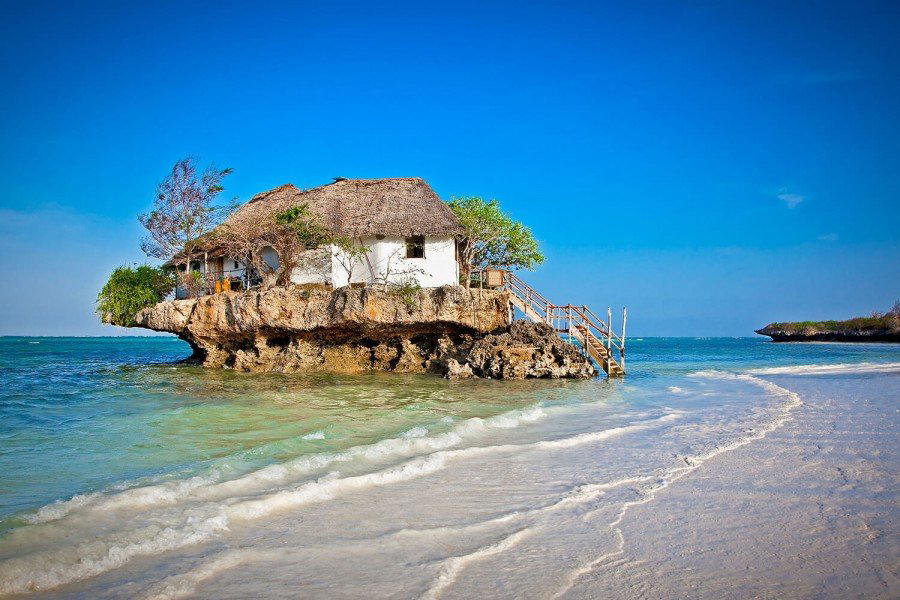
| The Rock | $$$ | , | Michamvi Pingwe, Seafood with Italian and Swahili Fusion |
Continue exploring